

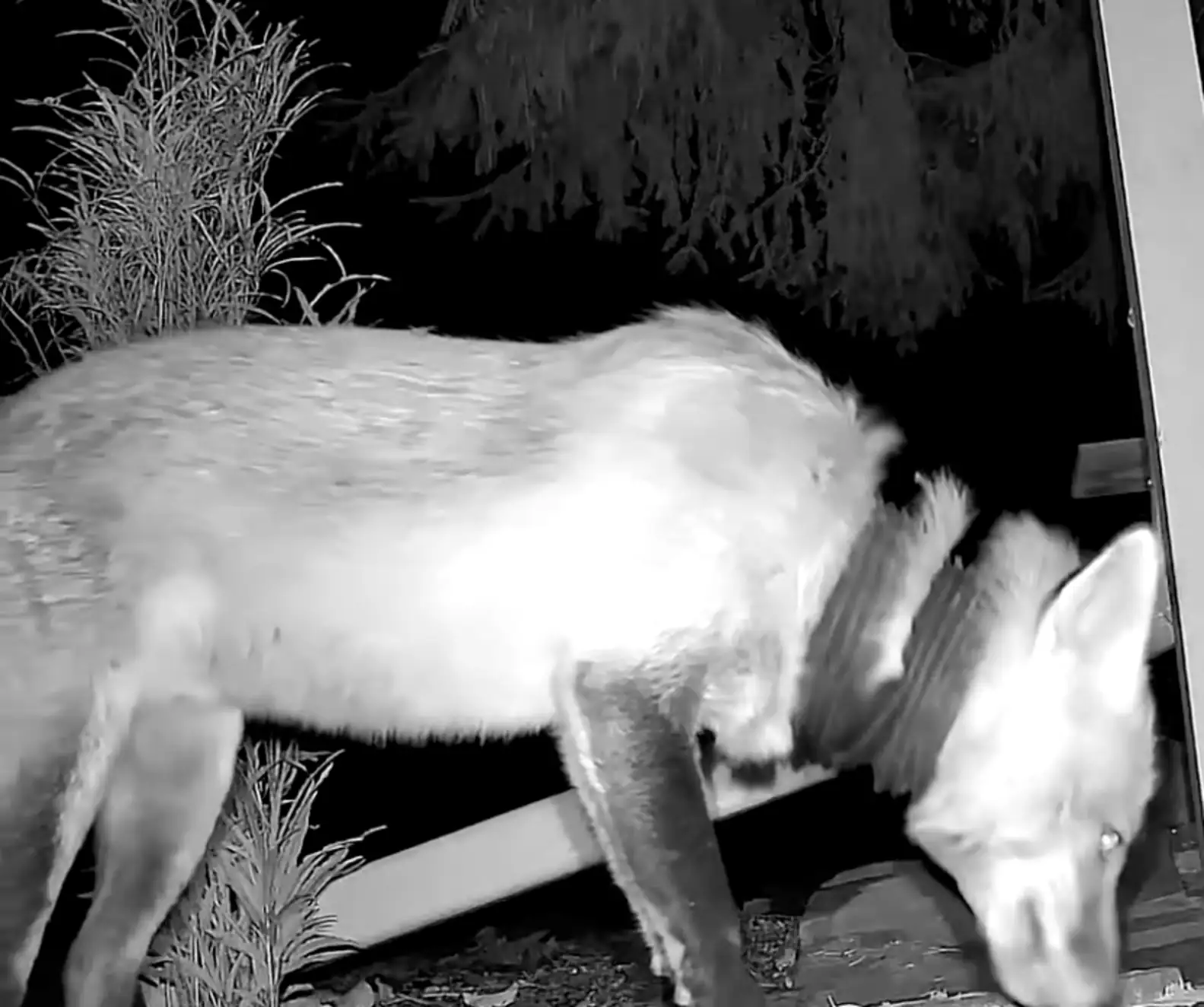
She refused to give up on this beautiful boy.
In July, Julie Bernstein glanced out her window in Pennsylvania and noticed something alarming — a large red fox was wandering through her yard with a piece of tubing tightly wrapped around his neck.
Concerned for the animal’s safety, Julie reached out to the Aark Wildlife Rehabilitation and Education Center for guidance. She also set up a trail camera to keep track of the fox’s movements and condition.
Through the footage, she could see that the plastic tubing had split into two sections, with tufts of the fox’s fur sticking out between them as he roamed her property.
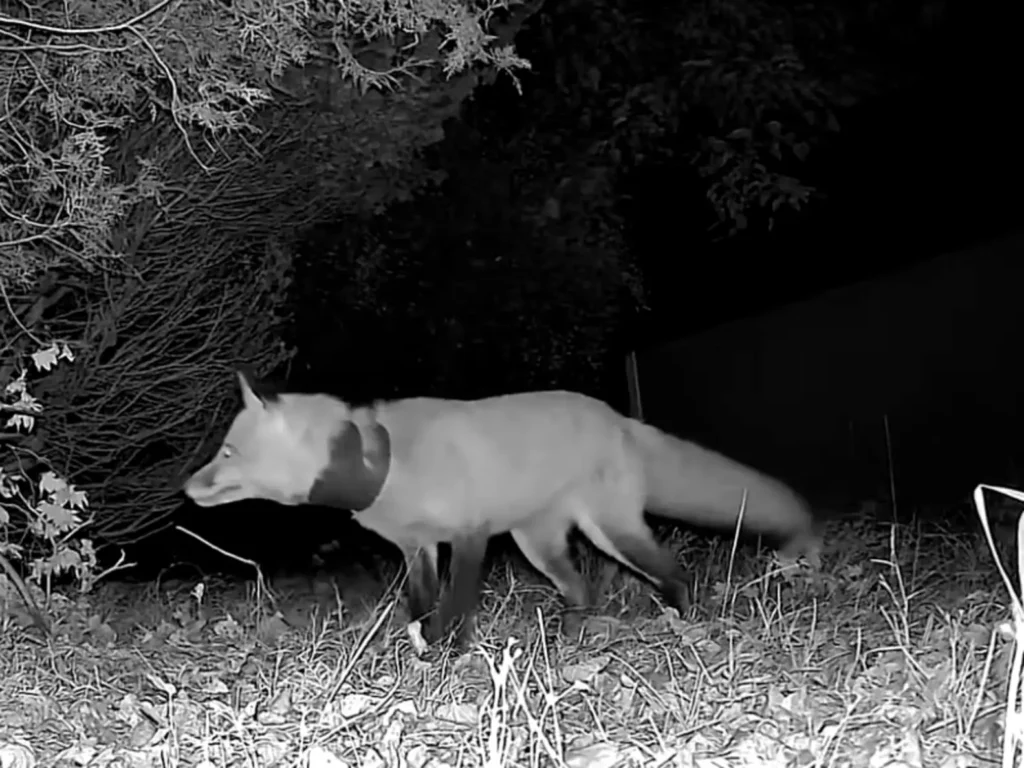
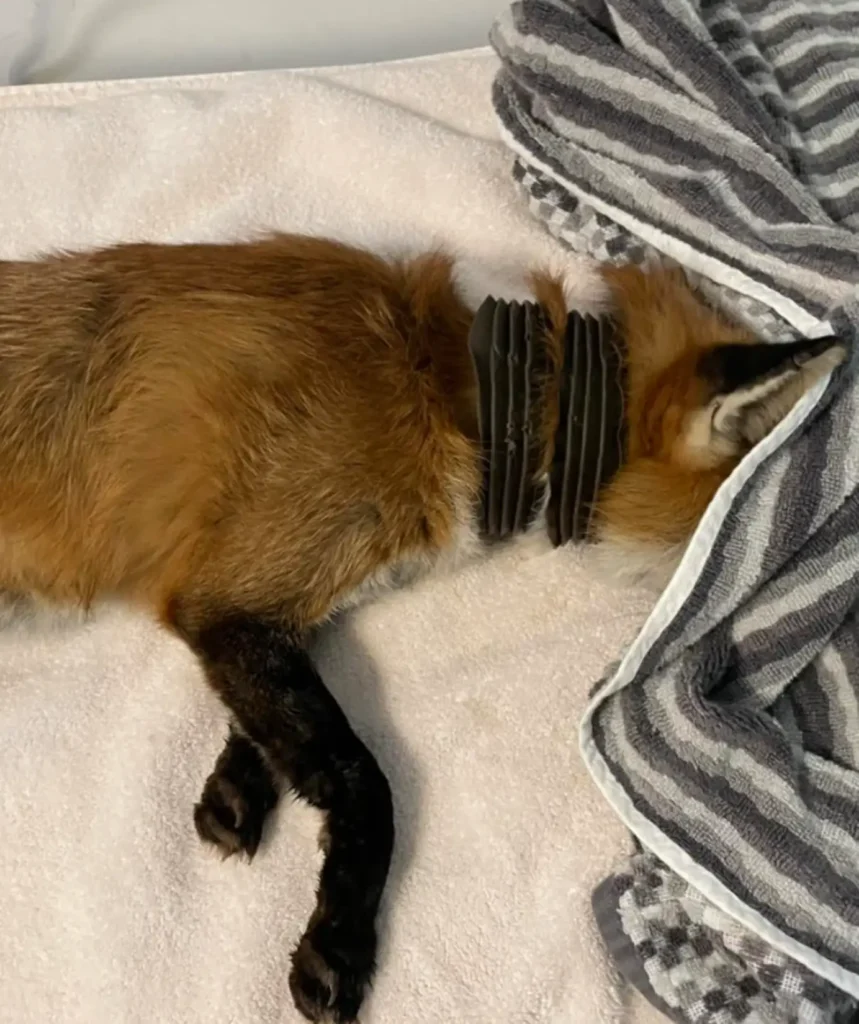
“The object around his neck was likely a segment of drainage pipe,” explained Amanda Leyden, a licensed wildlife rehabilitator and clinic director at Aark. “Small animals often hide inside these pipes, and when a curious fox sticks its head in to investigate or hunt, it can easily become trapped when trying to pull back out.”
Aark advised Julie that the best course of action was to humanely trap the fox and bring him in for treatment.
Determined to help, Julie created a feeding station in a spot where the fox frequently appeared. She lovingly nicknamed him Tubey and used her camera to monitor his visits.
Gradually, she began placing food a little closer to a humane trap each day — careful not to move too fast, since foxes are notoriously cautious and clever.
“Foxes are incredibly intelligent and wary of new things,” Leyden said. “So this process took a lot of time, consistency, and patience.”
Finally, after nearly three months of effort, Tubey wandered into the trap. Julie immediately transported him to Aark Wildlife Rehabilitation and Education Center.
To everyone’s relief, Tubey was in surprisingly great condition.
“He was a big, healthy red fox — weighing over 18 pounds and with a beautiful full coat,” Leyden shared.
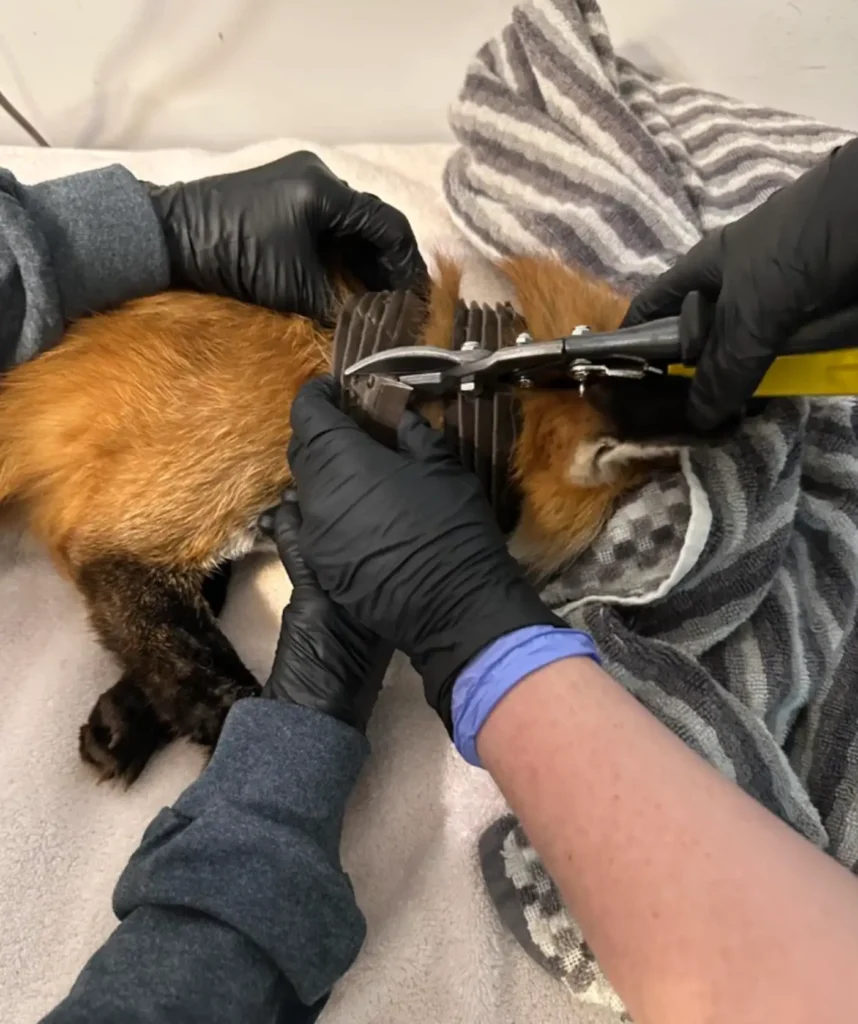
Still, the tubing had likely caused months of discomfort. To remove it safely, the team sedated Tubey, gently cut away the plastic, and examined his neck for injuries. Fortunately, there were no wounds beneath his thick fur, only a few ticks that were promptly removed.
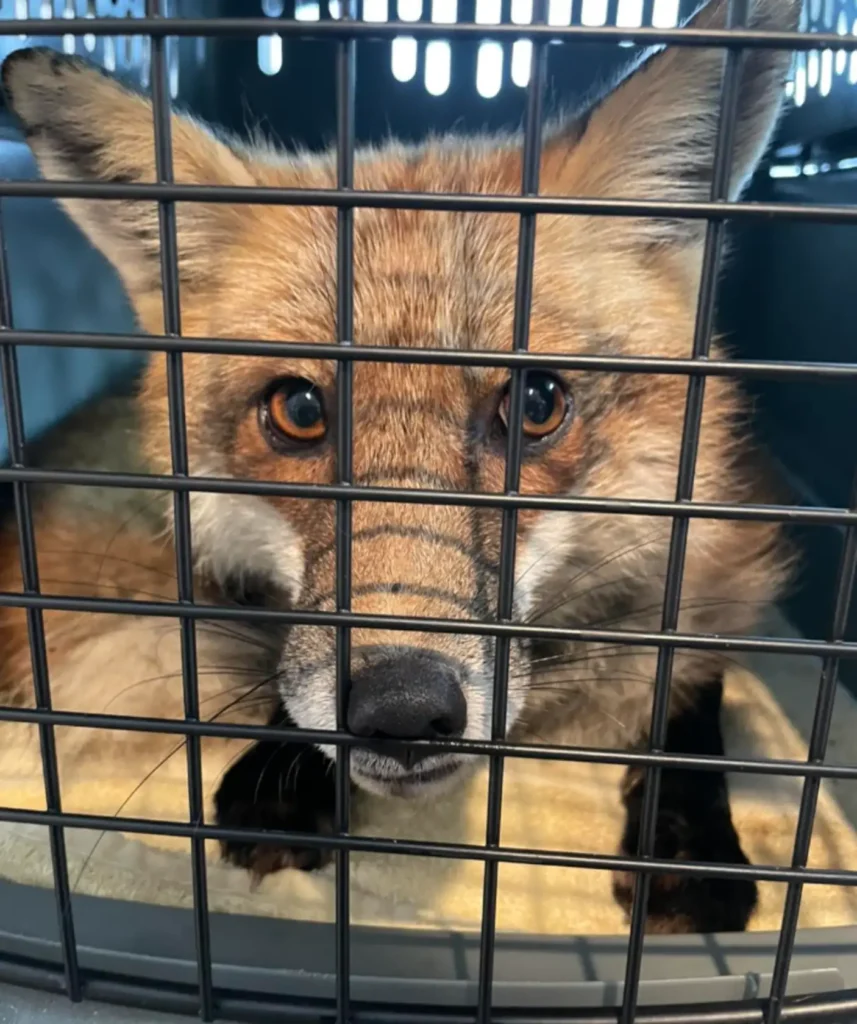
As a precaution, the staff also tested him for sarcoptic mange, a dangerous parasitic disease that can be fatal if untreated. Tubey’s test came back negative, and soon after waking from sedation, his stress levels noticeably dropped.
“Once he was fully awake, you could see he was much calmer,” Leyden said. “He was alert but relaxed — a huge improvement from when he first arrived.”
Leyden also emphasized how small preventative actions can protect wildlife: “Covering open drainage pipes and cutting up items like plastic rings before throwing them away can make a huge difference. We often see animals trapped or injured by things that could have been easily disposed of safely.”
Once Tubey was cleared for release, Julie brought him back to the same area where she had first spotted him. She opened the crate, and after a brief pause, Tubey sprinted back into the wild — free at last from the burden he’d carried for so long.