

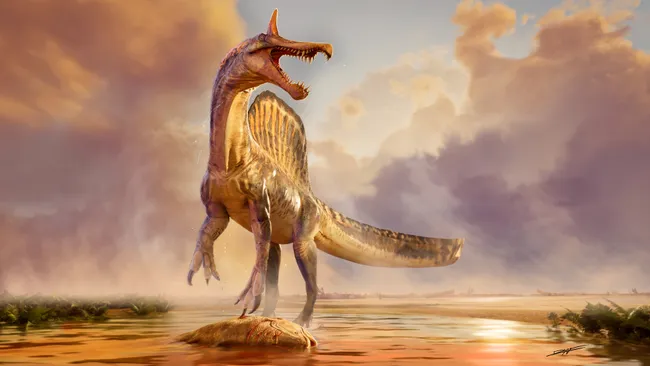
Researchers have identified a new Spinosaurus species with a blade-like crest in Niger, changing our understanding of dinosaur evolution and behavior.
About 95 million years ago, during the Cretaceous period, a striking predator roamed what is now Niger. According to a new study published in Science, this dinosaur — named Spinosaurus mirabilis — sported a tall, blade-like crest on its head and a massive sail rising from its back.
The name mirabilis means “astonishing,” and researchers say the fossil fully lives up to that description.
The remains were discovered in 2019 after a Tuareg guide led paleontologist Paul Sereno and his team to a remote site deep in the Sahara. The blackened color of the bones immediately stood out — a result of unusually high phosphate levels — something Sereno had never encountered in decades of fieldwork in the region.
A Crest Like No Other
At first, the team struggled to interpret some oddly shaped bones.
“We didn’t recognize the crest,” Sereno explained. “It was just so weird and asymmetrical.”
When researchers returned in 2022 and uncovered a skull fragment with part of the crest still attached, everything fell into place. CT scans revealed fossilized blood vessel impressions and a surface texture suggesting the crest was once covered in keratin — the same material found in horns and claws.
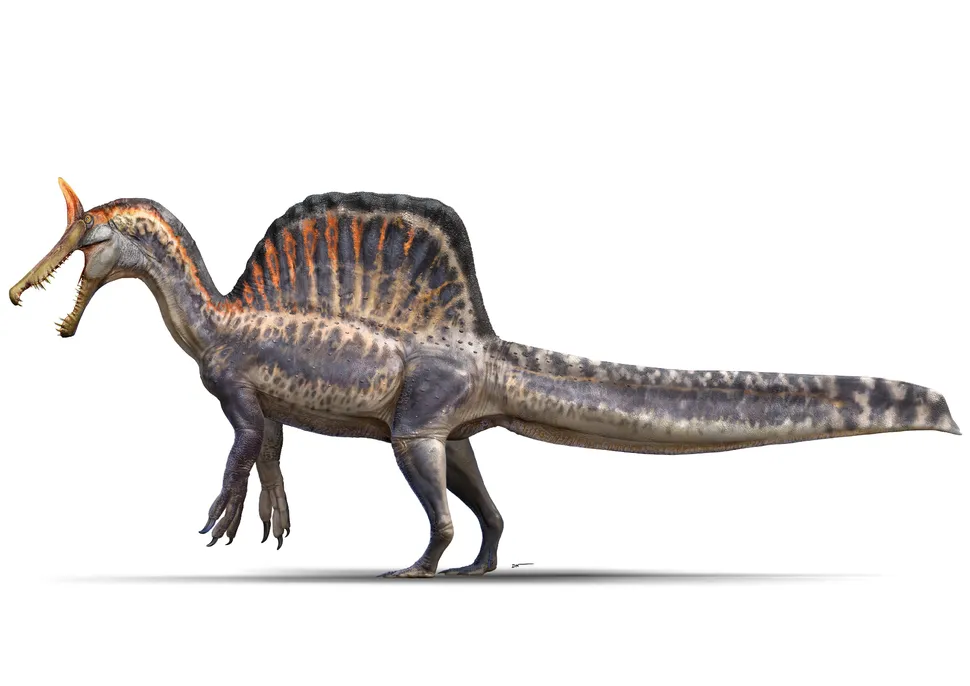
In life, the crest may have reached nearly 20 inches (0.5 meters) tall, making it the tallest known crest of any meat-eating dinosaur. Scientists believe it likely played a visual role — perhaps helping individuals identify mates or intimidate rivals along riverbanks.
River Hunter — Not Ocean Swimmer?
The discovery may also weigh in on a long-running scientific debate: Was Spinosaurus an underwater swimmer or more of a wading predator?
Some researchers have proposed that members of the Spinosaurus aegyptiacus lineage hunted like marine reptiles, chasing prey underwater. The long, narrow snout and interlocking fish-catching teeth of S. mirabilis certainly support a fish-heavy diet.
However, the fossil’s inland river location suggests a different lifestyle.
Sereno describes the animal as something akin to a “hell heron” — a predator that could wade confidently into water up to 6.5 feet (2 meters) deep but likely spent much of its time stalking fish in shallower waters.
The enormous sail on its back may have made full-time swimming impractical. The added surface area and weight would likely have reduced agility underwater, suggesting it was better suited for semi-aquatic life than deep diving.
Between Land and Water
In their study, researchers compared the dinosaur’s body proportions with modern animals. The analysis placed S. mirabilis somewhere between:
- Wading birds like herons
- Diving birds like penguins
In other words, it may have occupied a middle ground — comfortable in water, but not fully aquatic.
Science in Motion
The new fossil adds another layer to our understanding of Spinosaurus, a group already known for its unusual anatomy and ecological adaptations.
“It shows the process of science evaluating evidence and new evidence appearing,” Sereno noted.
As new discoveries emerge from ancient riverbeds and desert sands, our picture of this sail-backed predator continues to evolve — proving that even 95 million years later, Spinosaurus still has surprises left to reveal.