

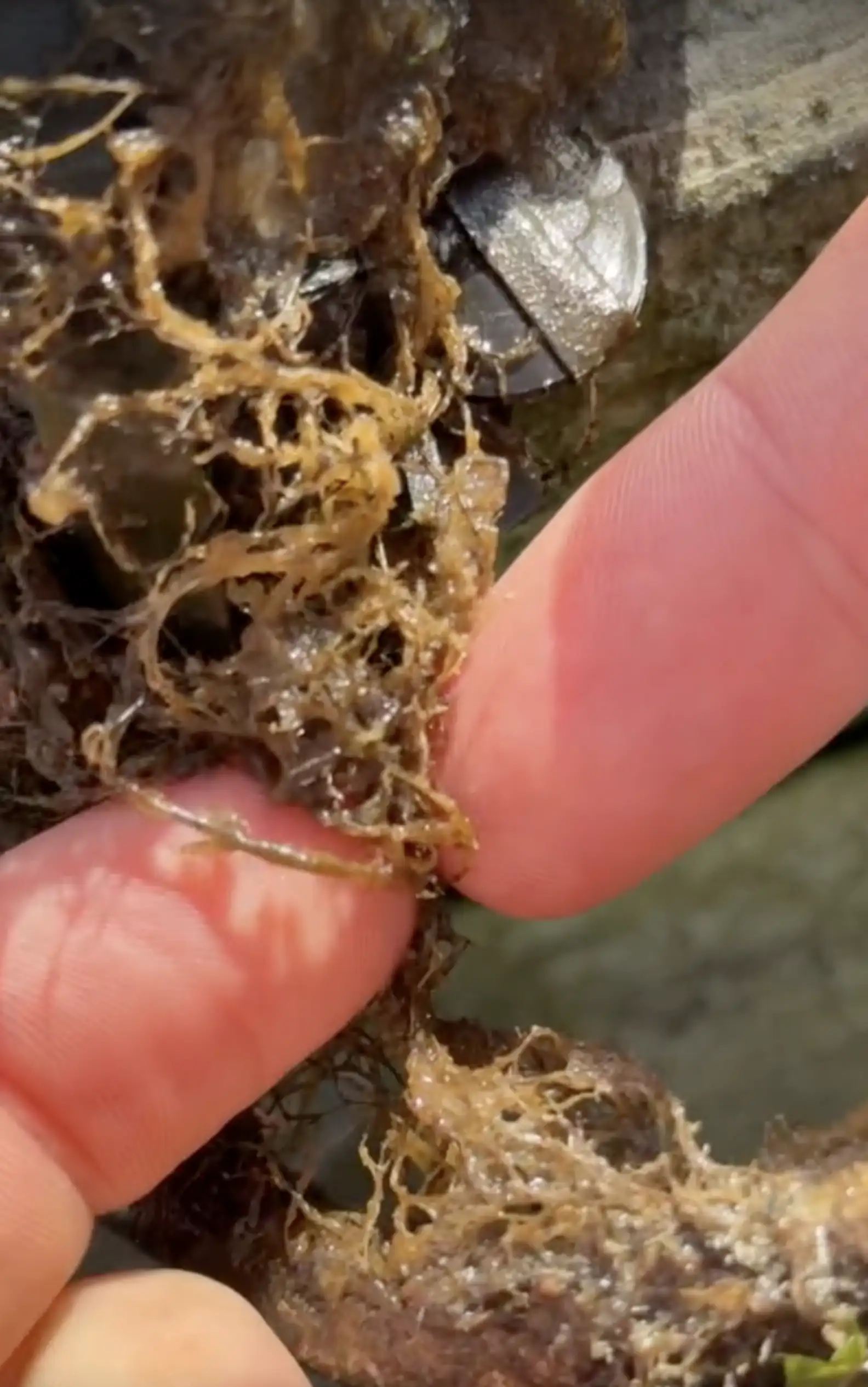
While birdwatching near the water in Semiahmoo, Britt Ballard and her husband stumbled upon a tiny marine creature that looked more like something from science fiction than the ocean.
As they walked along a dock, they noticed a buoy covered in what looked like brown seaweed or algae. Curious, Ballard’s husband picked it up to take a closer look.
That’s when they realized the buoy wasn’t just covered in seaweed — it was crawling with strange, insect-like animals.
A Tiny Creature With Long Limbs
At first glance, the creatures were difficult to spot because they blended perfectly with the seaweed around them.
When one of them crawled onto Ballard’s husband’s hand, they got a better look.
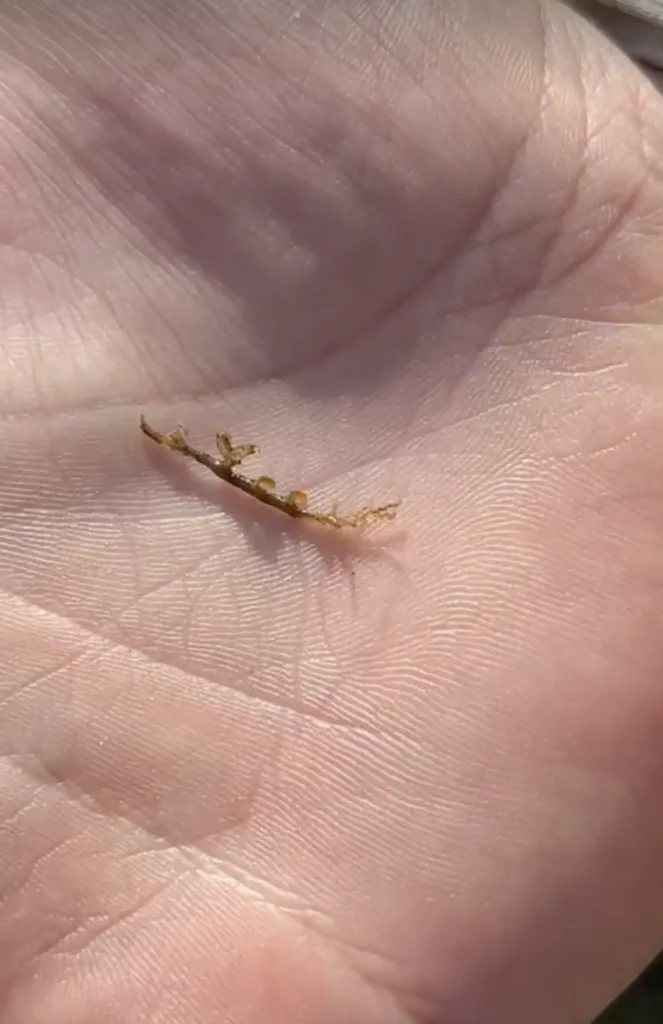
The tiny animal had a segmented body and moved like an inchworm, stretching and contracting as it crawled along his finger. It also had long, thin appendages that gave it a rather eerie appearance.
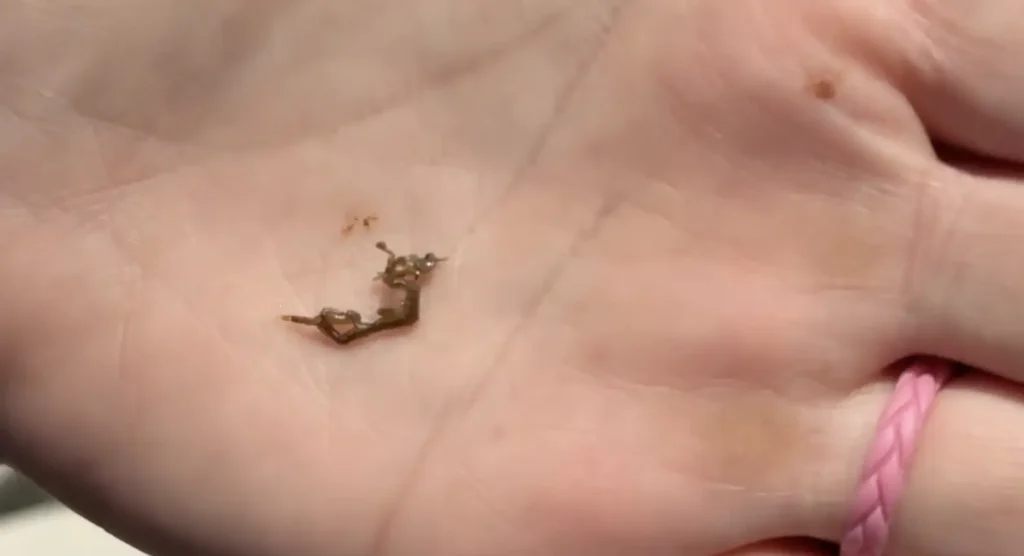
After some research using iNaturalist, Ballard identified the creature as a Japanese skeleton shrimp.
The “Praying Mantis of the Sea”
Japanese skeleton shrimp are small marine crustaceans native to the Sea of Japan.
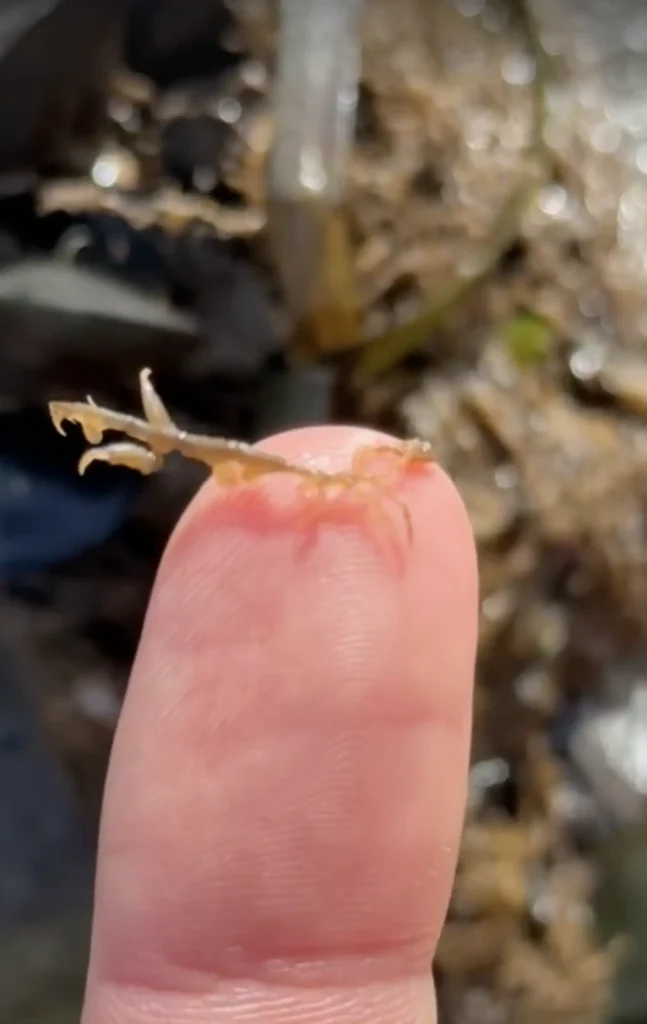
They’re sometimes called the “praying mantises of the sea” because of their appearance and hunting style. Like mantises, they use specialized front limbs to grab and capture prey.
Ballard noticed how skillfully the shrimp moved its front appendages as it explored the buoy and her husband’s hand.
At first the creature looked unsettling, but once she took a closer look, Ballard found it fascinating.
Masters of Camouflage
These shrimp typically live attached to seaweed, ropes, docks and other underwater surfaces.
Their thin bodies and long limbs help them blend seamlessly into algae and marine plants, making them difficult for predators to spot — and allowing them to ambush small prey.
An Invasive Species
Although the shrimp were interesting to observe, they’re not entirely welcome in North America.
Japanese skeleton shrimp are considered invasive, meaning they spread outside their native range and compete with local species.
They often:
- Grow larger than native skeleton shrimp
- Reproduce faster
- Outcompete local species for space and resources
Because native skeleton shrimp play important roles in marine ecosystems, the spread of this species can disrupt local food webs.
A Reminder of Hidden Ocean Life
Despite their invasive status, Ballard was amazed to discover such unusual creatures hiding in plain sight.
The experience reminded her how much life exists on everyday surfaces that most people never think to examine — from buoys and docks to strands of seaweed.
Sometimes, all it takes is a closer look to reveal a tiny underwater world that’s been there all along.