

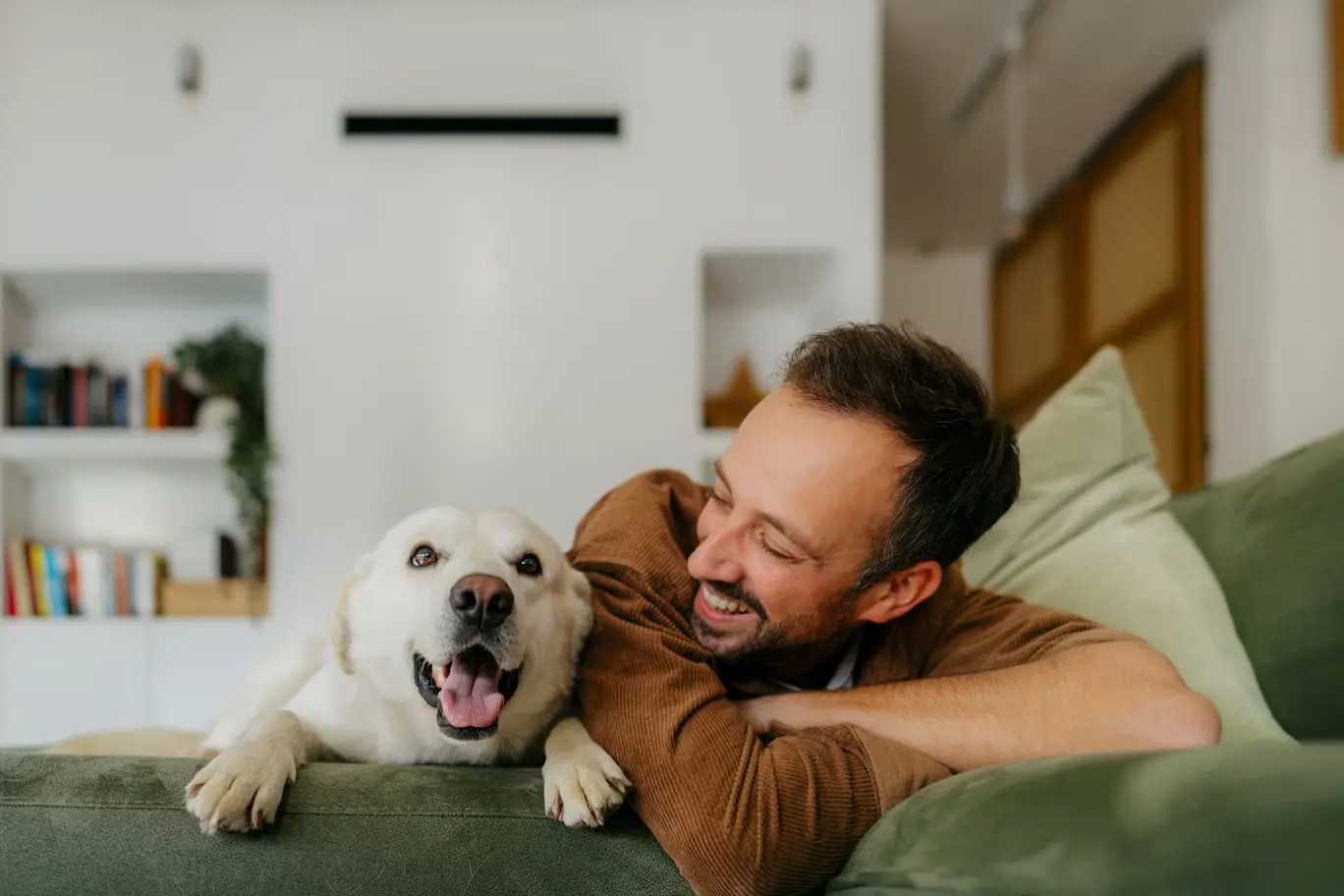
Nearly half of U.S. households share their homes with a dog, and most owners consider their pets true family members — not just companions. In fact, about half of Americans say pets belong in the family “as much as a human member.” The booming pet economy reflects that devotion, generating jobs for veterinarians, trainers, groomers and even pet influencers. Veterinary schools, meanwhile, struggle to meet growing demand.
Legal expert Mark Cushing has called this shift “the pet revolution.” In his 2020 book Pet Nation, he argues that as the internet reshaped social life and intensified loneliness, people increasingly turned to pets to fill emotional gaps once occupied by human relationships.
But there may be something deeper at work — especially since the COVID-19 lockdowns.
Dogs As Refuge In A Fractured Society
In Rescue Me, philosopher Margret Grebowicz suggests that contemporary dog culture reflects not just loneliness, but broader dissatisfaction with society. Rather than simply substituting for people, dogs may offer relationships that feel easier, steadier and more rewarding than human ones.
During pandemic lockdowns, many people reported tension from being confined with partners, children or roommates. Yet relationships with dogs often seemed to thrive. Shelter adoptions surged. Social media filled with posts celebrating pets, alongside hashtags like #DogsAreBetterThanPeople and #IPreferDogsToPeople.
A 2025 study even found that many dog owners rated their pets more highly than close human relationships in areas like emotional support and companionship — and reported fewer negative interactions with their dogs than with partners or relatives.
Dogs have shared human lives for as long as 40,000 years. Their deep evolutionary history alongside us may explain why bonds with them feel so natural and seamless.
The “Friendship Recession”
This devotion to dogs has grown alongside declining social trust in the United States. In 1972, nearly half of Americans said most people could be trusted. By 2018, that number had fallen significantly. Many report seeing friends less often, avoiding conversations with strangers and spending more time at home — trends sometimes described as a “friendship recession.”
Millennials now represent the largest share of pet owners. Some commentators suggest that as traditional milestones like homeownership or parenthood become harder to achieve — or less desirable — pets have taken on new significance. According to a Harris Poll survey, a notable portion of Americans would prefer a pet to having a child.
For many, dogs provide comfort, routine, affection and a sense of purpose. Research suggests interacting with pets can reduce stress, improve well-being and even support cognitive health. Programs pairing incarcerated individuals with shelter dogs have also been linked to lower recidivism rates.
When Love Becomes Extractive
Still, Grebowicz warns that unrealistic expectations can create unhealthy dynamics.
When people rely on dogs to supply emotional fulfillment that society no longer provides, the relationship risks becoming “extractive” — a term borrowed from environmental philosophy. In this sense, dogs are expected to perform emotional labor, compensating for social breakdown.
This can have consequences. Veterinarians report concern about the “fur baby” phenomenon, in which pets are treated as human children, sometimes leading to unnecessary medical procedures. Dogs left alone for long hours may experience boredom and chronic stress. And as pet ownership rises, so do surrender rates, contributing to shelter overcrowding.
Cultural theorist Lauren Berlant described modern life under late capitalism as a form of “slow death,” where maintaining daily survival becomes exhausting and self-eroding. In that environment, turning to pets for stability and affection can feel like relief — but it may not address the root causes of social strain.
Rethinking Life With Dogs
Some activists go so far as to argue for pet abolition, claiming that owning animals as property is ethically problematic. Yet that argument is difficult to reconcile with dogs’ unique place in human history. As the first domesticated species, dogs have evolved alongside us for tens of thousands of years. Some researchers even suggest that dogs helped shape human evolution itself.
Rather than eliminating companion animals, perhaps the deeper challenge lies in reshaping society so that both humans and dogs can thrive. Accessible health care, reasonable work expectations, stronger communities and better support systems would benefit people — and, by extension, their pets.
A society that nurtures human flourishing would likely foster healthier relationships with animals as well.
But building that world would require more than loving dogs. It would mean repairing the social fabric that makes their companionship feel indispensable in the first place.