
It kept getting tighter and tighter 😰
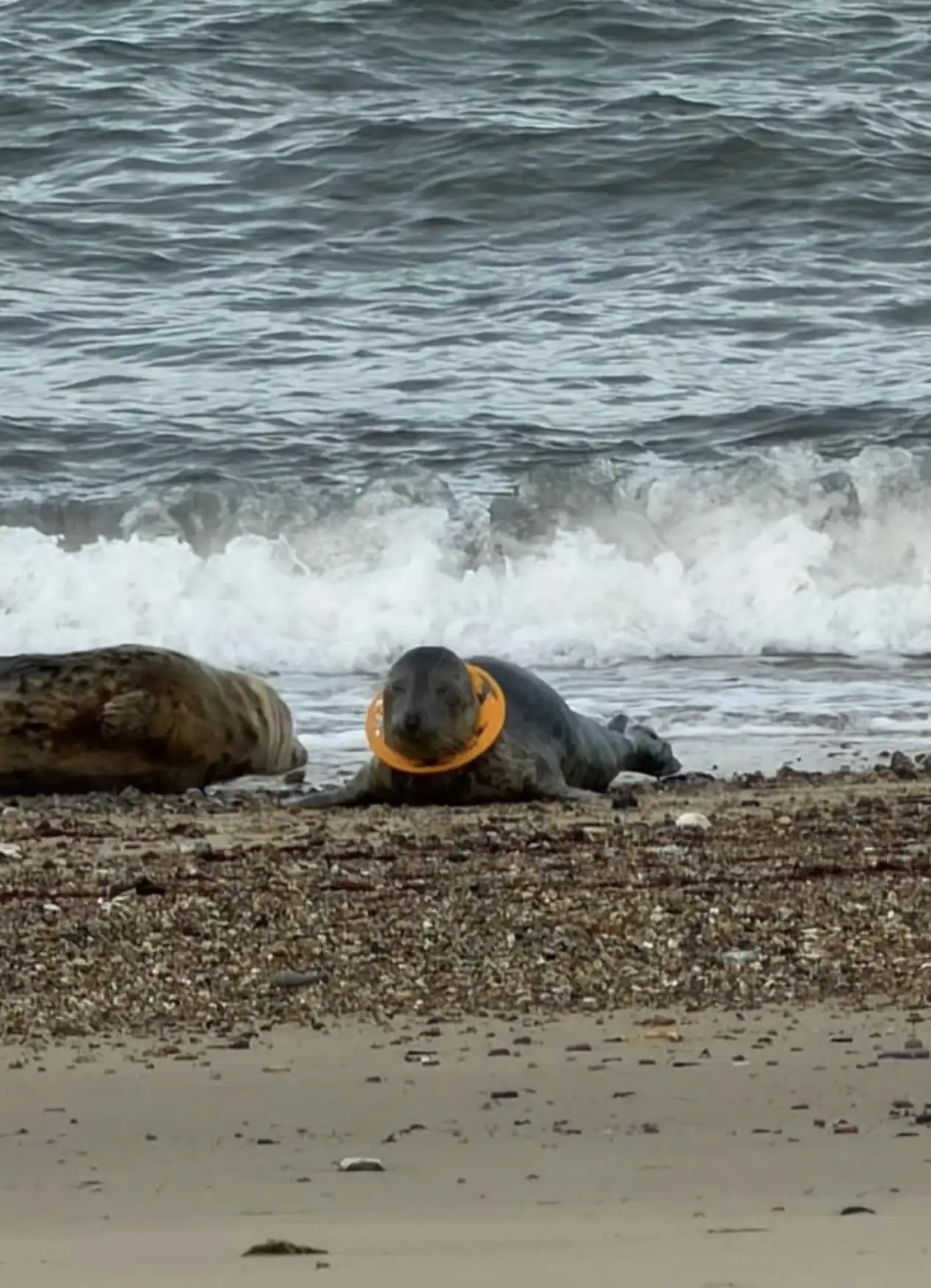
For weeks, volunteers along England’s Norfolk coast watched helplessly as a young grey seal struggled with a bright orange plastic ring trapped around her neck.
The seal had become entangled in a flying ring, a type of Frisbee-like toy. As she continued growing, the plastic tightened around her neck, leaving rescuers increasingly worried about her survival.
They knew she needed help.
But every time they tried to reach her, the frightened animal disappeared into the water or moved somewhere they couldn’t safely approach.
The volunteers refused to give up.
And when the perfect opportunity finally arrived, they moved quickly to save the seal they had affectionately nicknamed Orange Frisbee Seal.
What followed was an emotional journey involving an urgent rescue, weeks of medical treatment, and an unforgettable return to the ocean.
Volunteers Spot Young Seal With Bright Orange Ring Around Her Neck
The rescue effort began when volunteers from Friends of Horsey Seals Charity noticed an unusual sight among the seals living along Norfolk’s coastline.
A young grey seal had a bright orange plastic ring wrapped around her neck.
At first glance, the object might have looked like a strange collar.
But the volunteers recognized it as a dangerous piece of plastic litter.
The circular toy had become stuck around the animal’s neck, creating a potentially life-threatening situation.
The problem was particularly serious because the seal was still growing.
As her body became larger, the rigid plastic ring would not expand with her.
Instead, it would press more tightly against her neck, potentially causing painful wounds and increasing the risk of serious injury.
The volunteers knew the animal needed veterinary attention as soon as possible.
But rescuing her would prove far more difficult than they expected.
Seal Keeps Escaping Every Rescue Attempt
The charity’s volunteers began monitoring the seal closely, hoping to find a safe opportunity to approach her.
They gave her the temporary nickname Orange Frisbee Seal because of the unmistakable object around her neck.
Over the following weeks, the animal appeared repeatedly along the shore.
But whenever rescuers received reports of her location, she managed to remain just beyond their reach.
Sometimes, she slipped back into the sea before volunteers could arrive.
On other occasions, she rested among groups of pregnant seals.
The rescue team refused to disturb those animals, knowing that an attempted capture could create unnecessary stress.
The situation became increasingly frustrating.
The volunteers could see that the young seal needed help, but approaching her at the wrong moment could put both the rescuers and nearby wildlife at risk.
Meanwhile, the plastic ring remained wrapped around her neck.
With every passing day, the team became more determined to bring her to safety.
A Rare Opportunity Finally Gives Rescuers Their Chance
After weeks of unsuccessful attempts, the volunteers received the news they had been hoping for.
Someone had spotted Orange Frisbee Seal resting alone on the shore.
Unlike previous sightings, she was away from other seals and in a location where rescuers could approach without disturbing a larger group.
The volunteers immediately headed toward her.
They knew the opportunity might not last long.
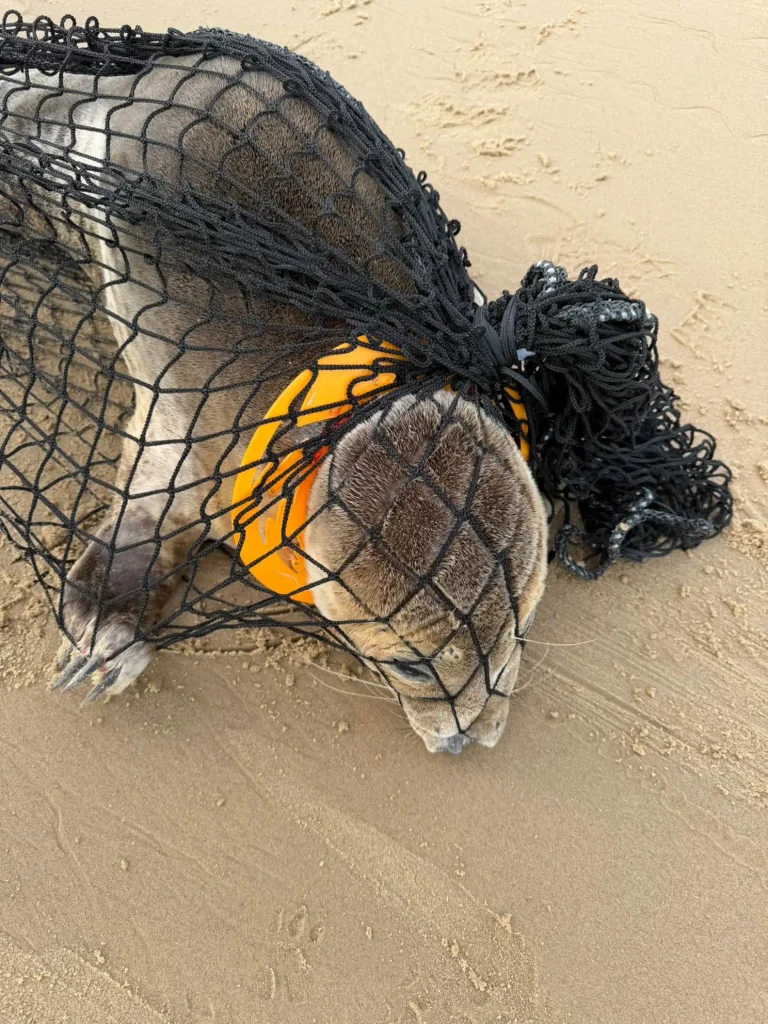
Within minutes of arriving, the team successfully captured the injured animal.
After so many frustrating encounters, the rescue was a huge relief.
The seal was finally in safe hands.
The team gave her a proper name: Monsoon.
But although the most difficult part of finding and capturing her was over, Monsoon still faced a serious medical challenge.
The plastic ring had already caused considerable damage to her neck.
Injured Seal Arrives at Wildlife Hospital for Emergency Care
Following her rescue, Monsoon was transported to the RSPCA East Winch Wildlife Centre in Norfolk.
The center specializes in caring for injured and sick wildlife, including seals affected by entanglement and other human-related hazards.
Veterinary staff carefully removed the plastic flying ring from Monsoon’s neck.
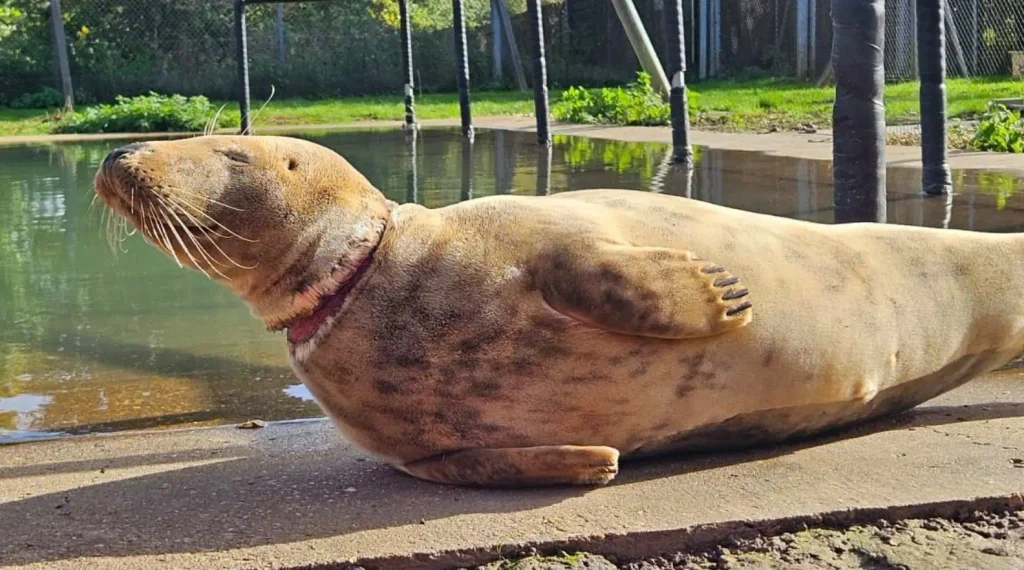
Unfortunately, the object had left a deep wound around her neck.
The injury required careful monitoring and ongoing medical treatment.
Monsoon was not the only seal at the center suffering from this type of problem.
Two other seals, named Doughnut and Marine Litter, were also receiving treatment for serious neck injuries caused by discarded items.
The three animals had become trapped in different materials: a flying ring, a shopping bag, and fishing-related litter.
Although the objects were different, the consequences were painfully similar.
Each seal had suffered an injury caused by human waste entering the marine environment.
Monsoon Begins Long Recovery After Plastic Ring Is Removed
Once the ring was removed, Monsoon began her recovery at the wildlife hospital.
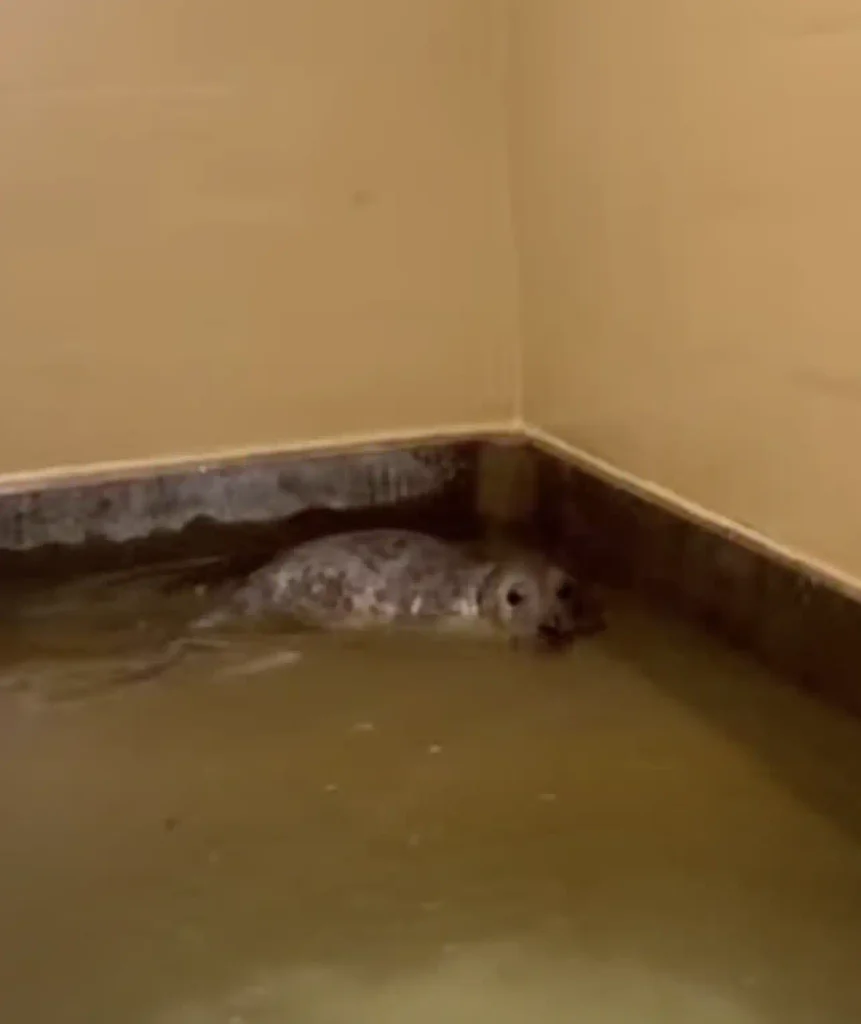
She was placed in an individual quarantine enclosure where staff could monitor her condition and provide regular care.
Her treatment included antibiotics and anti-inflammatory medication.
Veterinary staff examined her neck wound every day, checking for signs of infection and monitoring the healing process.
The young seal had already endured weeks with the plastic ring around her neck.
Now, she finally had the chance to heal without the object causing further damage.
The veterinary team remained hopeful that she would make a full recovery.
And Monsoon soon began showing encouraging signs of improvement.
As the days passed, her injury gradually healed.
After 20 days in indoor quarantine, she was well enough to move into a larger outdoor enclosure.
It was an important step toward her eventual return to the wild.
Seal Moves Into Outdoor Pool to Rebuild Her Strength
The transition to an outdoor pool marked a major milestone in Monsoon’s recovery.
After spending weeks receiving treatment indoors, she was finally healthy enough to begin rebuilding her swimming strength.
The larger pool gave her more space to move, exercise, and regain the physical condition she would need in the ocean.
The RSPCA East Winch team continued monitoring her progress.
Her neck wound was healing well, and her overall condition was improving.
For rescuers who had spent weeks trying to reach her on the beach, the updates were especially encouraging.
Monsoon had gone from being an elusive, injured seal with a dangerous ring around her neck to a recovering patient preparing for life in the wild.
And she was progressing faster than her rescuers had expected.
Within approximately one month of being captured, the young seal had recovered enough to be considered ready for release.
Monsoon Finally Returns to the Ocean on November 10
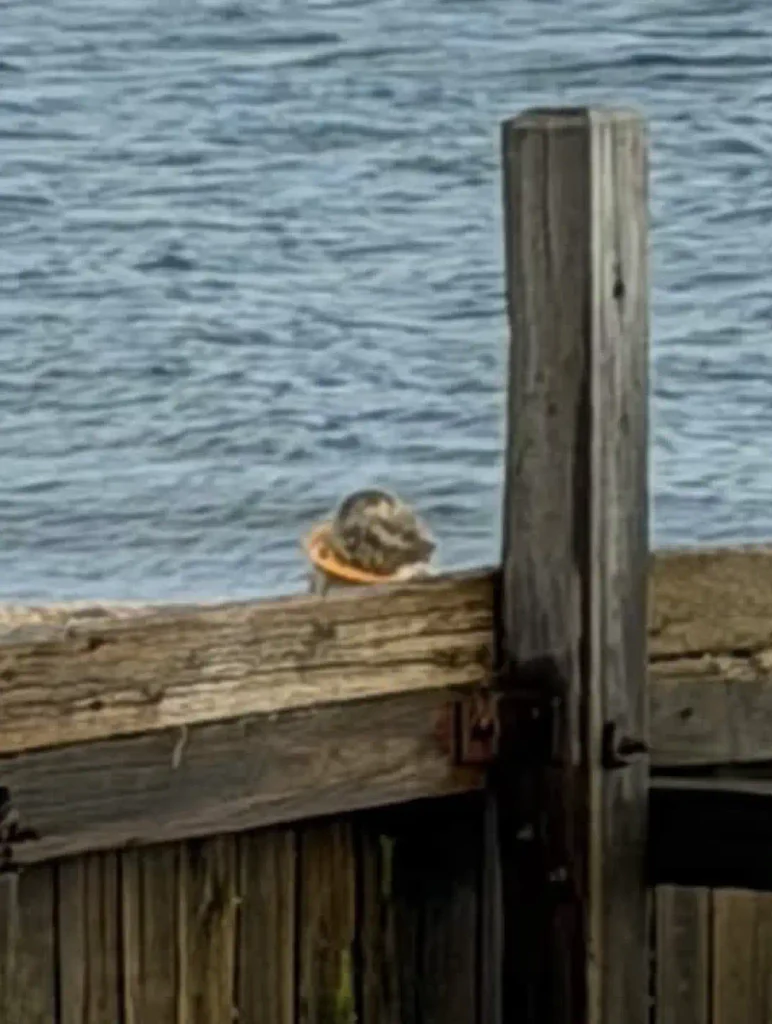
On November 10, 2026, the moment everyone had been waiting for finally arrived.
The RSPCA East Winch team transported Monsoon back to Horsey on England’s east coast.
After weeks of treatment and rehabilitation, she was about to return to her natural habitat.
Her rescuers watched as she approached the shoreline.
At first, Monsoon appeared slightly hesitant.
She paused near the water and briefly looked back.
Then, she continued forward.
The young seal made her way into the sea, returning to the place where she belonged.
For the volunteers who had monitored her for weeks, the moment was deeply rewarding.
They had spent so much time searching for a safe opportunity to capture her.
Now, they were finally watching her swim free.
The release marked the successful conclusion of a rescue effort that had required patience, cooperation, and specialized veterinary care.
You can watch Monsoon’s release in the official video shared by Friends of Horsey Seals Charity.
Seal Rescue Highlights the Dangers of Plastic Litter
Monsoon’s experience is a powerful reminder of the dangers that discarded plastic poses to marine animals.
Flying rings, fishing equipment, plastic bags, and other circular objects can become trapped around seals’ necks.
Young animals are particularly vulnerable because they continue growing after becoming entangled.
An object that initially fits loosely can become increasingly restrictive, causing deep wounds and other potentially serious complications.
Without intervention, severe entanglement injuries can threaten an animal’s survival.
The three seals treated at RSPCA East Winch demonstrate how different types of discarded materials can create similar problems.
Monsoon became trapped in a flying ring.
Doughnut and Marine Litter suffered injuries involving other forms of waste.
Their cases underscore the importance of keeping plastic and discarded fishing materials out of coastal and marine environments.
Wildlife Volunteers Continue Fighting to Protect Norfolk’s Seals
Although Monsoon has returned to the sea, the work of her rescuers continues.
Friends of Horsey Seals Charity monitors the local seal population and responds to reports of animals that may need assistance.
The organization also works to raise awareness about the risks posed by marine litter.
The RSPCA East Winch Wildlife Centre continues providing medical care and rehabilitation for injured wildlife.
Together, their efforts helped give Monsoon another chance at life in the ocean.
The volunteers hope that sharing stories like hers will encourage people to dispose of plastic responsibly and take greater care around coastal habitats.
For anyone who encounters an entangled seal, attempting to remove the object without appropriate training can be dangerous.
Seals are powerful wild animals, and rescue attempts should be left to experienced wildlife professionals.
Reporting an injured or entangled animal to an appropriate wildlife rescue organization is the safest way to help.
From Dangerous Entanglement to a Second Chance at Freedom
Monsoon’s journey began with a frightening discovery.
A young seal had become trapped in a bright orange plastic ring, and the object was cutting into her neck as she grew.
For weeks, rescuers searched for a safe opportunity to intervene.
When that opportunity finally came, they acted quickly.
Monsoon received medical treatment, spent 20 days in indoor quarantine, and gradually regained her strength in an outdoor pool.
Then, on November 10, she returned to the sea.
Her rescue was a reminder of how much dedication it can take to save an injured wild animal.
It also showed the difference that cooperation between volunteers and professional wildlife caregivers can make.
After weeks with a dangerous plastic ring around her neck, Monsoon finally returned to the ocean — free, healed, and ready for a new beginning.