
“We were keen to get the little one to safety as soon as possible.”
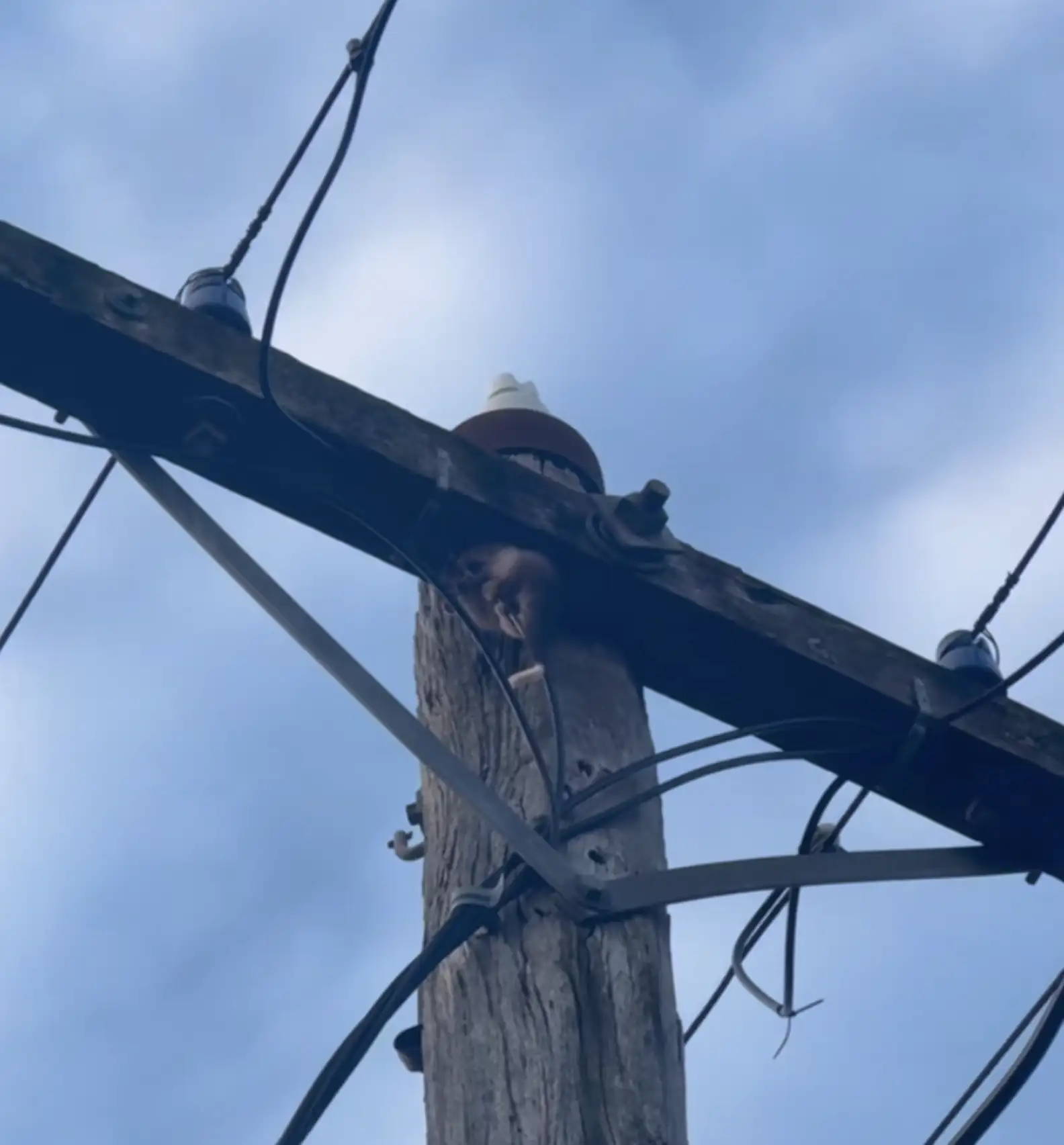
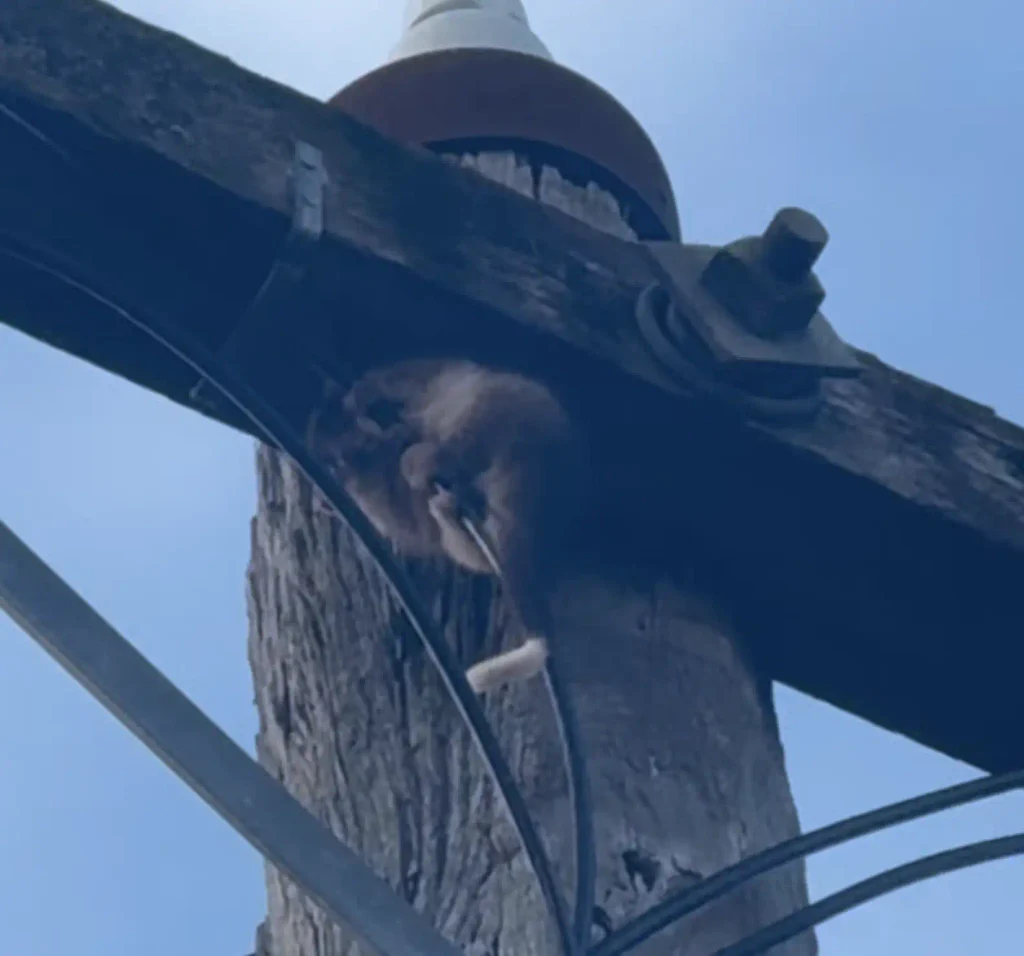
High above the streets of Boronia, Australia, a tiny animal was clinging desperately to a power line, far from the safety of the trees where he belonged.
From a distance, the little creature looked like nothing more than a fluffy ball of fur. But when a concerned resident took a closer look, they realized something was terribly wrong.
The animal was a baby brushtail possum, separated from his mother and stranded in a dangerously exposed position.
With nightfall approaching and electrical infrastructure surrounding him, the young marsupial needed help.
Fortunately, someone noticed him before it was too late.
What followed was a remarkable rescue involving wildlife specialists, an electricity company, and a team of compassionate caregivers determined to give the vulnerable youngster another chance.
A Strange Ball of Fur Catches Someone’s Attention
The unusual discovery happened in Boronia, a suburb of Melbourne in the Australian state of Victoria.
A local resident was passing through the area when something high above the ground caught their attention.
Perched along a power line was a small, furry creature.
At first glance, it was difficult to understand what the animal was doing there.
But as the resident observed more closely, the situation became increasingly concerning.
The little creature was a young brushtail possum who had somehow become separated from his mother.
Instead of resting safely in a tree or traveling alongside an adult, he was clinging to electrical infrastructure with no obvious way to reach safety.
His tiny body looked particularly vulnerable against the surrounding wires.
The resident understood that attempting to retrieve him without professional assistance would be dangerous.
Rather than risk making the situation worse, they contacted Vets for Compassion, an Australian animal welfare organization experienced in responding to wildlife emergencies.
Then they remained nearby, keeping an eye on the stranded youngster until help arrived.
A Baby Possum Faces a Dangerous Situation
Brushtail possums are among Australia’s most familiar native mammals.
They are excellent climbers, equipped with sharp claws and strong gripping abilities that help them move through trees and other elevated structures.
But even these impressive adaptations cannot make electrical power lines safe.
Young possums are particularly vulnerable because they are still developing the skills needed to survive independently.
During their early lives, brushtail possums depend heavily on their mothers for protection and nourishment.
As they grow, they gradually begin exploring their surroundings and learning how to find food, move between trees, and recognize potential dangers.
They typically become independent when they are around eight or nine months old.
For the little possum in Boronia, being separated from his mother meant facing an unfamiliar environment without that essential support.
His position on the power line added another layer of danger.
Electrical infrastructure can pose serious risks to wildlife, while attempting to escape from a height could expose a small animal to a potentially dangerous fall.
The situation required a careful rescue by people with appropriate training and equipment.
And with daylight fading, there was increasing urgency to bring him down safely.
Wildlife Rescuers Call in Special Equipment
When the team from Vets for Compassion responded, they recognized that reaching the young possum would require more than ordinary wildlife rescue equipment.
He was positioned too high for rescuers to approach safely from the ground.
Working around electrical lines also presented hazards that required professional assistance.
The rescue team coordinated with AusNet, the local electricity network business, to arrange a safe way to reach him.
With the company’s help, a cherry picker truck was brought to the scene.
The elevated work platform allowed the rescuers to reach the stranded possum without attempting to climb the electrical structure themselves.
As the team approached, their priority was ensuring that the tiny animal could be removed without causing additional distress or injury.
The youngster had already endured an uncertain ordeal.
Now, finally, help was within reach.
The Tiny Possum Is Finally Brought to Safety
Using the elevated platform, the rescue team carefully reached the young brushtail possum.
They gently removed him from his dangerous position on the power line.
The little animal was finally off the electrical structure and safely in human care.
For the rescuers, it was an enormous relief.
With darkness approaching, they had been determined to get him out of danger before conditions became more challenging.
But the rescue wasn’t finished simply because the possum was back on the ground.
He was still a vulnerable youngster who had been separated from his mother.
Without appropriate support, he might struggle to survive independently.
The team therefore arranged for him to be transported into specialized wildlife care.
There, he could receive further assessment and the attention needed to grow stronger.
His journey from a dangerous power line to a safe rehabilitation environment marked the beginning of a hopeful new chapter.
A Wildlife Shelter Welcomes Its Newest Little Resident
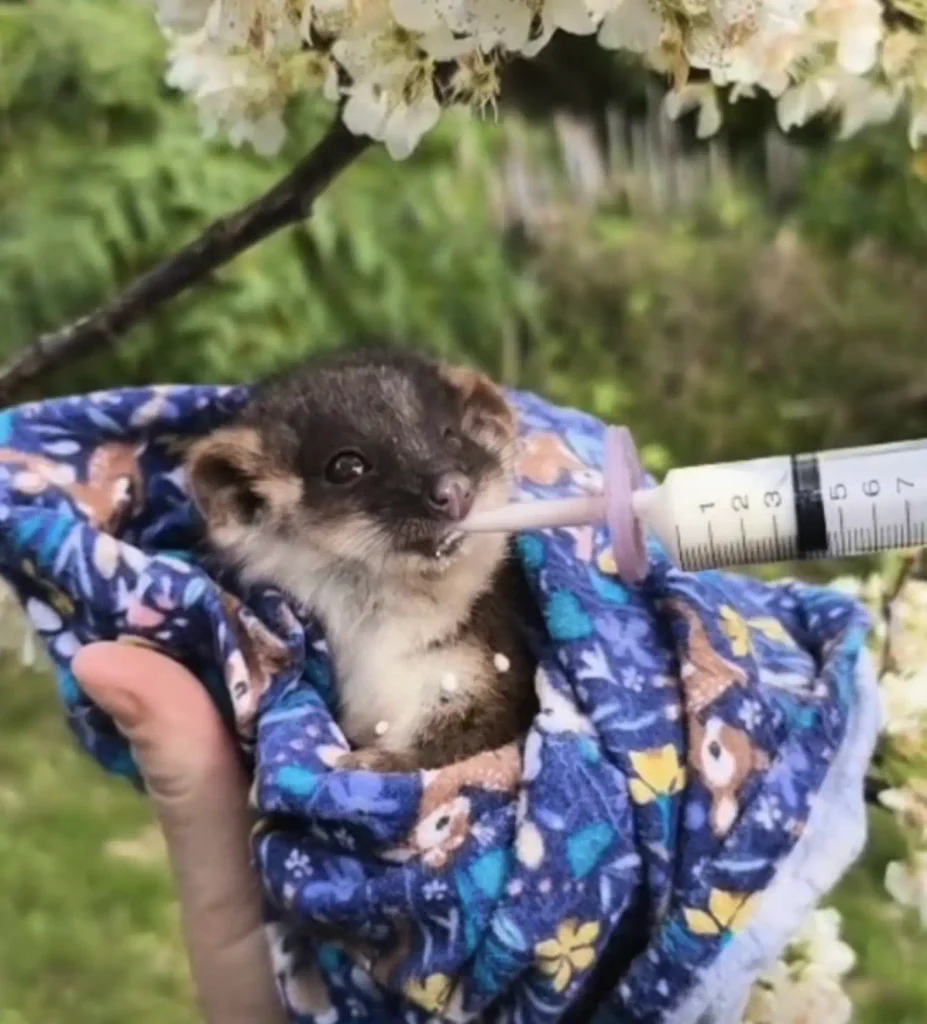
Following the rescue, the baby possum was placed in the care of wildlife rehabilitator Emma Sullivan at Wattle Wildlife Shelter.
The organization provides specialized care for vulnerable Australian wildlife, including orphaned and injured marsupials.
For young possums, rehabilitation involves much more than simply providing a safe place to sleep.
They need appropriate nourishment, careful monitoring, and opportunities to develop the natural behaviors they will eventually depend upon in the wild.
The good news was that the little possum would not have to make that journey alone.
At the shelter, he joined a group of other young possums receiving care.
Instead of spending his days clinging to an exposed power line, he could now grow and develop in a protected environment alongside animals of a similar age.
For a youngster who had suddenly found himself without his mother, the change was significant.
The rehabilitation team reported that he was becoming stronger and more confident.
It was an encouraging development for everyone involved in bringing him to safety.
Growing Stronger With Other Orphaned Possums
One of the most heartwarming parts of the little possum’s recovery is that he has other young possums around him.
Under the supervision of experienced wildlife carers, these animals can develop the skills they need while preparing for eventual independence.
Brushtail possums spend much of their natural lives climbing, exploring, and searching for food.
Their strong limbs and gripping tails allow them to travel through trees, while their keen senses help them navigate during the night.
For young animals, gaining confidence in these behaviors is an important part of growing up.
At Wattle Wildlife Shelter, the rescued youngster has the opportunity to mature in an environment designed around the needs of native wildlife.
His progress is encouraging, but his caregivers are not rushing the process.
The goal is to ensure that he is ready to survive independently before returning him to a suitable natural habitat.
At the time of the rescue update, he had not yet been released.
For now, his future is focused on growing, learning, and becoming the healthy young possum his rescuers hope to see return to the wild.
Why Brushtail Possums Matter to Australia’s Ecosystems
Although brushtail possums are commonly seen in Australian suburbs, they play important roles in the country’s natural environment.
These nocturnal marsupials feed on a variety of plant materials, including leaves, flowers, fruit, and shoots.
As they move through trees and feed on blossoms, pollen can become attached to their fur and be transferred between plants.
Their feeding activities also contribute to nutrient cycling within forest ecosystems.
And because brushtail possums are part of Australia’s natural food webs, they provide food for native predators such as powerful owls and pythons.
Despite their ability to adapt to suburban environments, living close to people presents additional challenges.
Roads, domestic animals, reduced tree cover, and electrical infrastructure can all create hazards.
Young animals that become separated from their mothers may be particularly vulnerable.
This is why dedicated wildlife rescue organizations and rehabilitation shelters are so valuable.
Their work helps give injured and orphaned animals a chance to return to their natural environments when they are ready.
What to Do if You Spot Wildlife Near Power Lines
The little possum’s story also carries an important message about responding safely to wildlife emergencies.
If an animal is stranded on or near electrical infrastructure, members of the public should never attempt to climb the pole, touch the wires, or retrieve the animal themselves.
Even equipment that appears inactive can be extremely dangerous.
The safest approach is to keep a safe distance and contact the local electricity network operator and an appropriate wildlife rescue organization.
Trained professionals can assess the situation and determine how to assist without placing people or animals at additional risk.
In Boronia, cooperation between the concerned resident, Vets for Compassion, and AusNet made the successful rescue possible.
Each played an important role.
The resident noticed the animal and called for help.
The electricity company provided the specialized access equipment.
And the wildlife rescuers ensured the young possum reached professional care.
Together, they turned a dangerous situation into a hopeful outcome.
A Tiny Life Gets a Second Chance
When the little brushtail possum was first discovered, he was alone high above the ground, gripping a power line with no mother nearby to protect him.
His future was uncertain.
But one person’s decision to stop and pay attention changed everything.
Thanks to that concerned resident and the professionals who responded, the youngster was brought safely down and given the chance to recover.
Today, he is receiving care at Wattle Wildlife Shelter, where he is growing stronger alongside other young possums.
His journey is not over yet.
He still needs time to develop the confidence and survival skills necessary for life outside the shelter.
But his rescuers have given him something invaluable: the opportunity to grow up safely and eventually return to the wild.
What began as the sight of a tiny ball of fur clinging to a power line has become a beautiful example of how people can work together to protect wildlife.
He may have been just one small possum in a big and busy world. But to the people who stopped to help him, his life mattered — and now he has the chance to live the wild, wonderful life he was meant to have.