

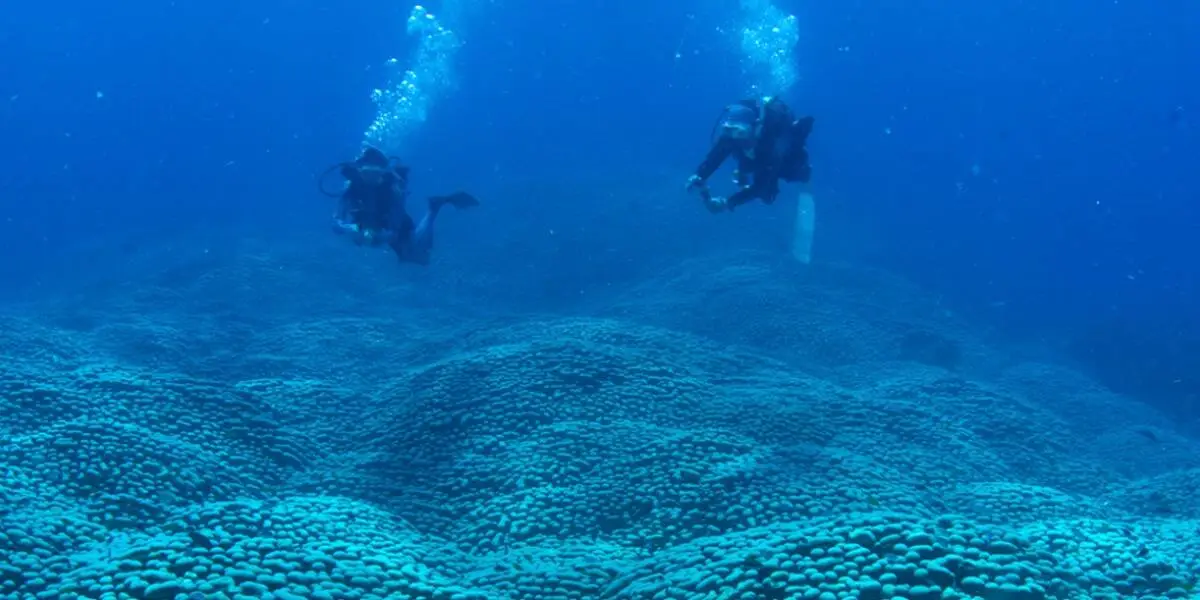
They couldn’t believe their eyes …
For the past few years, Jan Pope and her daughter, Sophie Kalkowski-Pope, have volunteered with the Great Reef Census — a community science initiative led by Citizens of the Reef. The project encourages everyday divers to help document sections of the Great Barrier Reef that scientists haven’t fully surveyed.
Stretching roughly 130,000 square miles — about half the size of Texas — the Great Barrier Reef is so vast that large areas remain underexplored.
An Unexpected Discovery
Late last year, Jan was diving in a relatively uncharted area of the reef when something extraordinary caught her eye.
Surrounding her was a coral formation so massive it seemed to stretch endlessly in every direction. She had never seen anything like it.
After telling Sophie about the encounter, the pair returned two weeks later to properly document the site.
“We knew as soon as we explored this site it was something incredibly special,” Sophie later shared on TikTok.
They captured extensive photos and video, though even their footage struggled to convey the true scale. When they submitted their findings to Citizens of the Reef, marine experts conducted further analysis.
The result was astonishing.
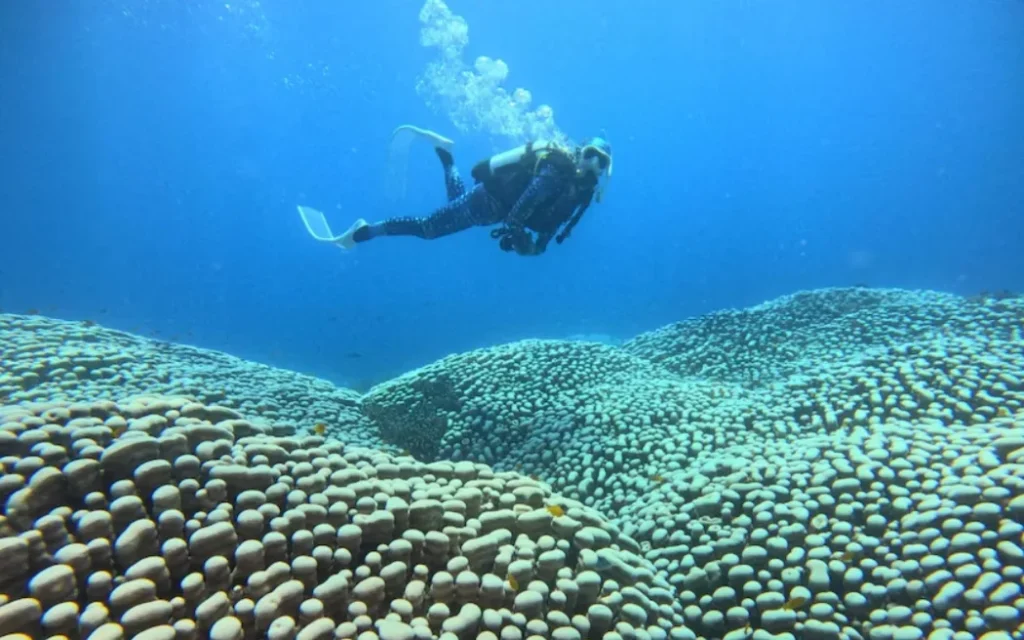
Jan and Sophie had identified the largest documented coral colony on the Great Barrier Reef — and possibly the largest coral colony ever recorded anywhere in the world.
A Giant Built From a Single Polyp
The coral colony measures more than 40,000 square feet and is believed to have grown from a single original polyp. It belongs to the species Pavona clavus, known for forming enormous, durable colonies.
Though they resemble underwater plants or rocks, corals are actually animals. They are invertebrates that use tiny tentacles to capture food and build protective limestone skeletons. Thousands of individual polyps work together as one living structure, forming a single interconnected organism.
A Sign of Hope for the Reef
Coral reefs worldwide face serious threats from rising ocean temperatures, which can trigger coral bleaching — a dangerous stress response that can lead to widespread die-offs.
That’s why this discovery is so meaningful.
It demonstrates that, despite environmental challenges, large and resilient coral colonies are still thriving in parts of the reef.
For Sophie, the moment was about more than science.
“It was so special to share this with my mom,” she wrote. “It just shows how everyday people can make a difference when given the chance.”
Their find highlights the power of community science — and the importance of continuing to protect one of Earth’s most extraordinary ecosystems.