

“Our rehabilitator feared the worst …”
Last September, the team at Raven Ridge Wildlife Center (RRWC) received an unexpected call from a woman named Brittany and her father, Ken. The pair had been watching a bald eagle around their neighborhood, and something about his behavior didn’t sit right with them.
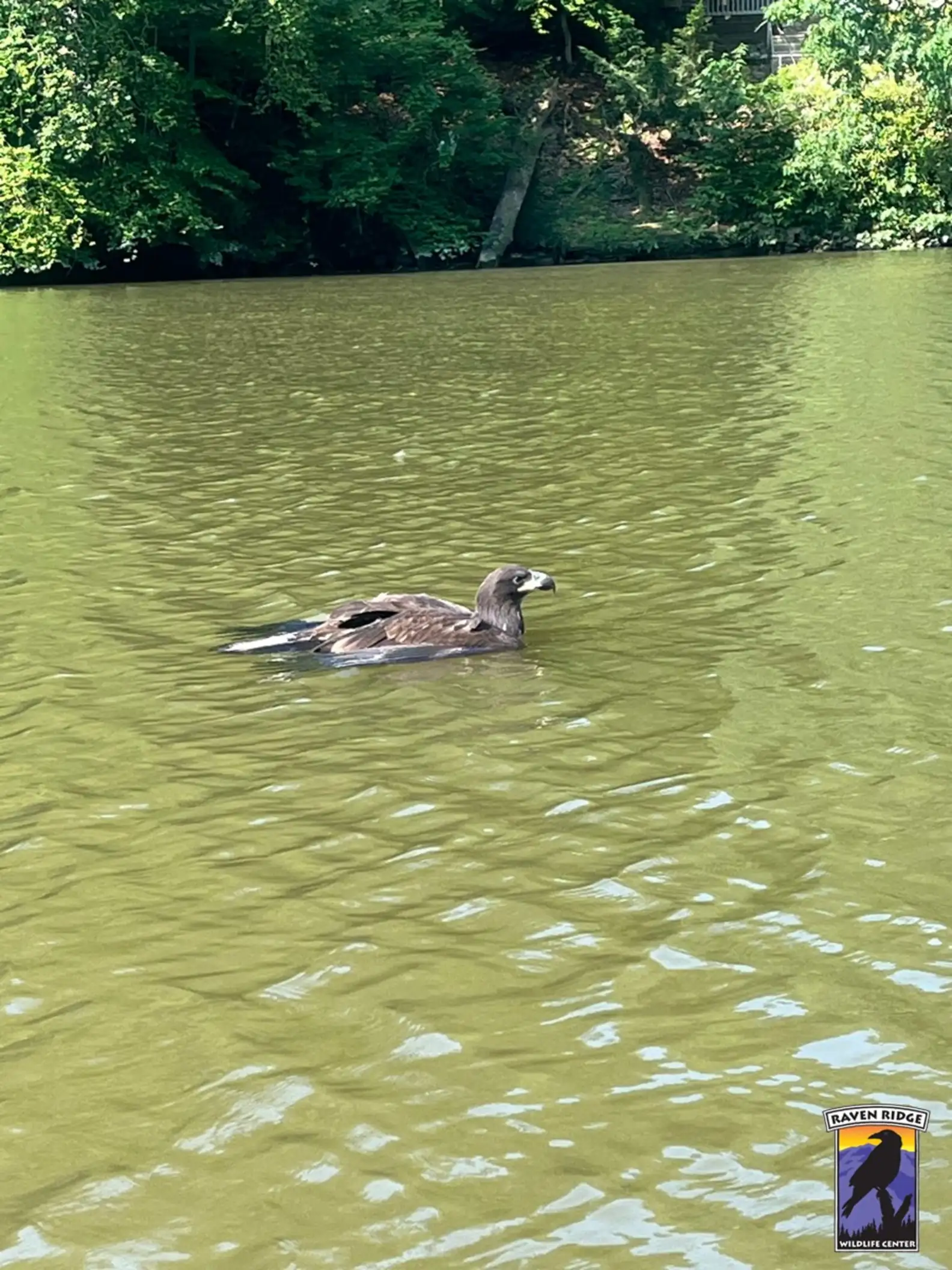
Brittany sent RRWC several photos and explained what they’d seen. Instead of soaring overhead or resting high in the trees like most bald eagles, this young bird was wandering the property on foot. He was walking along trails, hopping through the woods and, most surprisingly, swimming before drying himself under a bridge.
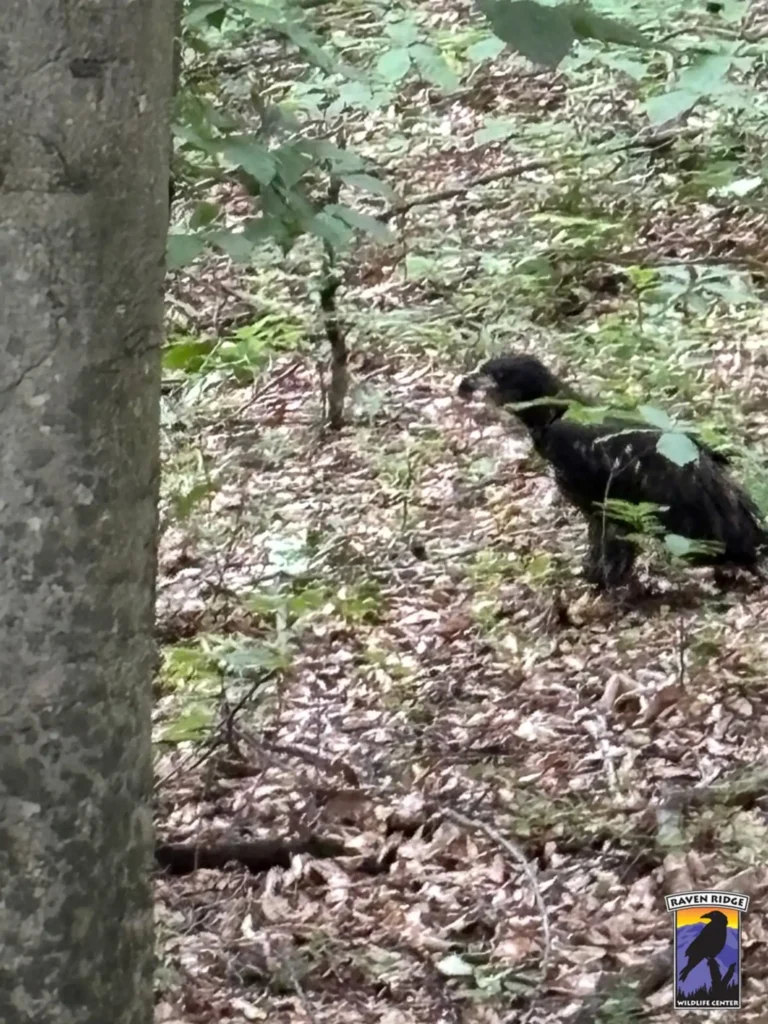
At first glance, the wildlife experts weren’t too alarmed.
“Initially, this seemed like normal behavior for a juvenile eagle exploring [his] surroundings,” RRWC shared.
Young eagles often experiment with different movements and may not yet be strong fliers. So the staff simply asked Brittany to keep watch and report any changes. But a few days later, the situation took a worrying turn.
When Brittany called back, she told them the eagle’s condition had clearly declined. The bird was no longer just curious — he looked like he was struggling. He couldn’t get airborne, couldn’t reach tree branches and was stumbling awkwardly through the forest.
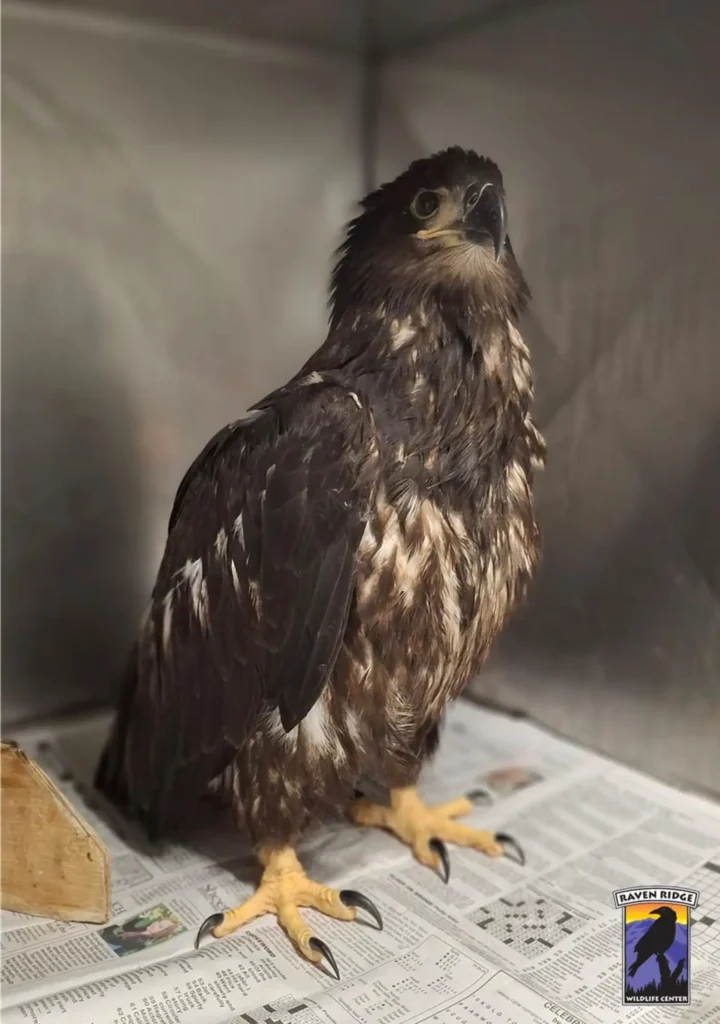
Realizing the eagle needed help, RRWC instructed Brittany and her dad to safely contain the bird so they could bring him in. With patience and care, Brittany and Ken managed to secure the weakened eagle and deliver him straight to the center for an urgent evaluation.
Once he arrived, the veterinary team grew concerned. His shaky movement and lack of coordination hinted at something serious.
“Our rehabilitator feared the worst, suspecting the eagle might be suffering from lead poisoning and would need treatment,” RRWC wrote.
A full examination thankfully revealed no trace of lead in his system. Still, the young eagle was severely dehydrated, underweight and exhausted from trying to survive on his own. The staff immediately created a recovery plan focused on nutrition, hydration and building his strength back up.
Over the next four months, the eagle slowly but steadily transformed. With proper food, medical care and a safe space to regain muscle, he began to stand taller, move more steadily and eventually take to the air again. The day he lifted off and flew confidently around the rehabilitation enclosure, the staff knew he was ready.
As part of their eagle release program, RRWC selected a release date and chose a veteran to participate in the meaningful moment. For this eagle, they invited U.S. Navy veteran Mr. Rinehart, who arrived eager to help guide the recovering bird back to freedom.
When the big moment came, the staff opened the transport crate, and the eagle wasted no time. He launched into the sky, wings outstretched, wind rippling through his feathers as he soared over the heads of the very people who had fought to save him.
After months of being grounded and vulnerable, he was finally home in the wild — exactly where he belonged.
RRWC expressed their gratitude for everyone involved in the rescue, especially the community members who stayed alert and took action.
“Many thanks to Brittany and Ken for keeping an eye on this eagle and bringing it to us for rehabilitation, as it would not have survived otherwise,” the center wrote. “We are grateful to Mr. Rinehart for joining us on this special day and for his service.”
Thanks to teamwork, quick thinking and compassionate care, a once struggling young eagle now soars freely again.