

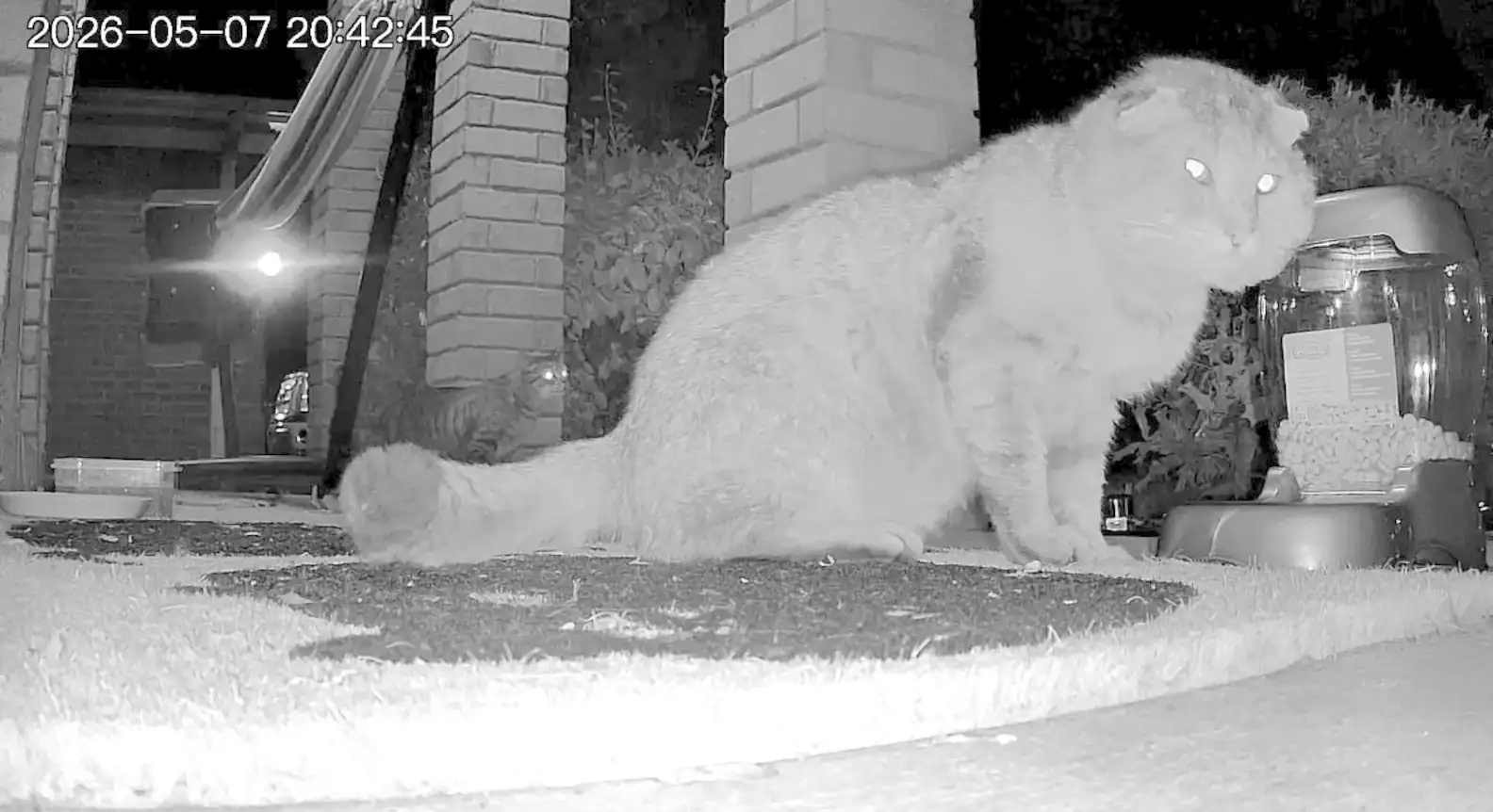
“It looked like he was trying to tell me something.”
A few months ago, a stray cat appeared outside Jaclyn Andersen’s home near Memphis, Tennessee. Andersen was already used to helping the feral cats in her neighborhood, often leaving food out for them, but this new visitor immediately stood out.
He arrived late at night, and the first thing Andersen noticed was his huge tomcat cheeks. They made him impossible to miss.
Over the next several days, the cat — later named Charles — kept coming back to her house. Like the other outdoor cats, he eagerly ate the food she put out. But unlike most ferals, Charles didn’t run off afterward. Instead, he stayed close, sometimes resting on her doormat for long stretches.
His behavior surprised Andersen. Most of the neighborhood cats were nervous and quick to disappear, but Charles seemed tired, calm and almost like he was waiting for something.
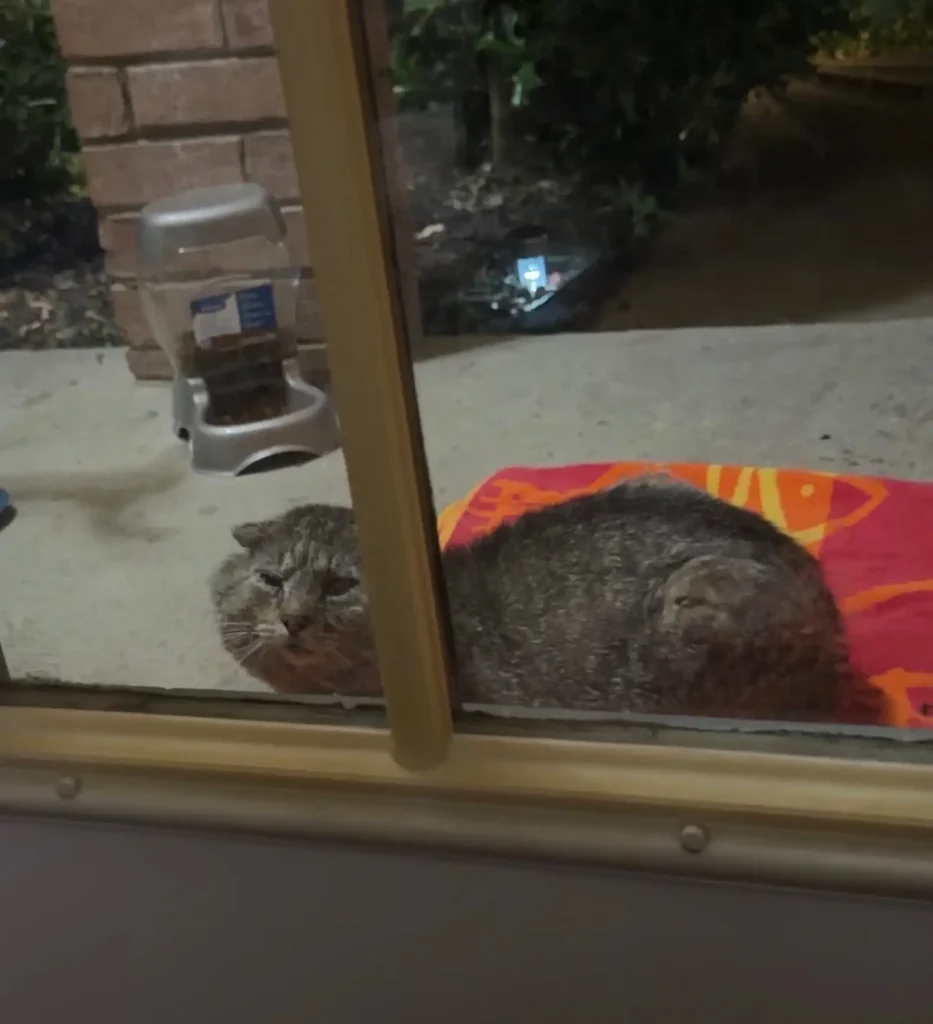
Andersen already had three indoor cats, including one she had previously rescued from the same area. Her cats quickly became fascinated by Charles and watched him through the window every day. Andersen even wondered whether one of them might have known him from his life outside.
After a few days, Charles began acting as though he wanted to come in. His condition was heartbreaking. His ears were folded and infected, and he looked worn down from life on the streets.
When Charles saw Andersen through the window, he didn’t run away. Instead, he lingered and slowly blinked at her, almost as if he was asking for help.
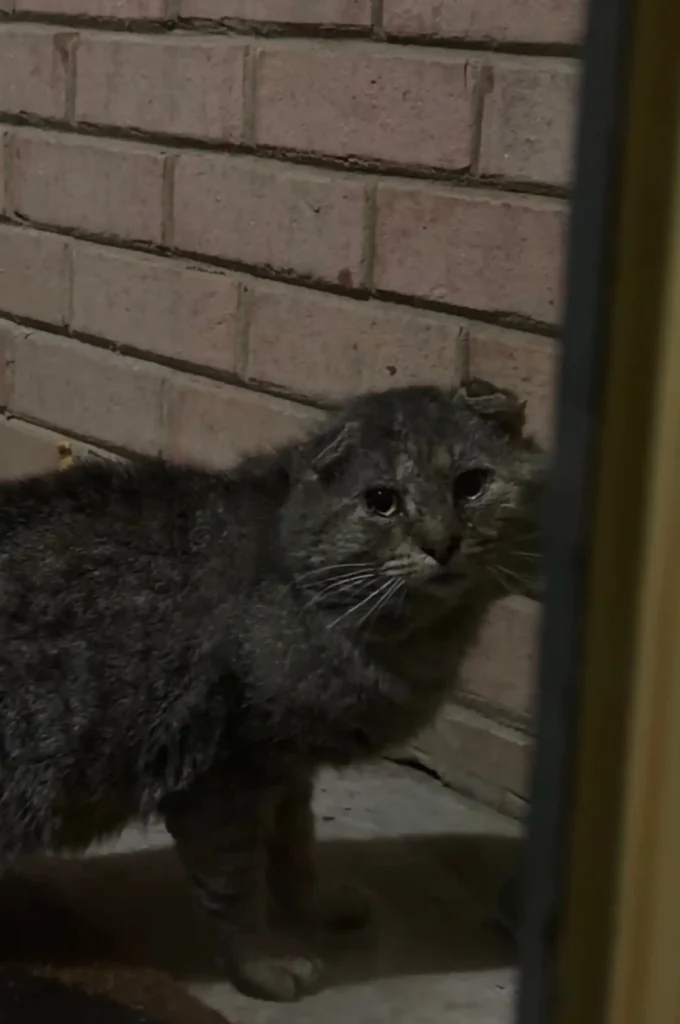
That was the moment Andersen knew she couldn’t leave him outside. She safely trapped him and took him to the vet, where he was diagnosed with FIV, a virus that weakens a cat’s immune system. Since cats with FIV can live long, healthy lives indoors, bringing Charles inside gave him the safe future he needed.
For Andersen, keeping him was an easy decision. She felt he had been through enough and deserved a quiet, protected place to rest.
She believed Charles seemed ready to retire from street life and had chosen her home because he saw other cats living safely and peacefully there.
For the past several weeks, Charles has been adjusting to indoor life. It has taken time, but he is slowly becoming more comfortable. He has started relaxing, trusting Andersen and even allowing her to pet him.
At first, Andersen expected him to be nervous or hiss, but Charles stayed calm and seemed to enjoy the affection. Since then, he has continued to accept gentle pets and show more of his sweet personality.
Now, Andersen is looking forward to watching Charles fully settle in. After a difficult life outdoors, he finally has a loving home, a safe place to rest and a family waiting to welcome him completely.