

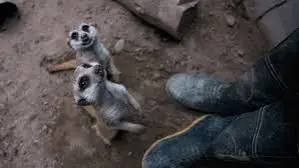
Two tiny meerkats have captured attention in Peru after making their first appearance before visitors at a wildlife refuge in the capital, Lima.
The playful youngsters were introduced at NaviFauna on November 25, 2026, offering visitors a chance to learn about an animal more commonly associated with the grasslands and deserts of southern Africa.
The two babies are the latest additions to a growing meerkat population at the facility.
But their public debut was about more than showing off two adorable animals.
According to the sanctuary’s staff, the occasion was also an opportunity to teach people about wildlife conservation, responsible animal care, and the importance of protecting biodiversity.
Two Baby Meerkats Meet the Public for the First Time
Visitors to NaviFauna were introduced to two young meerkats born at the facility in Lima.
Photographs from their debut show the little animals exploring and playing, displaying the curiosity that has made their species so recognizable.
With their small bodies, bright eyes, and alert expressions, the babies quickly became the center of attention.
Meerkats are known for their distinctive upright posture, which allows them to scan their surroundings for potential danger.
They also live in highly social family groups, making their interactions particularly fascinating to observe.
For people in Peru who may never have encountered these African mammals before, the event offered an opportunity to learn more about their behavior and natural habitat.
And for the team at NaviFauna, the youngsters represented another development in the facility’s animal care program.
The Sanctuary Now Cares for 15 Meerkats
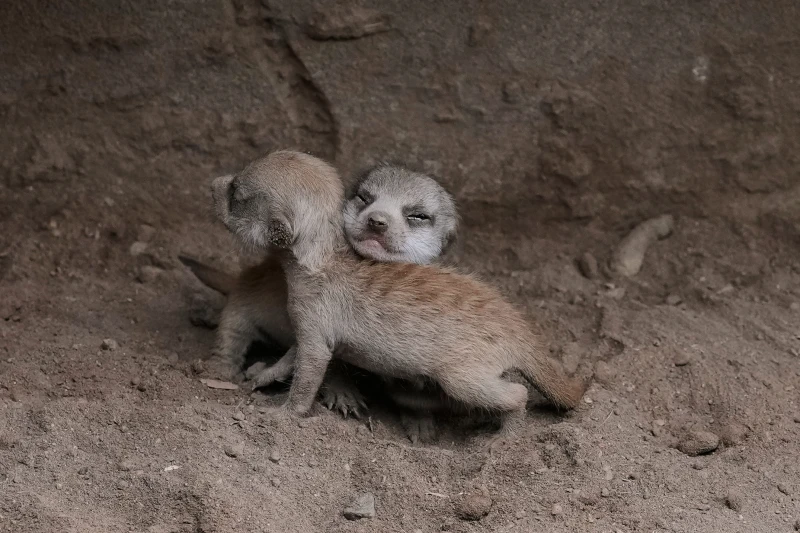
NaviFauna is a privately operated zoo and wildlife refuge authorized by Peru’s forestry and wildlife authority.
According to the organization, it currently houses 15 meerkats.
Seven of those animals arrived from Botswana in 2022 through an exchange between zoological facilities.
The other eight have been born in Lima since 2025.
The two youngsters introduced to the public are part of that locally born population.
For Eduardo Espíritu, the biologist responsible for mammals at NaviFauna, the successful births are an encouraging part of the facility’s work.
He explained that the organization focuses on maintaining the animals’ health and well-being, with reproduction regarded as one possible indicator of suitable living conditions.
The sanctuary also hopes the meerkats will encourage visitors to become more interested in wildlife beyond South America.
Why Meerkats Are Such Fascinating Animals
Meerkats are small mammals native to southern Africa, particularly the dry and open environments of countries such as Botswana, Namibia, and South Africa.
They belong to the mongoose family and are scientifically known as Suricata suricatta.
Although small, they are highly adapted to their challenging natural environment.
Their strong claws help them dig underground burrows, which provide shelter from predators and harsh weather.
These burrow systems also serve as important gathering places for family groups.
Meerkats are particularly famous for their cooperative behavior.
While some members of a group search for food, others may remain alert to possible threats.
A meerkat standing upright and scanning the landscape is one of the species’ most recognizable sights.
Their natural diet includes insects and other small animals, which they locate while foraging across the ground.
These behaviors make them interesting subjects for wildlife education, particularly for visitors learning about the diversity of mammal species around the world.
The Zoo Wants Visitors to Understand That Meerkats Are Wild Animals
Although meerkats are undeniably charming, NaviFauna’s staff emphasized an important message during the public presentation.
Meerkats are wild animals, not conventional household pets.
Their social needs, natural behaviors, and environmental requirements make them very different from domesticated animals such as dogs and cats.
In the wild, they depend on complex group relationships and spend significant amounts of time digging, exploring, and searching for food.
Those behaviors can be difficult to accommodate in an ordinary home.
Espíritu stressed that the sanctuary’s goal is not to encourage people to keep meerkats as pets.
Instead, the facility wants visitors to appreciate the species while understanding the responsibilities involved in caring for wildlife.
The distinction matters because an animal’s popularity does not make it suitable for domestic life.
More Than Just a Cute Animal Encounter
Meerkats became familiar to audiences around the world partly through the character Timon in Disney’s The Lion King.
The animated character helped introduce the species to generations of viewers.
But real meerkats have complex lives that extend far beyond their fictional portrayals.
They are intelligent, social animals whose survival depends on adaptations developed for life in the wild.
By presenting the two babies to visitors, NaviFauna hopes to connect public fascination with opportunities for education.
The facility also cares for other animals, including capybaras, macaws, and flamingos.
Together, these species provide opportunities for visitors to learn about animals from different habitats and geographic regions.
However, the birth of meerkats in captivity should not be confused with a program to release them into the wild.
No such release plans were reported for these two youngsters.
The event’s stated purpose was public education and awareness of wildlife conservation.
A New Generation Brings a Message About Wildlife Protection
For the two baby meerkats, their first public appearance marked the beginning of a new chapter at NaviFauna.
For visitors, it offered a chance to observe animals they might otherwise know only from photographs, documentaries, or animated films.
And for the sanctuary’s staff, the occasion helped reinforce an important conservation message.
Learning to appreciate wildlife means recognizing both the beauty of animals and the importance of respecting their natural needs.
Whether a species lives in an African grassland, a South American rainforest, or a protected zoological facility, understanding its behavior and habitat is an important part of wildlife education.
The two young meerkats may be small, but their arrival has given NaviFauna an opportunity to share that message with a wider audience.
Their playful public debut is a reminder that some of the most engaging wildlife encounters can also inspire people to learn more about the animals — and the natural world — they hope to protect.