

Australian Man Dubbed ‘Batman’ Uncovers One of the Country’s Most Enigmatic Creatures
Deep in the remote wilderness of northern Australia, a wildlife scientist was conducting a routine survey when his recording equipment captured something extraordinary.
Oli Aylen, an ecologist with Australian Wildlife Conservancy, was working near mangroves at Pungalina-Seven Emu Wildlife Sanctuary when he noticed an unusual sound on his bat detector.
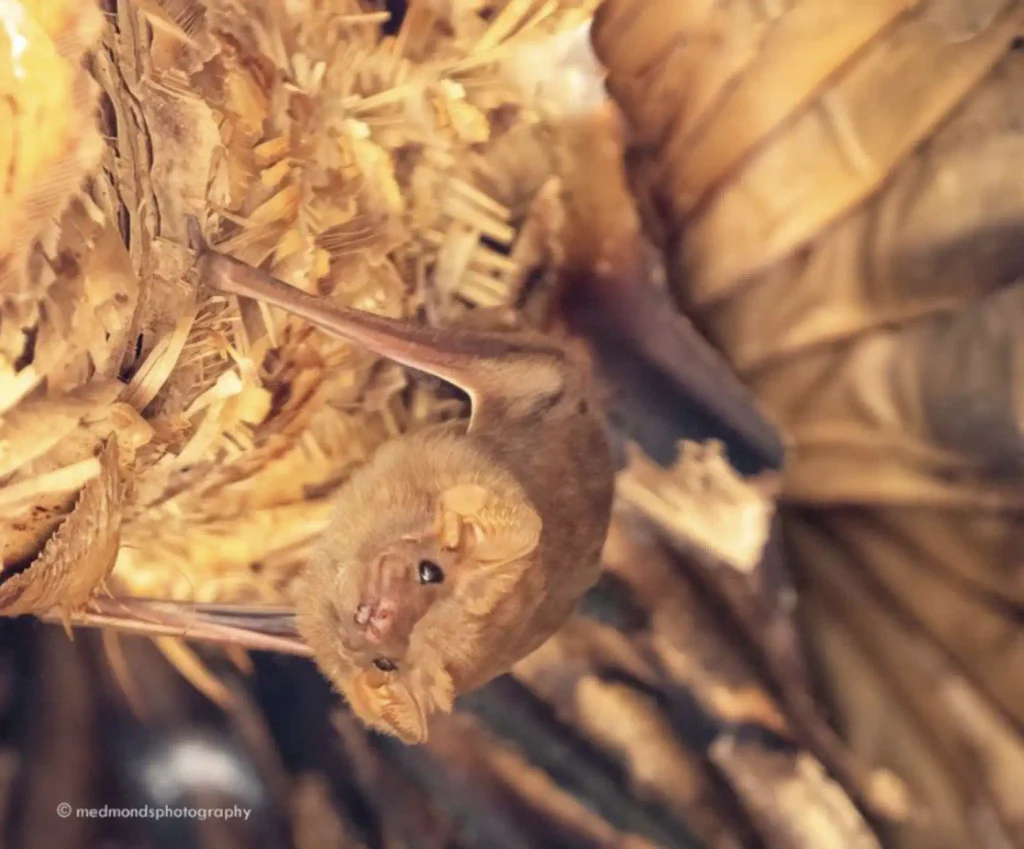
The recording contained the distinctive echolocation call of an Arnhem sheath-tailed bat, one of Australia’s least understood mammals.
What made the discovery so remarkable was the location.
The bat had been detected approximately 650 kilometers — more than 400 miles — east of its previously documented range.
For a species that scientists rarely encounter, a single recording had suddenly revealed an important new piece of its evolutionary and ecological story.
And for Aylen, whose colleagues affectionately call him “Batman,” it was exactly the kind of discovery that makes years of wildlife research worthwhile.
A Wildlife Scientist With an Unusual Nickname
Oli Aylen has earned a memorable reputation among his conservation colleagues.
Known as “Batman,” the Australian wildlife ecologist has developed extensive experience studying bats and the remote environments they inhabit.
His nickname is a playful tribute to his expertise and his determination to understand animals that are notoriously difficult to observe.
Bats represent a substantial proportion of the world’s mammal diversity, yet many species remain poorly studied.
Their nocturnal lifestyles, rapid flight, and tendency to occupy inaccessible habitats make them challenging subjects for researchers.
Aylen’s work involves using specialized scientific equipment to identify bat species, monitor their distribution, and gather information that can support conservation efforts.
But during one survey in the Northern Territory, his equipment captured something even he hadn’t expected.
An Unexpected Sound Changes Everything
The discovery occurred during wildlife surveys at Pungalina-Seven Emu Wildlife Sanctuary in Australia’s Northern Territory.
The conservation area lies near the Gulf of Carpentaria, within a vast landscape of coastal forests, mangroves, woodlands, and wetlands.
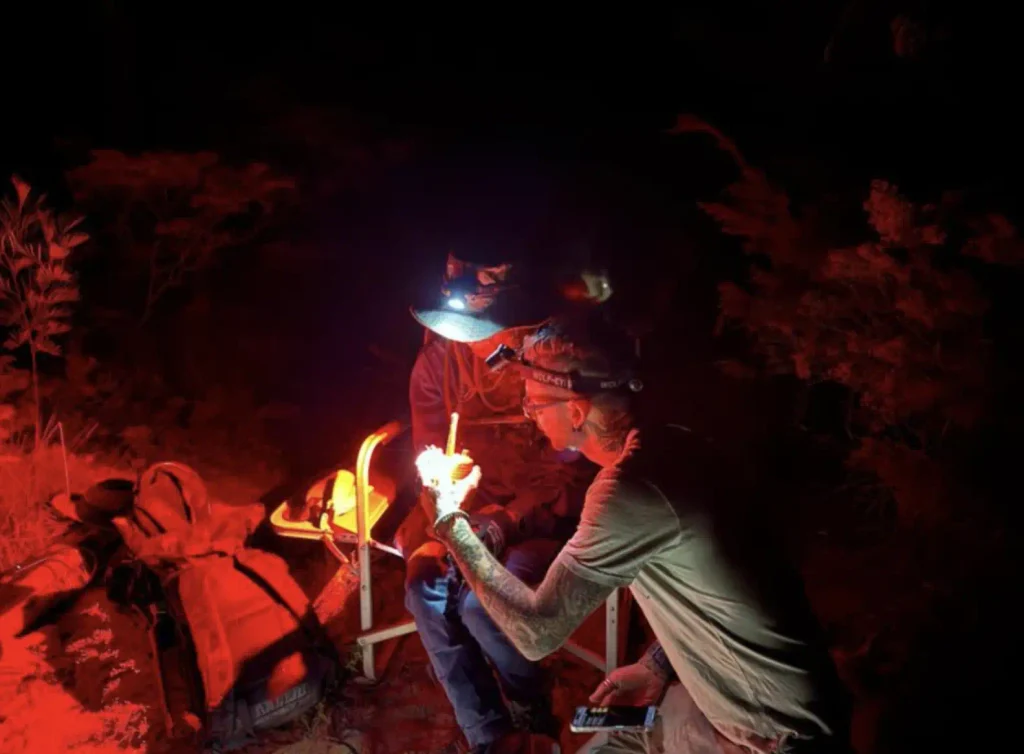
Aylen and his colleagues were working around mangrove habitat, setting up canopy mist nets used to study bats flying above the vegetation.
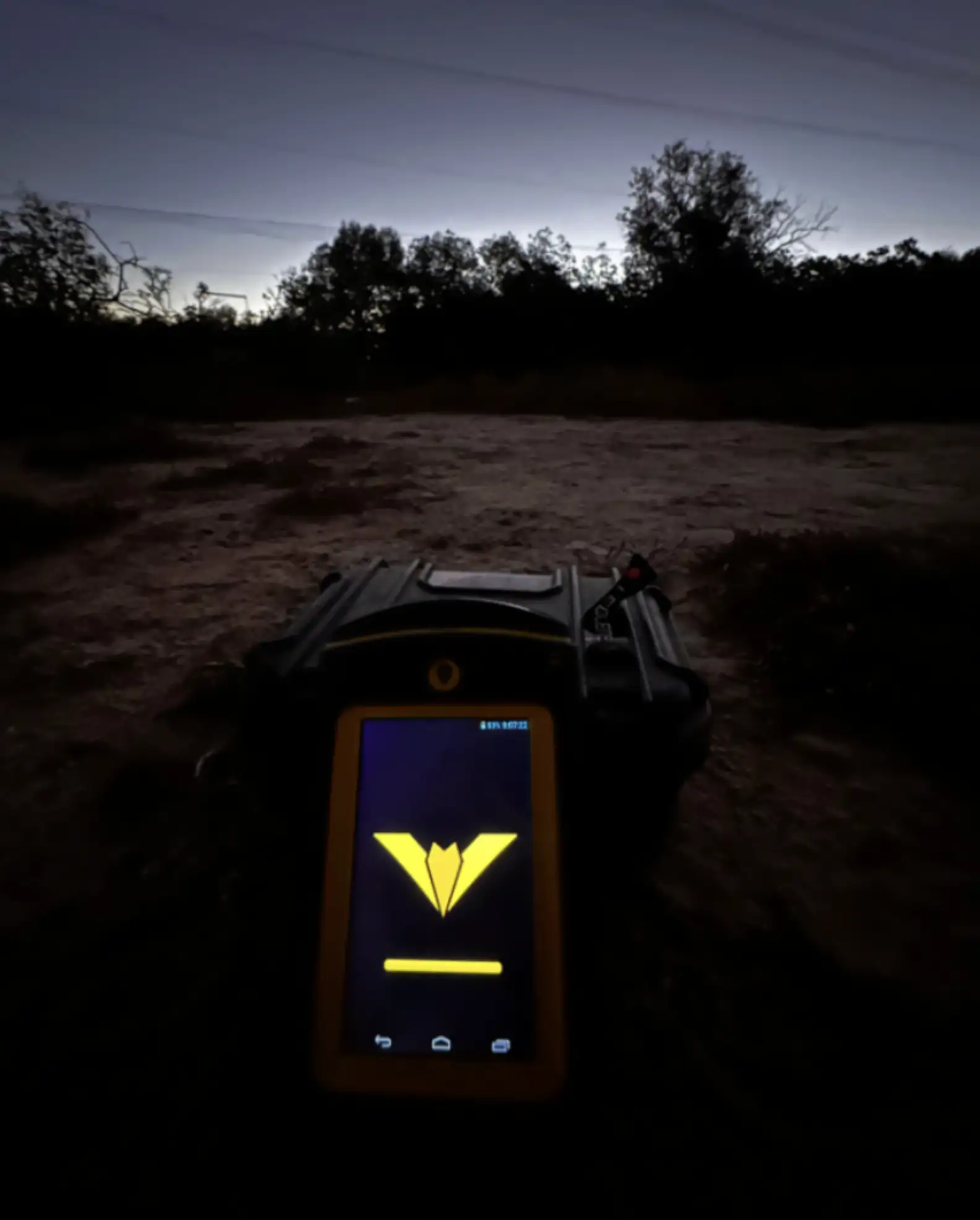
While preparing the equipment, Aylen also had a handheld bat detector switched on.
The device was recording the ultrasonic calls of bats moving overhead.
Then he noticed a distinctive sound pattern.
Unlike many of the calls researchers routinely encounter, this one was unusually short for its frequency.
Aylen recognized that it might belong to an Arnhem sheath-tailed bat.
The possibility was exciting.
This mysterious species had been documented only rarely, and scientists had little information about its distribution across northern Australia.
But the location made the potential identification even more significant.
The sanctuary was far beyond the species’ previously confirmed eastern range.
The Mysterious Bat Is Identified by Its Voice
Bats use echolocation to navigate through darkness and locate objects around them.
They produce high-frequency sounds that travel through the air and bounce off nearby surfaces.
By interpreting the returning echoes, bats can detect obstacles and locate prey while flying.
Scientists can use specialized acoustic detectors to record these calls and analyze their distinctive characteristics.
One of the most useful tools is a spectrogram, which displays sound frequencies and patterns visually.
Different bat species can produce recognizable echolocation signatures.
The Arnhem sheath-tailed bat has a particularly distinctive call, helping specialists distinguish it from other bats.
After returning from the survey, Aylen sent the recording to Dr. Damian Milne, a bat expert and senior scientist with the Northern Territory Government’s Flora and Fauna Division.
Milne confirmed that the sound matched the Arnhem sheath-tailed bat.
The identification transformed a curious recording into an important scientific discovery.
Although the researchers had not physically captured the animal, its distinctive call provided evidence that the species occurred much farther east than previously documented.
A Discovery More Than 400 Miles From Previous Records
Before Aylen’s detection, confirmed records of the Arnhem sheath-tailed bat were concentrated in western parts of the Northern Territory and northwestern Arnhem Land.
The previous easternmost detection was near Jabiru.
The new recording came from Pungalina-Seven Emu Wildlife Sanctuary, approximately 650 kilometers farther east.
That is a substantial expansion of the species’ documented distribution.
For conservation scientists, understanding where an animal lives is one of the first steps toward protecting it.
If researchers don’t know which habitats a species occupies, it becomes difficult to assess the threats it faces or identify areas that require protection.
The discovery also supports earlier suggestions that Arnhem sheath-tailed bats might inhabit a broader area of northern Australia.
Until now, those possibilities had been difficult to confirm.
Aylen’s recording provides concrete evidence that the species occurs in a region where scientists had not previously established its presence.
Importantly, the finding does not mean one bat traveled 650 kilometers from its former habitat.
It means the species’ known geographical range is larger than earlier records indicated.
Why Is the Arnhem Sheath-Tailed Bat So Difficult to Find?
The Arnhem sheath-tailed bat is among Australia’s most elusive mammals.
The species was first scientifically described in 1979, but decades later, researchers still know remarkably little about its ecology.
Part of the difficulty comes from its habitat.
Northern Australia’s remote landscapes can be challenging to access, particularly in areas with limited roads, dense vegetation, seasonal flooding, and extreme weather conditions.
The bats themselves create additional obstacles for researchers.
They often fly high and fast, making them difficult to capture in nets or observe directly.
Unlike animals that leave obvious tracks or can be photographed easily using ground-based cameras, bats may pass through an area without people ever realizing they are nearby.
Even when researchers know that a species exists in a region, locating its roosting sites can be extremely difficult.
For the Arnhem sheath-tailed bat, these challenges have left major gaps in scientific understanding.
Researchers still need to learn more about where the animals rest during the day, how widely they are distributed, and whether their populations face significant threats.
The new acoustic detection provides an important starting point.
A Remote Sanctuary Holds More Wildlife Secrets
Pungalina-Seven Emu Wildlife Sanctuary is a particularly valuable location for wildlife research.
Situated on Yanyuwa and Waanyi-Garawa Country, the sanctuary protects more than 300,000 hectares of diverse habitat near the Gulf of Carpentaria.
Its landscapes include mangroves, coastal rainforest, river systems, savanna woodlands, wetlands, and rugged sandstone formations.
The Australian Wildlife Conservancy has managed the conservation project since 2008, working to protect native species and restore ecological health.
Its programs include wildlife monitoring, fire management, invasive species control, and habitat protection.
The region is home to an extraordinary variety of animals, including numerous mammals, birds, and reptiles.
Yet its remoteness means some wildlife populations remain poorly documented.
The Arnhem sheath-tailed bat is a striking example.
The species may have occupied parts of this landscape for generations without scientists obtaining definitive evidence.
The new detection demonstrates how much remains to be discovered, even in places that conservationists have been studying for years.
Why Bats Are Essential to Healthy Ecosystems
Bats are sometimes overlooked in wildlife conservation, but they perform important ecological functions.
Around the world, different bat species contribute to insect population control, pollination, and seed dispersal.
Insect-eating bats can consume substantial numbers of insects, helping maintain ecological balance in their habitats.
Fruit- and nectar-feeding bats support plant reproduction and forest regeneration in ecosystems where those feeding relationships occur.
Because bats occupy such varied ecological roles, understanding their distribution is important for studying the health of natural environments.
However, many Australian bat species remain difficult to assess.
Scientists often have fewer reliable observations than they do for more visible mammals.
That lack of information can make conservation planning especially challenging.
For an elusive species such as the Arnhem sheath-tailed bat, even a single confirmed detection can contribute valuable knowledge.
The more scientists learn about where these animals live and how they use their habitats, the better equipped conservation organizations become to protect them.
Scientists Still Don’t Know Whether the Species Is Threatened
One of the most important unanswered questions concerns the Arnhem sheath-tailed bat’s conservation status.
Because confirmed observations are so limited, researchers cannot yet confidently determine whether the species is genuinely rare or simply difficult to detect.
Those possibilities have very different implications.
The bat could exist in small, isolated populations that require urgent protection.
Alternatively, it may be more widespread than researchers realize, with populations going largely unnoticed because of their remote habitats and high-flying behavior.
At present, there is not enough information to distinguish confidently between those scenarios.
The discovery at Pungalina-Seven Emu suggests that the species’ distribution has been underestimated.
But it does not establish how many individuals exist or whether their numbers are increasing or declining.
That uncertainty is one reason the Australian Wildlife Conservancy wants to expand its research.
The new record has made the Arnhem sheath-tailed bat a priority for future targeted surveys.
The Search for the Bat’s Secret Roosting Places
Aylen and his colleagues hope that future fieldwork will reveal more about the mysterious species.
Their plans include using several survey methods to improve the likelihood of detecting and potentially capturing Arnhem sheath-tailed bats for scientific examination.
Acoustic recorders will remain important because they allow researchers to identify bats without physically disturbing them.
But additional information could come from carefully managed trapping and direct observation.
One of the team’s most significant goals is discovering where these bats roost.
Roosting sites provide essential shelter, yet their locations remain poorly understood for this species.
Knowing where the bats spend their resting hours could help conservationists identify important habitat features and protect sites they depend upon.
Additional surveys may also reveal whether the species occurs in other previously undocumented areas of northern Australia.
Every new detection could improve scientific understanding of its population and distribution.
For Aylen, the discovery is exciting not simply because it adds a new location to a map.
It creates opportunities to answer questions that have remained unresolved for decades.
A Tiny Sound Makes an Enormous Difference
The Arnhem sheath-tailed bat discovery demonstrates how important careful observation and scientific technology can be.
During a survey focused on studying bats in a remote landscape, Aylen happened to have his handheld detector operating.
That simple decision allowed him to capture a distinctive sound that might otherwise have gone unnoticed.
After expert confirmation, the recording revealed that one of Australia’s least understood mammals occupied a region far beyond its previously documented range.
The finding doesn’t solve every mystery surrounding the species.
Researchers still have much to learn about its behavior, habitat requirements, population size, and conservation needs.
But it provides an important new direction for future research.
For the ecologist affectionately known as Batman, the experience reinforces why studying elusive wildlife matters.
There are still extraordinary discoveries waiting to be made across Australia’s remote landscapes.
And sometimes, those discoveries don’t begin with a dramatic sighting or an animal caught on camera.
Sometimes, they begin with a brief ultrasonic call in the darkness.
One small recording has expanded what scientists know about an entire species — and may help conservationists protect an animal that has remained mysterious for nearly half a century.