

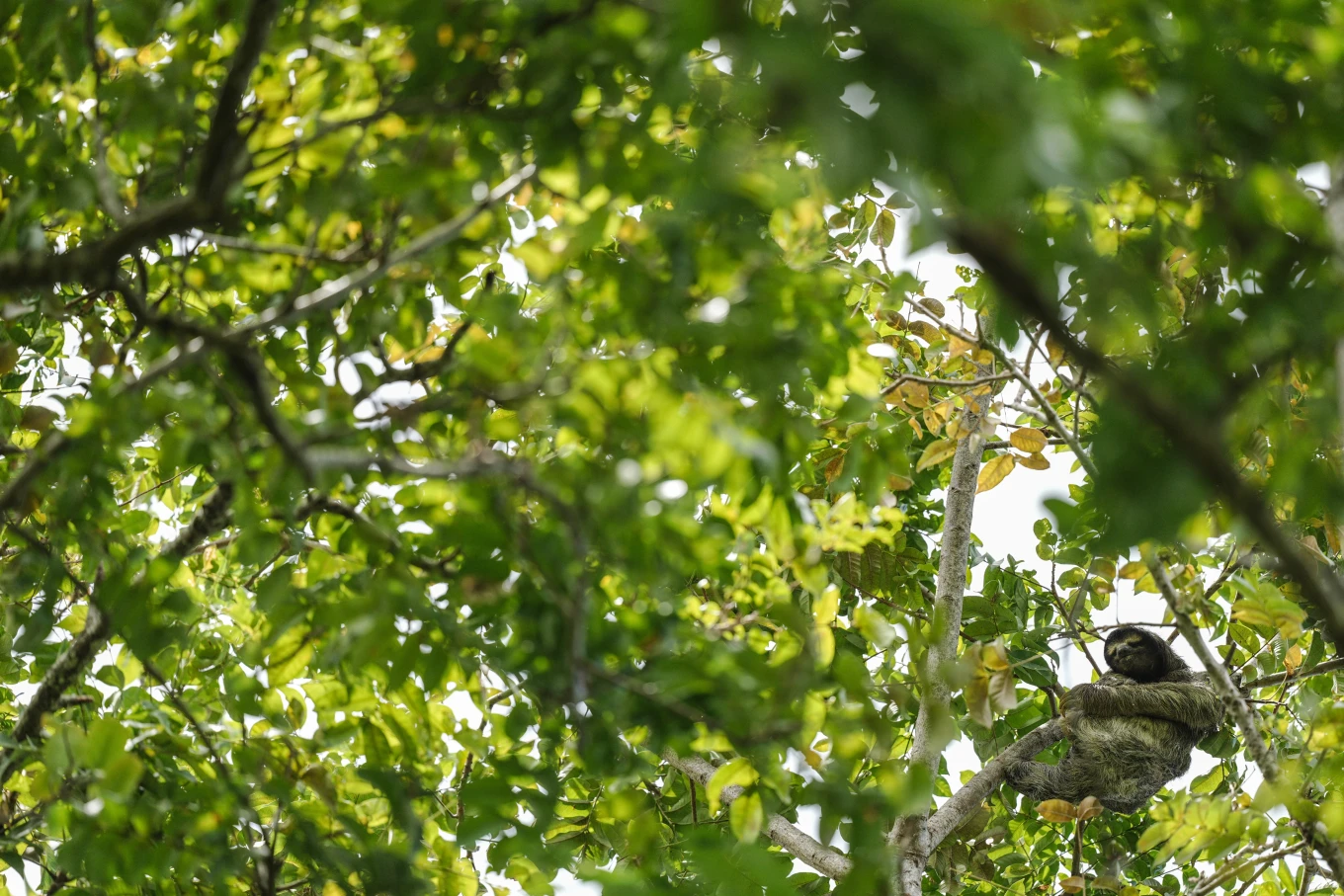
High above the busy roads and tourist destinations of Costa Rica’s Caribbean coast, a remarkable wildlife conservation project is helping some of the rainforest’s most vulnerable residents move safely between trees.
Conservationists have installed approximately 410 specially designed rope bridges to protect sloths from dangerous encounters with vehicles, dogs, and electrical power lines.
The simple structures may not look impressive to humans, but for animals that spend most of their lives suspended among tree branches, they can mean the difference between life and death.
And as development continues to divide the country’s tropical forests, these unusual wildlife crossings are becoming increasingly important.
Why Sloths Need Special Bridges to Survive
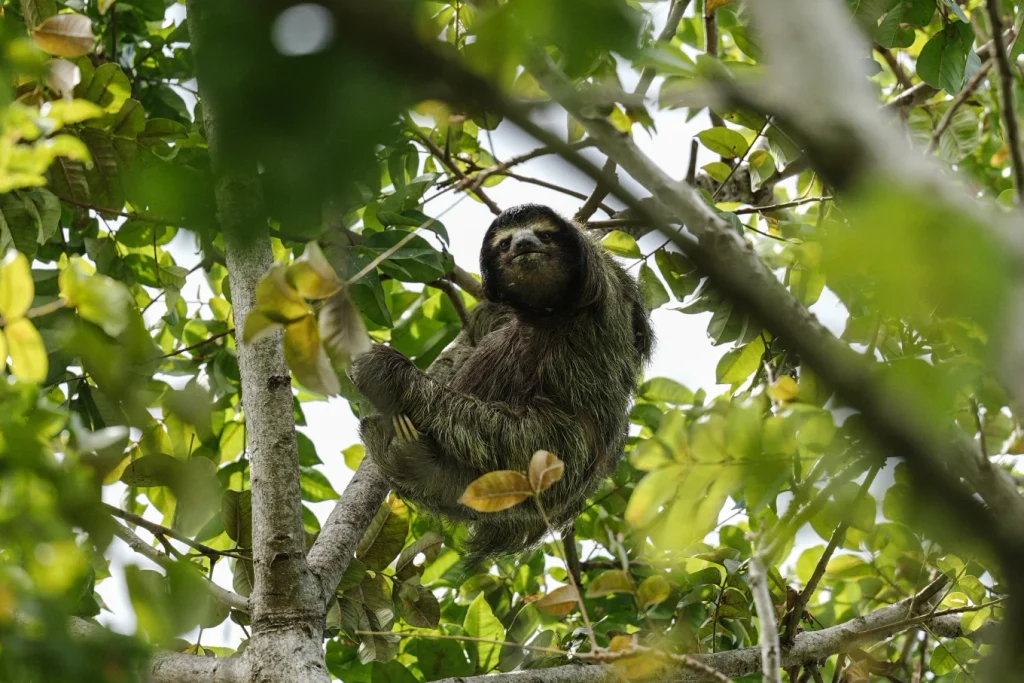
In the lush forests surrounding Puerto Viejo de Talamanca, Costa Rica, sloths spend much of their lives moving slowly between trees in search of food, shelter, and suitable resting places.
Unlike monkeys, sloths cannot leap across gaps in the forest canopy.
Even a relatively small separation between trees can create a serious obstacle.
When neighboring branches are too far apart, a sloth may have no choice but to descend from the safety of the treetops and travel across the ground.
Unfortunately, that decision can expose the animal to numerous dangers.
Dogs may attack vulnerable sloths, vehicles can strike them while crossing roads, and electrical cables can cause fatal injuries.
For creatures whose bodies are adapted to life in trees rather than moving quickly across open ground, these hazards are particularly serious.
Recognizing the problem, wildlife experts began developing a surprisingly simple solution.
Instead of forcing sloths to cross dangerous roads or developed areas, they could provide alternative routes above the ground.
Hundreds of Rope Bridges Create Safer Routes Through the Trees
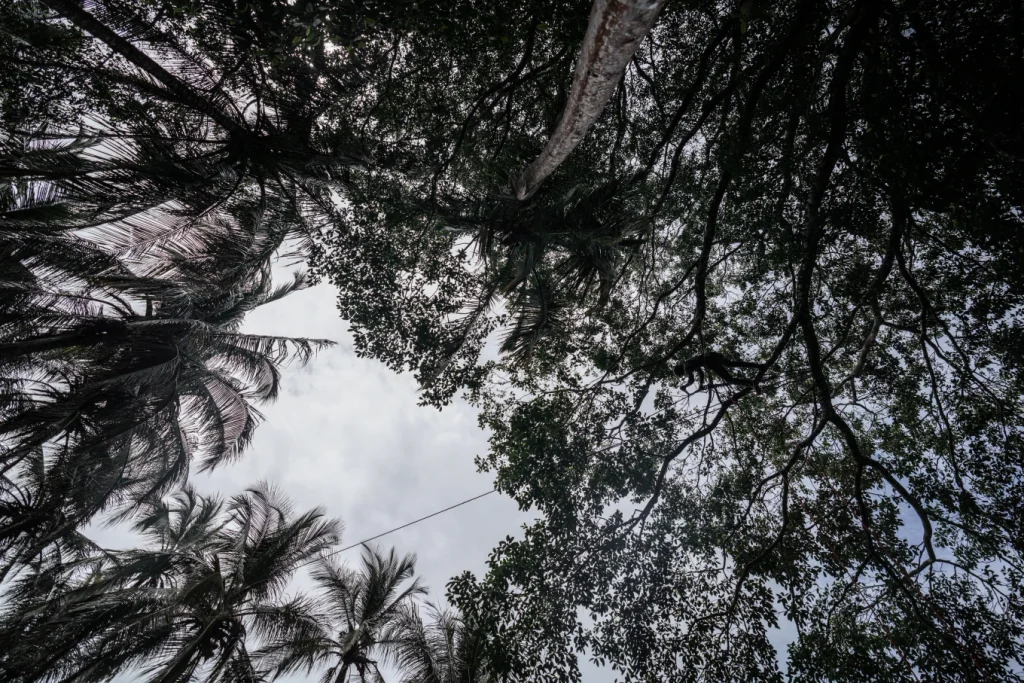
The Sloth Conservation Foundation has installed approximately 410 rope bridges throughout parts of Costa Rica’s Caribbean coastal region.
The structures connect trees separated by roads, buildings, and other obstacles created by human development.
Unlike elaborate wildlife crossings built for larger mammals, these bridges often consist of a single sturdy rope stretched between suitable trees.
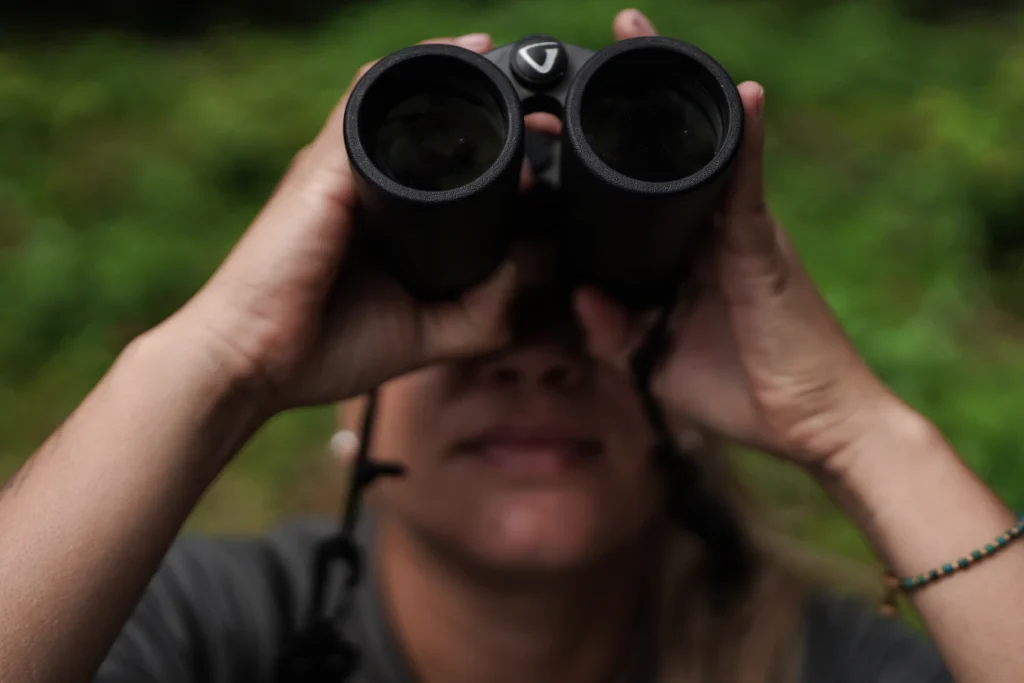
For sloths and other tree-dwelling species, that can be enough to create a useful pathway.
Rebecca Cliffe, a British zoologist and founder of the organization, has spent nearly two decades studying sloths and the challenges they face.
Her research and rescue experience revealed that habitat fragmentation was forcing many animals into situations they were poorly equipped to survive.
The bridges were designed to address those risks directly.
By reconnecting sections of the forest canopy, conservationists provide animals with opportunities to travel through their environment without descending into dangerous areas.
And the results have been encouraging.
Cameras monitoring some of the bridges have recorded more than 22,000 wildlife crossings, according to Cliffe.
Those crossings include sloths as well as other animals that move through the treetops.
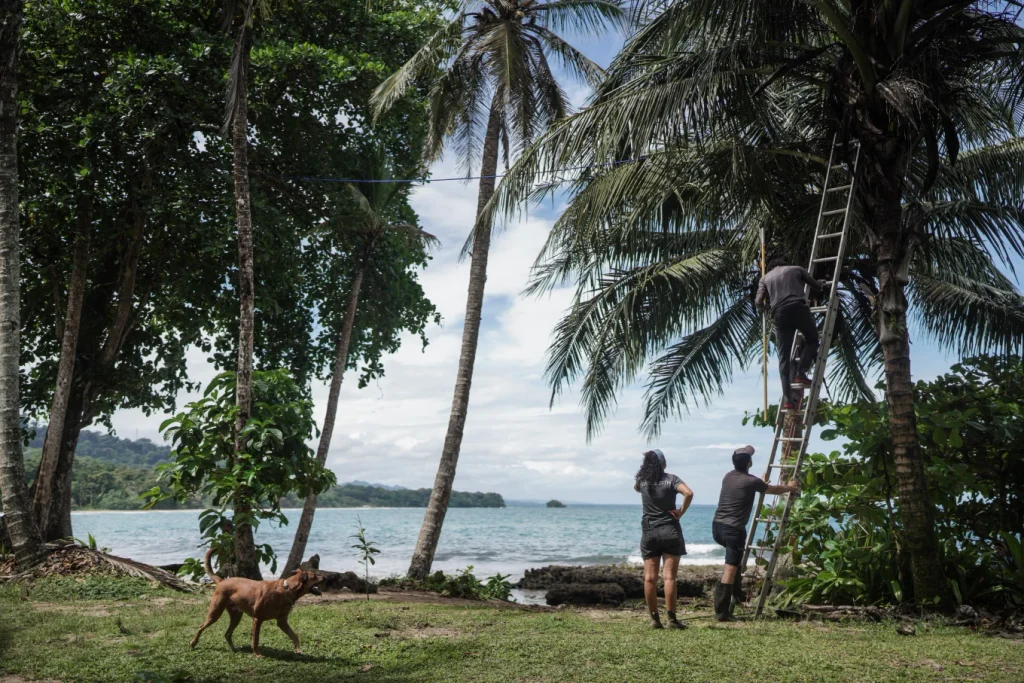
For the conservation team, the footage demonstrates how a relatively simple structure can provide meaningful protection for wildlife.
Even Small Gaps in the Forest Can Become Dangerous
One of the biggest challenges facing sloths is a problem conservationists describe as microfragmentation.
This occurs when small interruptions in the forest canopy prevent animals from following their usual routes through the trees.
A gap measuring just two or three meters can be enough to make a familiar pathway unusable.
Sloths are creatures of habit, often following routes they learned earlier in life.
When a tree is removed or branches are cut back, the animal may continue trying to follow its accustomed path, even when the safe connection no longer exists.
This behavior can bring sloths dangerously close to roads, electrical infrastructure, and residential areas.
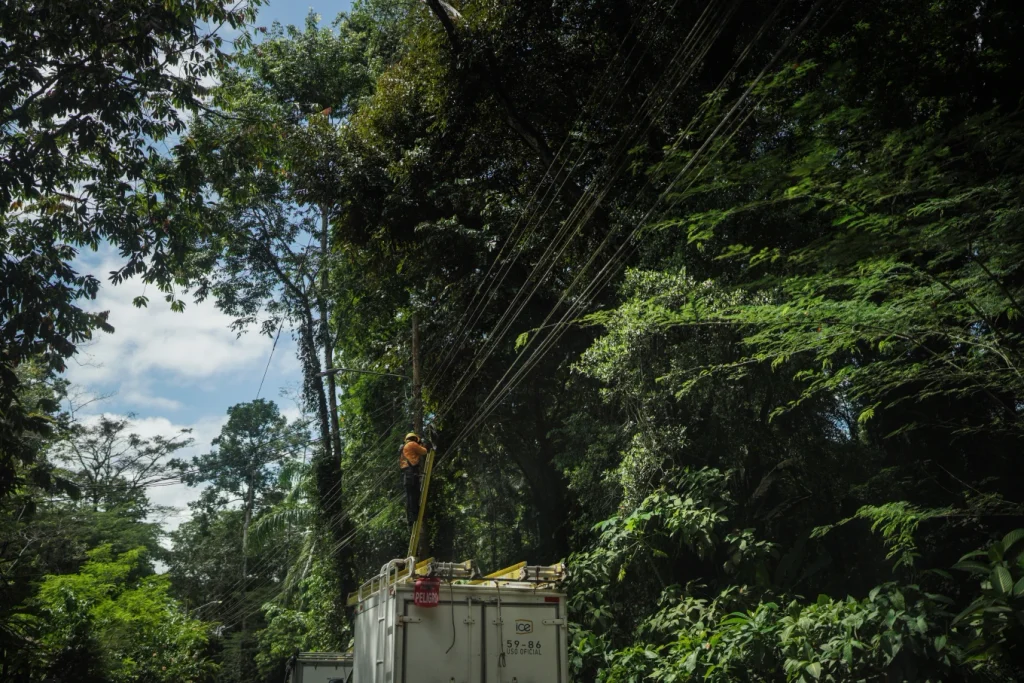
Cliffe began experimenting with rope bridges after repeatedly encountering injured animals at a wildlife sanctuary.
Many had suffered injuries involving vehicles, dog attacks, or power lines.
Determined to reduce these preventable emergencies, she started creating basic connections between trees.
Over time, the project developed into a larger conservation effort involving bridge installation, wildlife monitoring, and habitat restoration.
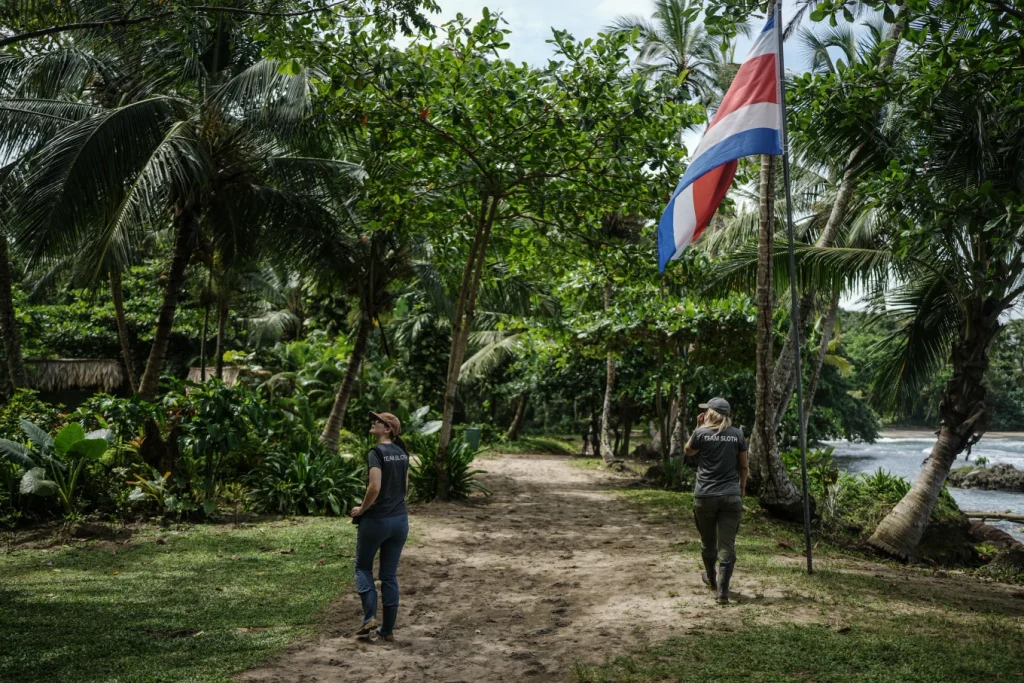
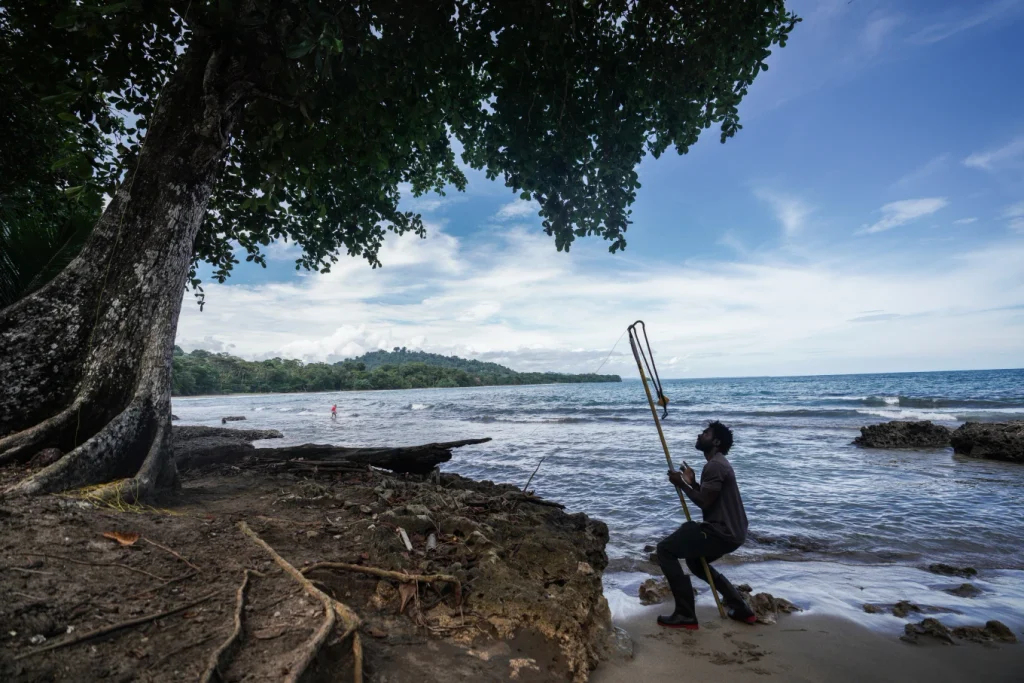
Today, teams visit locations where sloths have been observed struggling to navigate fragmented areas.
These include private properties, tourist accommodations, and neighborhoods where the rainforest meets human development.
Costa Rica’s Growing Forests Still Face a Hidden Problem
Costa Rica has earned international recognition for its efforts to restore forest cover following decades of deforestation.
According to a 2023 report by the Organisation for Economic Co-operation and Development, forest cover increased from approximately 21% of the country’s land area in 1987 to 59%.
It is a significant environmental achievement.
However, experts warn that increasing the number of trees does not automatically restore a fully connected ecosystem.
Many forests have regenerated on former agricultural land, leaving patches of vegetation separated by roads, pastures, buildings, and tourism infrastructure.
For wildlife that depends on connected tree canopies, these interruptions can remain a serious problem.
Carlos Morera Beita, a geographer at the National University of Costa Rica, has highlighted the importance of maintaining natural connections between forested areas.
Although sloths can adapt to certain modified landscapes, such as tree-lined pastures and vegetation alongside rivers, they still depend on access to suitable habitat.
Without adequate connections, populations can become increasingly isolated.
This isolation may limit access to food, shelter, and potential mates.

Rope bridges can help animals overcome individual obstacles, but they are only one part of a much broader conservation challenge.
Protecting existing forests and restoring natural wildlife corridors remain essential.
A Wildlife Sanctuary Offers Hope to Injured and Orphaned Sloths
While some conservationists focus on preventing accidents, others dedicate their lives to helping sloths that have already been injured or orphaned.
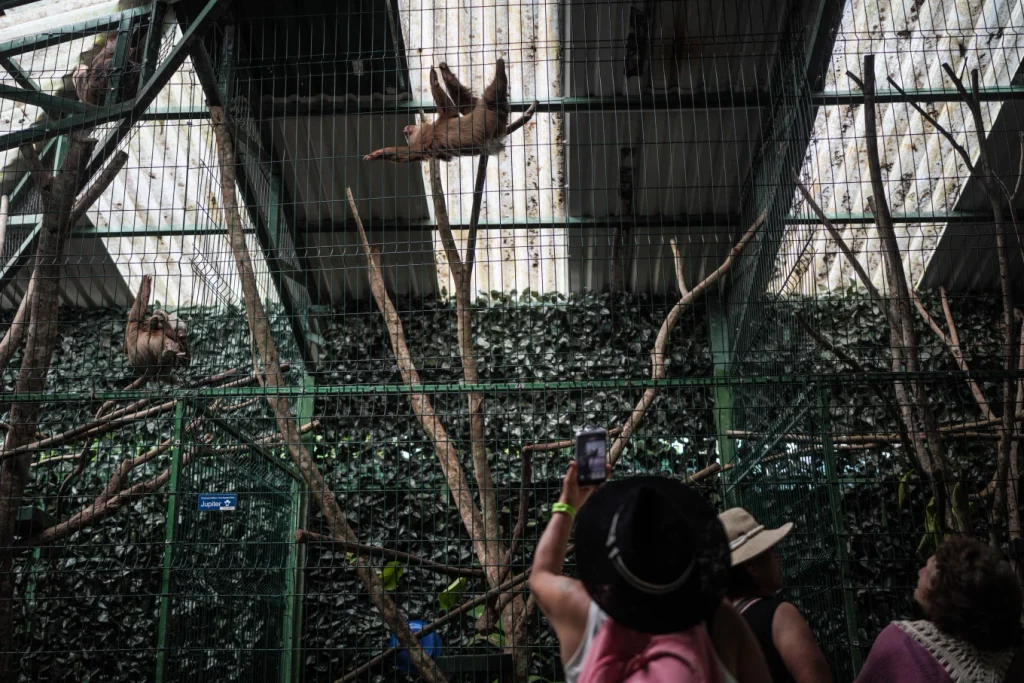
At the Sloth Sanctuary of Costa Rica, near the Caribbean community of Penshurst, rescued animals receive specialized care when they cannot immediately return to the wild.
Some arrive with serious injuries caused by vehicles, dogs, or electrical cables.
Others are orphaned babies whose mothers have died before they could teach them the skills necessary for independent survival.
For these young animals, rehabilitation presents extraordinary challenges.
Founder Judy Avey-Arroyo has devoted years to caring for vulnerable sloths, inspired by her early experience rescuing an orphan named Buttercup.
Inside the sanctuary, young sloths receive care appropriate to their age and development.
The smallest babies may require incubators and specialized milk feeding.
Older animals are introduced to leaves, climbing activities, and supervised opportunities to develop natural behaviors.
But replacing the guidance of a mother sloth is extremely difficult.
Young sloths spend approximately a year learning essential survival skills, including identifying suitable leaves, navigating trees, and recognizing familiar routes through the forest.
Without that knowledge, even a physically healthy orphan may struggle to survive independently.
For some rescued animals, permanent sanctuary care becomes necessary.
Their stories highlight why preventing injuries and protecting mothers in the wild is such an important part of conservation.
Rising Temperatures Bring New Challenges for Rainforest Wildlife
As conservationists work to reconnect fragmented forests, another threat is adding pressure to vulnerable wildlife populations.

Climate change is altering environmental conditions in tropical ecosystems, potentially increasing the difficulties faced by sloths.
Smaller forest patches are often more exposed to sunlight, strong winds, and lower humidity than extensive, connected forests.
These changes can affect the conditions animals depend on for survival.
Sloths regulate their body temperature partly through their surroundings, moving between shaded and sunlit areas as conditions change.
Extreme heat can place additional demands on their limited energy reserves, while unusually cold conditions can interfere with digestion.
For an animal that conserves energy through slow movement and a specialized metabolism, environmental stability is especially important.
Conservationists therefore emphasize that protecting sloths requires more than building bridges.
Forests must also provide sufficient shade, suitable food trees, and conditions that allow animals to remain healthy.
The Sloth Conservation Foundation combines its wildlife crossings with tree planting and habitat restoration to address these broader challenges.
Ultimately, the goal is to create landscapes where animals can move safely without relying permanently on artificial connections.
Scientists Use New Technology to Better Understand Sloth Populations
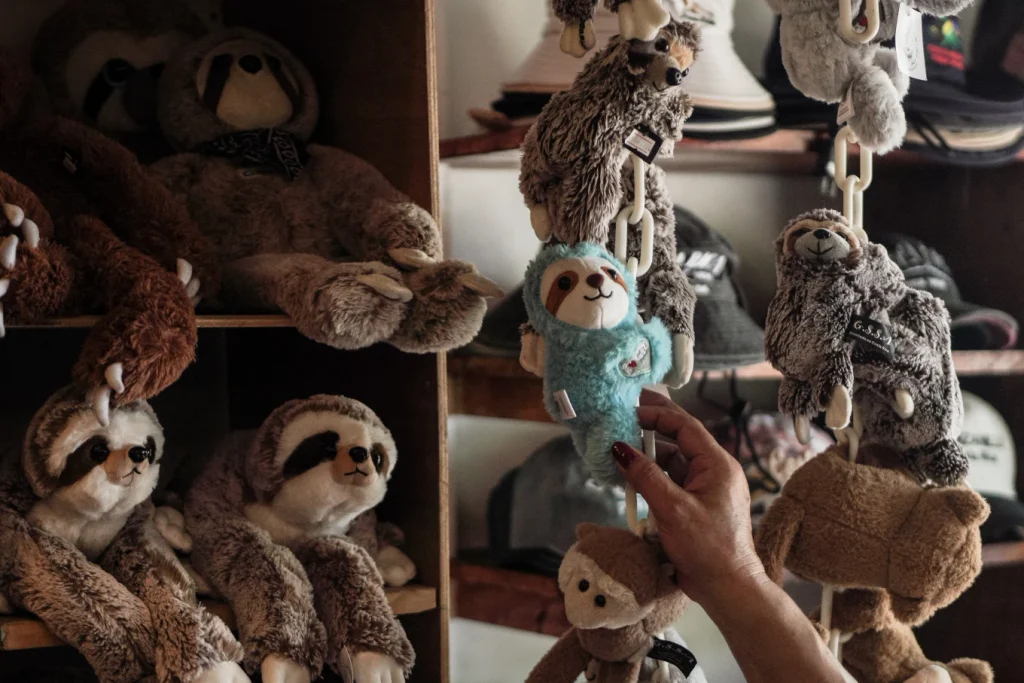
Despite their popularity as symbols of Costa Rica’s wildlife, researchers still lack reliable estimates of the country’s total sloth population.
Determining how many animals live in dense tropical forests is particularly difficult because sloths move slowly, spend long periods concealed in vegetation, and can be challenging to spot from the ground.
To improve monitoring, conservationists are experimenting with new approaches.
The Sloth Conservation Foundation is exploring the use of thermal imaging drones, specially trained detection dogs, and systematic field surveys.
These tools could help researchers locate animals more effectively and gather better information about their distribution.
Improved population data would also allow scientists to understand whether sloth numbers are changing and identify areas where additional protection may be necessary.
Cliffe has noted that two wildlife rescue centers in the region receive approximately three sloths per day.
However, without comprehensive historical data, it remains difficult to determine whether rescue numbers are increasing over time.
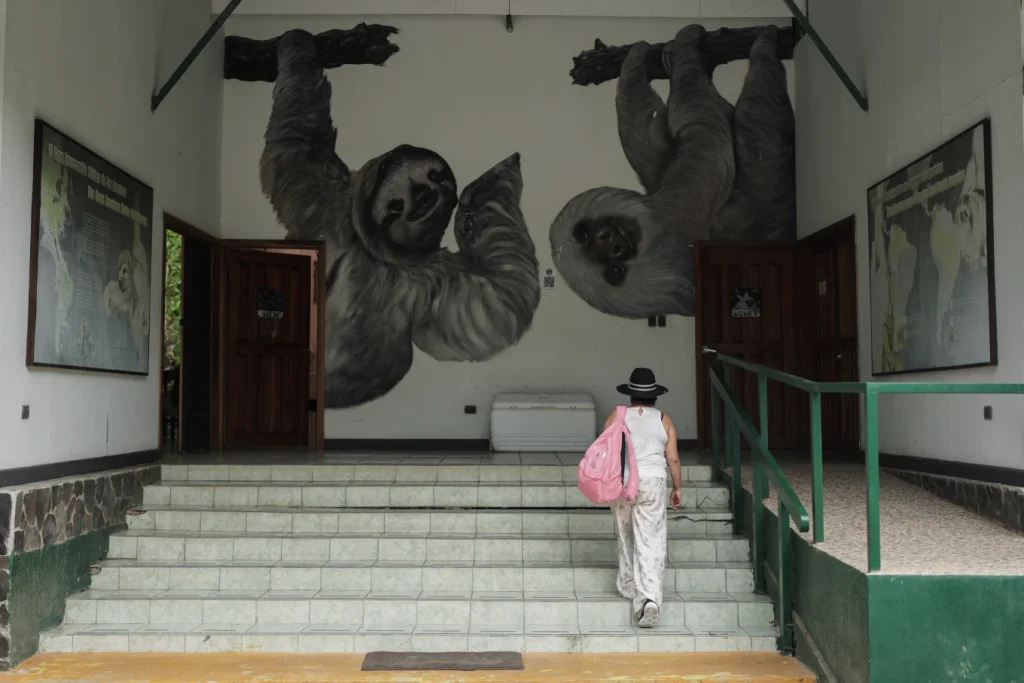
That uncertainty makes continued research especially important.
A Simple Rope Can Make an Extraordinary Difference
Along Costa Rica’s Caribbean coast, conservation teams continue working with property owners, hotels, and local communities to improve wildlife safety.
When sloths are spotted in areas divided by buildings or roads, the team assesses whether a rope bridge could provide a safer connection.
The project also involves maintaining existing crossings.
Because ropes deteriorate in tropical conditions, many need replacing after approximately four or five years.
The long-term vision is to restore natural forest connections wherever possible.
As newly planted trees grow and their branches eventually meet, they may create continuous pathways that allow sloths to travel without artificial bridges.
For now, the ropes remain an important tool.
Each bridge reconnects a small part of the landscape, offering animals another opportunity to move safely through an environment increasingly shaped by human activity.
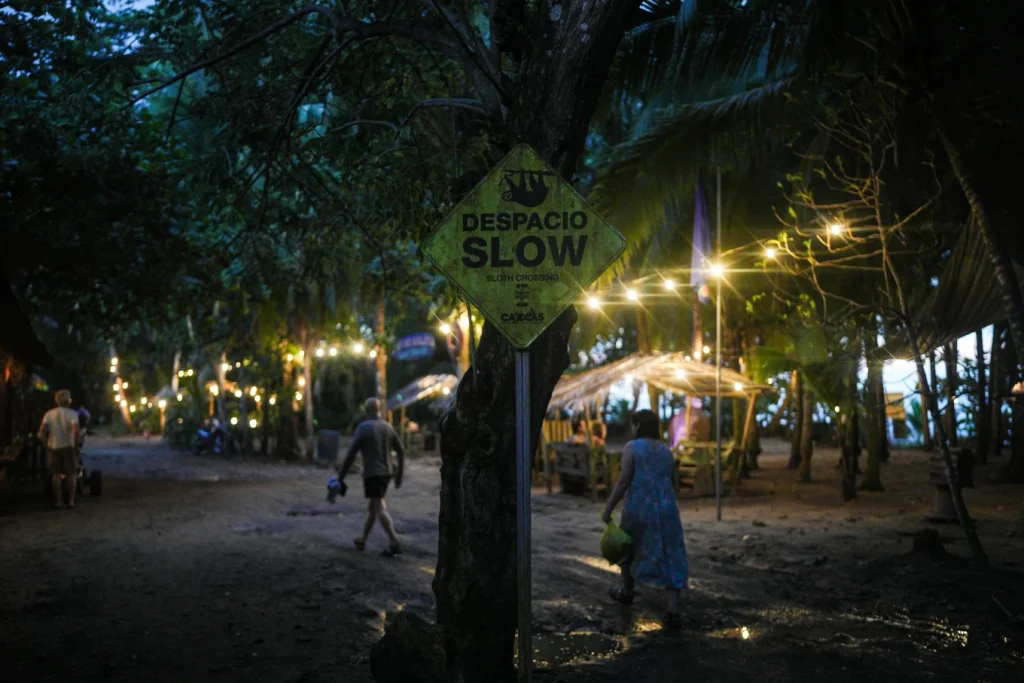
The conservation effort demonstrates that protecting wildlife doesn’t always require enormous structures or complicated technology.
Sometimes, a carefully positioned rope between two trees can help prevent an animal from encountering a life-threatening danger.
And when hundreds of these small interventions work together, their impact can become substantial.
Protecting Sloths Means Protecting Their Forest Home
The story of Costa Rica’s rope bridges is about far more than helping slow-moving animals cross from one tree to another.
It reflects a growing understanding that wildlife conservation must account for the ways roads, tourism, agriculture, and residential development alter natural habitats.
For sloths, staying above the ground is often essential to remaining safe.
By preserving forest connections, creating alternative routes, and caring for injured animals, conservationists are working to give these remarkable mammals a better chance of survival.
Their efforts also demonstrate the importance of cooperation between scientists, local communities, businesses, and property owners.
Planting trees, protecting existing branches, maintaining wildlife corridors, and installing rope bridges can all contribute to healthier ecosystems.
The challenges remain significant, but the work already underway offers meaningful reasons for hope.
For a sloth facing a dangerous gap in the forest canopy, a single rope may seem like a small thing. Yet that simple connection can provide something priceless: a safer path through the trees and another chance to survive in the wild.