
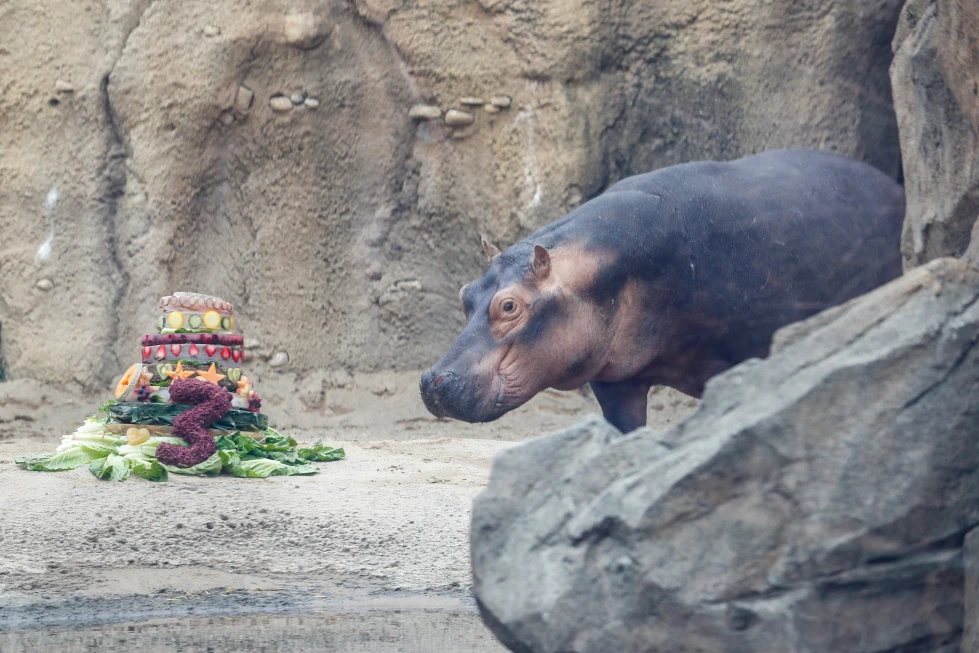
Fiona, the beloved hippopotamus who captured hearts around the world after surviving a premature birth, is facing another serious health challenge.
The nine-year-old Nile hippo at the Cincinnati Zoo & Botanical Garden accidentally swallowed a knitted hat that entered her enclosure earlier this month.
Since then, veterinarians have been working around the clock to monitor her condition and help her pass the object safely.
But the situation has become increasingly concerning.
An ultrasound revealed unusual bunching in part of her intestines, and a colonoscopy failed to locate the swallowed hat.
Even more worrying, veterinarians have said that surgery is not a viable option for a fully grown hippopotamus.
For Fiona’s caregivers and the countless people who followed her remarkable survival story as a newborn, the latest update has brought renewed concern.
How Did a Hat End Up Inside Fiona’s Enclosure?
The unusual incident happened in early November at the Cincinnati Zoo in Ohio.
According to zoo spokesperson Michelle Curley, a visitor tossed a knitted hat into the air.
The hat was caught by a ceiling fan and propelled through a small opening above the habitat’s viewing windows.
It then landed inside Fiona’s enclosure.
The hippo encountered the unexpected object and swallowed it.
Although the visitor did not directly place the hat inside the habitat, the accident created a potentially dangerous situation.
A knitted hat is not something a hippopotamus can digest normally.
Once swallowed, the fabric can travel through the digestive system and potentially become lodged along the way.
For Fiona, that possibility prompted close veterinary monitoring.
Fiona Undergoes Ultrasound and Colonoscopy
As the days passed without confirmation that Fiona had passed the hat, her veterinary team began investigating further.
On Tuesday, November 17, Fiona was sedated for another medical evaluation.
The team performed an ultrasound to examine her digestive tract.
According to Dr. Mike Wenninger, the Cincinnati Zoo’s director of animal health, the scan revealed some bunching of the intestines.
That finding suggested that material could still be moving through her small intestine.
However, the ultrasound did not confirm that the hat had been successfully passed.
Veterinarians also attempted a colonoscopy.
With assistance from specialists and equipment provided by the Columbus Zoo, the team used a scope approximately nine feet long.
Despite the unusually long instrument, they were unable to reach far enough into Fiona’s digestive tract to locate the suspected obstruction.
The results left her caregivers with difficult decisions about how to proceed.
Why Surgery Isn’t an Option for Fiona
One of the most troubling parts of the zoo’s update involved the limitations of available treatment.
According to Wenninger, veterinary specialists advised the team that surgery was not a viable option for a full-grown hippopotamus in Fiona’s situation.
Hippos are extremely large animals with complicated medical and anesthetic considerations.
Operations involving their abdominal organs present significant challenges.
Because surgical removal isn’t considered feasible, Fiona’s care team is focusing on supportive treatment while hoping the material can pass naturally.
That includes monitoring her gastrointestinal function, maintaining hydration, and watching for changes that could suggest her condition is improving or worsening.
The team has not announced that the obstruction has cleared.
Zoo Staff Provide Around-the-Clock Care
Fiona’s caregivers have been monitoring her continuously.
Veterinarians are administering fluids to keep her hydrated while her digestive system works to move the swallowed object.
Staff are also offering some of her favorite foods in an effort to encourage her to eat.
Her appetite has been affected, making nutritional support and close observation particularly important.
The team is watching for signs that the hat may be progressing through her digestive system.
Although the ultrasound findings suggested movement through the intestines, that alone does not guarantee a successful outcome.
The zoo continues to approach her condition cautiously.
For the people who have cared for Fiona since she was a newborn, the priority is ensuring that she receives the best support possible.
Fiona Became Famous After Surviving a Remarkable Premature Birth
Fiona’s health scare has attracted widespread attention because of the extraordinary story that made her famous.
She was born at the Cincinnati Zoo on January 24, 2017, approximately six weeks prematurely.
At birth, she weighed just 29 pounds.
That was significantly below the expected weight of a newborn Nile hippopotamus.
She was so small and weak that she initially couldn’t stand independently or nurse from her mother.
Her survival required intensive intervention from zoo veterinarians and animal care staff.
The team developed specialized feeding and care routines, closely monitored her development, and worked to help her overcome repeated health challenges.
Her progress was shared through photographs, videos, and updates that attracted an enormous international following.
Fans celebrated each milestone as Fiona learned to stand, swim, and grow stronger.
Over time, she became one of the zoo’s most recognizable animals.
The Hippo Who Inspired Books and Merchandise
Fiona’s extraordinary beginning turned her into a symbol of perseverance.
Her story inspired children’s books, commemorative merchandise, and even a specially branded beer.
She also became the subject of a collectible bobblehead.
But her popularity has always been rooted in more than her appearance.
People were drawn to the dedication of the team that helped her survive when her chances seemed uncertain.
Watching Fiona overcome the challenges of her premature birth created an emotional connection between the animal and millions of supporters.
Now, nearly a decade later, many of those same fans are following another difficult chapter in her life.
Why Foreign Objects Are Dangerous for Zoo Animals
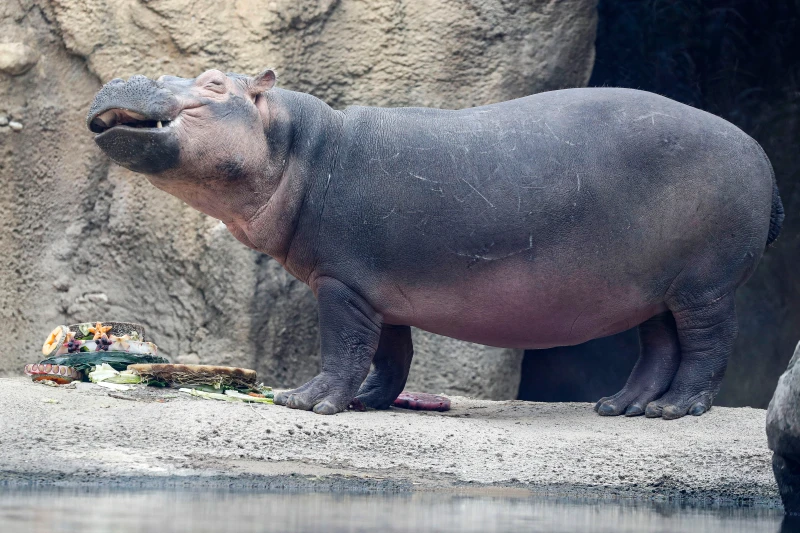
Fiona’s experience highlights an important risk faced by animals living in managed habitats.
Objects that accidentally enter an enclosure can become dangerous if an animal investigates, chews, or swallows them.
Fabric, plastic, and other materials may not break down normally during digestion.
Depending on their size and composition, they can create blockages, irritation, or other complications.
For large animals, removing swallowed foreign objects can be especially challenging.
Even advanced veterinary equipment may not reach every area of the digestive tract.
This is why zoos emphasize keeping personal belongings and other objects outside animal habitats.
What begins as a seemingly harmless accident can result in a serious medical emergency.
In Fiona’s case, a single knitted hat has led to repeated veterinary examinations and continuous observation.
What Happens Next for Fiona?
As of November 18, 2026, Fiona remains under the supervision of the Cincinnati Zoo’s veterinary team.
Her caregivers are continuing supportive treatment and monitoring her digestive health.
The immediate hope is that the swallowed hat will move through her intestines and pass without requiring an invasive procedure.
However, the zoo has not confirmed that this has happened.
The situation remains uncertain, and further updates will depend on how Fiona responds to treatment.
For now, her caregivers are focused on keeping her hydrated, supporting her appetite, and checking for changes in her condition.
Cincinnati Zoo’s Beloved Survivor Faces Another Challenge
Fiona has already overcome extraordinary obstacles.
Born dangerously premature in 2017, she survived thanks to intensive veterinary care and the dedication of her caregivers.
Her remarkable recovery turned her into a worldwide favorite.
Now, after accidentally swallowing a knitted hat, she is facing another health challenge.
Veterinarians have used ultrasounds, a nine-foot colonoscopy scope, fluids, and continuous monitoring to assess and support her.
But with surgery ruled out, the team must hope her digestive system can pass the object safely.
For Fiona’s many supporters, the latest developments are concerning.
Yet the zoo team continues doing everything it can to help her through the ordeal.
Fiona became famous for beating the odds as a tiny newborn. Nine years later, the world is once again hoping that Cincinnati’s beloved hippo can overcome another difficult medical challenge.
For official information about Fiona, visit the Cincinnati Zoo & Botanical Garden.