

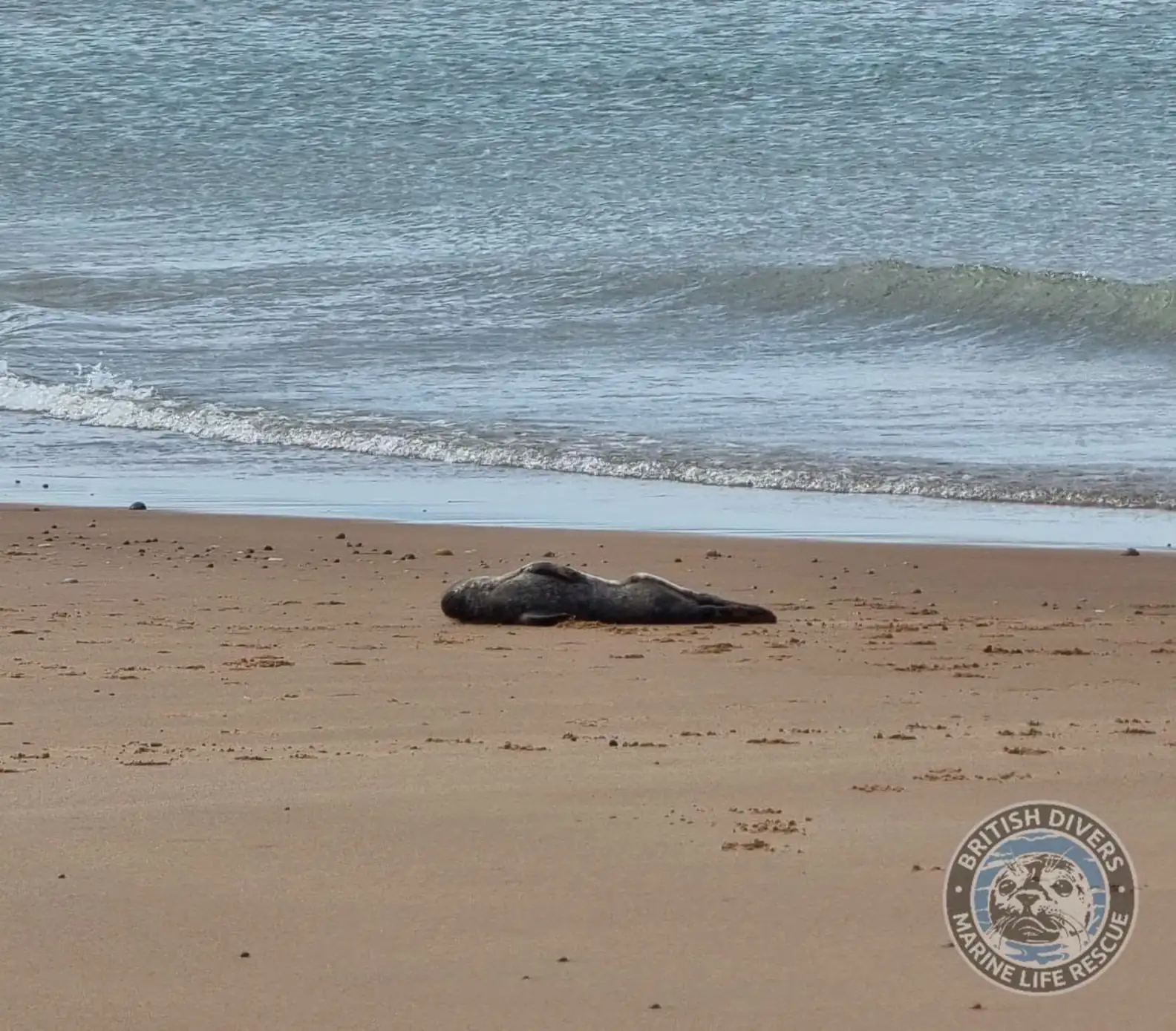
When a tiny seal pup was discovered lying motionless on a beach in northern Scotland, rescuers immediately knew something was terribly wrong.
The young animal wasn’t moving or making a sound.
He was dangerously underweight, severely weakened, and apparently too exhausted even to call out.
For the wildlife medics who rushed to help him, his silence was especially worrying.
But despite his critical condition, the little seal still had a chance.
And thanks to the dedication of two wildlife rescue organizations, the pup who initially seemed unlikely to survive would eventually make a remarkable recovery.
Tiny Seal Pup Found Silent and Motionless on Scottish Beach
The rescue began when members of the public spotted a vulnerable common seal pup along the northern Scottish coastline.
The animal was lying alone on the shore and appeared unusually weak.
Concerned witnesses contacted the emergency hotline operated by British Divers Marine Life Rescue (BDMLR).
The organization dispatched trained marine mammal medics to investigate.
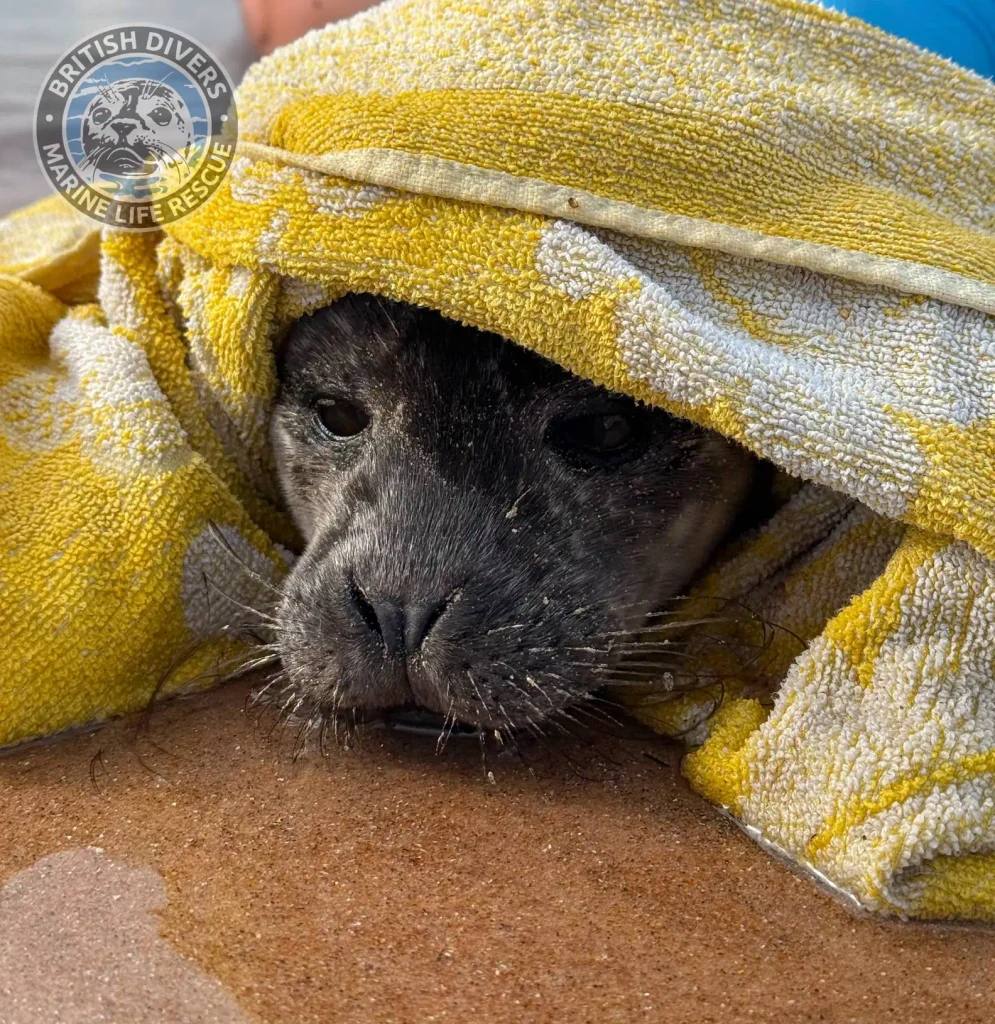
When the team arrived, they discovered a seal pup in serious distress.
Unlike healthy seal pups that may vocalize or respond to activity around them, this animal remained completely silent.
Emily Mayman, BDMLR’s national rescue coordinator, believed the pup was conserving what little energy he had left.
His body was severely underweight, and he was too weak to behave normally.
The medics recognized that he needed immediate assistance.
Without specialized care, his chances of survival were uncertain.
Wildlife Medics Rush Critically Ill Seal Pup Into Emergency Care
After assessing the pup’s condition, the rescuers transported him to a marine mammal triage facility.
There, he received urgent supportive care intended to stabilize his fragile condition.
For the next 48 hours, the team worked to keep him alive.
He was provided with fluids, carefully managed nutrition, and additional warmth from heat lamps.
The medics monitored him closely, watching for changes in his breathing, body temperature, and overall condition.
The goal was to stabilize him enough to survive a longer journey to a dedicated wildlife rehabilitation center.
After two days of intensive support, he was finally considered stable enough for transfer.
The young seal was transported to the Scottish SPCA’s National Wildlife Rescue Centre.
There, staff gave him a name.
Tardi.
But although Tardi had survived the first critical stage of his rescue, he was still far from healthy.
Veterinarians Discover Tardi Is Fighting Several Serious Health Problems
When Tardi arrived at the Scottish SPCA’s wildlife rescue center, his medical condition remained extremely concerning.
He was severely dehydrated and struggling to tolerate food.
His lungs were in poor condition, making breathing difficult.
He was also unable to regulate his own body temperature properly.
These problems made even basic recovery challenging.
Chloe Burrell, a communications officer for the Scottish SPCA, recalled being particularly worried about Tardi when he first arrived.
His prognosis was guarded, meaning the medical team could not confidently predict whether he would survive.
The staff knew they were facing a difficult case.
Tardi needed constant care, carefully managed feeding, and medical treatment to address several serious health concerns at once.
But his caregivers were determined to give him every possible chance.
Rescue Team Provides Around-the-Clock Care to Save the Baby Seal
To treat Tardi’s severe dehydration, veterinary staff administered intravenous fluids.
He also received prescribed medication and additional warmth to help maintain his body temperature.
Because he struggled to tolerate feeding, caregivers offered him very small meals at frequent intervals.
At times, he needed to be fed every couple of hours.
The team monitored his response closely and adjusted his treatment as his condition changed.
Progress was slow at first.
But gradually, staff started noticing small improvements.
His breathing became easier.
His lungs began sounding healthier during examinations.
He also became better able to maintain his own body temperature.
Perhaps most importantly, he started accepting his food more comfortably.
Each improvement was an encouraging sign for a pup who had arrived in such poor condition.
Still, the rescuers were hoping to see something more.
They wanted Tardi to begin showing a natural interest in eating on his own.
And one morning, that long-awaited moment finally arrived.
One Small Moment Gives Rescuers Hope for Tardi’s Future
While caring for Tardi, the team had been leaving fish for him in the hope that he would eventually begin exploring food independently.
Then, one day, staff discovered something exciting.
Tardi had started chewing on one of the fish.
It might have seemed like a small milestone, but to his caregivers, it was a major breakthrough.
For a seal that had previously struggled to tolerate assisted feeding, voluntarily showing interest in fish was an encouraging indication that he was feeling stronger.
The moment gave the team renewed hope.
From that point forward, his progress became more noticeable.
He gradually began eating without assistance.
His need for medication eventually ended.
And as his health continued to improve, Tardi was finally ready to leave the most intensive stage of rehabilitation behind.
Seal Pup Makes Friends With Other Rescued Seals
Once Tardi became healthier, the rescue team moved him into a pool with another rehabilitating seal.
It was an important step toward preparing him for life in the ocean.
Swimming would help him rebuild his strength, while spending time with other seals would allow him to practice natural social behaviors.
Eventually, Tardi progressed into one of the center’s pre-release pools.
There, he joined two other rescued seals named Bug and Mozzy.
The three animals became companions during their rehabilitation.
According to Burrell, Tardi appeared to be enjoying the company of his new friends.
His daily routine had changed dramatically from the desperate conditions in which he was found.
Instead of struggling to breathe or remain warm, Tardi could now spend his time swimming, resting in the sunshine, playing with enrichment items, and eating his meals.
For staff who remembered his critical condition, the transformation was extraordinary.
Tardi Gains More Than 30 Pounds During Recovery
One of the clearest signs of Tardi’s progress was his remarkable weight gain.
When rescuers first found him, the tiny common seal pup weighed approximately 20 pounds.
At the time of the latest update, he weighed around 53 pounds.
The change represents a gain of approximately 33 pounds.
For a pup who had been severely malnourished and dehydrated, the increase was an important achievement.
But Tardi’s caregivers were not ready to release him just yet.
He still needed to gain more weight and demonstrate that he was fully prepared to survive in the wild.
When Will Tardi Be Released Back Into the Ocean?
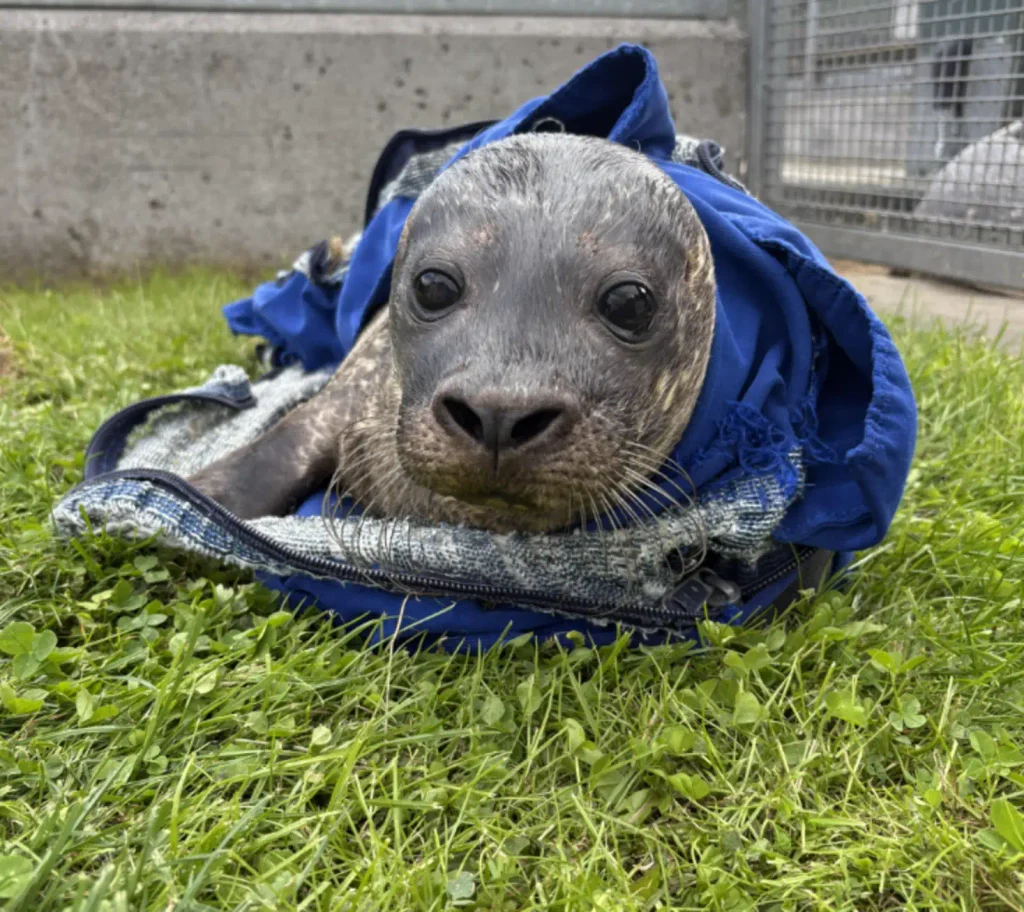
The Scottish SPCA team hopes to return Tardi to the wild once he reaches a suitable weight and meets the other requirements for release.
His reported target is approximately 77 pounds.
However, reaching that number alone will not determine when he can return to the sea.
The team must also be satisfied with his overall health, swimming ability, feeding behavior, and readiness to survive independently.
If he continues progressing well, Tardi is expected to be released along the Scottish coastline near an established seal colony.
For now, he remains in rehabilitation alongside Bug and Mozzy.
The exact date of his release has not been announced.
Rescuers Celebrate a Recovery They Didn’t Expect
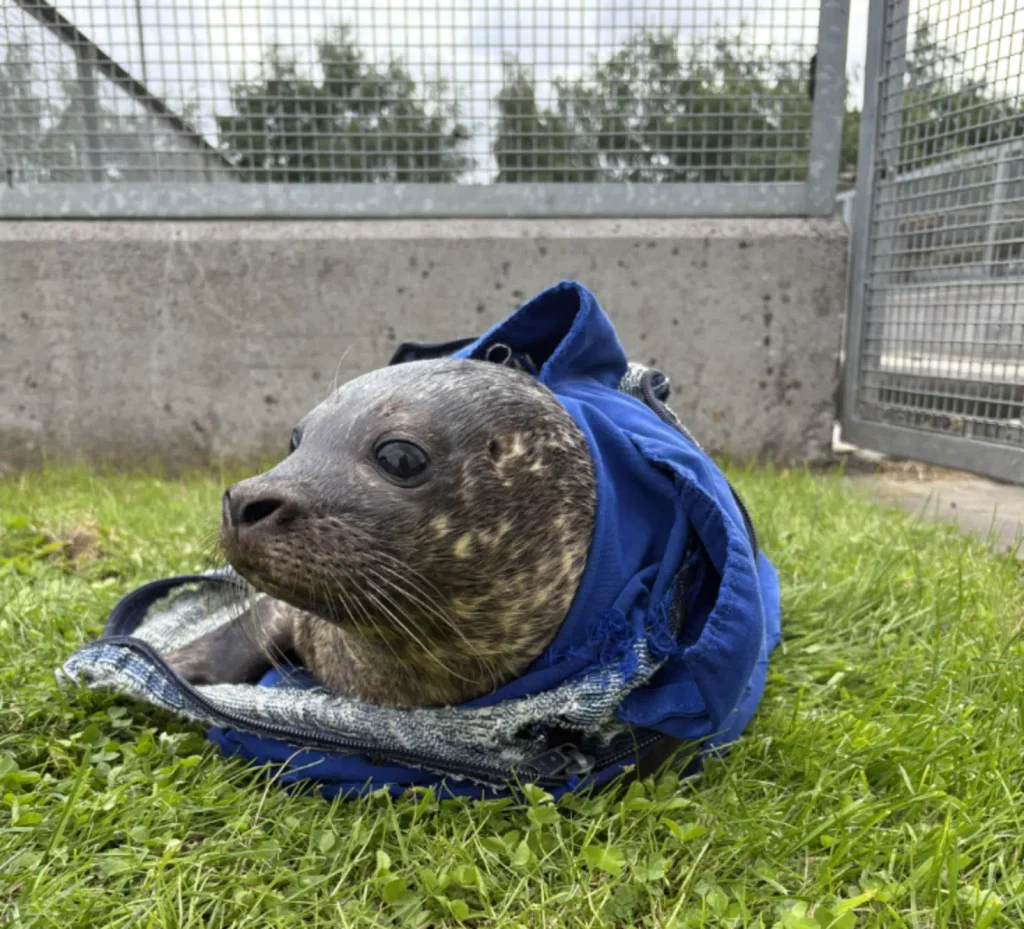
For the people who cared for Tardi, his transformation has been deeply rewarding.
When the young seal arrived, he was critically ill, unable to regulate his temperature, and struggling with serious respiratory problems.
His prognosis was uncertain.
Yet after weeks of carefully managed treatment, he began eating independently, gaining weight, and enjoying life alongside other seals.
Even Burrell admitted that the extent of his improvement surprised her.
Mayman, who helped coordinate his initial rescue, sees Tardi’s progress as an example of why responding quickly to distressed seal pups is so important.
The case also demonstrates the difference that cooperation between rescue organizations can make.
BDMLR medics provided emergency care and helped stabilize Tardi.
The Scottish SPCA then continued his longer-term treatment and rehabilitation.
Together, their efforts turned a frightening situation into a hopeful recovery story.
From Silent and Weak to Swimming With Friends
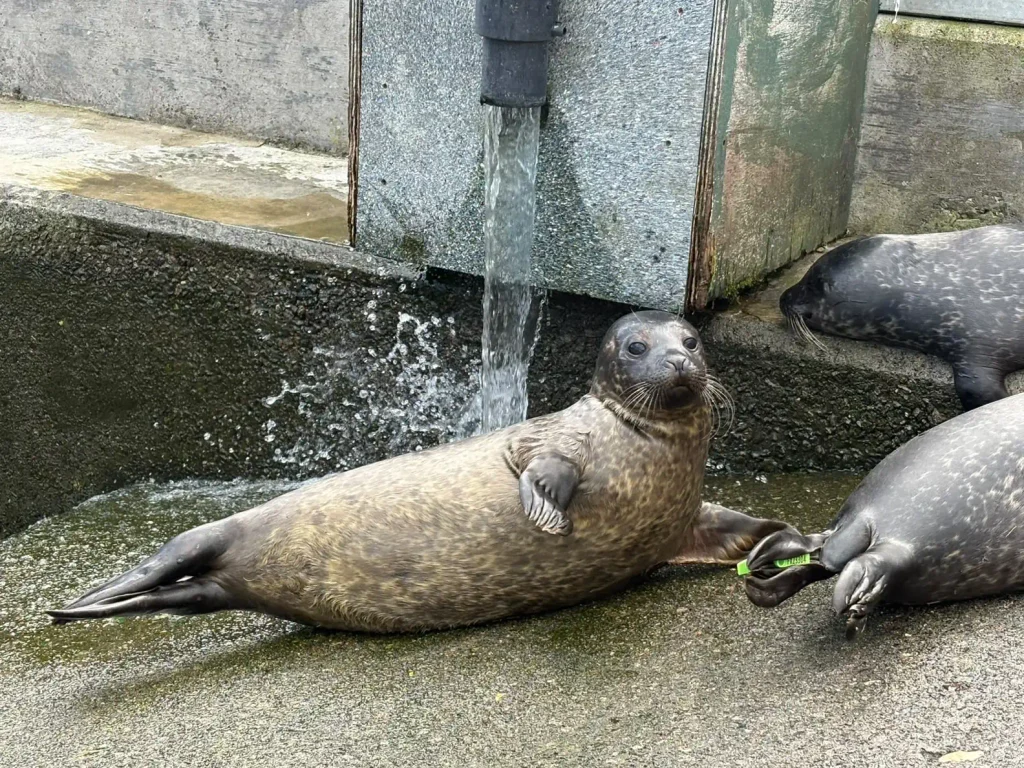
Tardi’s journey began on a lonely stretch of Scotland’s northern coastline.
He was silent, barely moving, and dangerously weak.
Rescuers rushed him into emergency care, unsure whether he would survive.
But slowly, the tiny seal began improving.
First came better breathing and temperature regulation.
Then came his first voluntary bites of fish.
Eventually, he was strong enough to eat independently, swim in a larger pool, and join other recovering seals.
Now, weighing around 53 pounds, he is continuing to prepare for a future back in the ocean.
The little seal who was once too weak to make a sound is now swimming, eating, and playing with new companions — one step closer to returning to the wild.