

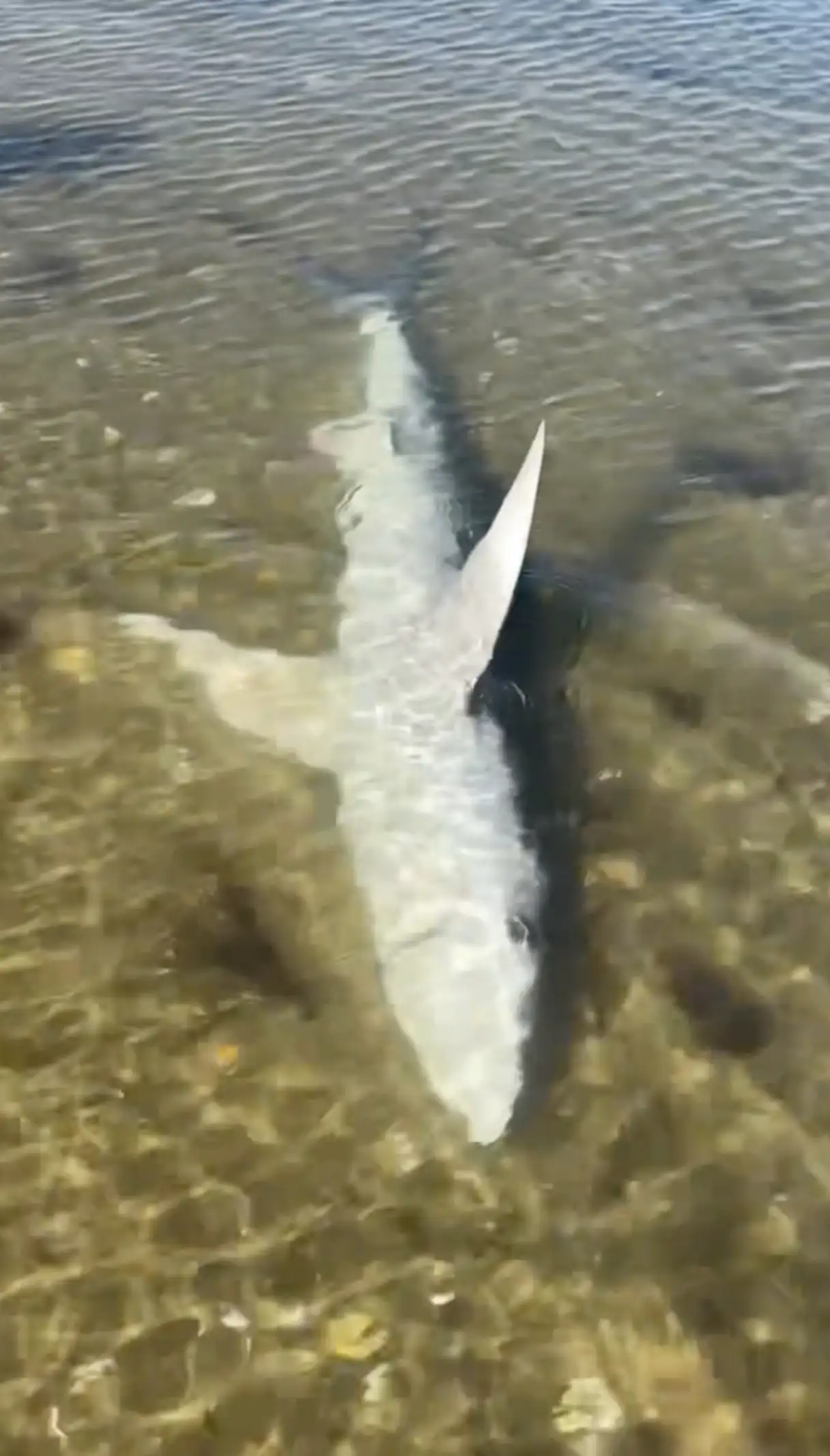
“He was in trouble …”
A group of wildlife volunteers searching for stranded ocean sunfish along the Massachusetts coastline never expected to encounter a shark in desperate need of help.
But while patrolling the shallow waters of Wellfleet Harbor, the team spotted something unusual.
A blue shark was lying upside down near the shoreline, apparently unable to turn himself over or return to deeper water.
With the tide steadily receding, the animal was in danger of becoming completely stranded on the beach.
The volunteers knew they had to act quickly.
And although rescuing a shark wasn’t part of their original mission, they were determined to give the struggling animal a chance to swim free.
Wildlife Volunteers Make Unexpected Discovery in Wellfleet Harbor
The rescue began when volunteers from the New England Coastal Wildlife Alliance (NECWA) were surveying the shoreline around Wellfleet Harbor in Massachusetts.
The organization works to protect marine wildlife, including ocean sunfish that sometimes become trapped in shallow coastal waters.
During their search, the volunteers noticed an animal lying in an unusual position.
At first, the sight was difficult to understand.
A shark was resting upside down in the shallow water.
One volunteer, Catherine Bilodeau, immediately recognized that something was wrong.
Having previous experience working with sharks, she understood that the animal’s position could indicate serious trouble.
The shark appeared stunned and was unable to move back toward deeper water.
Although there were no obvious external injuries, the volunteers were concerned that the animal might not survive if it remained trapped.
And time was running out.
Receding Tide Puts Stranded Blue Shark in Danger
The shark was found near Indian Neck in Wellfleet, an area where changing tides can quickly expose sections of the shoreline.
As the volunteers assessed the situation, the water continued to recede.
If the shark remained where he was, he could soon be left on the exposed beach.
That would create a potentially dangerous situation for an animal that relies on water flowing across its gills to breathe.
The team realized that waiting too long could make the rescue more difficult.
But they also understood that attempting to handle a shark without proper guidance could be dangerous.
Rather than immediately approaching the animal, the volunteers contacted a shark specialist for advice.
Shark Expert Helps Volunteers Plan a Safe Rescue
The NECWA team reached out to John Chisholm, a shark scientist familiar with the region’s marine wildlife.
They described the animal’s unusual position and explained that the tide was going out.
After assessing the information provided, Chisholm indicated that the blue shark appeared generally healthy.
The immediate problem seemed to be that he was unable to turn himself upright or navigate out of the shallow water.
The scientist recommended moving the shark toward deeper water.
However, he also warned the volunteers to keep clear of the animal’s mouth.
Even a distressed or disoriented shark can react suddenly, making careful handling essential.
With expert guidance, the team developed a plan to help the animal without unnecessarily exposing themselves to danger.
Volunteers Work Together to Pull Shark Into Deeper Water
Catherine was joined by fellow volunteers Lars and Keegan for the rescue.
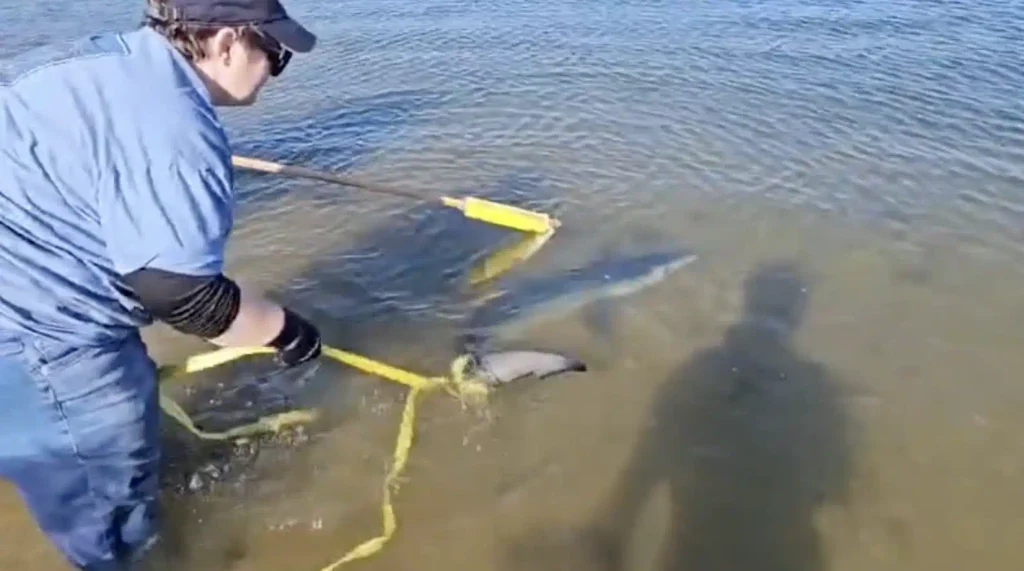
The team approached the shark carefully, keeping its powerful jaws in mind.
Catherine positioned a rope around the shark’s tail so the group could move him toward deeper water.
Meanwhile, Lars remained near the animal’s head with a pole, ready to help maintain a safe distance if the shark suddenly turned.
The volunteers coordinated their movements as they worked to guide the animal away from the shallows.
It was a delicate operation.
They needed to move the shark quickly enough to prevent further stranding while avoiding injury to the animal and themselves.
Fortunately, the plan worked.
Within minutes, the volunteers managed to move the shark into deeper water.
Then they witnessed the moment they had been hoping for.
Rescued Shark Finally Flips Upright and Swims Away
As soon as the blue shark reached deeper water, he was able to turn himself right side up.
For the volunteers, the change was an enormous relief.
The animal that had been lying helplessly upside down was finally moving normally again.
The team released the strap from his tail and gave him space.
Moments later, the shark swam away into the surrounding waters.
After watching him struggle in the shallows, seeing him disappear into deeper water was an emotional reward for everyone involved.
The rescue had taken only minutes once the volunteers began moving the animal.
But without their intervention, the outgoing tide could have left him stranded on the exposed beach.
The team had arrived at exactly the right time.
The rescue was captured in videos shared online, showing both the volunteers’ efforts and the shark’s return to the water.
Watch the original shark rescue footage.
Watch the blue shark swim away after being rescued.
Blue Shark Rescue Wasn’t Part of the Volunteers’ Original Mission
What made the encounter especially remarkable was that the volunteers had not gone out looking for sharks.
Their original mission was to search for stranded ocean sunfish.
These unusual, large-bodied fish can sometimes become trapped in shallow coastal areas, where rescuers may need to help them return to suitable water.
The volunteers were prepared to look for those animals.
Instead, they discovered a blue shark facing an immediate problem.
Rather than continuing their original survey, they shifted their attention to the unexpected emergency.
For NECWA founder and president Krill Carson, the incident reflected the organization’s commitment to protecting marine wildlife.
The group’s guiding principle is simple: “Every Animal Counts.”
That philosophy helped shape the volunteers’ decision to assist an animal they hadn’t expected to encounter.
Why Sharks Sometimes Become Stranded in Shallow Water
Although sharks are powerful swimmers, they can occasionally find themselves in dangerous situations near shore.
Shallow water, tidal changes, and physical obstacles can make it difficult for an animal to return to open water.
In this case, the blue shark appeared to have difficulty turning around or righting himself.
The provided account does not establish why the shark ended up upside down.
However, the receding tide made his situation increasingly urgent.
Once the volunteers moved him into deeper water, he was able to regain his normal swimming position and leave the area.
The successful release suggests that the shark was capable of swimming away after receiving assistance, although his condition after departing was not subsequently documented in the account.
Rescue Highlights the Importance of Protecting Marine Wildlife
The incident also demonstrates the value of having experienced wildlife volunteers monitoring coastal habitats.
Because the NECWA team was already surveying the shoreline, they noticed the shark before the tide left him completely stranded.
Their decision to contact a qualified shark specialist helped them approach the situation with a clear plan.
The rescue required teamwork, careful positioning, and an understanding of the potential risks involved.
It is important to remember that sharks are wild animals and can be dangerous to handle.
Members of the public who encounter a stranded or distressed shark should contact local marine wildlife authorities rather than attempting a rescue without appropriate training.
Professional guidance can help protect both the animal and the people trying to assist.
An Unexpected Encounter Ends With a Shark Swimming Free
The volunteers began their day searching for ocean sunfish along the Massachusetts coast.
Instead, they discovered a blue shark lying upside down in shallow water, with the tide quickly disappearing around him.
They could have been too late.
But Catherine, Lars, and Keegan worked together, following advice from shark specialist John Chisholm, to move the animal into deeper water.
Within minutes, the shark turned upright and swam away.
For the team, it was a moment of enormous relief.
Their unexpected rescue demonstrated how much difference a small group of dedicated people can make when they encounter wildlife in trouble.
They went looking for stranded sunfish, but ended up saving a shark — proving that sometimes the most important rescue is the one nobody planned.