

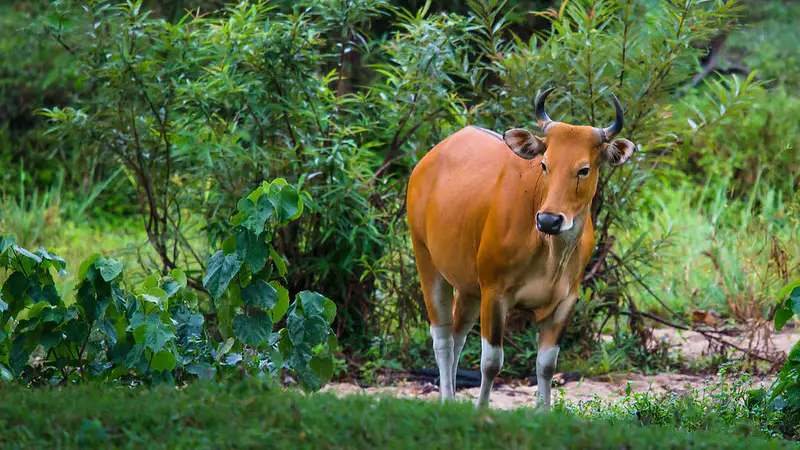
Nearly 180 years ago, a small group of wild cattle was transported from Indonesia to a remote part of northern Australia.
Nobody could have predicted what would happen next.
While the animals gradually established a thriving population in their new surroundings, their relatives back in Indonesia faced a very different future.
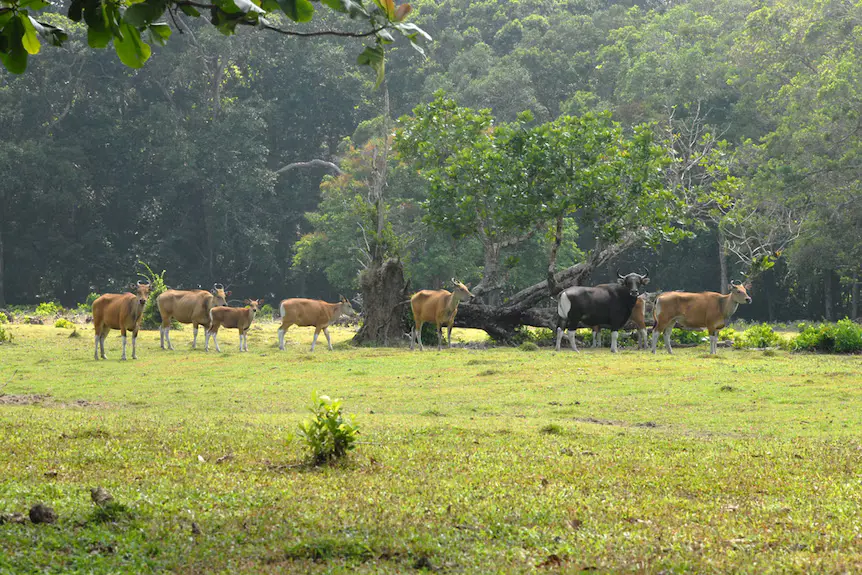
Today, approximately 10,000 banteng cattle roam freely across Australia’s Cobourg Peninsula, while estimates suggest that only around 1,000 remain in the wild in Indonesia.
Now, a surprising conservation proposal could bring the story full circle.
Indonesia’s ambassador to Australia believes some of these animals might eventually return to their ancestral homeland, potentially helping protect a species facing serious threats in its native environment.
Thousands of Endangered Banteng Are Thriving in Northern Australia
On the remote Cobourg Peninsula, approximately 200 kilometres northeast of Darwin, thousands of wild cattle roam through the tropical landscapes of Australia’s Northern Territory.
These animals are banteng, a species of wild cattle native to Southeast Asia.
Although they are classified as feral animals in Australia because they were introduced by humans, their conservation status in parts of their native range presents a very different picture.
Banteng populations have declined significantly across Southeast Asia, making their survival an important concern for wildlife conservationists.
In Indonesia, estimates cited by the country’s ambassador suggest that roughly 1,000 wild banteng remain.
Meanwhile, Australia’s introduced population has grown into a substantial free-ranging herd.
The contrast has raised a fascinating question.
Could animals once transported away from Indonesia now help conserve the species in its original homeland?
For Indonesian ambassador Siswo Pramono, the possibility deserves serious consideration.
How 20 Banteng Became a Population of Around 10,000
The story of Australia’s banteng population began in 1849.
At the time, a colonial settlement on the Cobourg Peninsula received approximately 20 banteng from Bali, Indonesia.
The settlement ultimately failed, but the animals remained.
Over the generations that followed, the banteng adapted to the region’s tropical environment and established a free-ranging population.
Without the original settlers maintaining control of the animals, the herd continued reproducing in the wild.
What started with just 20 individuals eventually developed into a population estimated at around 10,000.
Today, many of these animals live in and around Garig Gunak Barlu National Park.
Their presence represents an unusual chapter in Australian wildlife history.
Unlike native species that evolved in the region, banteng arrived through human activity.
Yet while Australia considers them introduced animals, their descendants may now hold valuable genetic information for conserving the species internationally.
Scientists Discover Something Remarkable About Australian Banteng
In 2006, researchers published a study examining the genetic characteristics of banteng living on the Cobourg Peninsula.
Scientists analyzed samples from 54 animals to determine whether the Australian herd had interbred with other cattle species.
The results revealed an important finding.
The sampled animals showed genetic characteristics consistent with pure-strain banteng, scientifically known as Bos javanicus.
This was significant because some domesticated cattle populations in Southeast Asia have experienced genetic mixing with other cattle species.
The Australian herd, despite originating from a small number of introduced animals, had retained distinctive banteng ancestry.
Researchers suggested that this population could have international conservation value.
However, the finding does not mean every animal is automatically suitable for reintroduction.
Any future conservation program would require detailed genetic assessment to determine whether particular animals were appropriate for the populations and habitats receiving them.
Indonesia Considers Bringing Wild Banteng Back Home
Indonesia’s ambassador to Australia, Dr. Siswo Pramono, has expressed interest in exploring cooperation between the two countries to help protect banteng.
He believes Australia’s population could potentially support conservation efforts in Indonesia.
One possibility would involve identifying suitable animals from the Northern Territory and eventually relocating them to protected areas in their native range.
However, Pramono emphasized that such a proposal would require careful scientific planning.
Genetic compatibility would be one of the most important considerations.
Animals selected for relocation would need to be appropriate for the Indonesian populations they were intended to support.
The ambassador has called for greater research cooperation between Australian and Indonesian national parks.
He hopes that shared scientific expertise could help establish whether returning banteng would be practical and beneficial.
For now, the idea remains at an exploratory stage.
No formal agreement to transfer animals has been announced.
Australia’s Wild Cattle Could Become an Unusual Conservation Resource
One of the most intriguing aspects of the proposal is how Australia has unintentionally become home to an important population of a threatened Asian animal.
The banteng were not originally introduced as part of a conservation effort.
Their establishment was largely the unexpected result of a failed nineteenth-century settlement.
Yet their descendants have survived for generations in a landscape far from their native range.
Pramono compared Australia’s role to that of a modern-day Noah’s Ark, reflecting the idea that introduced populations may sometimes preserve animals that are declining elsewhere.
It is an unusual conservation situation.
Normally, introduced species are discussed because of the environmental problems they can cause.
But the Australian banteng population demonstrates why the conservation value of some non-native animals can be more complicated.
These cattle may create local ecological challenges while also representing a potential genetic resource for the wider species.
Could New Banteng Be Introduced to Australia?
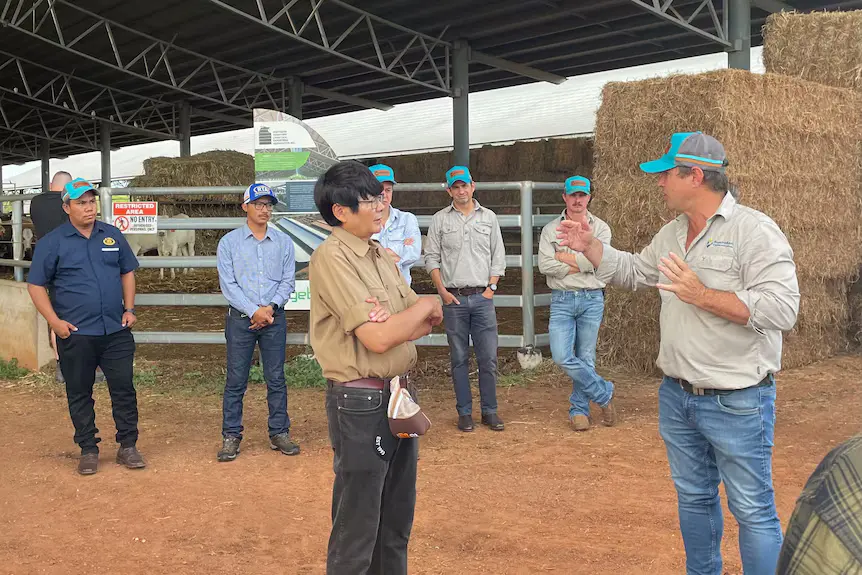
The Indonesian ambassador also raised another possibility.
Rather than focusing exclusively on returning Australian banteng to Indonesia, he suggested that additional animals might be introduced to the Northern Territory to improve genetic diversity.
This idea reflects an important challenge facing the Australian herd.
Although it has grown considerably, the entire population descends from a small number of founders.
Research published in 2007 found evidence of reduced genetic diversity associated with that population bottleneck.
A large population does not necessarily possess high genetic variation.
Introducing genetically appropriate animals could theoretically help address some limitations, but such a move would require careful evaluation of animal health, ecological impacts, and conservation objectives.
Any proposal would also need to consider the existing landscape and the wildlife already living there.
Feral Animals Create a Difficult Conservation Debate
The banteng situation has sparked a broader discussion about how Australia should manage introduced species that are threatened in other parts of the world.
Australia has a long history of dealing with animals introduced from overseas.
Some have established large wild populations, creating difficult management challenges for native ecosystems.
Banteng are not the only example.
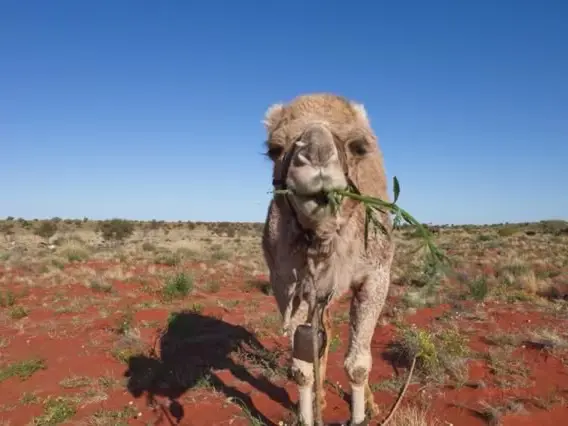
Dromedary camels, introduced during the nineteenth century, now roam parts of the Australian interior.
Professor Daniel Ramp, director of the Centre for Compassionate Conservation, believes discussions about introduced animals should consider both their ecological impacts in Australia and their broader conservation significance.
He has questioned whether threatened species living outside their native ranges should sometimes receive additional protection.
The issue is far from straightforward.
Large introduced herbivores can affect native vegetation, damage sensitive habitats, and create competition for resources.
Conservation decisions must therefore balance the welfare and international significance of introduced animals with the protection of Australia’s native biodiversity.
For banteng, that means recognizing the potential value of the herd without overlooking its environmental impacts.
International Cooperation Could Help Shape the Future of Banteng
Dr. Pramono believes cooperation between Indonesia and Australia could provide a path toward answering these difficult questions.
He has suggested that discussions begin between Northern Territory authorities and Indonesian national park representatives.
More formal government involvement could follow if the idea proves scientifically and practically viable.
Researchers would need to examine several factors before any animals could be relocated, including genetic suitability, disease risks, habitat conditions, and the potential effects on existing wildlife populations.
The welfare of the animals during capture, transport, and release would also require attention.
And any reintroduction would need long-term monitoring to determine whether relocated banteng could survive and reproduce successfully.
Although these challenges are substantial, the ambassador believes the species’ conservation importance makes further discussion worthwhile.
A Species That Left Indonesia 177 Years Ago Could Help Its Homeland Again
The story of Australia’s wild banteng is an unusual reminder of how unpredictable wildlife history can be.
In 1849, just 20 animals were transported from Bali to a remote Australian settlement.
The settlement disappeared, but the cattle survived.
Over the following 177 years, their descendants established a large wild population on the Cobourg Peninsula.
Meanwhile, banteng numbers declined in parts of their native Southeast Asian range.
Now, the animals once considered an accidental introduction could potentially become part of an international conservation effort.
Much remains uncertain.
Scientists would need to determine whether returning animals could genuinely strengthen Indonesian populations and whether the ecological and genetic risks could be managed.
But the possibility has introduced a new way of thinking about an unusual wildlife population.
Nearly two centuries after their ancestors were taken from Indonesia, Australia’s wild banteng may one day help protect the future of the species in the land where their journey began.