

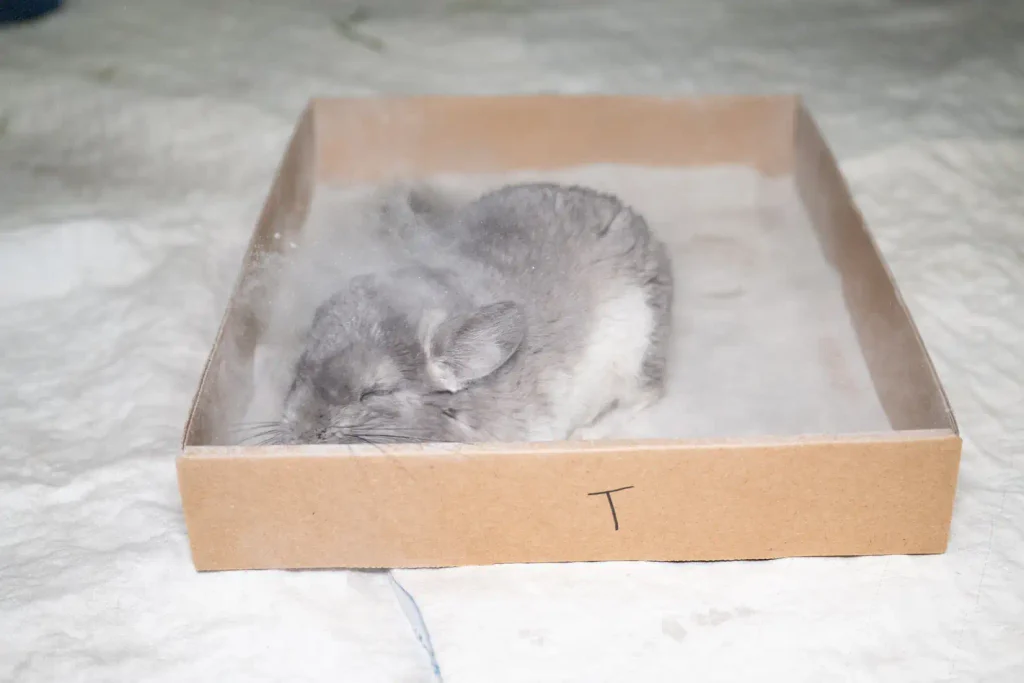
Now they’re taking dust baths for the first time ❤️
Hundreds of chinchillas have been rescued from a breeding facility in Ohio after animal welfare investigators discovered them living in cramped, filthy cages with little light and inadequate care. The massive rescue operation saved 951 animals, many of whom were suffering from serious health problems.
For the rescuers, the conditions were heartbreaking. But after two days of intensive work, every chinchilla was finally brought to safety, beginning a remarkable journey toward recovery.
Rescuers Discover Nearly 1,000 Chinchillas Living in Terrible Conditions
The rescue began when the U.S. Department of Justice requested assistance from Humane World for Animals, an international animal protection organization.
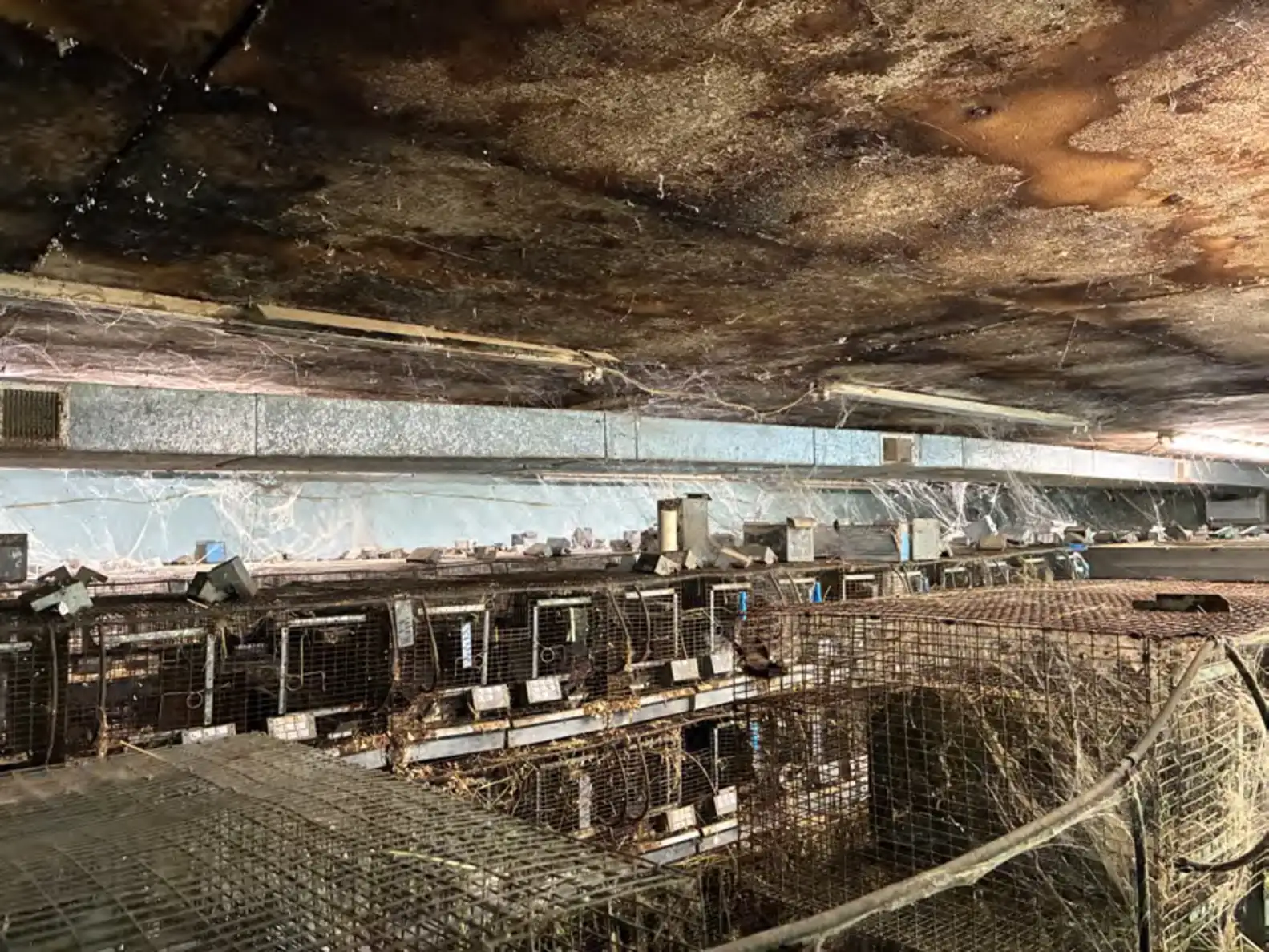
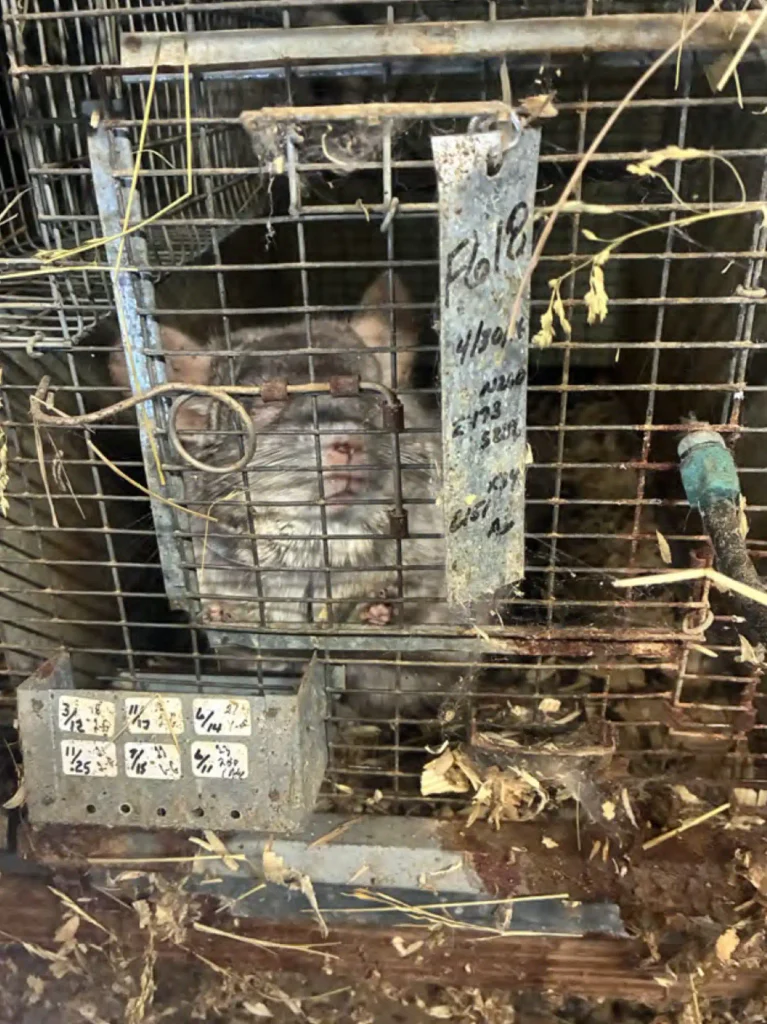
When the rescue team arrived at the Ohio breeding facility, they encountered a deeply disturbing scene.
Hundreds of chinchillas were confined to small cages inside dark, unsanitary rooms. Many had severely matted fur, inflamed skin, overgrown teeth, and other medical conditions requiring attention.
The animals had little opportunity to move freely or engage in the natural behaviors essential to their well-being.
Laura Koivula, director of animal crimes and investigations at Humane World for Animals, described the conditions as a devastating contrast to the lives chinchillas are naturally adapted to lead.
In their native South American habitat, wild chinchillas navigate rocky mountain landscapes, interact socially, and maintain their thick coats by rolling in fine dust.
Inside the facility, however, the animals had been deprived of many of these basic experiences.
“It was like walking through a factory of forgotten souls,” Koivula said.
The team knew that getting the chinchillas out of the facility was only the beginning. Many would need veterinary treatment, specialized care, and time to adjust to a healthier environment.
A Massive Rescue Operation Brings All 951 Animals to Safety
Removing nearly 1,000 chinchillas from a single location required extensive coordination and careful handling.
Over the course of two days, the rescue team successfully transported all 951 animals out of the breeding facility.
Once they reached safety, veterinary professionals began evaluating their health and identifying those requiring treatment.
For animals that had spent prolonged periods in inadequate housing, the transition was significant.
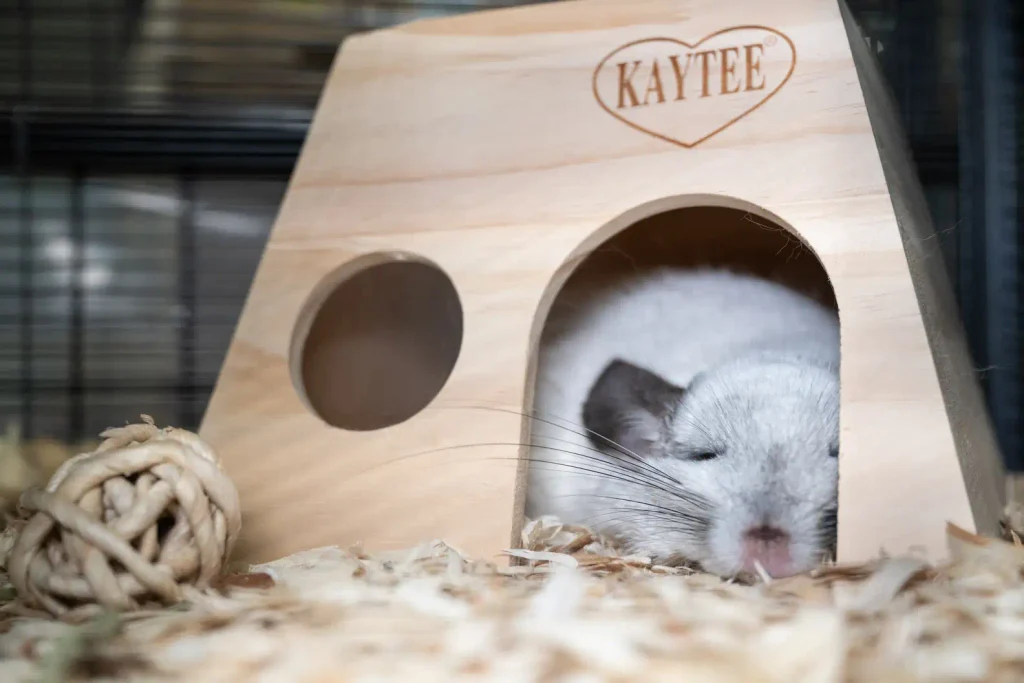
The rescuers provided clean living spaces, appropriate food, hiding shelters, climbing perches, and materials that encouraged natural activity.
Their goal wasn’t simply to keep the animals alive. It was to give them the opportunity to experience a healthier, more comfortable life.
And one of the most touching moments came when the chinchillas were introduced to something especially important to their well-being.
Chinchillas Finally Enjoy the Simple Pleasure of Dust Baths
Chinchillas have some of the densest fur of any land mammal, which makes proper coat maintenance essential.
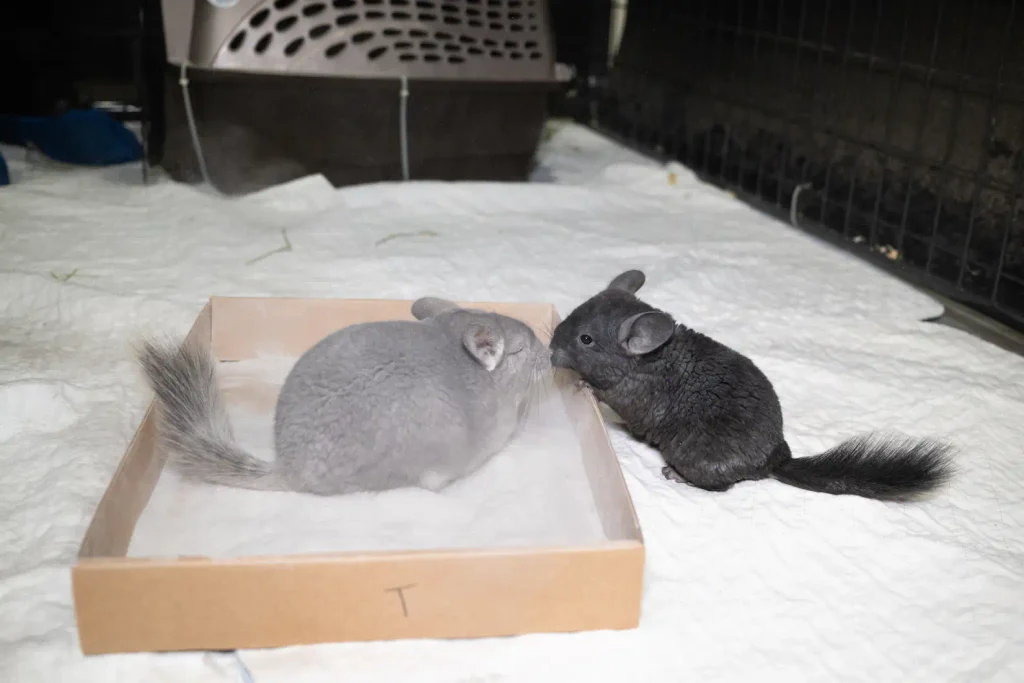
Unlike animals that clean themselves with water, chinchillas rely on regular dust baths to remove excess oils and keep their fur in good condition.
In the wild, they roll in fine volcanic dust. In captivity, they require specially formulated dust that allows them to perform this natural grooming behavior safely.
After the rescue, the chinchillas were given access to dust baths alongside other enrichment materials.
The animals began exploring their surroundings, taking shelter in their huts, climbing, and rolling in the dust.
For the rescue team, watching them engage in these natural activities was particularly rewarding.
“It’s incredibly rewarding to see the chinchillas settle into a safe place and express natural behaviors,” Koivula explained.
These small but meaningful moments provided encouraging signs that the animals were beginning to adjust to their new environment.
After everything they had endured, they finally had the space and resources to behave more like chinchillas should.
Why Chinchillas Need Specialized Care
Although chinchillas are often admired for their soft fur and charming appearance, they are delicate animals with specific needs.
Originally from the Andes Mountains of South America, chinchillas are adapted to cool, dry environments. Their thick coats make them especially sensitive to heat, while their active nature means they need suitable housing and opportunities for exercise.
They also require a carefully balanced diet to maintain healthy digestion and manage their continuously growing teeth.
Without proper nutrition and opportunities to chew, chinchillas can develop painful dental problems that may become life-threatening.
Wild chinchilla species have experienced severe population declines, largely due to historic hunting for their valuable fur and the destruction of their natural habitats.
The Ohio rescue also draws attention to the welfare problems that can arise when captive animals are bred or housed without adequate regard for their physical and behavioral needs.
Finding Safe Homes for Hundreds of Rescued Chinchillas
With all 951 chinchillas safely removed, Humane World for Animals began focusing on their long-term futures.
The organization is working to arrange appropriate placements for the animals, ensuring that each one has access to suitable housing, veterinary care, and the enrichment needed to thrive.
Finding homes for such a large number of chinchillas presents a considerable challenge.
Unlike more familiar companion animals, chinchillas require specialized knowledge and long-term commitment. Potential adopters must understand their dietary needs, environmental requirements, natural behaviors, and potential veterinary expenses.
The rescue team hopes that every chinchilla will eventually be placed in an environment where its welfare is the priority.
For these animals, that would mean a future very different from the conditions they experienced at the breeding facility.
A New Beginning for 951 Rescued Chinchillas
The rescue of 951 chinchillas is a powerful example of what coordinated animal welfare efforts can accomplish.
Through the involvement of the Department of Justice, Humane World for Animals, and dedicated veterinary professionals, hundreds of vulnerable animals were given an opportunity to recover and begin new lives.
Their journey is not over. Some may require ongoing treatment, while others will need time to become comfortable in their new surroundings.
But the most important change has already happened.
The animals are no longer confined to the dark, filthy conditions in which rescuers found them.
Instead, they have clean spaces, opportunities for natural behavior, and people working to ensure their futures are brighter.
For 951 chinchillas who spent far too long without the care they deserved, the chance to live safely and comfortably is the beginning of an entirely new chapter.