

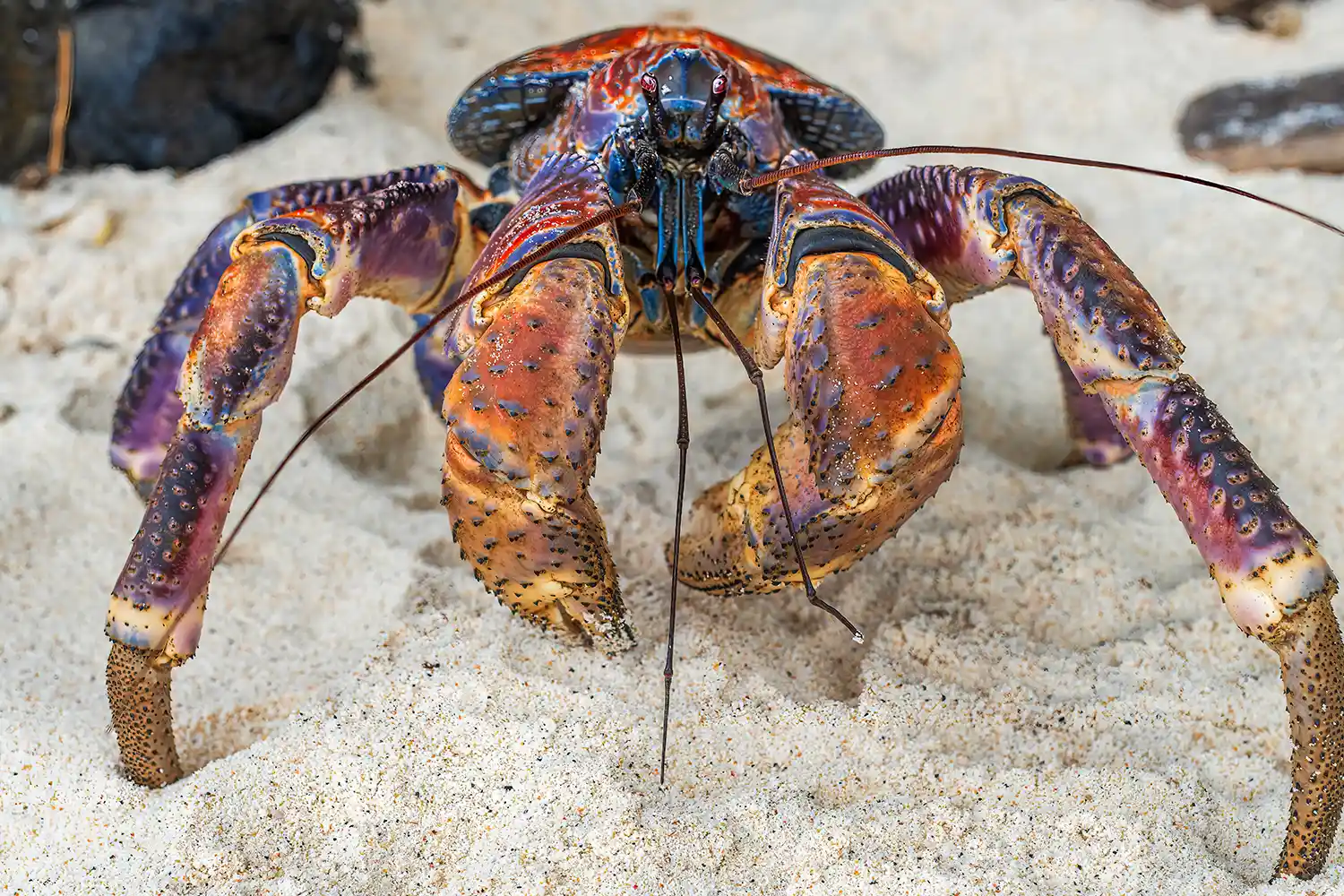
Nearly nine decades after legendary aviator Amelia Earhart vanished over the Pacific Ocean, a new expedition to a remote island has revived interest in one of the strangest theories surrounding her disappearance: the possibility that giant coconut crabs scattered her remains.
A 17-member research team led by Purdue University and the Archaeological Legacy Institute traveled to Nikumaroro, an uninhabited atoll in the Pacific nation of Kiribati, on October 12, 2026.
The expedition aimed to investigate a mysterious formation in the island’s lagoon that some researchers believed might be connected to Earhart’s missing aircraft.
Although the investigation ultimately failed to uncover evidence of her plane, the presence of enormous coconut crabs on the island brought renewed attention to a decades-old theory about what might have happened to the pioneering pilot.
Giant Coconut Crabs Complicate Island Exploration
Nikumaroro is home to coconut crabs, remarkable creatures that are considered the world’s largest land-dwelling invertebrates.
These enormous crustaceans can measure approximately three feet across and weigh more than nine pounds.
Their powerful claws allow them to crack open coconuts, while their varied diet includes fruit, birds, rodents, and the remains of dead animals.
Because the crabs are particularly active after dark, expedition members chose to sleep aboard their research vessel rather than spend the nights on the island.
Researchers explained that the crabs’ considerable size and nighttime activity made camping on Nikumaroro impractical.
John Clauss, an experienced explorer who has participated in more than 10 expeditions to the island with the International Group for Historic Aircraft Recovery (TIGHAR), described how numerous crabs can appear beyond the illuminated area of a flashlight at night.
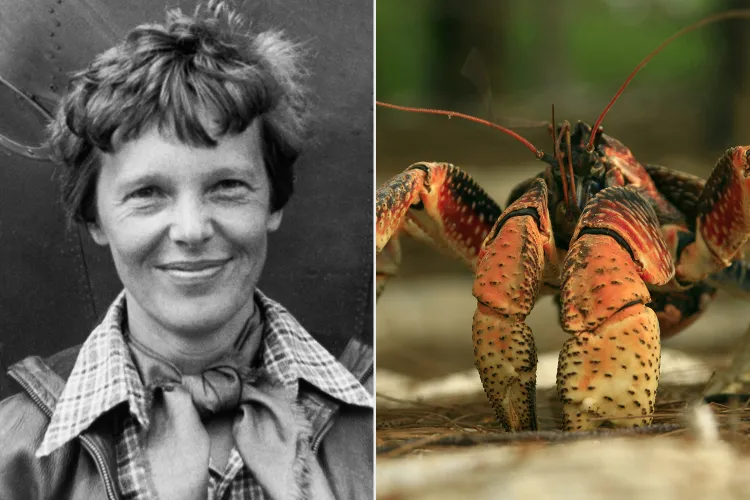
Despite their intimidating appearance, the animals caused no serious problems during the latest expedition.
While clearing a route toward the lagoon, researchers encountered at least four coconut crabs, but the creatures did not interfere with their work.
Could the Crabs Explain Missing Human Remains?
The connection between coconut crabs and Amelia Earhart dates back to a discovery made on Nikumaroro in 1940.
Three years after the aviator disappeared, British colonial administrator Gerald Gallagher reported finding part of a human skeleton on the island.
According to historical accounts, Gallagher believed coconut crabs had scattered many of the missing bones.
Only 13 bones from the remains were recovered and eventually transported to Fiji for examination.
An initial assessment suggested the skeleton belonged to a man, but later researchers questioned that conclusion.
The original bones were subsequently lost, preventing modern investigators from examining them directly using contemporary forensic techniques.
This discovery became an important part of the theory that Earhart and her navigator, Fred Noonan, might have reached Nikumaroro after failing to locate their intended destination.
Supporters of the theory believe the pair could have landed their aircraft on the island’s reef, with Earhart potentially surviving for some time before dying there.
However, the identity of the skeleton has never been conclusively established, and no definitive evidence connects the recovered remains to Earhart.
An Unusual Experiment Tests the Theory
In 2007, researchers associated with TIGHAR conducted an experiment to better understand whether coconut crabs could scatter skeletal remains.
They placed a pig carcass on Nikumaroro and observed how the island’s scavenging animals responded.
Within approximately two weeks, coconut crabs and smaller strawberry hermit crabs had removed most of the flesh.
When researchers returned a year later, they discovered that some bones had been moved as far as 60 feet from their original location.
The findings suggested that scavenging crabs were capable of moving bones considerable distances.
Tom King, TIGHAR’s former chief archaeologist, has suggested that such behavior could help explain why only a small number of human bones were recovered from the island in 1940.
King believes Earhart may have died on Nikumaroro and that coconut crabs subsequently moved parts of her remains into their burrows.
However, the experiment was not peer-reviewed and did not establish that Earhart died on the island or that crabs disturbed her body.
The theory remains speculative, although the experiment demonstrated how scavenging animals can affect the distribution of bones over time.
The Enduring Mystery of Amelia Earhart’s Final Flight
Amelia Earhart disappeared on July 2, 1937, while attempting to complete a historic flight around the world.
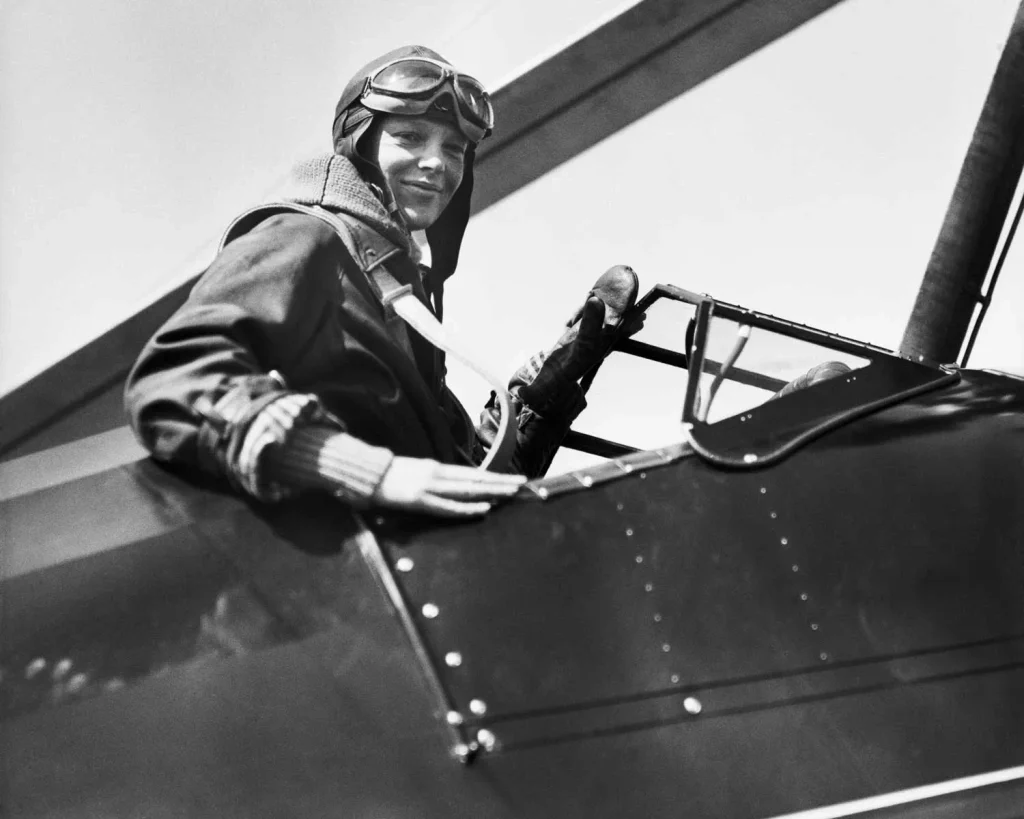
Accompanied by navigator Fred Noonan, she departed Lae, New Guinea, aboard a Lockheed Electra 10-E aircraft.
Their next planned destination was Howland Island, a tiny island in the central Pacific Ocean.
However, the aircraft never arrived, and the pair vanished despite extensive search efforts.
The conventional explanation is that Earhart’s aircraft ran out of fuel and crashed into the ocean.
Other researchers have proposed alternative possibilities, including the theory that she landed on Nikumaroro, which was then known as Gardner Island.
Over the decades, investigators have examined historical documents, radio transmissions, archaeological findings, and underwater imagery in an effort to determine what happened.
Yet no discovery has definitively resolved the mystery.
New Expedition Investigates Mysterious Lagoon Object
The latest search focused on an unusual formation known as the Taraia Object.
First identified in satellite imagery in 2020, the shape attracted attention because some observers believed it resembled wreckage from Earhart’s missing Lockheed Electra.
The research team traveled to Nikumaroro to examine the formation more closely and determine whether it could be connected to the aircraft.
However, the expedition faced challenges almost immediately.
Strong winds and rough seas temporarily prevented researchers from safely reaching the island by small transport boat, forcing them to suspend field operations.
Despite the difficult conditions, the team continued its investigation.
Expedition leader Rick Pettigrew, executive director of the Archaeological Legacy Institute, emphasized that identifying objects in such remote environments requires careful scientific examination rather than assumptions based on appearance.
Not everyone believed the lagoon formation was an aircraft.
Ric Gillespie, founder of TIGHAR, had previously suggested that the object was more likely a tree or collection of natural debris.
Researchers Rule Out Latest Possible Aircraft Discovery
On October 19, Purdue University announced that the expedition had found no conclusive evidence supporting the idea that Earhart’s aircraft was located in Nikumaroro’s lagoon.
Instead, observations gathered during the investigation supported the explanation that the Taraia Object was likely a collection of large trees deposited near a sandspit.
The findings effectively ruled out the latest hypothesis concerning the mysterious shape seen in satellite imagery.
Although the expedition did not locate the missing aircraft, researchers considered the work valuable because it provided evidence about the formation’s likely origin.
Pettigrew expressed appreciation for the team’s efforts and the donors who supported the journey, emphasizing the importance of scientific curiosity and exploration.
The researchers also acknowledged that answering one question does not necessarily bring investigators closer to solving every aspect of Earhart’s disappearance.
A Mystery That Continues to Fascinate the World
The latest expedition may have ruled out one possible discovery, but the mystery surrounding Amelia Earhart remains unresolved.
The giant coconut crabs of Nikumaroro continue to attract attention because of their unusual feeding habits and the historical reports of scattered human remains.
While researchers have demonstrated that these animals can move bones, there is still no proof that they were responsible for dispersing Earhart’s remains.
Likewise, the discovery of a partial skeleton in 1940 has never been conclusively linked to the missing aviator.
For now, the fate of Earhart, Fred Noonan, and their aircraft remains one of aviation history’s most enduring mysteries.
Nearly 90 years after their disappearance, the search continues to inspire researchers who hope that new technology, historical evidence, and scientific investigation may someday provide a definitive answer.