

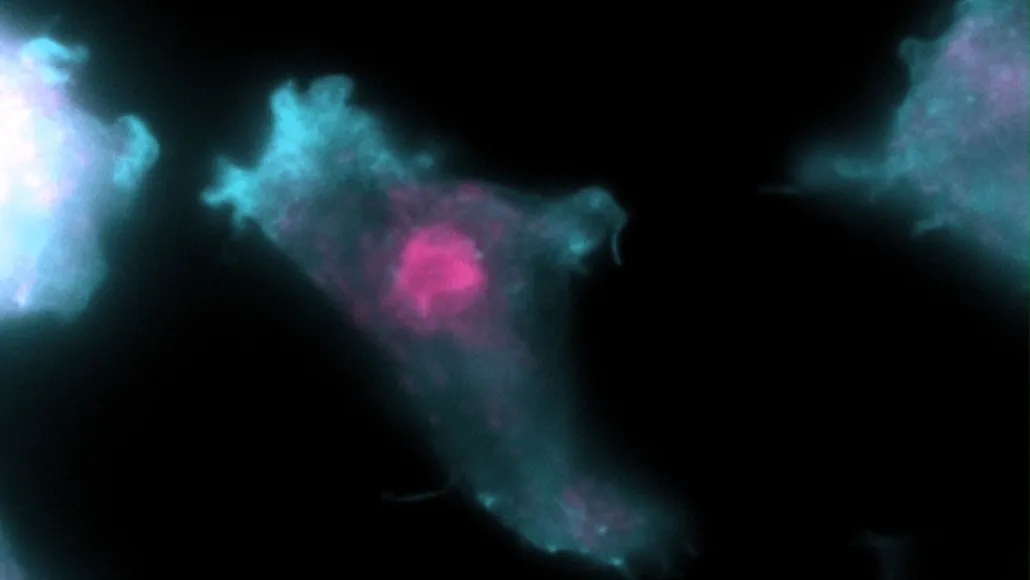
Naegleria fowleri, widely known as the “brain-eating amoeba,” normally feeds on bacteria in warm freshwater environments. But new research suggests the microscopic organism may possess movement abilities that also help explain how it can travel from a person’s nose to the brain.
Scientists studying Naegleria found that the amoebas are unusually persistent explorers. In laboratory experiments, they readily entered narrow spaces and continued moving forward rather than turning back.
Researchers reported the findings on September 10 in the Proceedings of the National Academy of Sciences. The study found that the amoebas moved persistently through confined passageways.
“They’re like robots,” said Lillian Fritz-Laylin, a cell biologist at the University of Massachusetts Amherst. “They just go and go and go.”
That determination may be important in understanding how the organisms can occasionally make the long journey from the nasal cavity to the brain.
Scientists still know surprisingly little about the basic behavior of Naegleria, Fritz-Laylin said, making studies of how the cells move particularly valuable.
Naegleria amoebas showed a strong tendency to explore narrow spaces in laboratory experiments, including tiny microchannels designed to mimic confined environments.
Most members of the genus are harmless to humans.
Naegleria fowleri, however, can cause a rare but devastating infection when contaminated freshwater enters the nose.
The amoeba typically lives in warm freshwater and sediment. In very rare cases, it can enter a swimmer’s nasal passages and migrate toward the brain.
Once there, it damages and consumes brain tissue while reproducing, causing an infection known as primary amoebic meningoencephalitis.
Cases remain extremely rare in the United States, with fewer than 10 infections typically reported each year, often during the summer months. But the disease is almost always fatal.
To better understand how the organisms move, Fritz-Laylin and her colleagues studied Naegleria gruberi, a harmless relative of N. fowleri that shares many of its behaviors.
“It’s a lot safer to work with something that can’t kill you,” Fritz-Laylin said.
Researchers placed the amoebas in glass-bottom laboratory dishes containing extremely narrow microchannels and observed their movements under a microscope.
The cells were able to squeeze through passages narrower than their own bodies and appeared strongly drawn to confined spaces.
Once an amoeba entered a channel, it rarely reversed direction or left.
The confined environment also appeared to make some of the cells move faster.
In the largest channels tested, the amoebas traveled at roughly twice the speed of cells moving outside the channels.
Researchers did not observe the same combination of speed and persistence when testing another type of amoeba.
Those traits may have evolved because Naegleria normally hunts bacteria in the narrow spaces found between particles of pond sediment.
But the same behavior that helps the amoeba find food in nature may also become dangerous under unusual circumstances.
If N. fowleri happens to enter a person’s nose, its ability to relentlessly explore narrow passages could potentially help it navigate deeper into the nasal cavity and toward the brain.
Placed in “the wrong place at the wrong time,” Fritz-Laylin said, an otherwise ordinary survival strategy can lead to a devastating infection.