

“I’d like people to become more aware that they shouldn’t litter …”
For Cintika and her family, birds have become a familiar part of everyday life. Their home on the Belgian coast has a backyard where local birds regularly stop by in search of food.
The family often leaves snacks outside for their feathered visitors, but their connection with the birds goes beyond simply feeding them.
Over the years, they have also helped birds that were injured or struggling. Sick pigeons have been cared for in their yard, while one young crow stayed with the family for several days until it became strong enough to fly properly.
Because of this, Cintika believes that many of the birds in the neighborhood have learned that her family’s yard is a safe place to visit.
Recently, another bird arrived needing help.
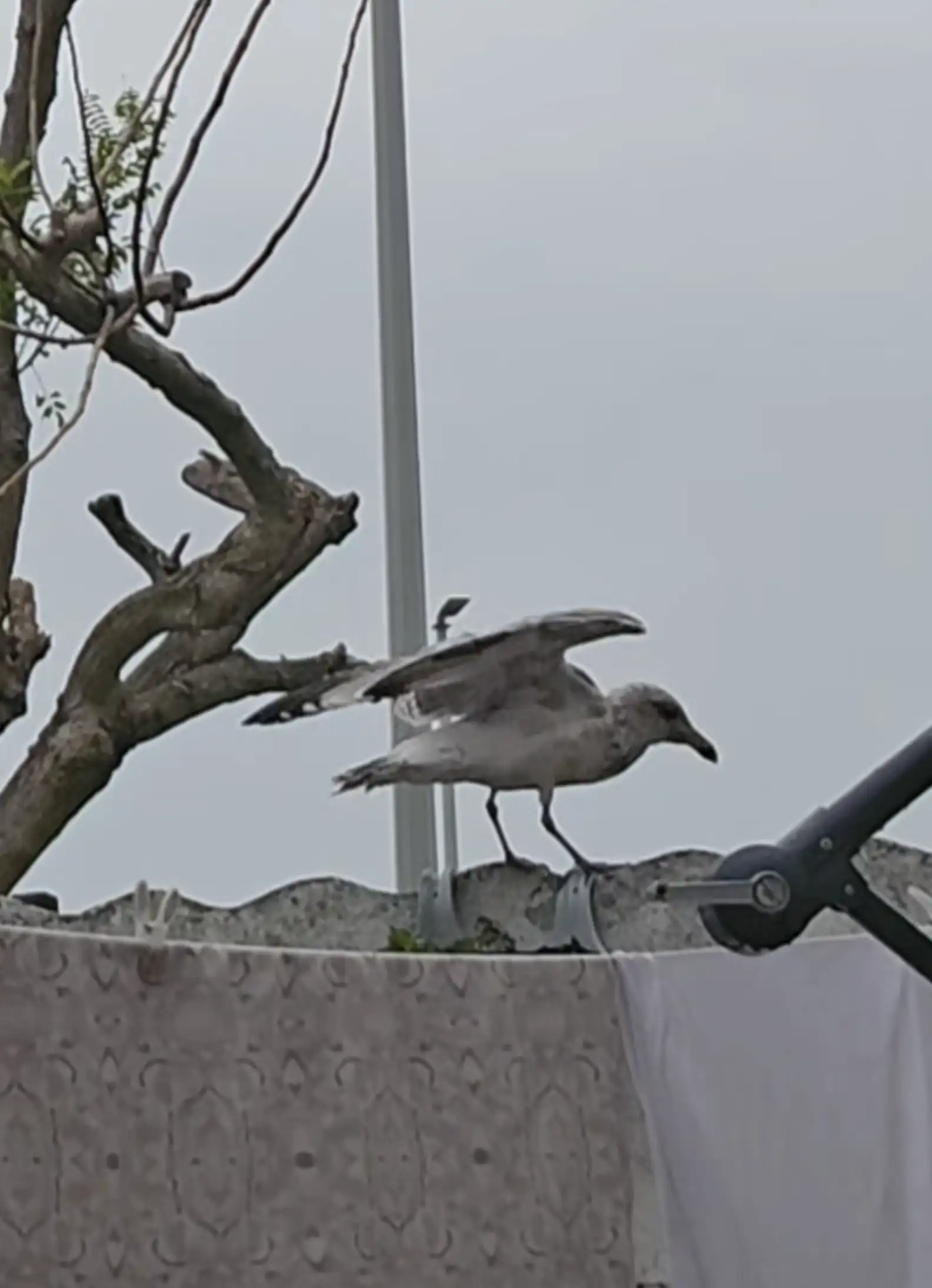
One day, Cintika and her husband noticed a seagull outside their home behaving strangely. The bird appeared to be having trouble eating, and when they looked more closely, they realized something was stuck around its beak.
A plastic ring had become tightly caught around the gull’s bill.
The couple immediately tried to help, although their first attempt was unsuccessful. They attempted to catch the bird by dropping a blanket from an upper floor, but the gull managed to avoid them.
Soon, however, they noticed that the bird was struggling to move normally. Cintika distracted the seagull while her husband carefully approached it from behind.
This time, they managed to catch the bird.
Cintika then gently removed the plastic ring from around its beak. The object turned out to be part of the cap from a large water container and had become lodged in a way that prevented the gull from eating normally.
Fortunately, the bird appeared to have escaped serious injury.
“She seemed fine to me afterward — in fact, she was very quick to peck me!” Cintika recalled.
Once the plastic was removed, the seagull immediately returned to what it had been trying to do before the rescue: eat.
The bird finished the piece of food it had picked up and, now free of the obstruction, soon flew away.
Cintika later went to a nearby beach in the hope of seeing the gull again, but she was unable to identify the bird among the others.
Even so, she hopes the encounter will encourage people to think more carefully about the waste they leave behind.
Plastic litter can pose serious dangers to wildlife, particularly in coastal areas where animals can easily come into contact with discarded packaging and other debris.
For Cintika, the experience was a reminder that even a small piece of plastic can have a major impact on an animal’s life.
“I’d like people to become more aware that they shouldn’t litter anywhere, especially in nature and on beaches,” she said.