


Along the Aguarico River in Ecuador’s Amazon region, a small group of Indigenous Siekopai women is blending ancestral knowledge with digital tools to protect one of the river’s vulnerable native species.
Their work focuses on the charapa turtle (Podocnemis unifilis), also known as the yellow-spotted Amazon River turtle. The species has been under increasing pressure from several threats, including the hunting of adult turtles, the collection of eggs from nests, and pollution from plastics, oil, gasoline, and other waste.
Janeth Piaguaje, a Siekopai community leader involved in the project, told Mongabay Latam that pollution is a regular problem along the river.
“Sometimes we see plastic, garbage bags,” she said. “We also see dead animals floating down the river. We can’t control all of that, but we do make a significant effort to clean the beaches where we work.”
Other environmental pressures are making nesting more difficult as well. Boat traffic contributes to erosion along the riverbanks, while rising water levels linked to climate change can flood the sandy areas where turtles normally bury their eggs.
The charapa turtle is currently classified as vulnerable by the International Union for Conservation of Nature.
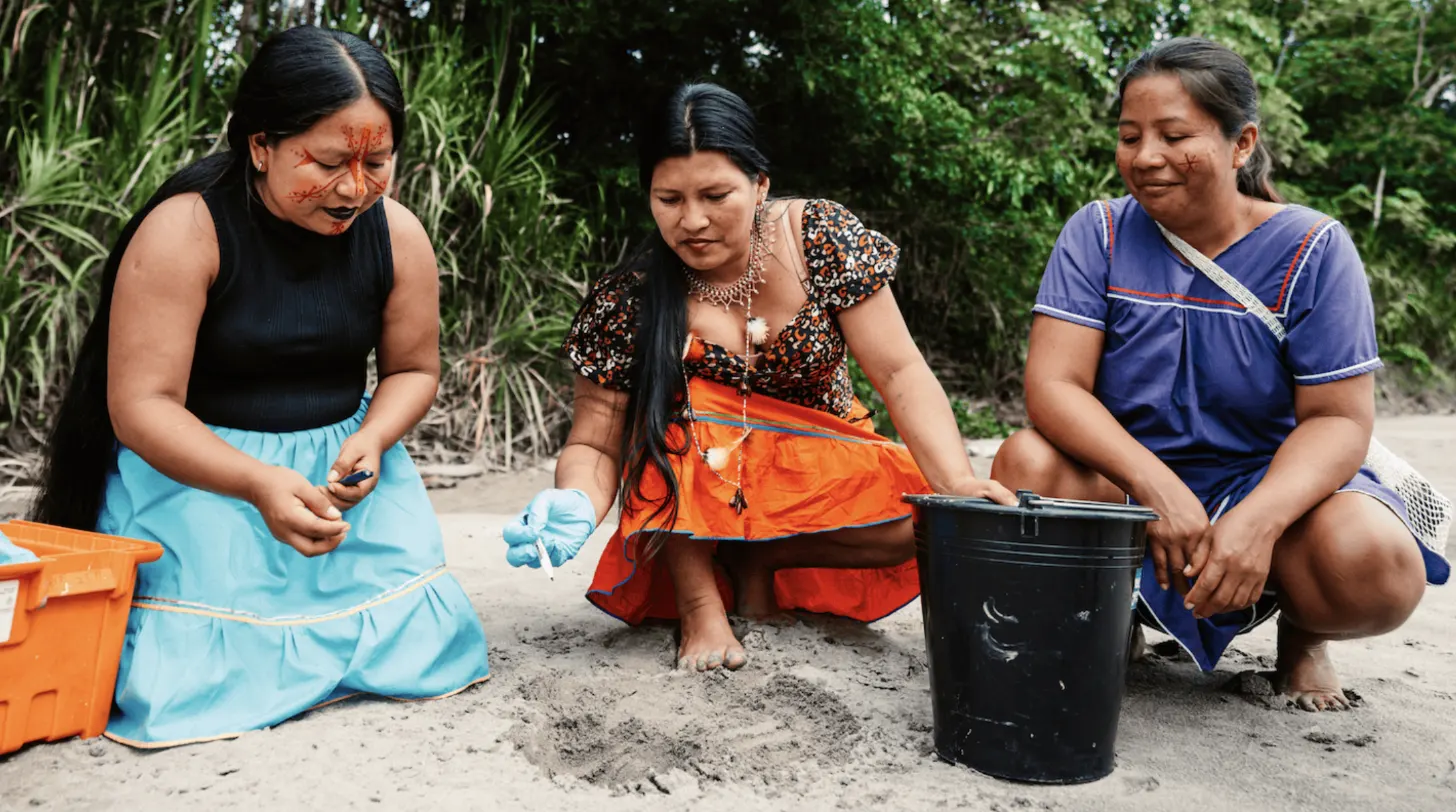
The Tari Nomiowa’i women collecting charapa turtle (Podocnemis unifilis) eggs, recording information and measuring a nest. Courtesy of CI Ecuador.
To give the turtles a better chance of survival, seven Siekopai women formed a group called Tari Nomiowa’i, which translates to “turtle women.”
They regularly patrol the riverbanks, searching for footprints and other signs that indicate a female turtle has recently nested.
When a nest is located, the women carefully remove the eggs so they can be transferred to a safer place.
Piaguaje said this knowledge was passed down to her by her father.
“He taught me how to handle the eggs, how to see on what dates and in what months the turtles lay their nests,” she said.
Traditional knowledge is now being paired with modern data collection.
Using the Epicollect5 application, the women record key details about each nest, including its location, the date and time it was found, and the number of eggs inside.
The eggs are then moved to a protected incubation site, where they are less exposed to predators, flooding, and contamination from the river environment.
Protection does not end once the turtles hatch.
The women care for the young turtles for roughly another month before release. During this period, the hatchlings are fed local foods such as cassava, sweet potato, and taro leaves.
The results have been encouraging.
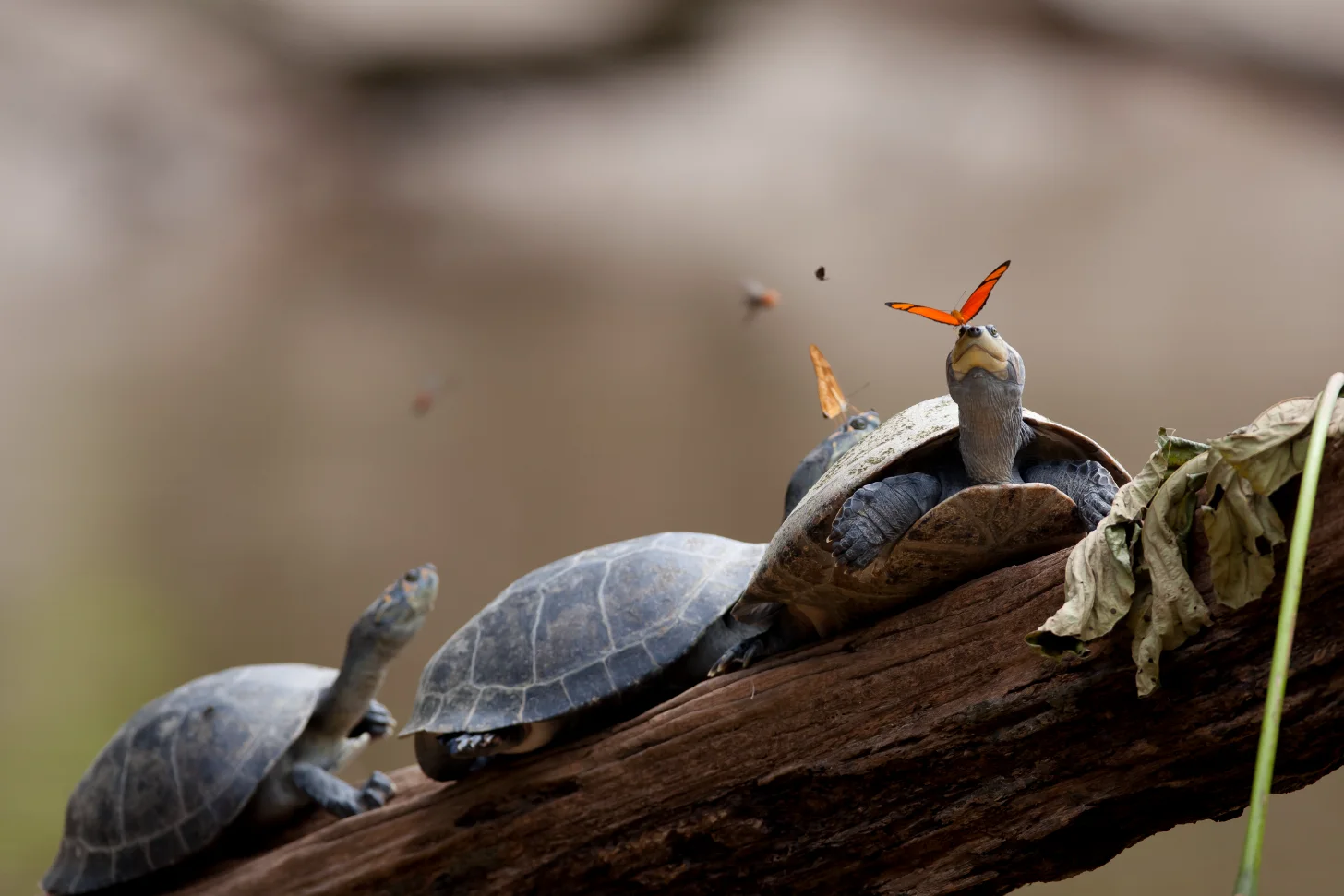
Charapa turtles in Ecuador. Amalavida.tv/Wikimedia Commons (CC BY-SA 2.0).
During the 2025-26 nesting season, the Tari Nomiowa’i collected 235 turtle eggs.
Of those, 208 successfully hatched and were returned to the Aguarico River during releases held in March and April.
The project has also become a way to involve the wider community in conservation.
Local residents and schoolchildren were invited to attend the releases, take part in educational workshops, and learn why protecting turtle nests is important.
Piaguaje remembered one young participant in particular.
“A little girl said, ‘I’m going to take care of them, I’m going to tell them not to touch the eggs,’” she recalled.
For the Tari Nomiowa’i, however, protecting charapa turtles is about more than rebuilding wildlife populations.
The project is deeply connected to Siekopai culture and spirituality.
According to ancestral beliefs, turtles represent a connection between the physical and spiritual worlds. They are protected by Koouwajëo, described as the spiritual chief, mother, and ancestral guardian of the turtles.
That belief gives the conservation effort a broader cultural meaning.
“I want Koouwajëo to be proud,” Piaguaje said. “When we protect turtles, we don’t just care for a species; we honor the spirits of the river, strengthen our culture, and maintain the sacred pact between our community and nature.”
By combining knowledge passed down through generations with digital monitoring, controlled incubation, environmental cleanup, and community education, the Tari Nomiowa’i are creating a conservation model rooted in both science and Siekopai tradition.
Their work protects more than hatchlings. It also helps preserve a cultural relationship with the river that has endured across generations.