

Jojo, a rabbit-detection dog, is working eight days on and two days off, sometimes covering as much as 20 kilometres a day as she tracks rabbits across the south-western reaches of Bon Bon Reserve in South Australia’s arid interior.
“She’s being kept very busy,” says Dr Pat Taggart, an ecologist with Bush Heritage Australia, the conservation organisation that owns the former sheep property.
Jojo’s job is not to catch the rabbits.
“I don’t actually think she has ever caught one,” Taggart says. “Her job is to scare them back into the burrows.”
The five-year-old kelpie, Jack Russell and whippet cross helps staff locate and map rabbit warrens so they can later be fumigated or destroyed.
At Bon Bon, controlling rabbit numbers is an ongoing battle, particularly after rainfall. Fresh growth from native plants such as acacia and mulga should provide food and habitat for native wildlife, but instead it often becomes fuel for rapidly expanding rabbit populations.
The same pattern is being seen at nearby Boolcoomatta Reserve and across other parts of Australia.
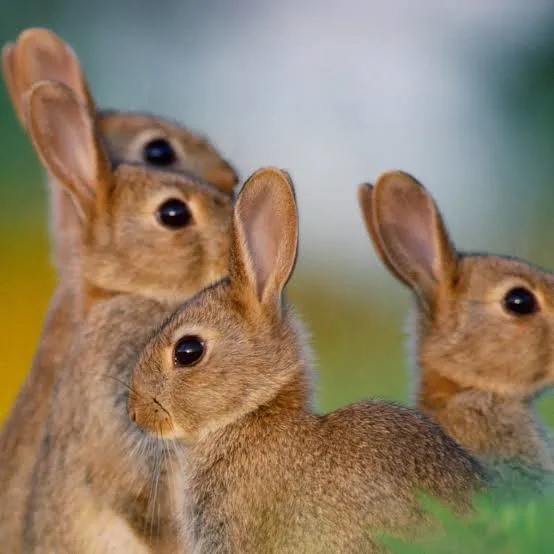
The European rabbit, Oryctolagus cuniculus, remains one of the country’s most destructive introduced pests.
Following a wet winter across central and southern Australia, rabbit numbers are once again booming.
“We’ve noticed increases all around the country,” says Dr John Virtue, director of research, development and engagement at the Centre for Invasive Species Solutions.
Virtue points to several major hotspots, including southern Western Australia, suburban Canberra, peri-urban areas around Adelaide, the Riverina region of New South Wales and southern Queensland.
In Albany, southern Western Australia, rabbit numbers have reportedly reached plague levels. The animals have spread across farms and even invaded one of the country’s leading golf courses, where grounds staff have struggled to repair holes dug by rabbits.
At times, as many as 30 rabbits have been seen gathering on the greens in a single evening.
“They can get to incredible numbers and you see the whole landscape gets denuded,” Virtue says.
From 24 Rabbits to Around 200 Million
Rabbits were introduced to Australia with the First Fleet in 1788, but research has traced their continent-wide expansion primarily to a shipment of just 24 rabbits brought into the country by settler Thomas Austin in 1859.
By the 1920s, rabbit populations had reached plague proportions, with estimates placing their numbers in the billions.
More recent estimates suggest Australia now has around 200 million rabbits, although the true figure remains uncertain because there is no formal nationwide monitoring system.
Their environmental impact is enormous.
One study found that rabbits negatively affect 329 threatened species in Australia—more than any other invasive pest.
With an adequate food supply, rabbits can breed throughout the year. In temperate regions, breeding is particularly intense during autumn and spring following rainfall. If left uncontrolled, a rabbit population can increase tenfold in a single season.
Their economic impact is also significant. A 2020–21 estimate suggested that rabbits cost Australia’s agricultural sector around $200 million each year.
The damage extends far beyond agriculture.
Rabbits consume young native vegetation and compete with native animals for food and habitat. Their presence can also support larger populations of introduced predators such as feral cats and foxes, creating an additional threat to native wildlife.
“There’s a lot of blame that goes on cats and foxes,” says Professor Katherine Moseby, an ecologist and conservation biologist at the University of New South Wales. “But rabbits can sustain them at really high densities. They are the key to controlling cats.”
Viruses Transformed Rabbit Control
Australia’s most successful large-scale rabbit-control efforts have relied heavily on biological control.
Myxoma virus was introduced in the 1950s, followed from the 1990s by versions of calicivirus.
In 1995, rabbit haemorrhagic disease virus escaped from a quarantine facility on Wardang Island in South Australia, most likely carried by insects.
The impact was dramatic.
Rabbit numbers fell by as much as 95% in some arid regions, triggering major ecological changes.
Moseby says the event caused “probably the biggest recovery of threatened species ever seen in Australia”.
The sharp decline in rabbit populations reduced grazing pressure on native vegetation and helped create conditions in which threatened native species could begin to recover.
But the long-term fight against rabbits remains difficult. Their ability to reproduce rapidly, expand after wet periods and support populations of other invasive predators means sustained control is essential if Australia is to protect its native wildlife and landscapes.