

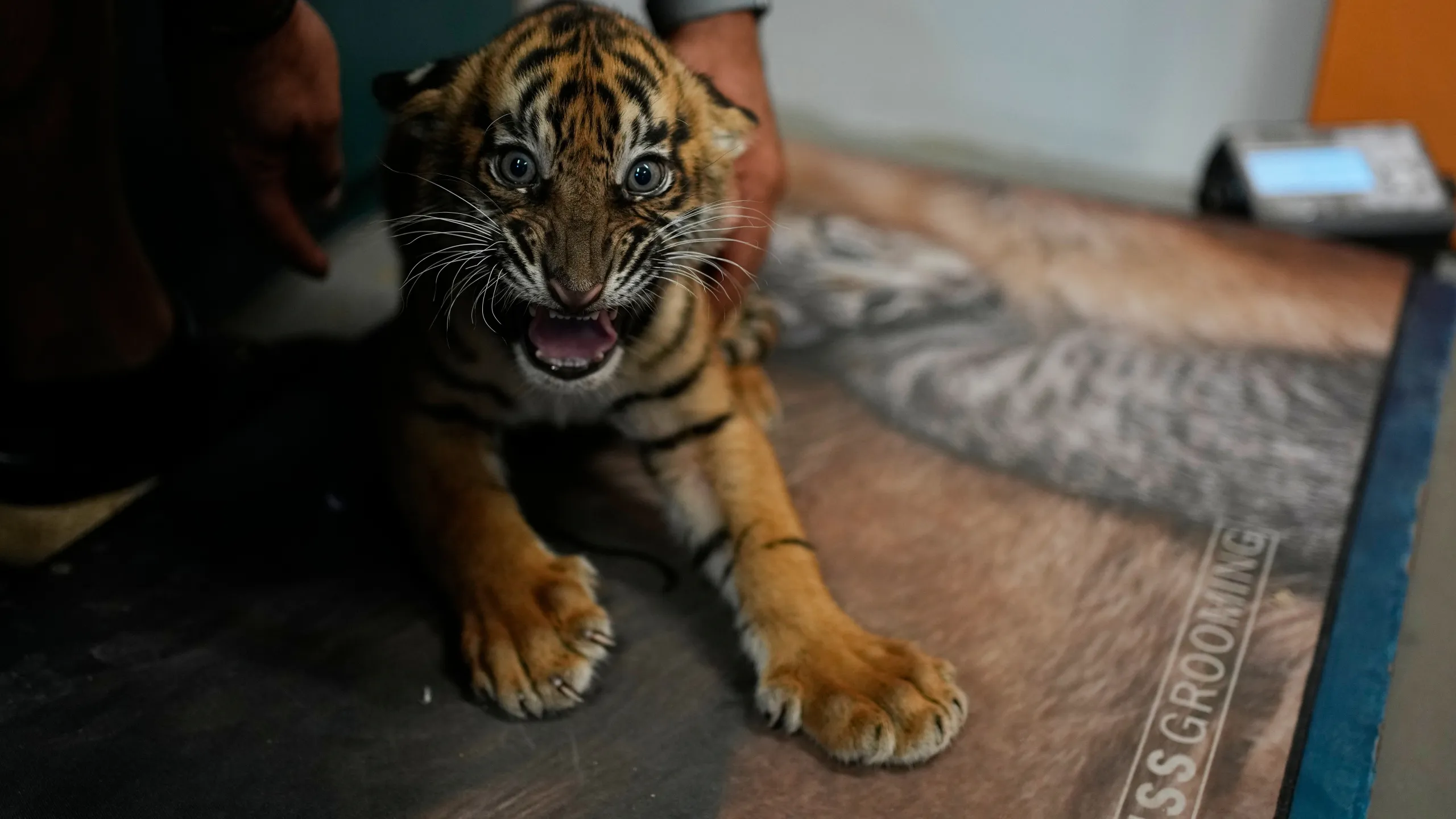
SPATA, Greece — Three rare Sumatran tiger cubs born at a zoo near Athens are giving conservationists fresh hope for one of the world’s most threatened big cats.
The two-month-old cubs received their first vaccinations and identification microchips on Tuesday at Attica Zoological Park, where they are being raised as part of an international breeding effort aimed at protecting the species from extinction.
Sumatran tigers survive in the wild only on the Indonesian island of Sumatra. Their numbers have fallen dramatically because of habitat destruction, with estimates suggesting that only around 400 remain in their natural environment.
“The Sumatran tiger is one of the most threatened tiger species in the world, and among felines in general,” said Theodoros Babilis, head keeper of cats and monkeys at the zoo.
European zoos and other conservation institutions are maintaining a carefully managed population of the animals, Babilis said, with the possibility that future generations could one day contribute to reintroduction efforts in the wild.
Although Sumatran tigers are the smallest living tiger subspecies, adult males can still reach about 2.55 meters in length and weigh as much as 140 kilograms.
They are powerful swimmers and climbers, and their distinctive dark stripes help camouflage them in dense forests while hunting animals including deer and wild pigs. Like fingerprints in humans, each tiger’s stripe pattern is unique.
The three cubs — two males and one female — were born in early July to their mother, Toba, and father, Argos. Argos has since died from cancer.
Zoo officials said the young tigers are expected to receive names inspired by characters from Homer’s The Odyssey.
Even at just two months old, the cubs already have sharp teeth and claws, making veterinary examinations difficult. During Tuesday’s vaccinations, staff transported them in carriers using electric buggies and worked together to safely complete the procedure.
“The tigers don’t like to be handled. They’re very wild,” said zoo and wildlife veterinarian Dr. Arsenoi Psaroudaki, adding that the veterinary team works as quickly as possible to minimize stress for the animals.
Each cub was fitted with a microchip registered in a shared database and received a vaccine protecting against three diseases, similar to vaccinations commonly used for domestic cats.
For Psaroudaki, helping care for such rare animals is both demanding and meaningful.
She said the birth of the cubs provides hope for the future of the species and described working with the critically endangered cats as a humbling experience.