

Dogs are famous for using expressive faces to communicate with their owners, but new research suggests they are also paying close attention to the emotions written across human faces.
A study led by researchers at the University of Vienna has found that dogs’ brains can distinguish between different human facial expressions, including several types of negative emotion.
The findings suggest dogs may be able to tell fearful faces apart from angry or sad ones, adding to evidence that domestication has helped them become highly sensitive to human social signals.
Looking Beyond Happy and Unhappy Faces
Previous behavioural studies have shown that dogs can distinguish between positive and negative human expressions.
However, many of those experiments compared only two emotions at a time, typically one positive and one negative. That left researchers unsure whether dogs could also differentiate between emotions that fall into the same broad category.
Dr Laura Cuaya, a co-author of the new study, said the latest research goes a step further by examining whether dogs can distinguish between different forms of negative emotion.
According to Cuaya, the findings provide the first evidence that the canine brain can separate emotions with the same emotional “valence” — meaning emotions that are similarly positive or negative.
Dogs Took Part in Awake MRI Scans
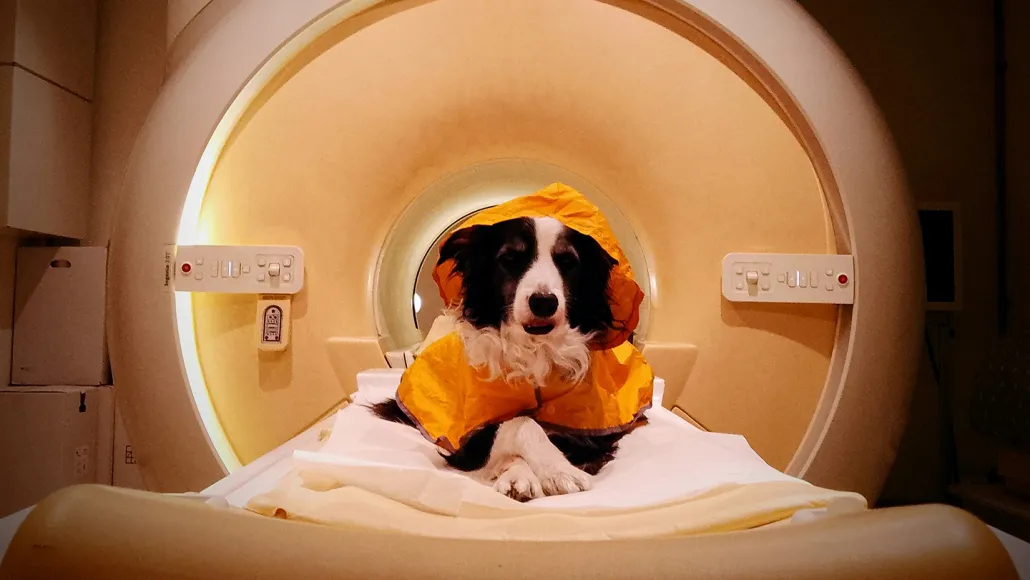
The research, published in iScience, involved pet dogs that had been trained to enter an MRI scanner voluntarily.
The animals remained awake, unrestrained and still while researchers monitored their brain activity as they viewed photographs of unfamiliar human faces.
This allowed the team to examine how different parts of the dogs’ brains responded to various facial expressions without sedation.
Happy Faces Triggered Distinct Brain Activity
In the first experiment, eight dogs were shown sets of happy and neutral human faces.
Each group of images contained photographs of unfamiliar people who were the same gender as the dog’s primary caregiver.
Brain scans revealed increased activity in particular areas when the dogs looked at happy faces compared with neutral ones.
These regions were linked with higher-level visual processing, social information and reward-related activity, suggesting that the dogs may have been responding to something positive in the expressions.
However, the researchers still wanted to know whether those brain regions were responding specifically to happiness or to emotional faces more generally.
Testing Fear, Anger and Sadness
A second MRI experiment involved 12 dogs.
This time, the animals were shown unfamiliar male and female faces displaying four emotions: happiness, sadness, fear and anger.
Researchers then used machine-learning techniques to analyse patterns of brain activity.
When they examined only the areas identified during the first experiment, the researchers could distinguish brain responses to happy faces from responses to each negative expression.
Those same regions, however, did not reliably distinguish one negative emotion from another.
Whole-Brain Analysis Revealed More Detail
The picture changed when researchers looked at activity across the dogs’ entire brains.
The broader analysis showed that brain patterns could distinguish sad faces from fearful ones, as well as angry faces from fearful ones.
Researchers were not able to clearly separate responses to anger and sadness.
The findings suggest that dogs may process certain negative expressions differently, particularly when those expressions could signal different kinds of threats or social situations.
Dogs May Need More Than a Face
The researchers noted that distinguishing between two negative expressions may be more difficult for dogs than separating a positive expression from a negative one.
In everyday life, dogs also have access to much more than a person’s face.
Body posture, movement, tone of voice and other social cues may help them work out whether someone is angry, frightened, upset or relaxed.
This could explain why facial information alone was not always enough for the dogs to distinguish certain emotions.
The Study Has Some Limitations
Researchers cautioned that the results are based on a relatively small number of animals.
Most of the dogs involved were border collies, and all were healthy animals without known behavioural problems.
That means further studies involving a wider variety of breeds, temperaments and backgrounds will be needed to determine how broadly the findings apply.
The Findings Could Help With Dog Training
The research may also have practical implications for the way people interact with dogs.
Cuaya suggested that showing positive facial expressions during training could potentially support learning, particularly if dogs interpret happy human faces as rewarding or socially encouraging.
A better understanding of how dogs process human emotions could eventually help improve communication between pets and their owners.
Domestication May Have Sharpened Dogs’ Social Skills
Professor Bridget Waller, an expert in evolution and social behaviour at Nottingham Trent University who was not involved in the research, described the findings as an intriguing example of how dogs have adapted to living alongside humans.
Human smiles are especially common and important in everyday social interaction, so dogs may have developed a particularly strong ability to recognise them.
Other expressions, including anger and sadness, may be more difficult to separate because dogs encounter them less consistently or depend on additional cues to understand what they mean.
Overall, the study adds to growing evidence that dogs are not simply watching their owners — their brains may also be actively interpreting the emotional information contained in human faces.