

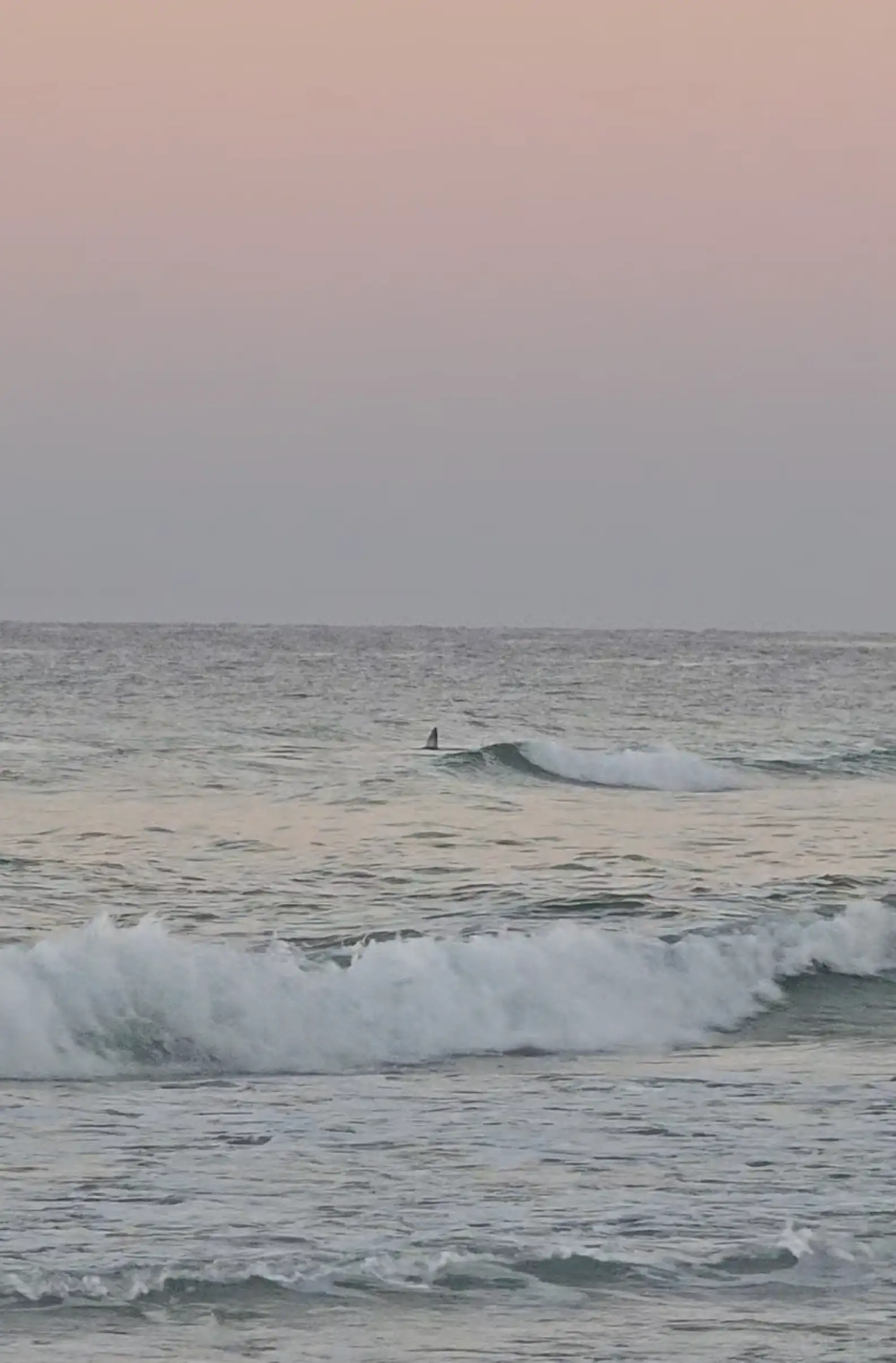
“Sharks can die fast in situations like this …” 😰
Early one March morning in Pensacola, Florida, Rebecca arrived at the beach eager to enjoy the sunrise and spot some marine animals. As someone who loves the ocean, she was hoping to see dolphins, rays, or other sea life moving through the Gulf Coast waters.
While looking out over the waves, Rebecca noticed a fin cutting through the water. At first, she thought it belonged to a large hammerhead shark swimming close to shore. She watched the animal for nearly 20 minutes, fascinated by the sight.
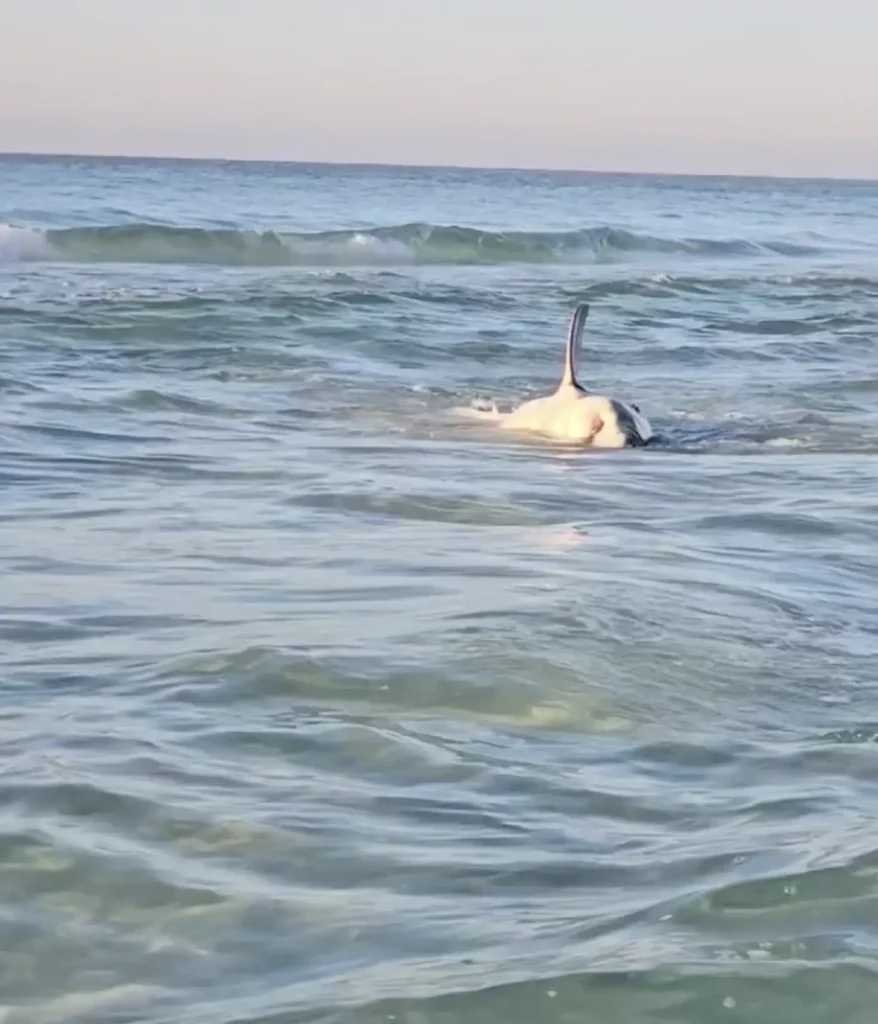
Then everything suddenly changed.
A wave rolled in and knocked the shark over. Moments later, the animal became stranded on its side near a sandbar, unable to free himself. That was when Rebecca realized he was not a hammerhead at all — he was a great white shark.
The powerful shark was trapped, and each incoming wave pushed him into an even worse position. Rebecca immediately called for her partner, Josh, and the two rushed into the water to help. Together, they tried to push and turn the shark so he could swim back out.
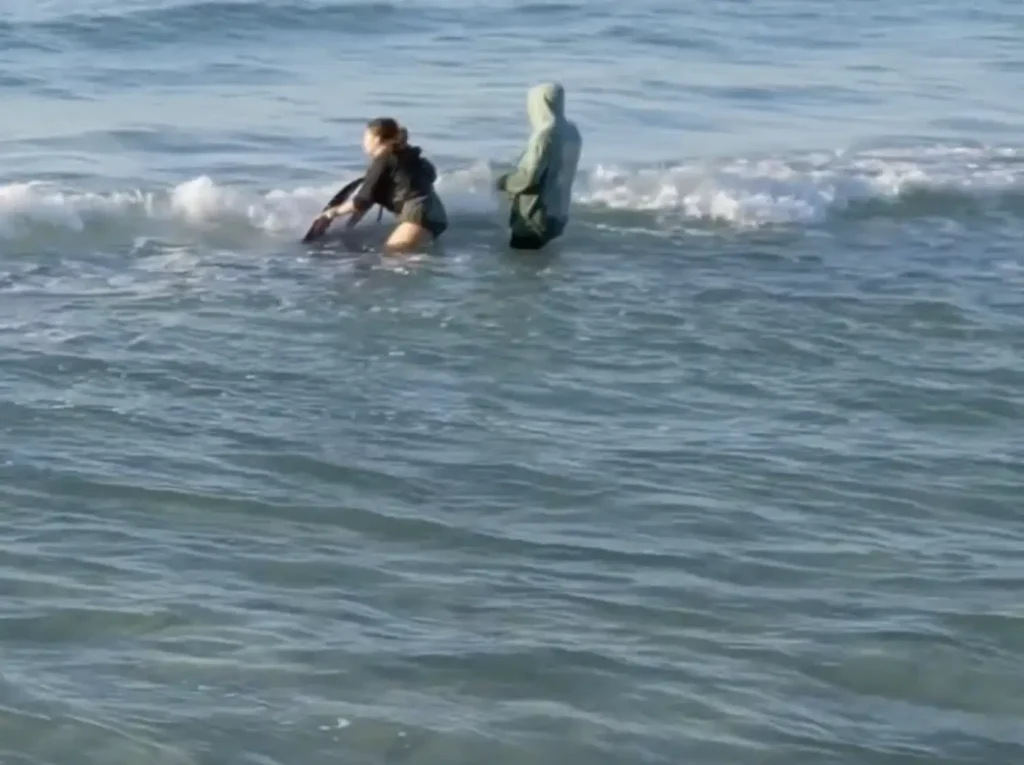
It was clear the animal was struggling. The waves kept forcing him backward, making every rescue attempt harder. Rebecca and Josh were determined to save him, but the situation quickly became stressful and exhausting.
After several unsuccessful tries, they contacted the North Florida Wildlife Center. Help was on the way, but it would take time — and Rebecca feared the shark might not survive long enough. Sharks can be in serious danger when stranded like that, especially if they become stuck upside down or unable to move properly.
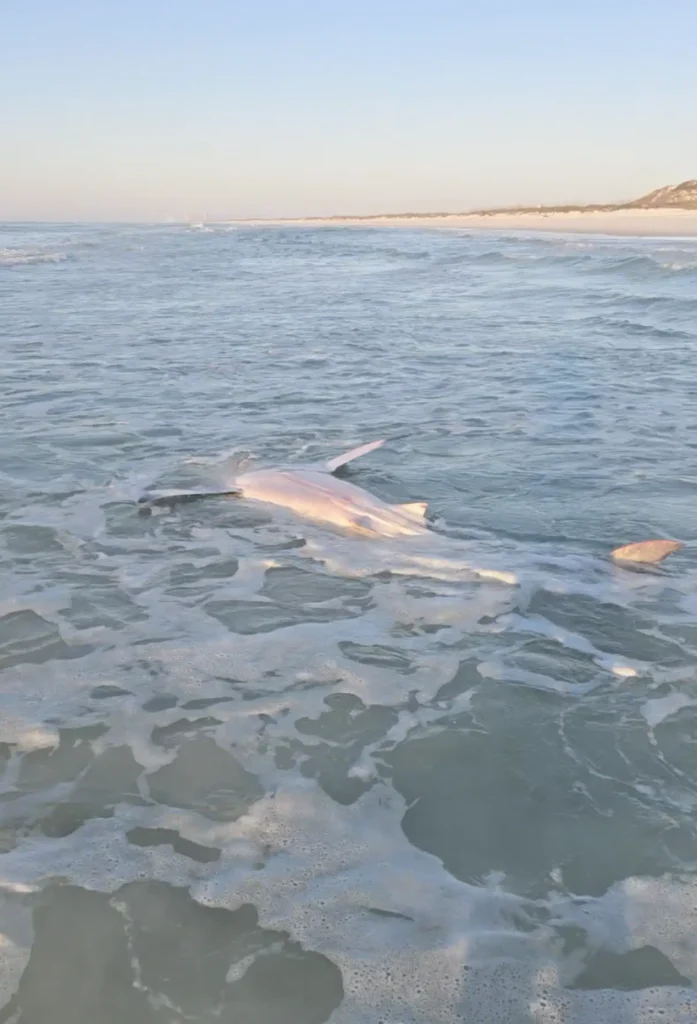
Still, Rebecca and Josh refused to stop trying.
The shark appeared healthy and strong. He had no visible fishing hooks, no tag, and only a small injury near his dorsal fin. To Rebecca, it was obvious that he was fighting to live.
For nearly two hours, the couple battled the waves while trying to guide the shark back into deeper water. Each time they made progress, another wave pushed him back toward the sandbar.
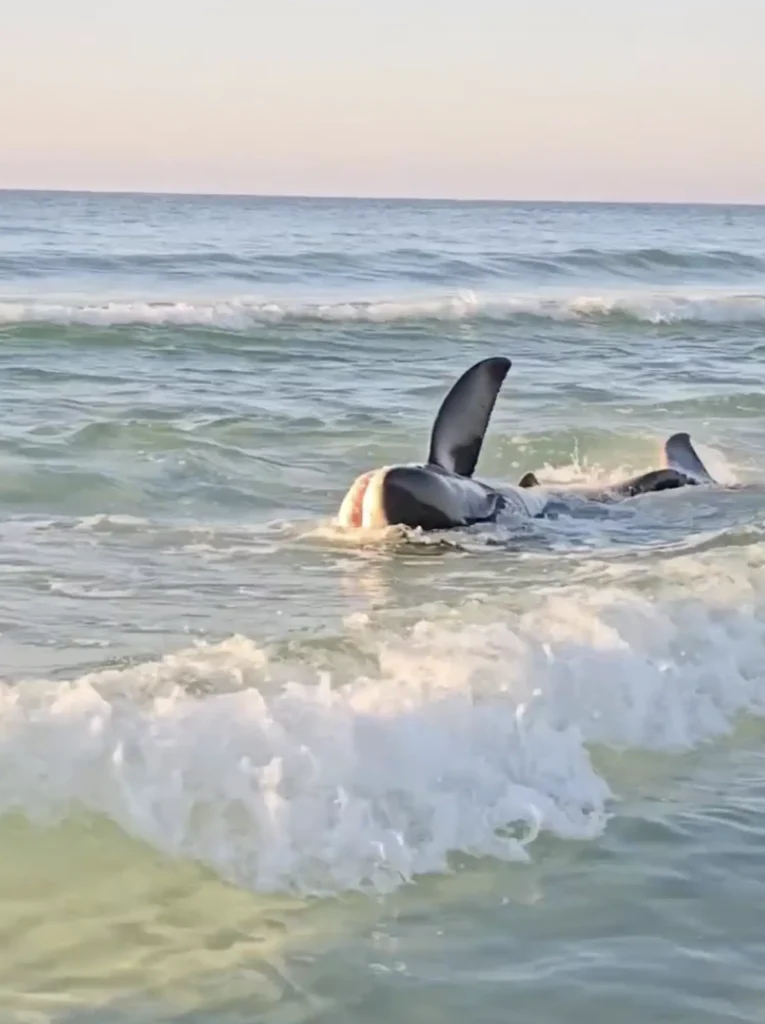
Eventually, more people noticed what was happening. A cyclist passing by stopped to record the rescue, and two fishermen soon joined in to help. With four people working together, they finally managed to push the shark into a better position.
Then, at just the right moment, a series of larger waves came in. The shark caught one of them and finally managed to swim free.
As he disappeared back into the ocean, Rebecca fell to her knees, overwhelmed with emotion and relief. She had come to the beach expecting a peaceful sunrise, not an intense rescue mission. But seeing the shark return safely to the water became an unforgettable moment.
For Rebecca, watching him swim away was one of the most beautiful experiences of her life — a memory she said would stay with her forever.