

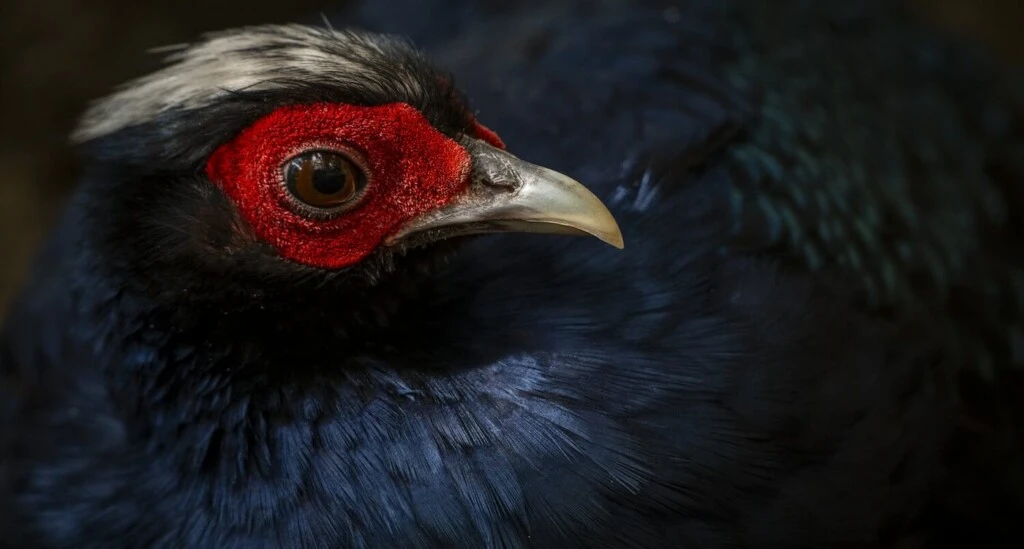
For more than 20 years, the forests of central Vietnam have been missing one of their rarest and most beautiful native birds.
Now, conservationists are working to bring the Vietnam pheasant back.
An international partnership of conservation groups, zoos and Vietnamese organizations has launched an ambitious project to return the species to the forests where it once lived. The effort is especially important because the Vietnam pheasant is believed to be likely extinct in the wild.
The Vietnam pheasant was once found in the dense, humid forests of central Vietnam. Male birds are especially striking, with dark blue plumage that has a subtle metallic shine and bright red facial skin.
But over time, the species disappeared from its natural habitat. Its decline was caused by several threats, including habitat loss, agricultural expansion, illegal hunting and long-term environmental damage from the Vietnam War, which severely affected forests within the bird’s range.
Fortunately, the species was not completely lost. In the early 20th century, a small number of Vietnam pheasants were brought from Vietnam to Europe. Those birds became the foundation of a carefully managed breeding program involving zoos and private breeders.
Over many decades, conservationists worked together to maintain a healthy, genetically viable population under human care.
Now, that population is being used to help bring the species home.
In mid-May, 20 Vietnam pheasants selected from European breeding programs are expected to travel from Berlin to Vietnam. Each bird has been chosen carefully based on health, genetics and behavior, giving the future population the strongest possible start.
The pheasants will be transported by cargo aircraft in specially designed crates made to keep them safe, well-ventilated and as calm as possible during the journey. Experienced experts will accompany the birds and monitor them throughout the trip.
Once they arrive in Vietnam, the pheasants will not be released immediately. Instead, they will spend time acclimating to local conditions under professional care. The first goal is to help them adjust, form breeding pairs and produce locally born, parent-raised generations.
Only after that foundation is secure will conservationists consider future releases into the wild.
Reintroducing a species that may no longer exist in nature is complicated. It requires more than moving birds from one place to another. The species needs safe habitat, long-term protection and support from local communities.
In central Vietnam, conservation teams are preparing protected forest areas within the pheasant’s historic range. They are also working to monitor biodiversity and reduce threats such as illegal hunting.
For Vietnamese conservationists, the project is about more than saving one bird. It represents a chance to restore part of the country’s natural heritage.
The effort also shows the value of long-term conservation breeding. Because zoos and breeding programs protected the species for decades, there is now a real chance to return the Vietnam pheasant to its homeland.
If successful, the project could turn a story of loss into one of recovery — and bring a long-absent bird back to the forests where it belongs.