

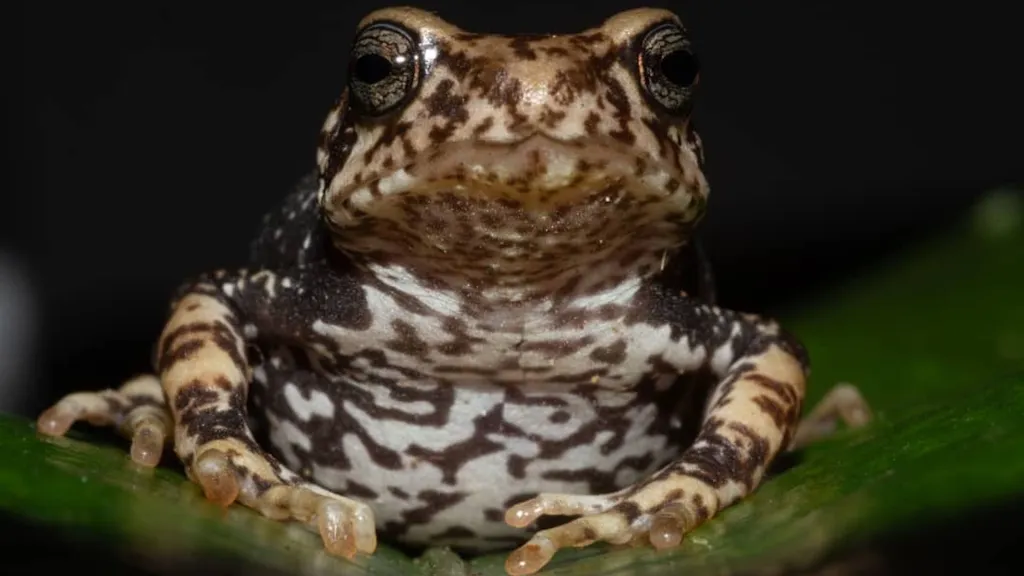
Scientists have identified three previously unknown toad species with an unusual way of reproducing: instead of laying eggs, they give birth to live baby toads.
The newly described species belong to the genus Nectophrynoides, a group often called “tree toads.” These toads are already known for a rare reproductive strategy in which their young are born as tiny toadlets, skipping the tadpole stage entirely.
Live birth is extremely uncommon among frogs and toads. Fewer than 1% of known frog and toad species reproduce this way, which makes the discovery especially interesting to amphibian researchers.
Before this study, scientists knew of only 17 frog and toad species that gave birth to live young, and 13 of them belonged to the Nectophrynoides group. The new research adds three more species to that rare list.
For many years, scientists believed a species called Nectophrynoides viviparus was widespread across Tanzania’s Eastern Arc Mountains and Southern Highlands. It had first been identified in the early 1900s and was thought to have a large range and healthy population.
But later genetic research suggested that what scientists were calling one species might actually be several similar-looking species.
To investigate, researchers studied hundreds of preserved museum specimens, some more than 120 years old. They also analyzed recordings of toad calls from the wild and sampled mitochondrial DNA from museum specimens using techniques known as museomics.
Their work revealed that toads from the Eastern Arc Mountains were not all the same species. Instead, they belonged to four separate species. Three of them had never been formally identified before.
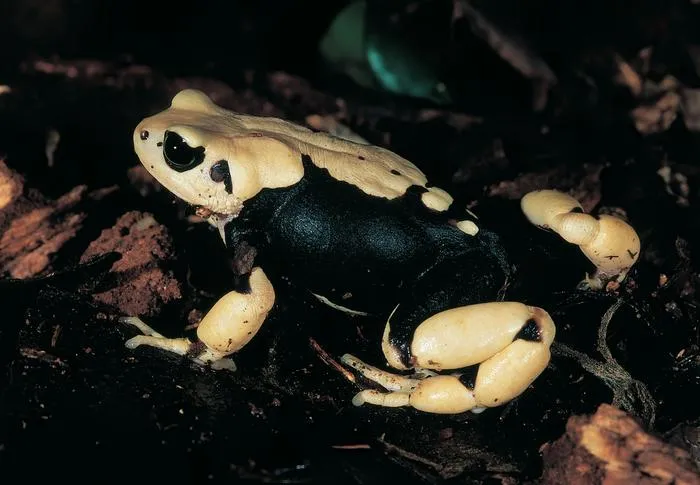
The newly named species are Nectophrynoides saliensis, Nectophrynoides luhomeroensis and Nectophrynoides uhehe. They look very similar to N. viviparus, but researchers found differences in their DNA, head shapes and the glands located near their shoulders.
The discovery has important conservation implications. When scientists thought these toads were one widespread species, they were not considered especially vulnerable. But now that the group has been split into several species with smaller, more fragmented ranges, each one may be at greater risk than previously believed.
This matters because their forest habitats in Tanzania are under pressure from human activity and climate change. One related species, Nectophrynoides asperginis, has already gone extinct in the wild after habitat changes and disease.
Researchers say future studies will be needed to understand how threatened each of the newly identified species is. With better information, conservationists may be able to create stronger plans to protect these rare live-bearing toads and the forests they depend on.