

Here’s the rewritten version with engaging language, subheadings, and all Dodo references removed:
She Wasn’t a Scientist. She Worked at a Spice Factory. And She Spent Five Years Tracking Down Every Species of Sea Turtle on Earth.
The Night That Changed Everything
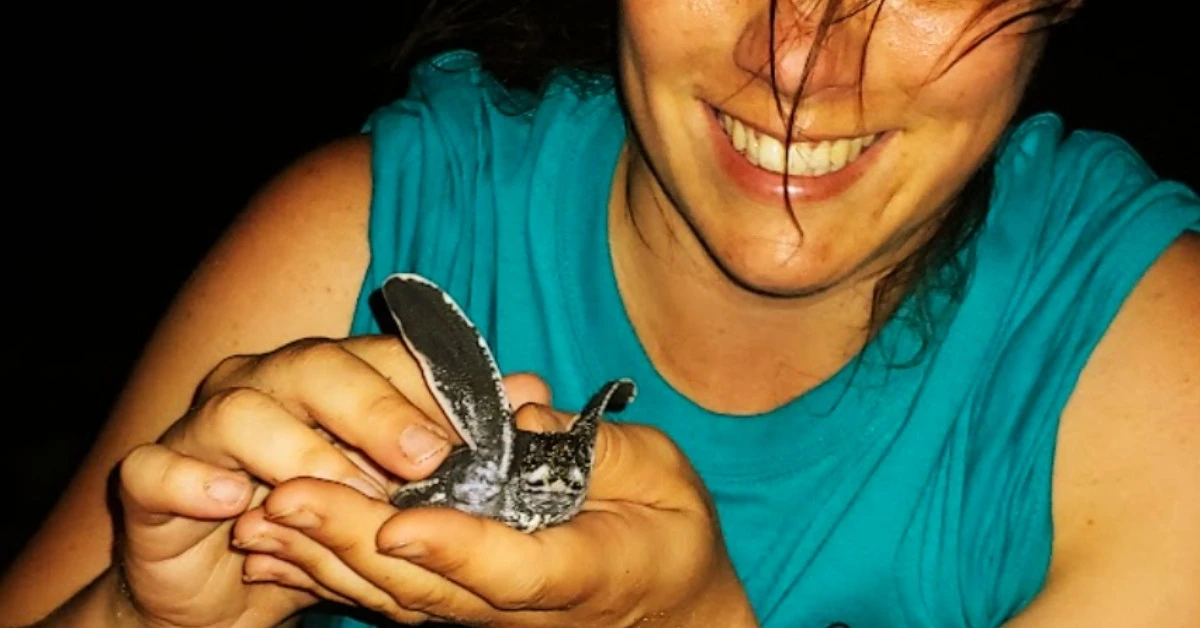
Nicole Milson is a 42-year-old mother of two from London, Ontario, who does office administration at a spice factory. She is not a marine biologist. She holds no research credentials. But in December 2025, she completed something that most wildlife scientists never do — she saw all seven species of sea turtle in the wild.
It started on a moonlit beach in Hawaii in 2020. Milson had never seen a sea turtle before, and after spending a couple of days quietly hoping one might surface near her, one finally did — a single head poking up from the water. That alone would have been enough. But later that night, walking along the beach with friends, she spotted what she thought was an oddly shaped rock. She went to investigate.
“And there she was — a green sea turtle,” Milson recalled. “As if that wasn’t spectacular enough, there were about 30 of them all lined up next to her, just sleeping peacefully on the beach.”
The feeling that followed was almost impossible to put into words.
“I suppose at first, I felt this rush of adrenaline that transformed into awe, and then came emotional tears,” she said. “It’s like stepping into a different world, and you get a sense of serenity.”
From Turtle Lover to ‘The Crazy Kind’
Back home in Canada, Milson couldn’t stop thinking about what she had seen. She threw herself into research, learning everything she could about sea turtles — all of which are endangered or vulnerable — and the more she learned, the deeper her passion grew. Eventually, she found a volunteer website offering hands-on conservation work with nesting sea turtles in Grenada, and something clicked into place.
“This was it, I knew this was what I needed to do, and I had the epiphany: to see all the species.”
The quest had begun.
Turtle One and Two: Leatherbacks and a Lucky Snorkel
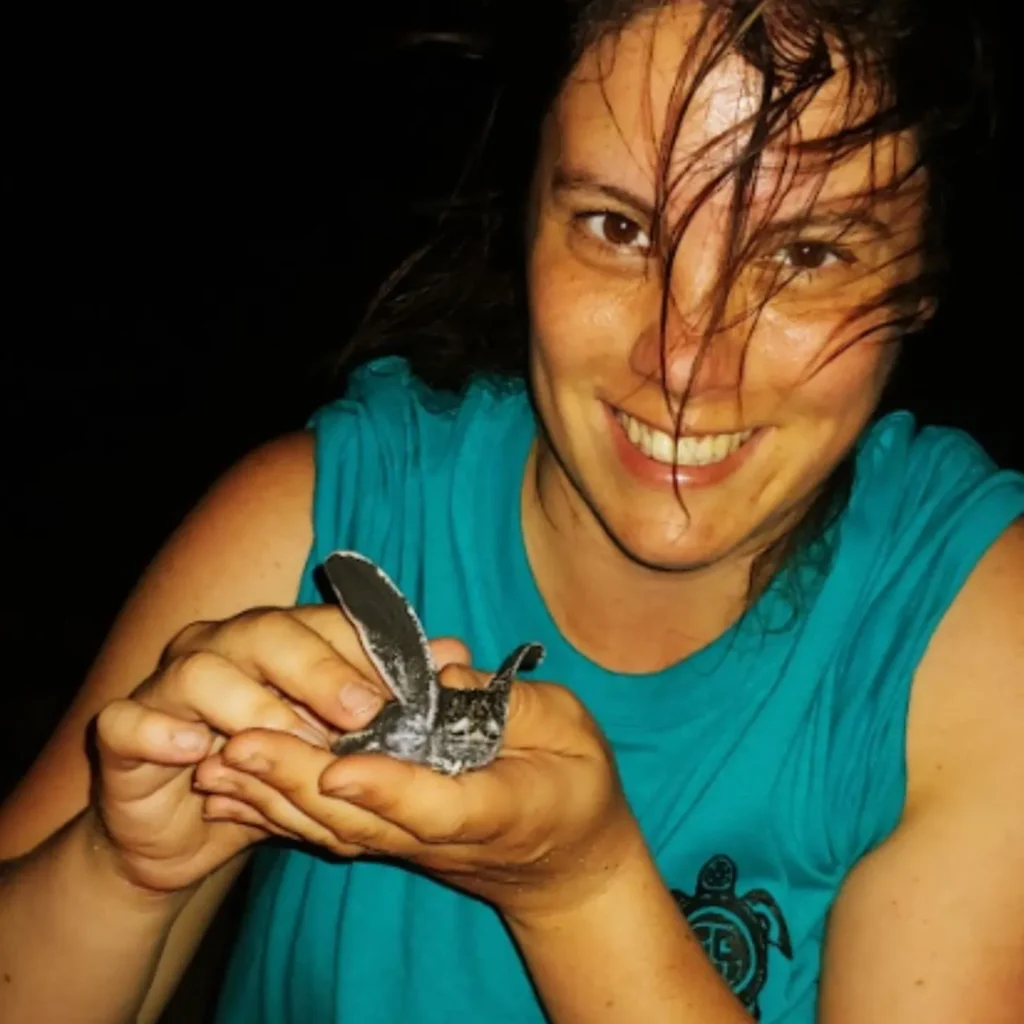
Milson signed up to volunteer as a research assistant through Working Abroad in Grenada, joining leatherback sea turtle monitoring, data collection and community outreach programs on the island. She saw nine leatherbacks and a baby hatchling during her time there.
“Not only do you get to be up close to them, but you’re working in and around them and helping the species with data collection to save their future,” she said.
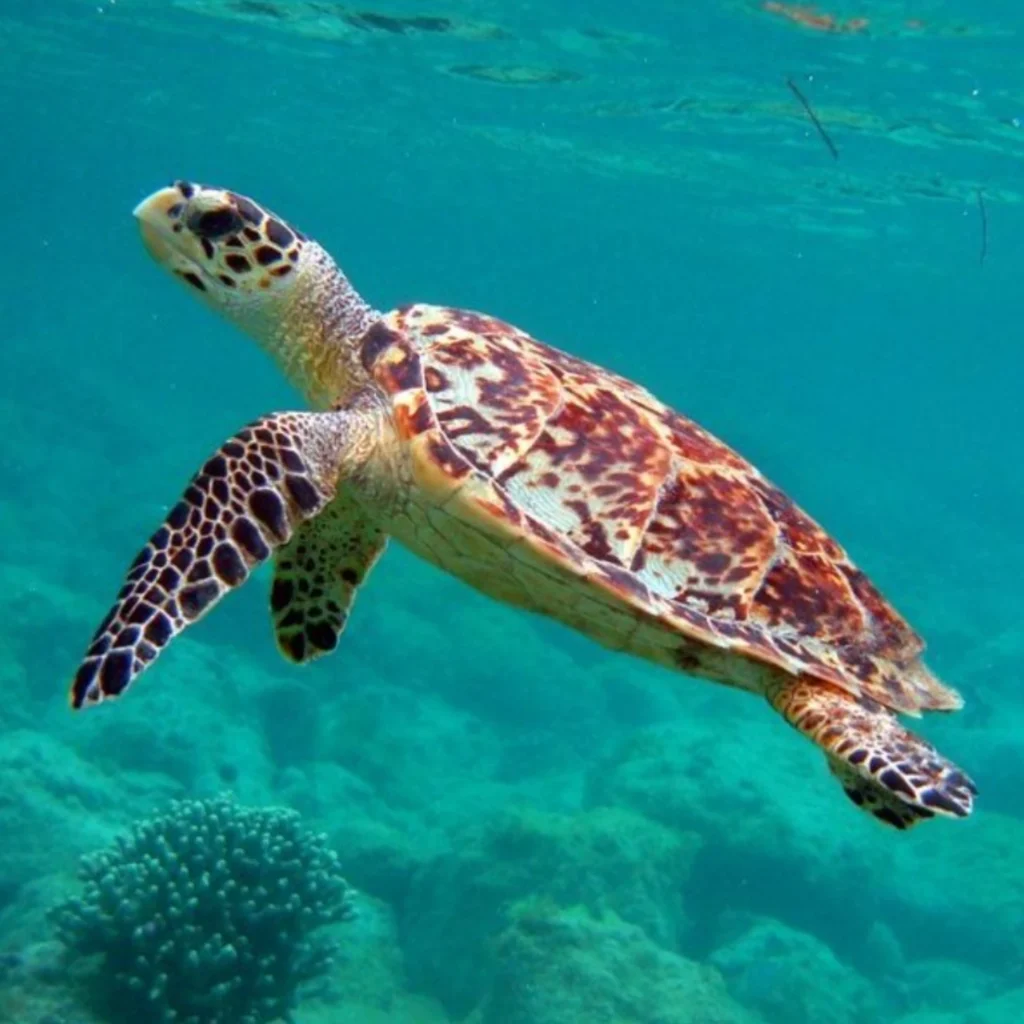
And then, almost as a bonus, came turtle number two — a hawksbill spotted while snorkelling off the coast.
“That amazing feeling you get when you see them for the first time doesn’t fade,” Milson said. “It’s like seeing them for the first time all over again.”
Turtle Three: Loggerheads in Florida
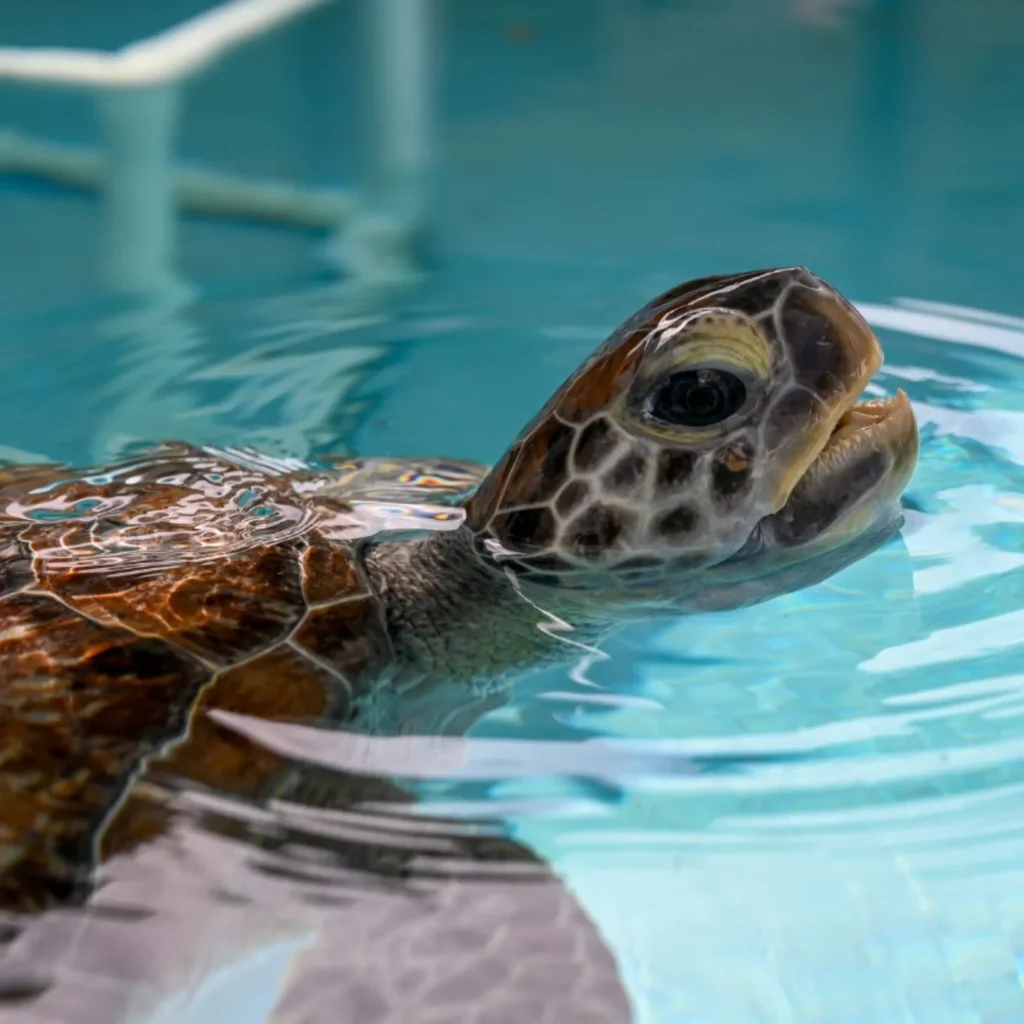
For her next target — the loggerhead — Milson reached out to the Sea Turtle Conservancy, which pointed her toward the Loggerhead Marinelife Center in Juno Beach, Florida. She planned her entire trip around the visit, touring popular nesting beaches in the hope of a wild sighting. The wild encounter didn’t materialise, but the centre and its work left a deep impression.
“That place was so inspiring,” she said.
Turtle Four and Five: Fifty-Three Olive Ridleys in Costa Rica
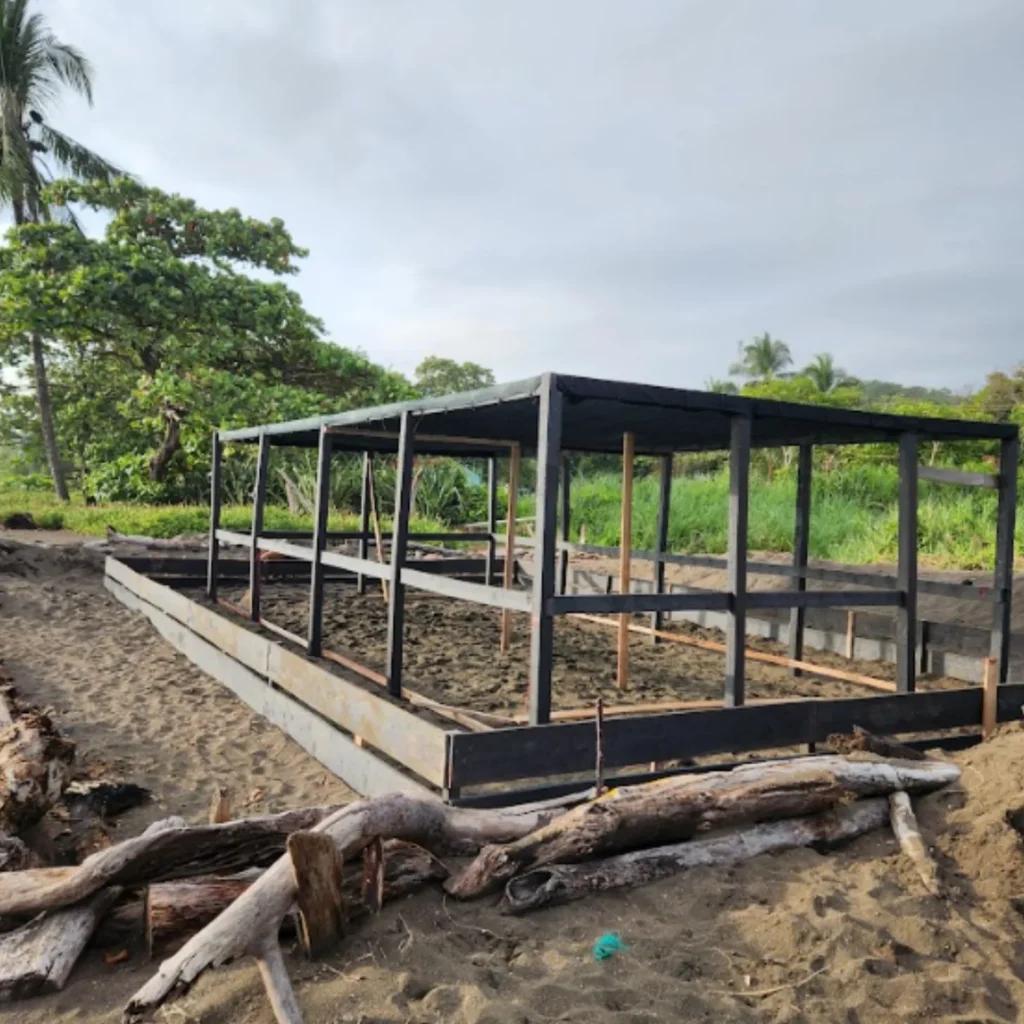
Next came the olive ridley, and Milson returned to Working Abroad — this time heading to Costa Rica. What followed was, by her own account, the hardest she had ever worked in her life. All-night beach walks. Daytime cleaning duties. Construction of a new hatchery for turtle eggs.
But she got to work alongside 53 olive ridleys.
“I can’t believe something I’ve been a part of will be around for years to come,” she said.
Turtle Six: A Special Bond on Padre Island
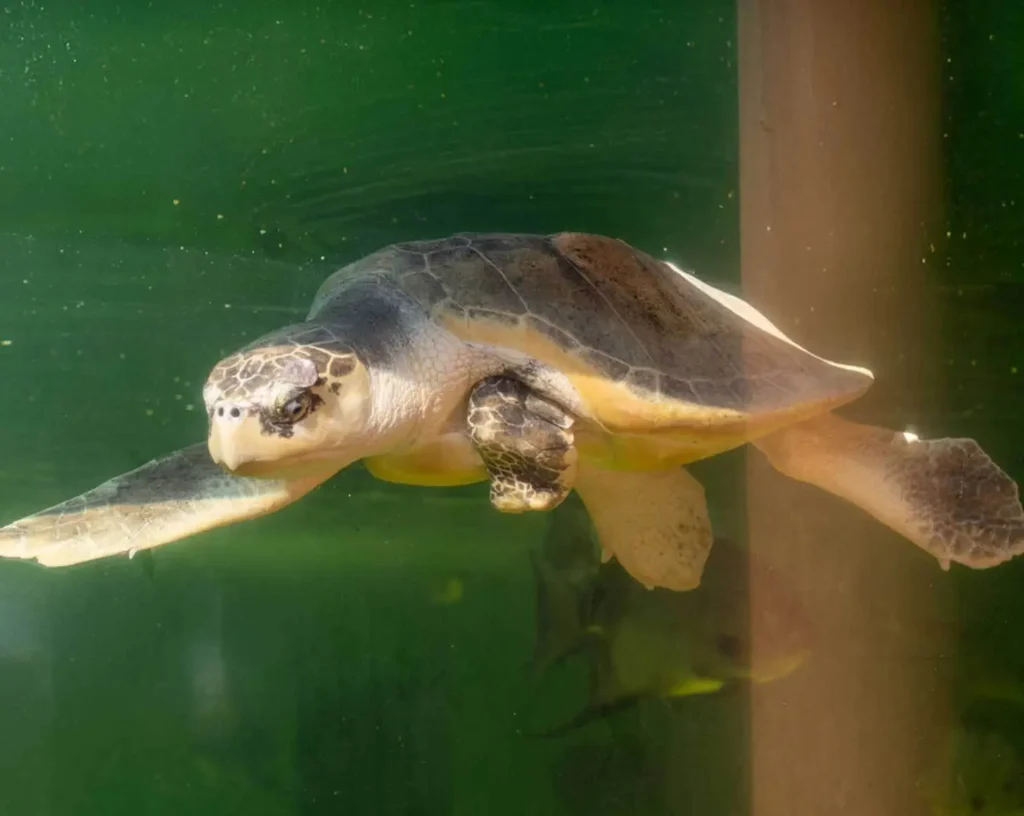
Five down, two to go — and things were about to get considerably more difficult. The Kemp’s ridley is the world’s most endangered sea turtle, found in only one location on earth. Milson spent a week driving and camping along the beaches of Padre Island, Texas, hoping for a sighting that never came.
In the end, she turned to Sea Turtle, Inc., a local rehabilitation centre, which arranged for her to meet Hang Ten — a resident Kemp’s ridley with a rare birth defect that had made release into the wild impossible. The two shared what Milson described as her favourite turtle encounter yet.
“Hang Ten and I had a pretty special bonding moment while there,” she said.
Turtle Seven: A Flatback Appears in the Daylight
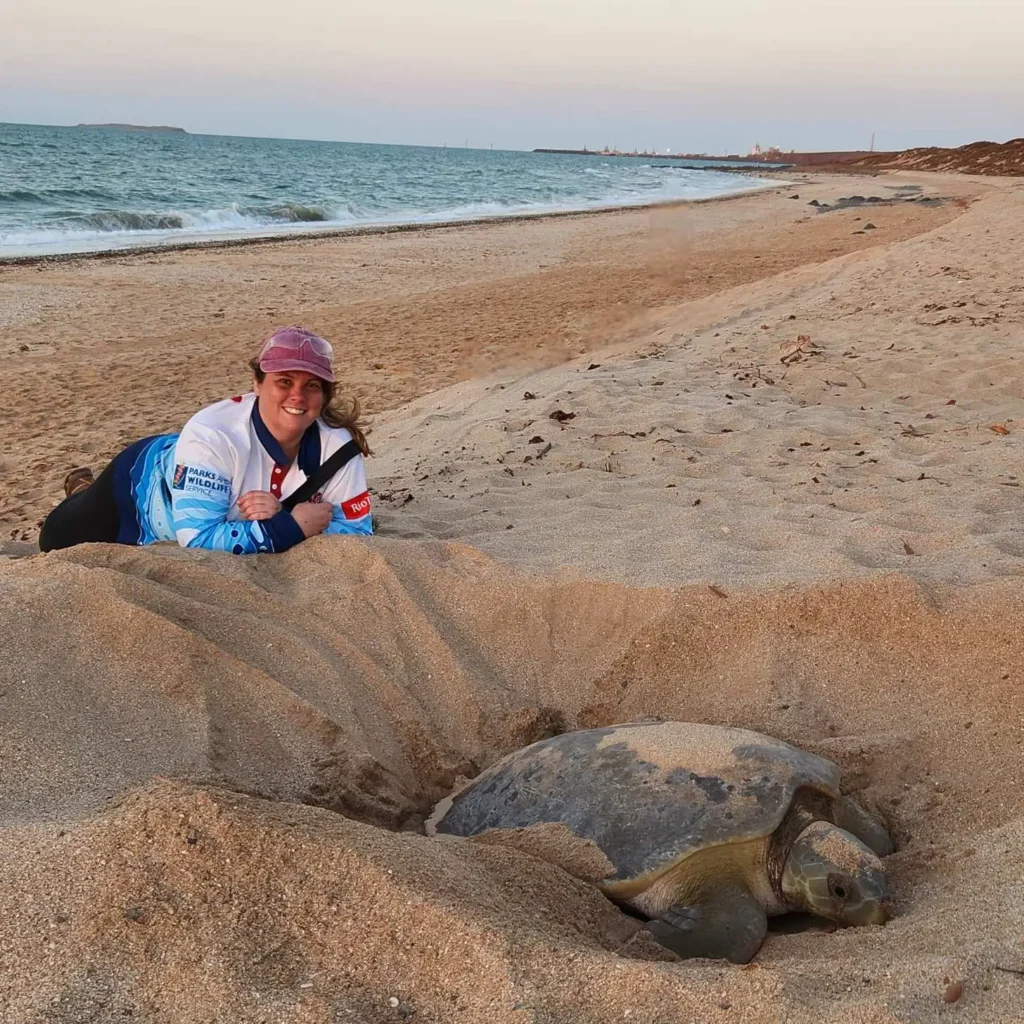
The final species — the flatback — exists only in the waters of Western and Northern Australia. Milson found her way to Point Samson, a small coastal town, through the West Pilbara Turtle Program, which enlists community volunteers to monitor nesting beaches. Four days into her seven-day stay, with no sighting yet, she began to worry. The programme coordinator gave her extra shifts to maximise her chances.
That same day, she returned to the beach to find her fellow volunteers gathered together, all grinning at her. When she asked why they wouldn’t stop looking at her, they all pointed — simultaneously — toward the water.
A massive flatback turtle, over 150 pounds, was making her way out of the surf and up the sand. And unlike every other encounter Milson had experienced — all conducted in darkness under red-filtered torchlight — this one was happening in full daylight.
“What a sight it was,” Milson said. “All of my experiences had been in the dark with red flashlights. But this one, on my last adventure, she decided to come out during the day for me to catch it all.”
Milson stood on the sand, tears streaming down her face, and simply soaked it in. Before the night was over, she had seen 14 turtles in total.
More Than a Personal Dream
What makes Milson’s journey remarkable is not just the ambition behind it, but what she left behind along the way. In Grenada, she collected research data that supports ongoing conservation efforts. In Costa Rica, she built a hatchery that will protect turtle eggs for years to come. In Australia, she monitored nesting beaches that might otherwise go unobserved.
A self-described office administrator from Ontario, armed with nothing but passion and determination, spent five years quietly helping to protect some of the ocean’s most vulnerable creatures — one volunteer shift at a time.
As for what comes next? That’s still to be decided. But for now, Milson is in Panama, relaxing in an overwater bungalow — a well-earned reward for a dream that turned out to be anything but small.