

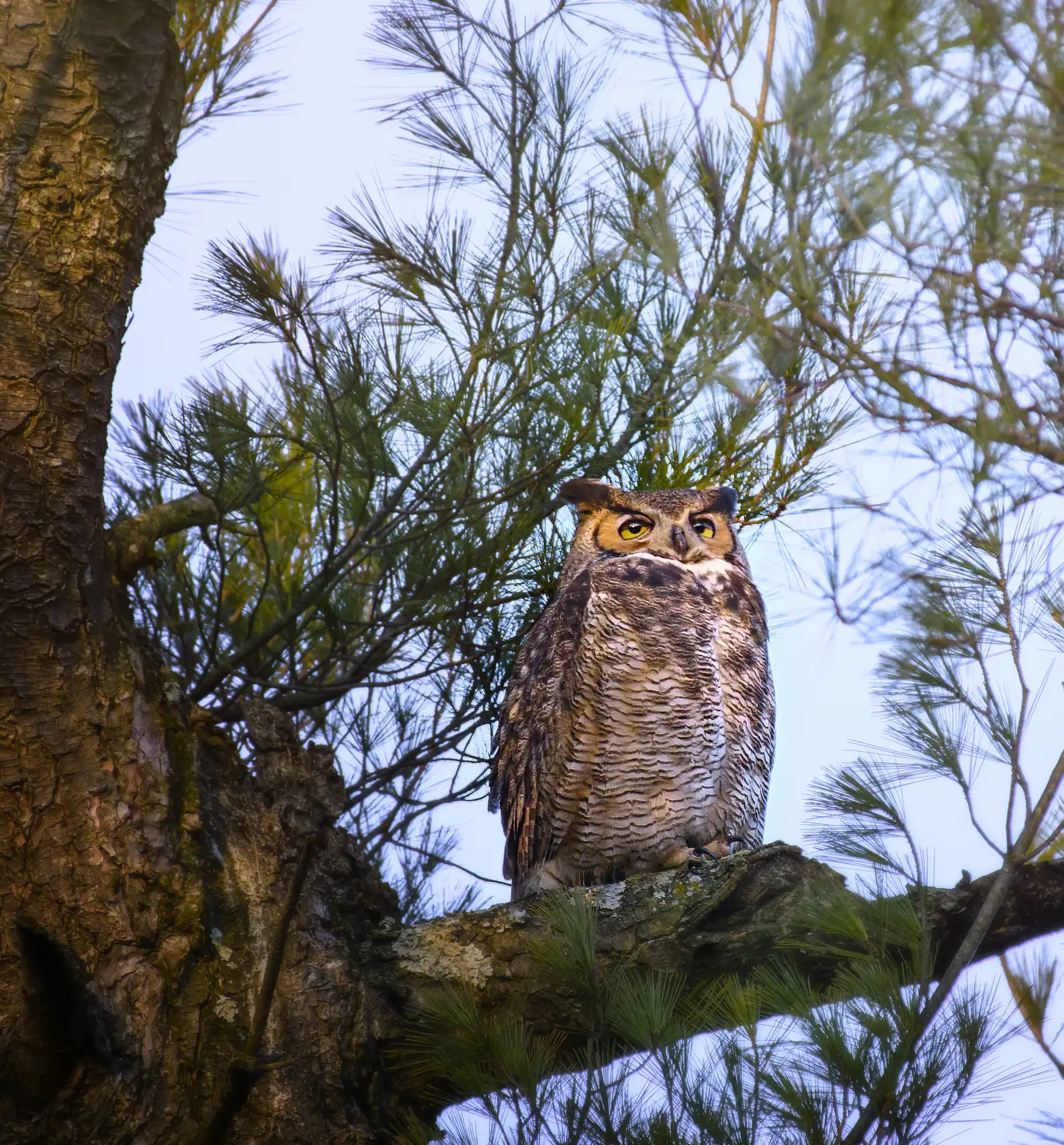
“It was the most prolonged eye contact I’ve ever experienced.”
Each evening as Nicholas Albright, a park ranger at Gifford Pinchot State Park in Pennsylvania, locked the gates for the day, he could count on hearing the same great horned owl calling out from nearby trees.
“That owl was hooting almost every night,” Albright said. “It became one of those small things you start looking forward to.”
Sometimes he would catch sight of her moving between branches, though even on days he could not see her, he usually heard her. According to Albright, she was never shy about making herself known.
Then one day in August, everything changed.
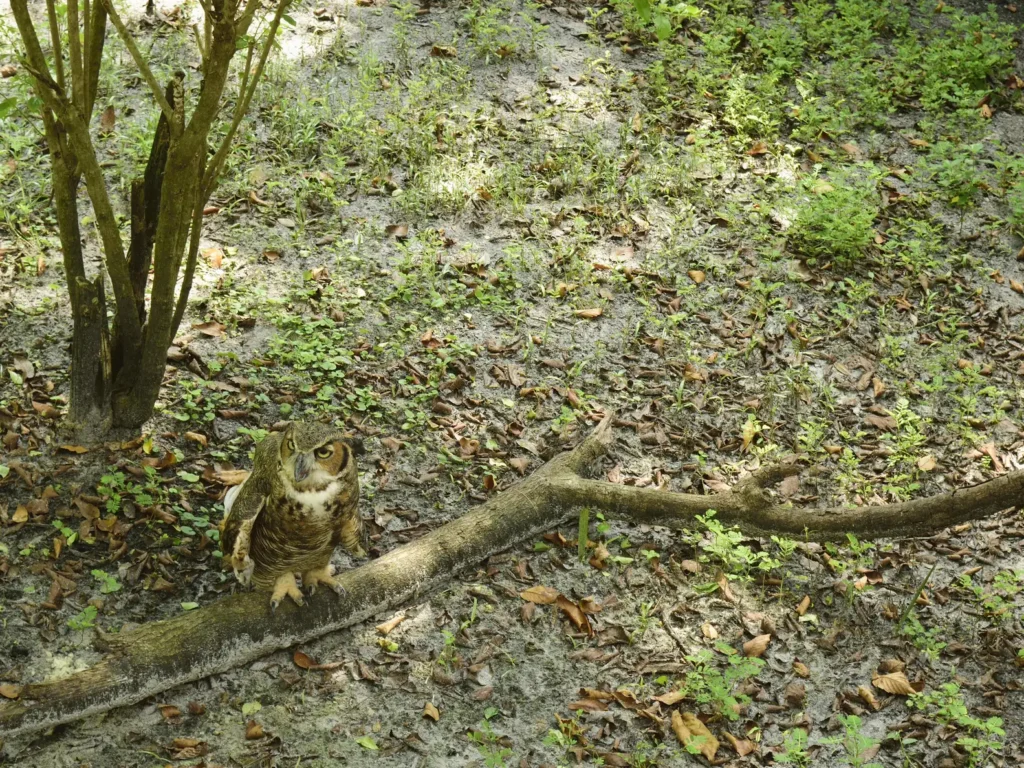
Instead of hearing her from above, Albright found the owl sitting on the ground in the middle of the day. Even when park visitors approached, she did not react or try to fly away.
That was when he knew something was seriously wrong.
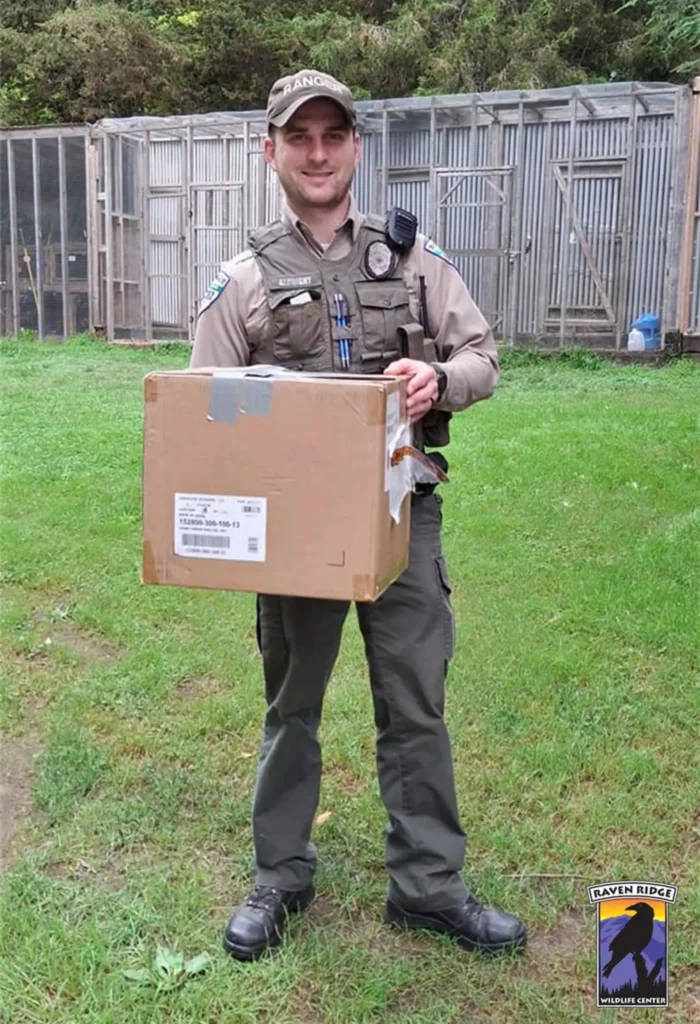
Wanting to help, Albright contacted Raven Ridge Wildlife Center, a nonprofit that rehabilitates injured and distressed wildlife. The center agreed to take the owl in, but first he had to safely catch her himself.
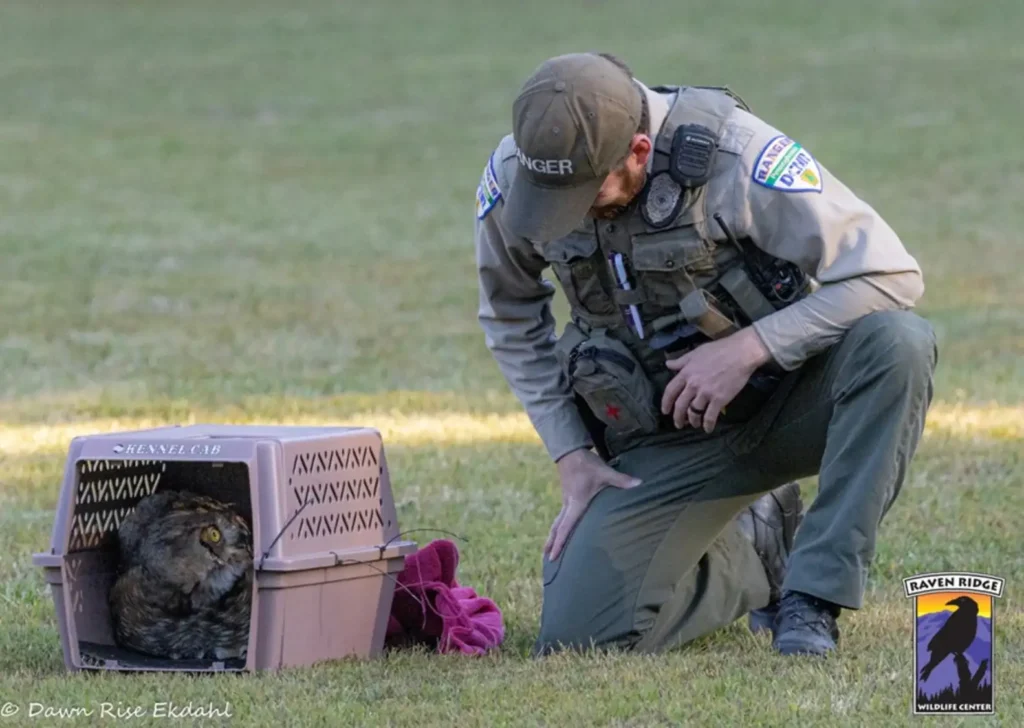
He admitted the task made him nervous. Great horned owls are powerful birds, and up close they can be intimidating.
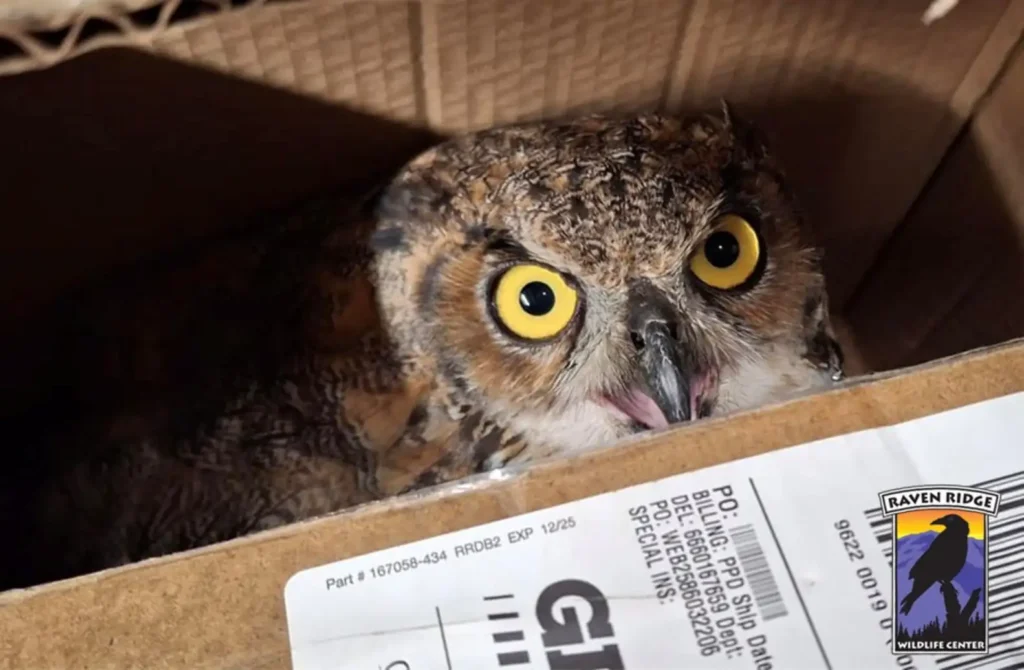
Using a blanket, he carefully covered the owl and placed her into a cardboard box before driving her about 40 minutes to the wildlife center. The entire ride, she remained completely silent.
When Tracey Young, founder of Raven Ridge Wildlife Center, met them, she could see how worried Albright was. He seemed to believe the owl might not survive.
Young, a licensed wildlife rehabilitator, quickly saw how serious the bird’s condition was. The owl was badly dehydrated and dangerously thin. She was still young, and Young suspected she had not yet fully developed the hunting skills she needed to survive on her own.
Albright told the team he would be heartbroken if she did not recover, especially because he knew her usual perches and had grown used to seeing her around the park.
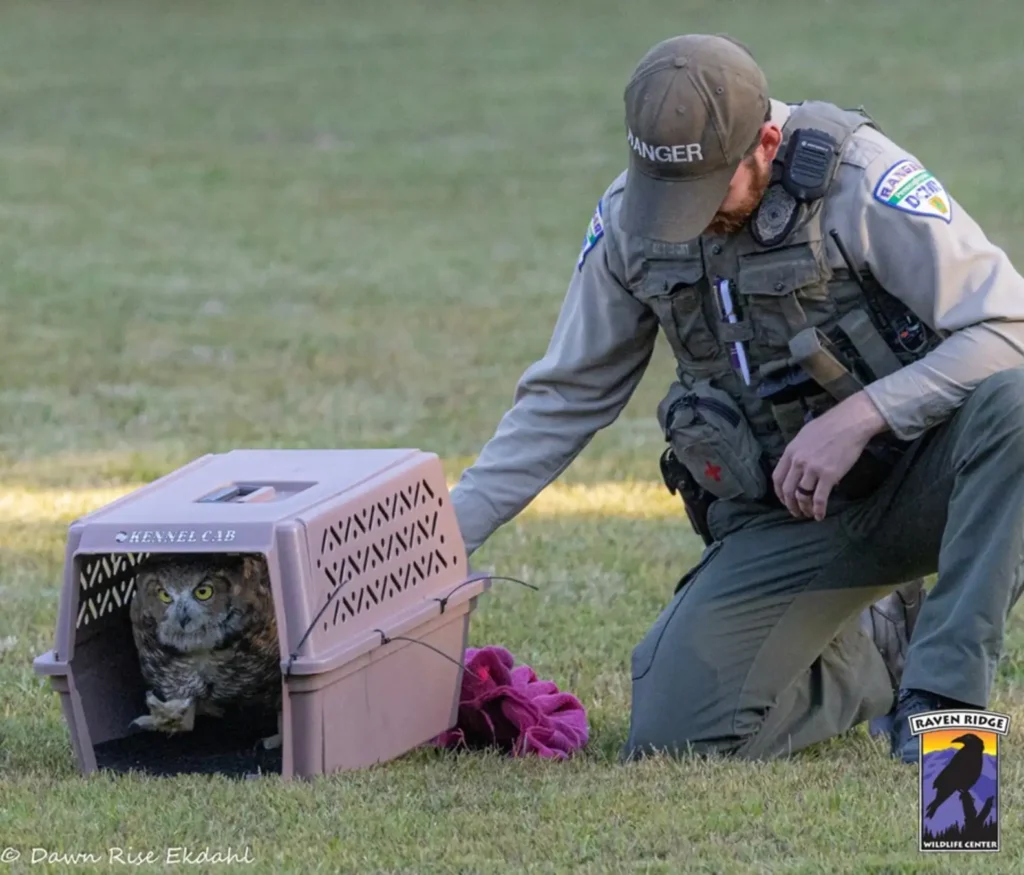
At the center, the team began treating the owl with fluids and gradually reintroducing food. Day by day, she gained strength and put on weight. Eventually, she became energetic enough to bounce around her flight enclosure — a huge improvement from the motionless bird Albright had first found.
After about two months of care, the owl was finally ready to return to the wild.
When Young called Albright with the news, he was thrilled. But she had one more surprise: she wanted him to be the one to release the owl.
Because he had been the one to find her and get her the help she needed, Young felt it was only right that he help send her home.
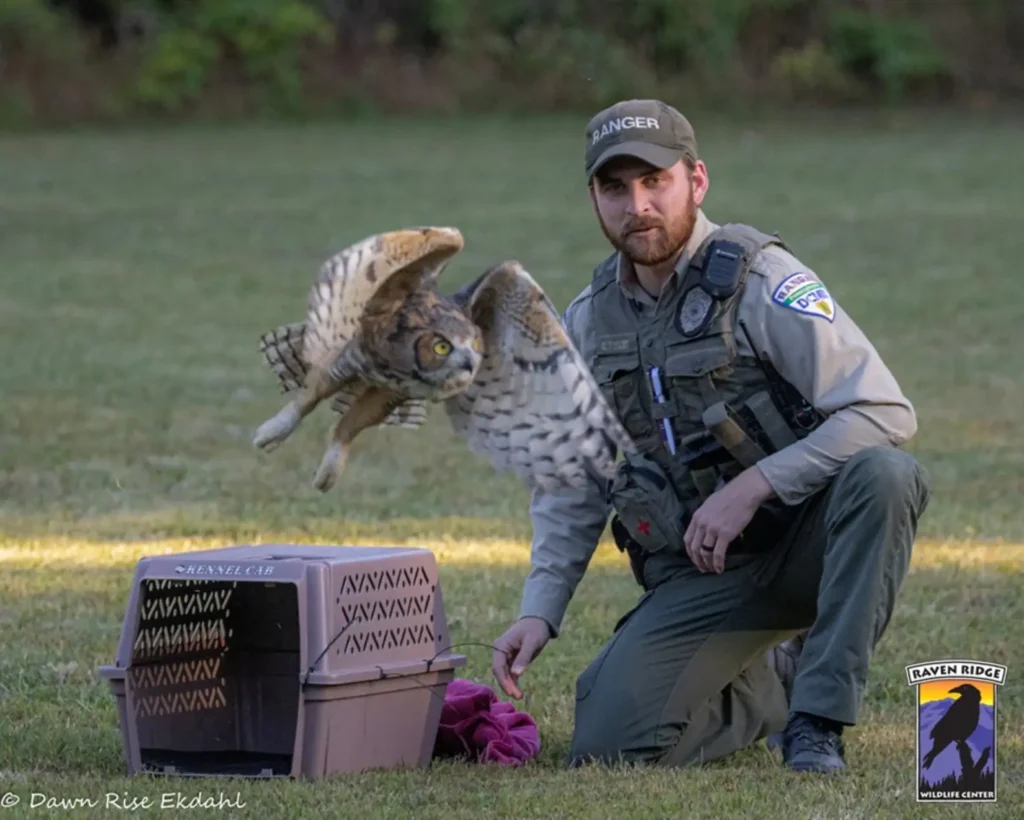
The two returned to the exact place where the owl had originally been found on the ground.
Albright opened the cage door, but instead of flying off immediately, the owl paused and looked directly at him. He later joked that it was the longest eye contact he had ever experienced.
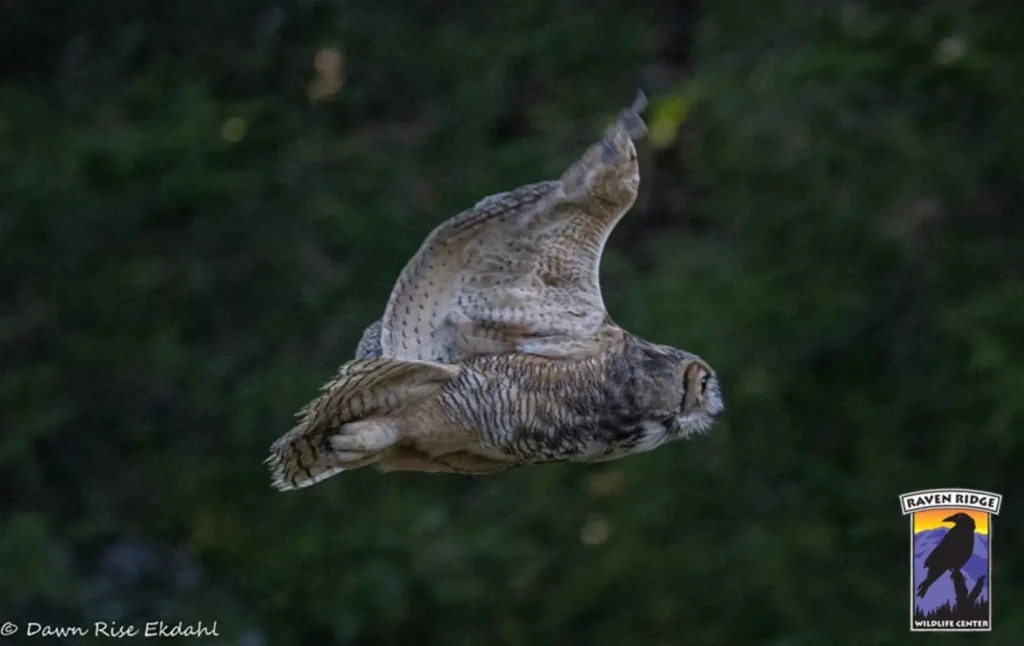
Then, at last, she launched herself into the air.
For Albright, seeing her fly away so strongly was especially meaningful because the last time he had seen her, she had barely been able to move. This time, she lifted off perfectly.
He described the release as deeply rewarding — a moment of closure he will never forget.