

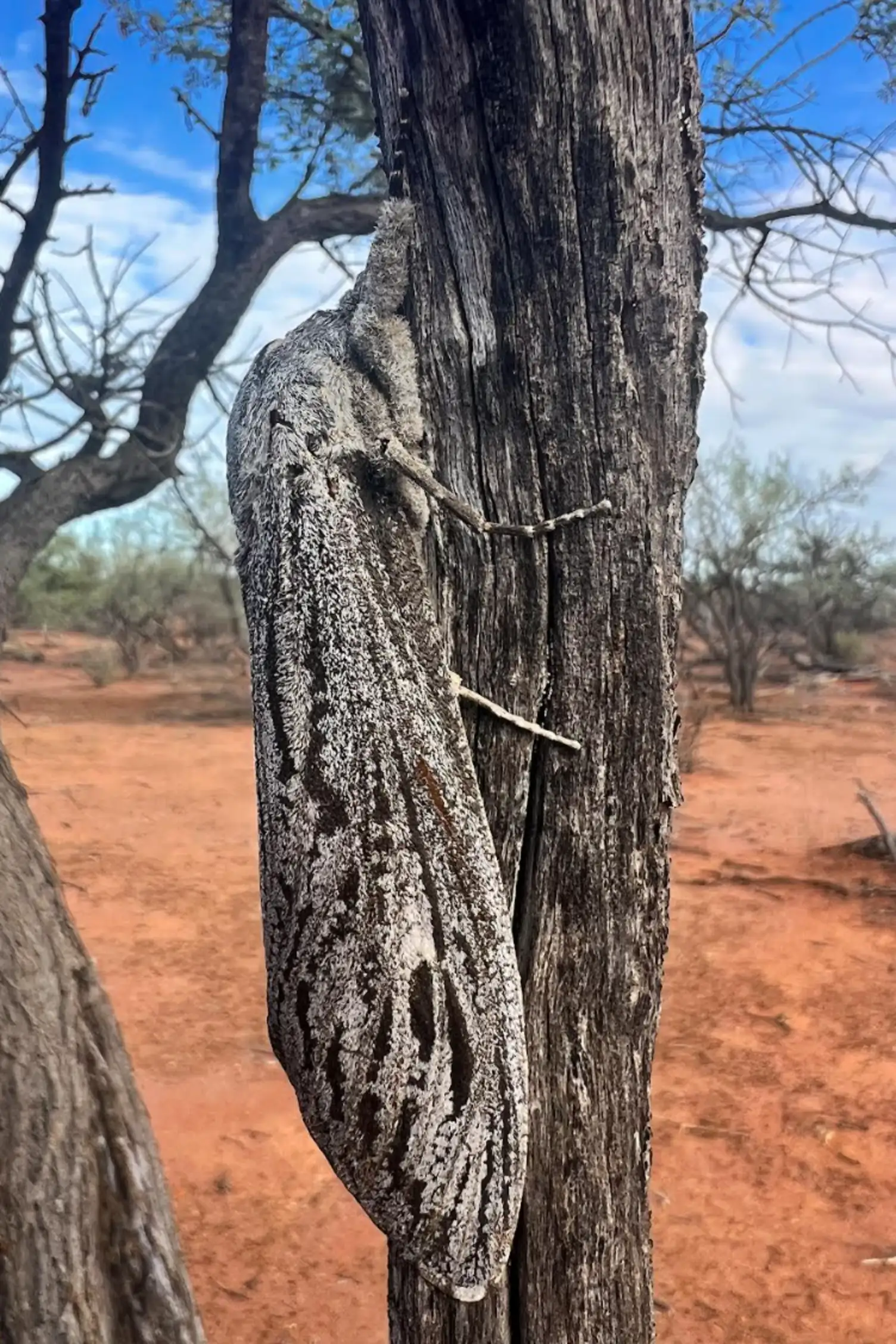
It’s one of the world’s heaviest insects.
A routine day in the field turned into an unforgettable wildlife encounter for Ben Parkhurst, a regional ecologist with Bush Heritage Australia. While conducting vegetation monitoring at Hamelin Station Reserve, he paused to take measurements near an old acacia tree — and suddenly noticed something extraordinary resting against the bark.
He quickly placed his measuring tape beside it and was stunned. Perched silently on the tree was a massive moth, so large that it stretched longer than his sunglasses.
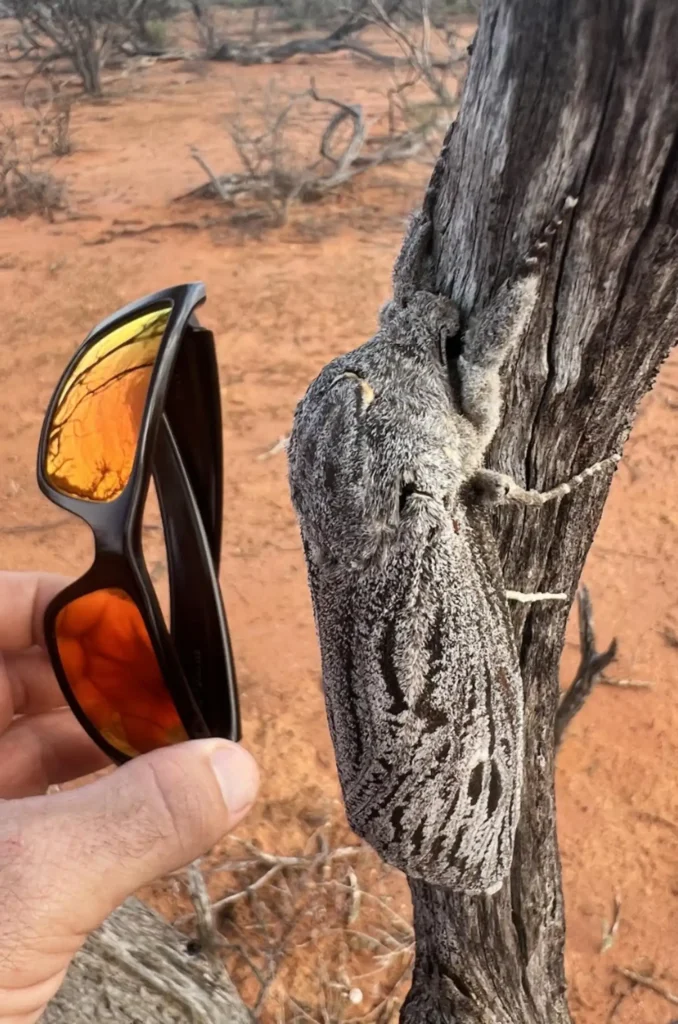
What made the discovery even more remarkable was how perfectly the insect blended into its surroundings. Its bark-like camouflage was so effective that Parkhurst only spotted it when he was almost right beside the tree.
In all his years working outdoors and studying the diverse wildlife across Bush Heritage’s conservation reserves, Parkhurst had never come across a moth of this size. He had seen some that came close, but none quite as impressive as this one.
Although identifying the exact species proved difficult, he was able to place the moth within the Cossidae family, most likely in the genus Enoxyla. That detail made the find even more fascinating, since the world’s heaviest moth — weighing up to 32 grams — also belongs to this same genus. The moth before him seemed nearly as substantial.
To put that into perspective, Parkhurst compared it to Australia’s smallest bird, the weebill, which weighs only around five or six grams. This moth, he explained, could weigh as much as several of those tiny birds combined.
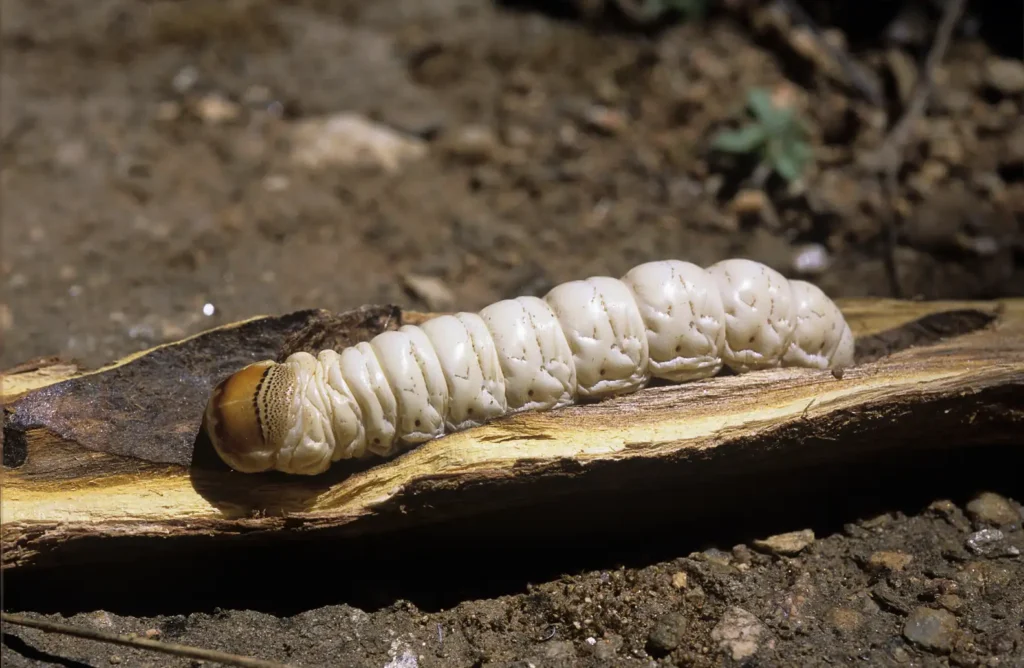
Like others in its family, the moth is a wood borer. These insects lay their eggs in bark, and once the larvae hatch, they tunnel into the wood and remain there for one to two years before finally transforming into their winged adult form.
Yet despite spending years developing, their adult life is astonishingly brief. Once they emerge as fully grown moths, they survive for only about a week. They do not eat, because they have no functioning mouths. Their sole purpose during this short time is to mate and lay eggs, ensuring the cycle begins again.
This giant moth, like many members of Enoxyla, is mainly active at night. During Parkhurst’s close observation, it remained completely motionless, calm and undisturbed, even when he came within a centimeter of it.
For Parkhurst, the encounter felt like a rare privilege. Had he not passed so close to the tree, he might never have noticed one of the most striking and unusual creatures he had ever seen.
I can also make it more elegant, more natural, or more dramatic depending on the style you want.