

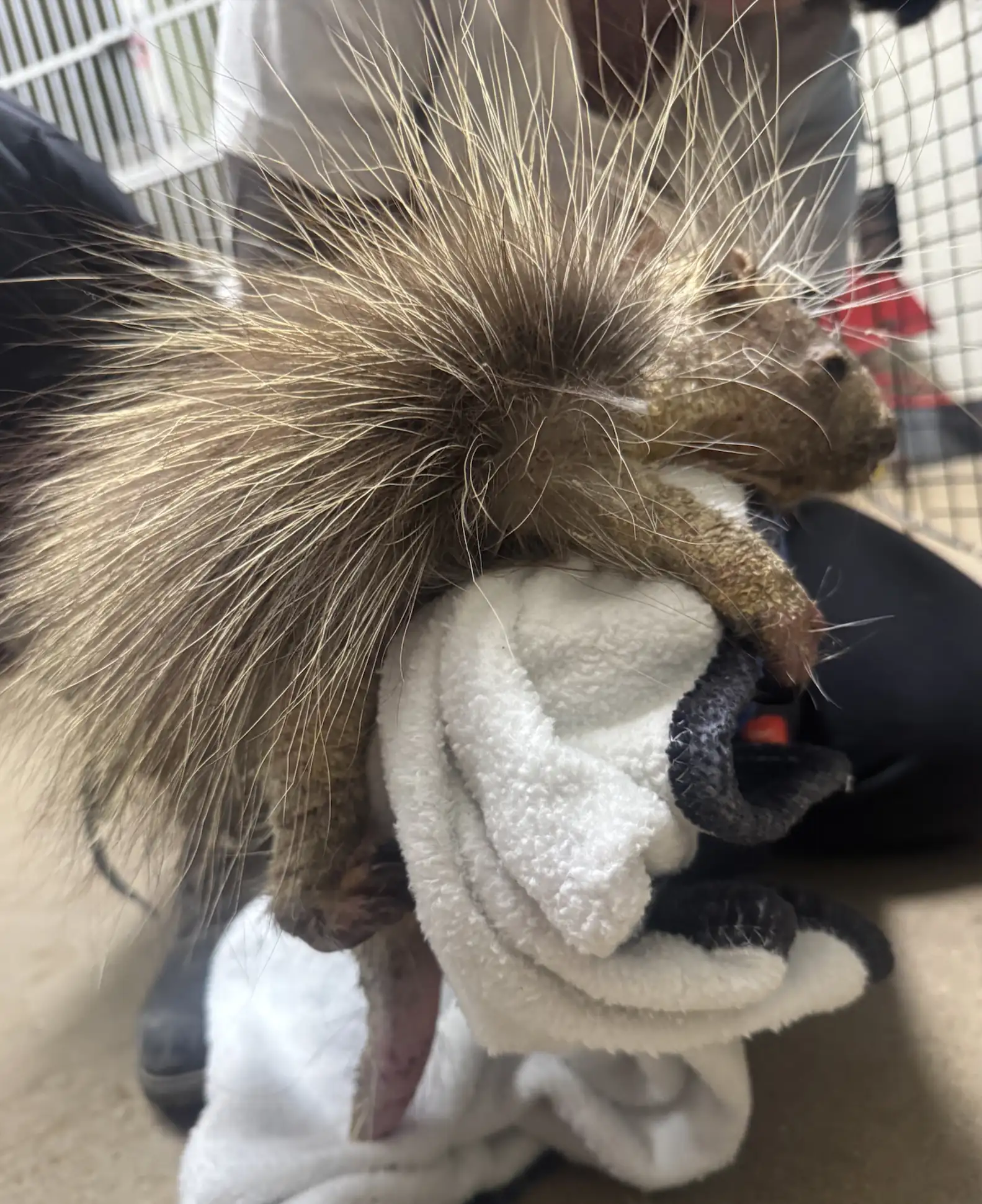
She was speechless.
Late last month, a concerned Texan rushed into Austin Wildlife Rescue carrying a young porcupine in obvious distress. The little animal’s quills were thin and patchy, his fur was sparse, and his skin was coated in thick, dry scales.
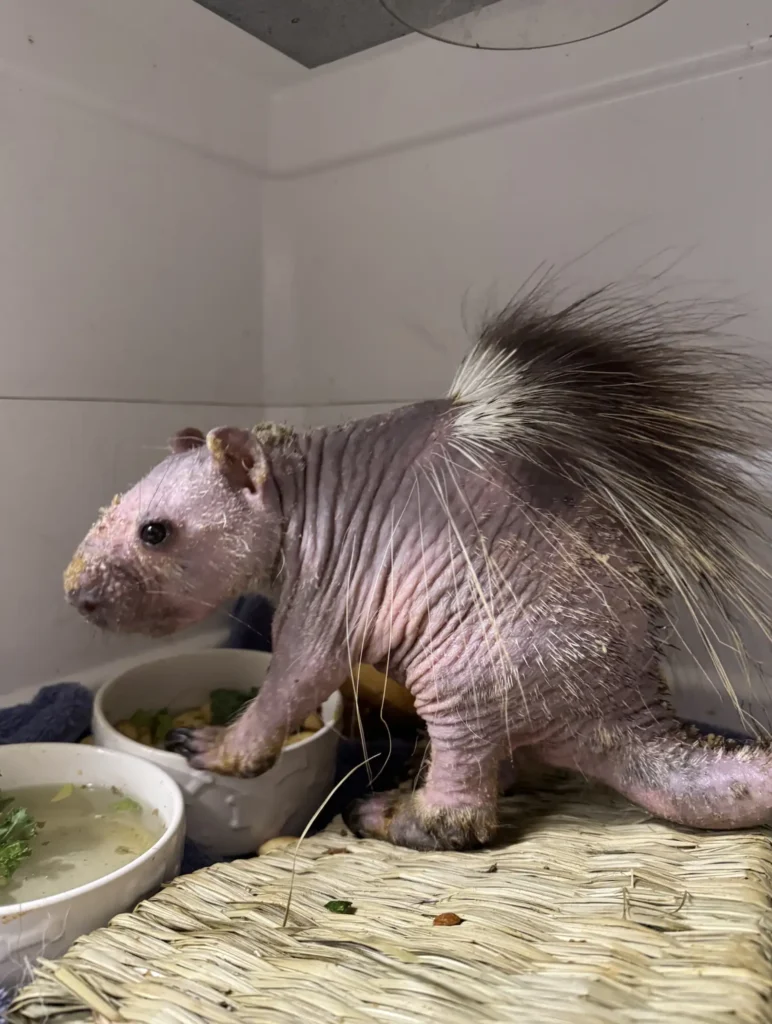
According to operations manager Kathryn Mattison, it was the most severe case of mange and ringworm the team had ever seen in a porcupine his age. Staff immediately began fluids and medication, knowing he was in critical condition.
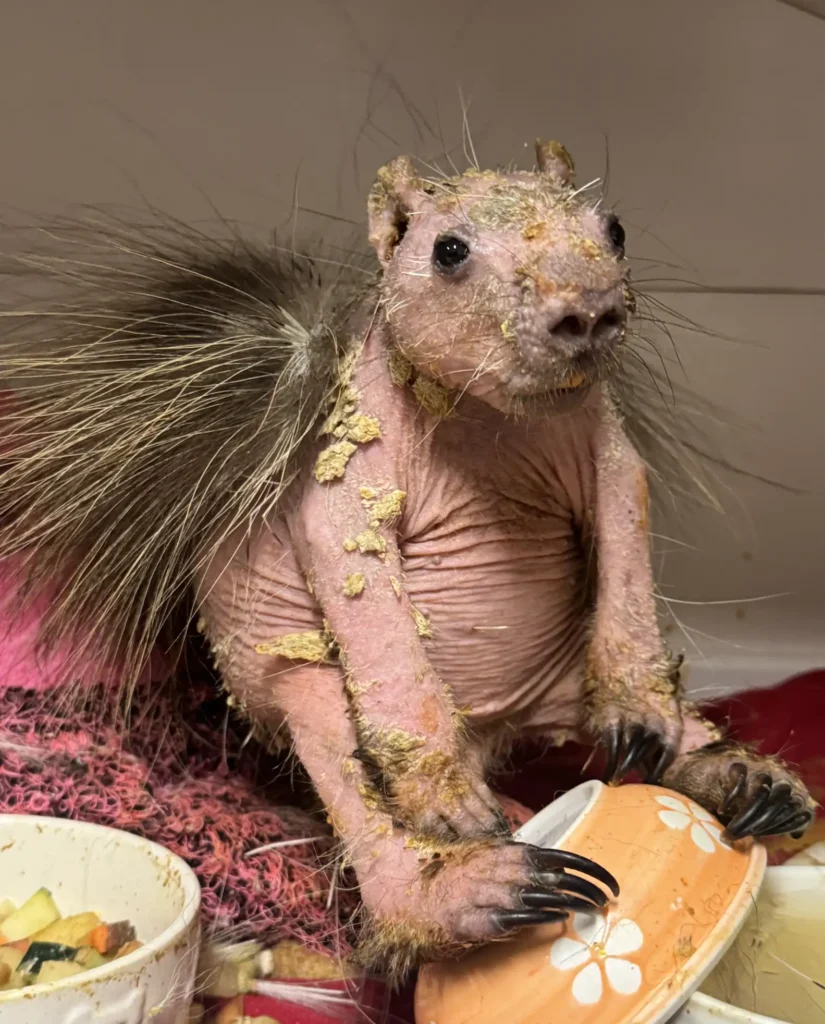
He was so weak at first that he barely had the strength to eat.
Aggressive Treatment Begins
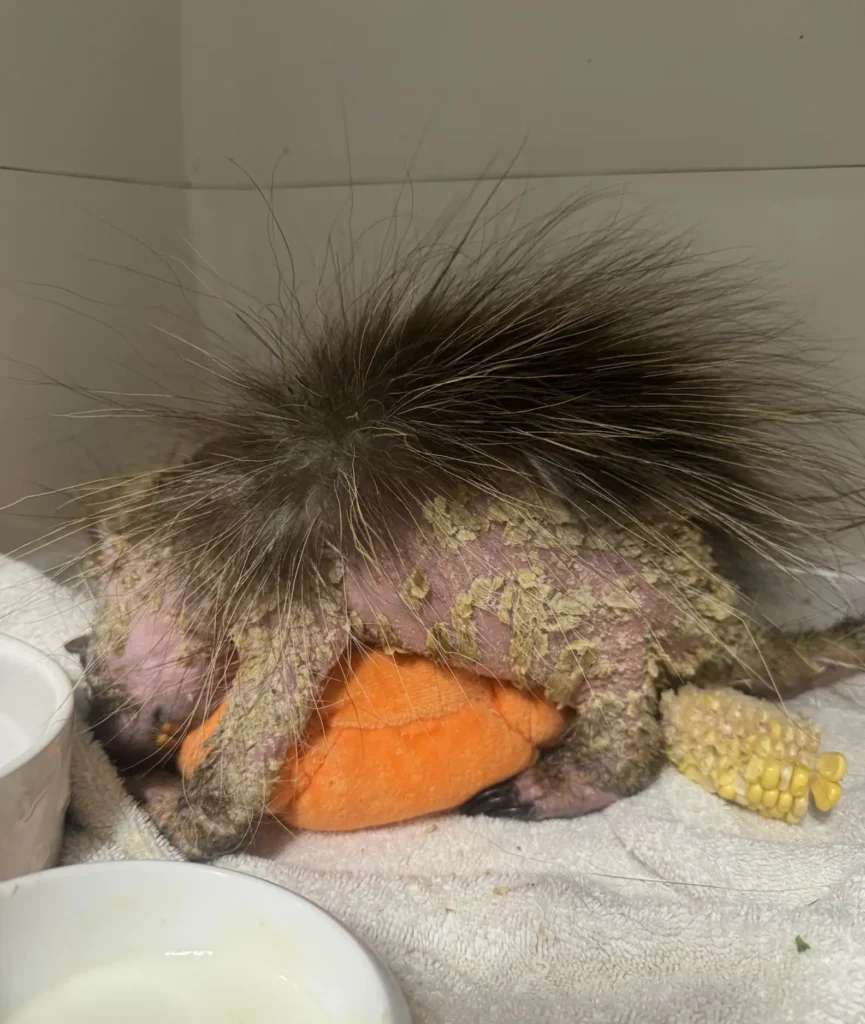
Once veterinarians confirmed the infection hadn’t reached his lungs, the focus shifted to intensive antifungal and antiparasitic therapy. The medications were designed to eliminate mites and halt the abnormal keratin buildup responsible for the “fluffy” crusts covering his body.
In many similar cases, porcupines must be sedated for medicated baths and careful cleaning. But this resilient little patient managed to help himself — scratching away the thick flakes as the treatments began working.
Within days, the crusty patches started falling off, revealing much healthier skin underneath.
A Remarkable Turnaround
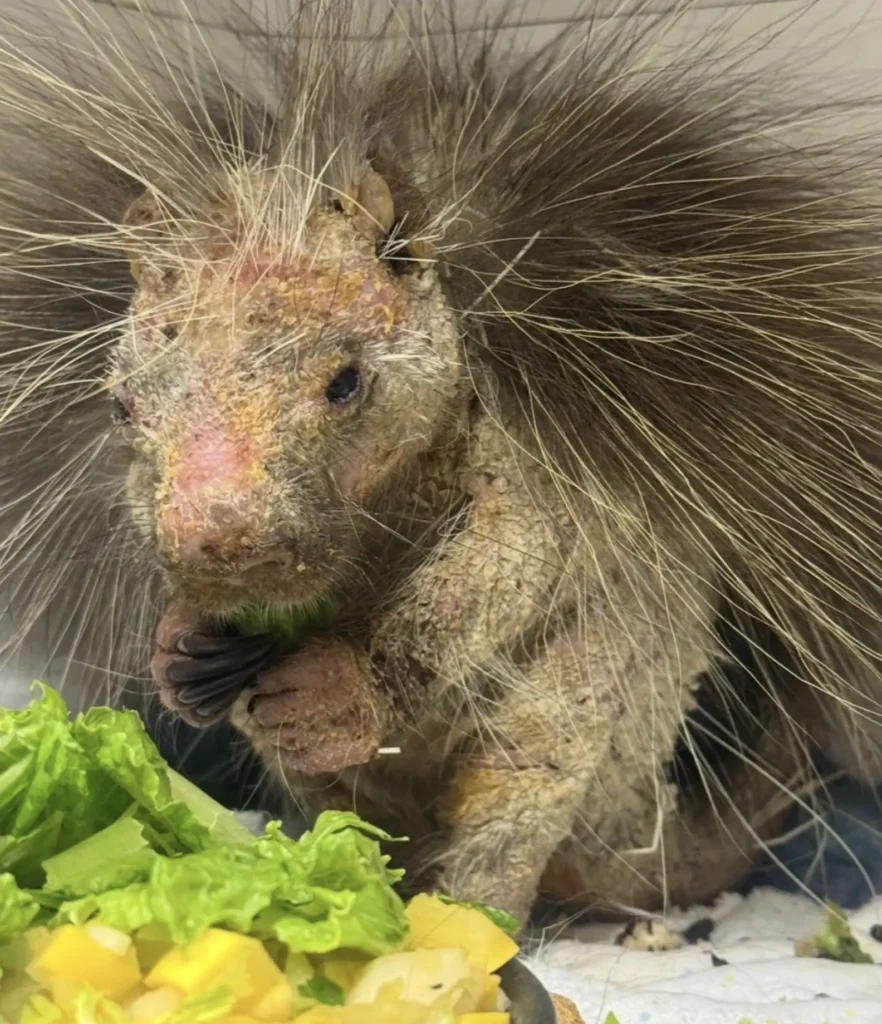
As the infection cleared, the transformation was dramatic. The constant itching eased, and his energy returned. Fresh quill stubble began sprouting from his newly healed skin — a promising sign of regrowth.
About a month after his rescue, he looks almost like a different animal. Staff describe him as playful and full of personality. Though he still stays in a large incubator to keep warm while his quills grow back, he’s already showing a mischievous streak — tipping over food bowls and lounging comfortably on his back.
Looking Ahead
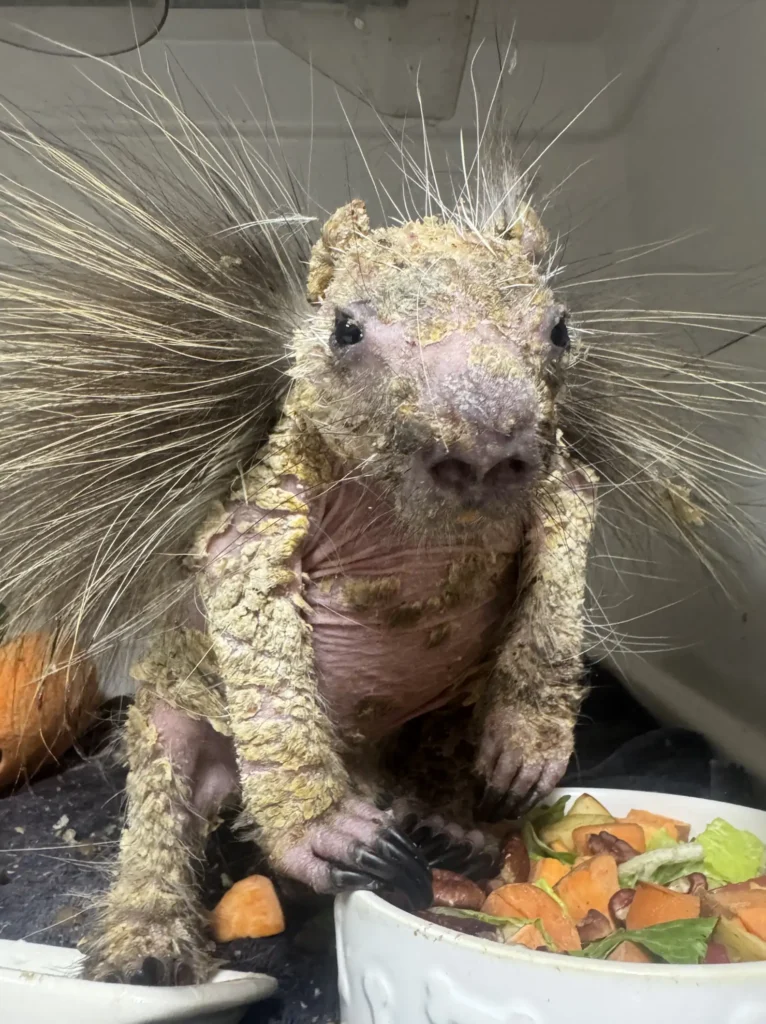
Recovery isn’t instant. It could take close to a year for his coat and quills to fully return. But his caregivers are optimistic.
If all continues to go well, he may be strong enough for release by this time next year — a remarkable outcome for a porcupine who once arrived exhausted, itchy and barely able to eat.
What began as one of the worst skin cases the rescue had ever seen has become a powerful example of how quickly wildlife can rebound with the right care.