

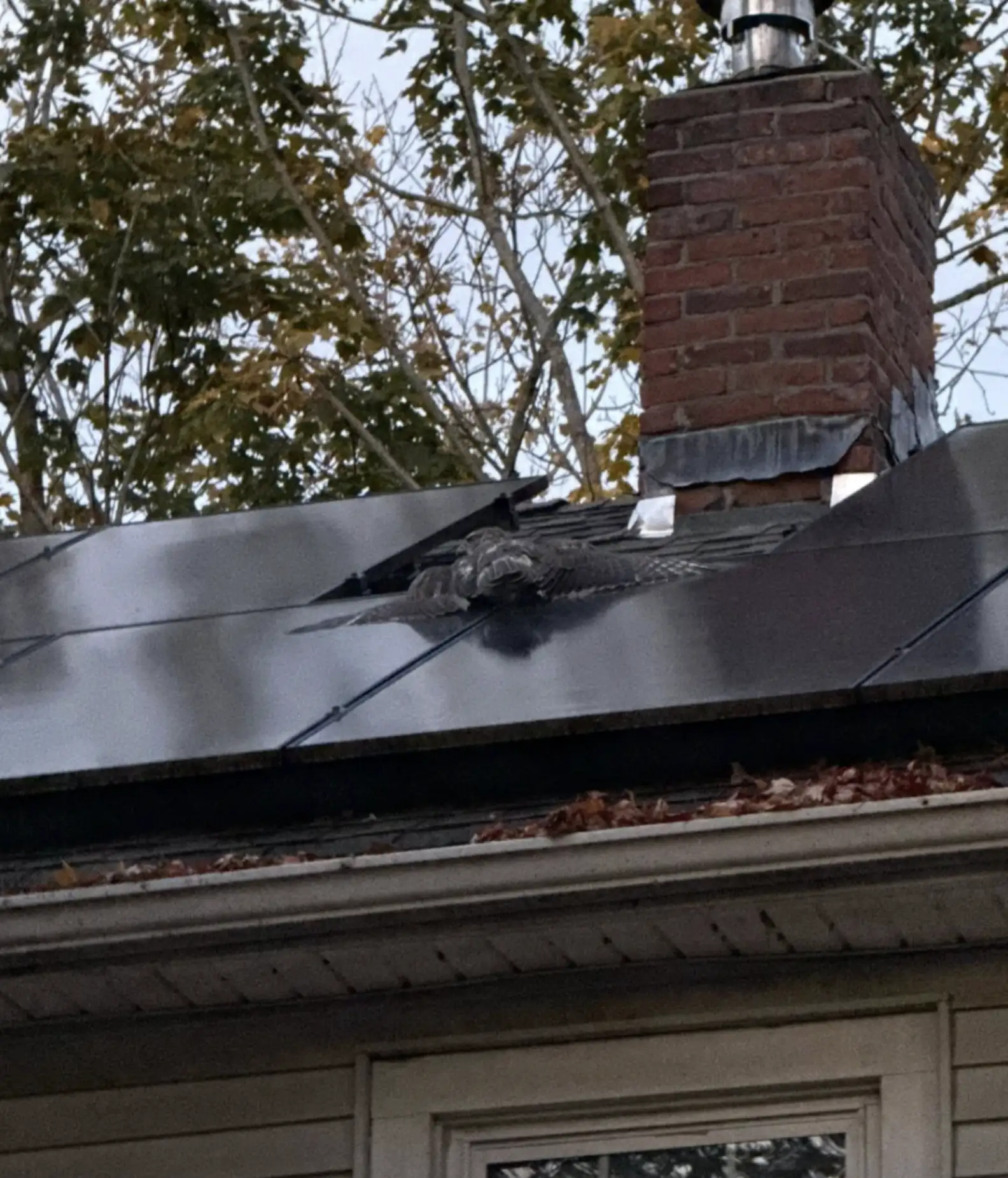
“It was a long night of worry.”
On a recent fall evening in Connecticut, a grandmother babysitting her grandchildren glanced up at the roof and spotted something unusual. Perched awkwardly among the home’s solar panels was a red-tailed hawk — and he was clearly in trouble.
A Chase That Ended in Crisis
The hawk had been pursuing a squirrel when he accidentally slipped beneath the panels and became trapped. As a result, he injured himself, grew dehydrated and could no longer move.
Recognizing the urgency of the situation, the grandmother contacted A Place Called Hope (APCH), a local wildlife rescue organization.
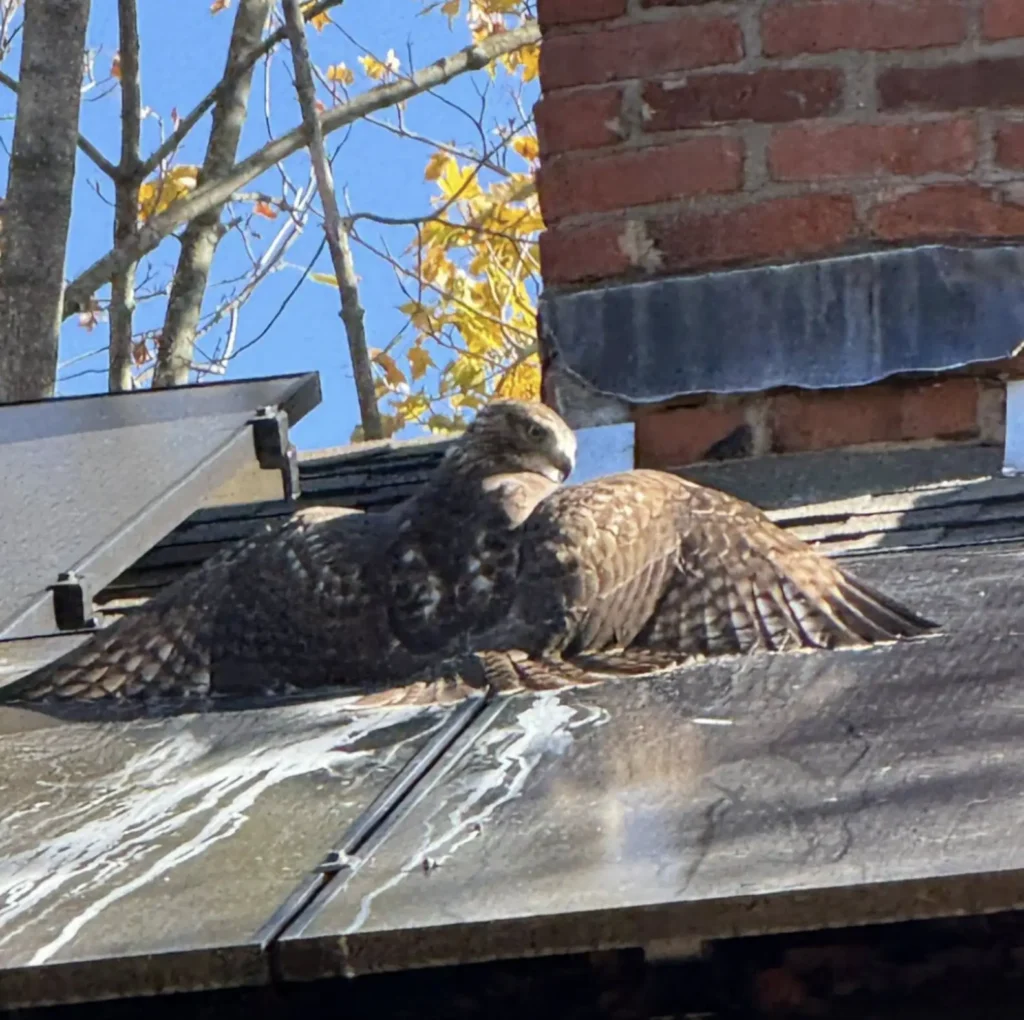
However, daylight was fading fast. By the time a rescuer arrived, the sun had already set, making an immediate rescue unsafe. The team photographed the hawk and consulted their climbing specialists. Then, with no safe option in the dark, everyone waited and hoped the bird would hold on through the night.
“It was a long night of worry,” an APCH representative later shared. “We were all very anxious for daylight.”
A Careful and Coordinated Rescue
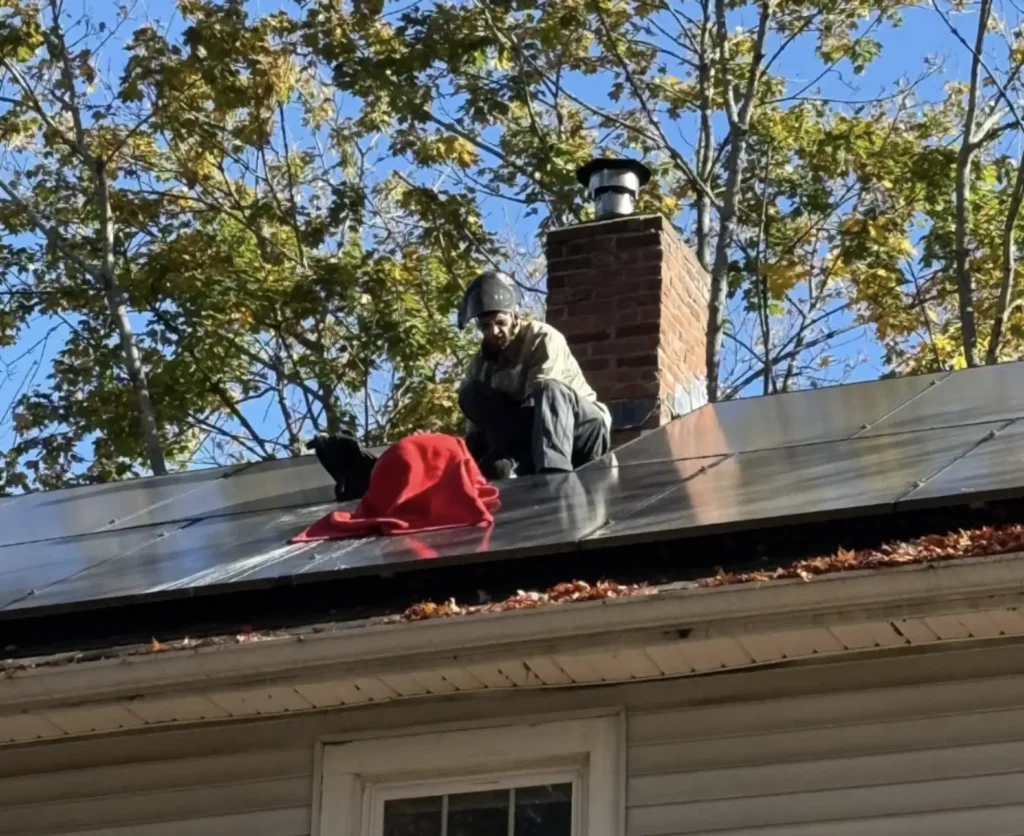
At first light the following morning, rescuers Peter Lombardo and Alex Brune arrived prepared.
Using the homeowner’s ladder, Brune climbed onto the lower section of the roof. After securing himself with safety gear, he carefully free-climbed to the upper panels. To reduce the hawk’s stress, he gently covered the bird before freeing him from beneath the metal structure.
Next, he placed the hawk in a carrier and lowered him down to Lombardo, who waited below. Thanks to their training and steady teamwork, the rescue went smoothly.
Treatment and a Swift Recovery
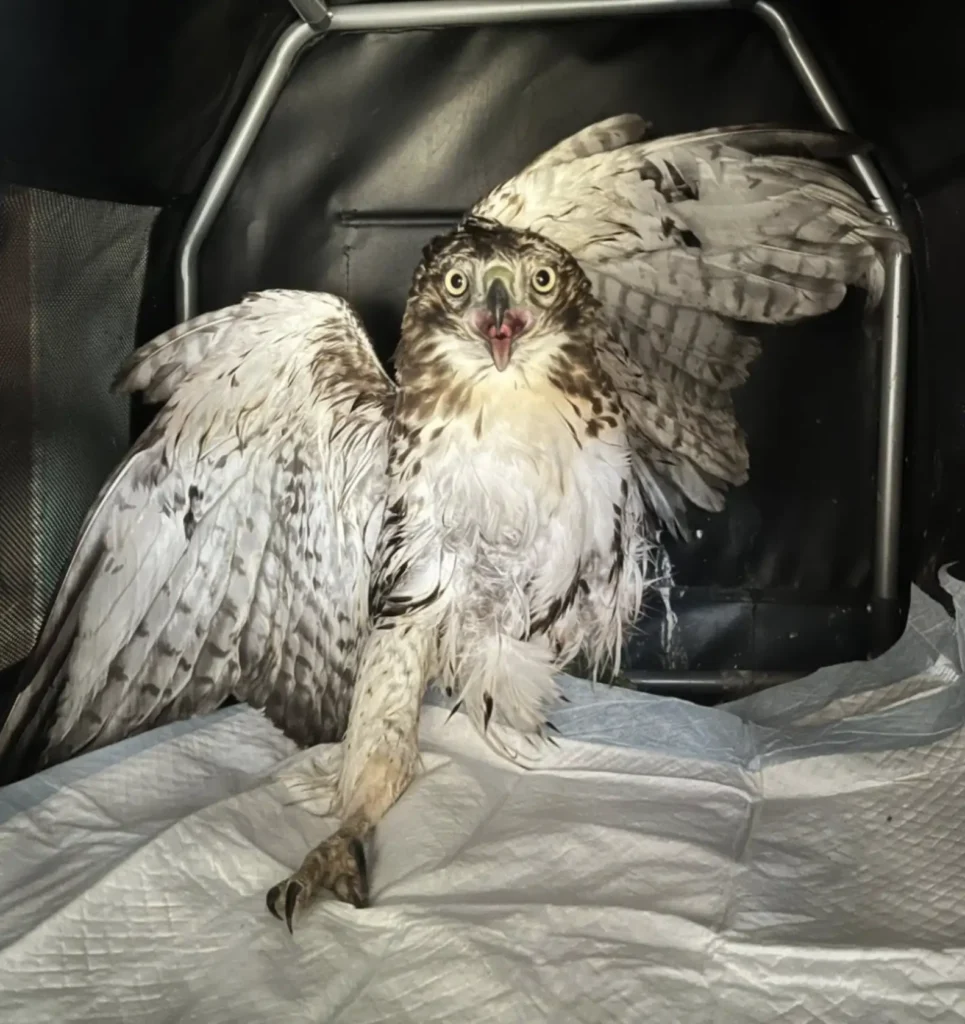
The team immediately transported the hawk to the rescue center. There, APCH director Christine Cummings conducted X-rays and treated his leg injuries.
Fortunately, the damage was less severe than expected. Once stabilized, the hawk eagerly ate his food and began regaining strength. With proper care and monitoring, he healed quickly.
Before long, he was ready for release — returning to the skies where he belongs.
A Team Effort With a Happy Ending
The successful rescue highlights both community awareness and professional expertise. Because one vigilant grandmother made a phone call — and because trained wildlife rescuers responded — this red-tailed hawk survived what could have been a fatal accident.
“APCH is so fortunate to be made up of dedicated individuals who care deeply for our wildlife,” the organization shared. “Thank you, team, once again, for another brave rescue.”