

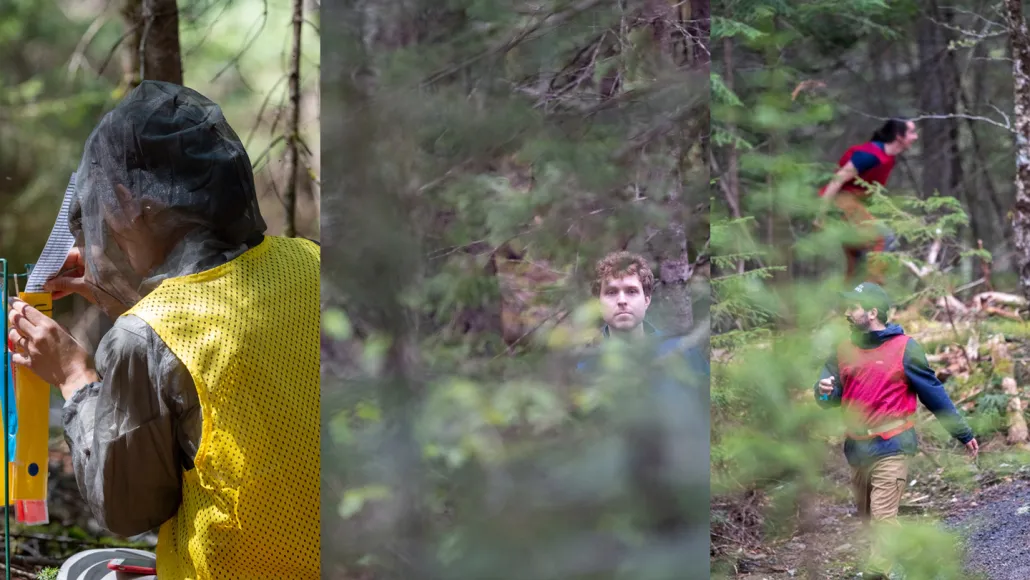
Using humans as both the hunters and the hunted, the game aims to demystify ecology data
A Game of Survival
The predator was closing in.
The prey had one choice: find food or flee.
But this time, the prey wasn’t an animal — it was ecologist David Bolduc.
He was one of dozens of researchers sprinting through a forest in Quebec, playing a game designed to mimic real-life predator–prey dynamics.
“It’s so fun,” Bolduc said.
Turning Ecology Into a Live Experiment
Bolduc, from Université Laval in Quebec City, helped design a live-action game that replaces animals with people. The goal: observe how humans behave when placed into the same survival roles as wildlife.
The study was published on November 17 in Methods in Ecology and Evolution.
The game is called the Trophic Interactions Experiment (TrophIE).
How the Game Works
TrophIE began as a summer school project in 2023 to teach advanced data analysis. It quickly became something more.
“It became an intermediate step between mathematical models and real field studies,” said biologist Frédéric Dulude-de Broin.
The team ran nine 30-minute games in a forested park about two hours north of Montreal. Each game included 23 to 31 players.
Participants were split into three roles:
- Prey (search for food and mates, avoid death)
- Mesopredators (hunt prey, avoid apex predators)
- Apex predators (hunt everyone)
Each role wore a different shirt color. Every player was tracked with GPS.
What the Researchers Discovered
The results closely matched real animal behavior.
Players avoided exposed trails.
They stayed near familiar areas.
They changed routes based on fear and competition.
Some prey players even hid in safe zones and called out for mates — a strategy the researchers hadn’t predicted.
The players also shared their emotions: fear, excitement, and heightened awareness. They noticed sounds like footsteps in leaves — data scientists can’t get from wild animals.
Why This Matters
Studying real predators and prey means capturing animals and hoping they cross paths.
“With the game, you have the whole population,” Bolduc said. “That’s nearly impossible in real fieldwork.”
The game allows scientists to control conditions while keeping realism.
A Powerful Learning Tool
Not everyone sees it as a replacement for wildlife research.
Wildlife ecologist Liana Zanette says real animal studies are still essential. But she calls TrophIE a brilliant educational tool.
“It can’t get more concrete than acting it out,” she said.
When Science Feels Real
When the games ended, players gathered in excited groups, sharing their experiences.
“These are things we read about,” Bolduc said. “But feeling them unlocks another part of your brain.”
For once, survival science wasn’t just studied — it was lived.