

She was shocked.
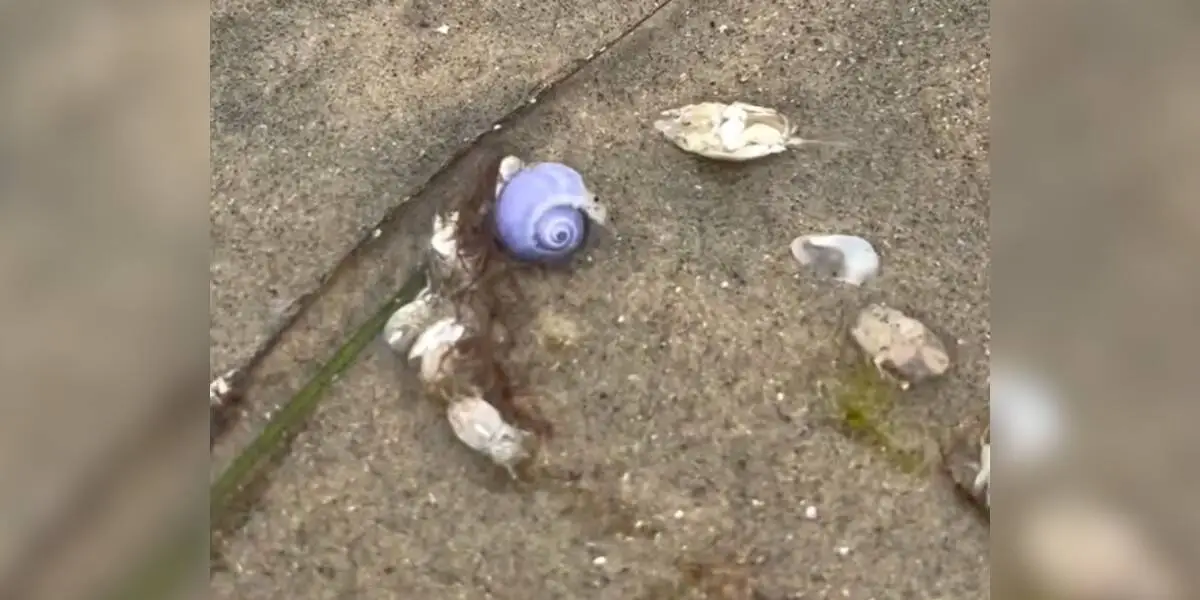
On a quiet summer evening in La Jolla, San Diego resident Anya Stajner was walking along the shoreline when a flash of purple in the sand caught her eye. At first, it looked like nothing more than a colorful shell — but as she moved closer, she realized it was a living snail.
Most beachgoers might have paused briefly and continued on. But Stajner isn’t most beachgoers. She’s a PhD student at the Scripps Institution of Oceanography, and her research background immediately told her this was something extraordinary.
The tiny creature was a Janthina — a violet sea snail usually found drifting in warm, tropical waters far from shore. Stajner had never seen one in California before, let alone on a San Diego beach.
“I was honestly thrilled,” she later wrote on Instagram. “Recognizing what they were and realizing how rare it is to encounter them here made the moment unforgettable.”
Unlike most snails that live along the ocean floor, Janthina spend their lives at the surface of the open sea. They create floating “rafts” made of hardened mucus bubbles, which allow them to drift upside down while feeding on organisms like Portuguese man o’ war. Their striking purple shells aren’t just beautiful — scientists believe the color helps protect them from intense ultraviolet radiation at the ocean’s surface.
Curious to learn more, Stajner carefully brought several of the snails back to a Scripps lab for closer examination. After consulting with colleagues, she confirmed just how unusual the discovery was: there hadn’t been a recorded Janthina sighting in San Diego in a decade.
As for why the snails appeared so far north, researchers suspect changing ocean conditions may be to blame. Stajner noted that the water felt unusually warm the day she found them, and scientists say strandings like this are often associated with warmer offshore currents moving toward the coast.
Whether the appearance of these violet drifters was a rare coincidence or a sign of shifting marine habitats remains unclear. But for Stajner, the encounter was unforgettable.
“I feel incredibly lucky to have crossed paths with such a remarkable ocean species,” she wrote. “They live such a strange and beautiful life — it was a privilege to see them up close.”