

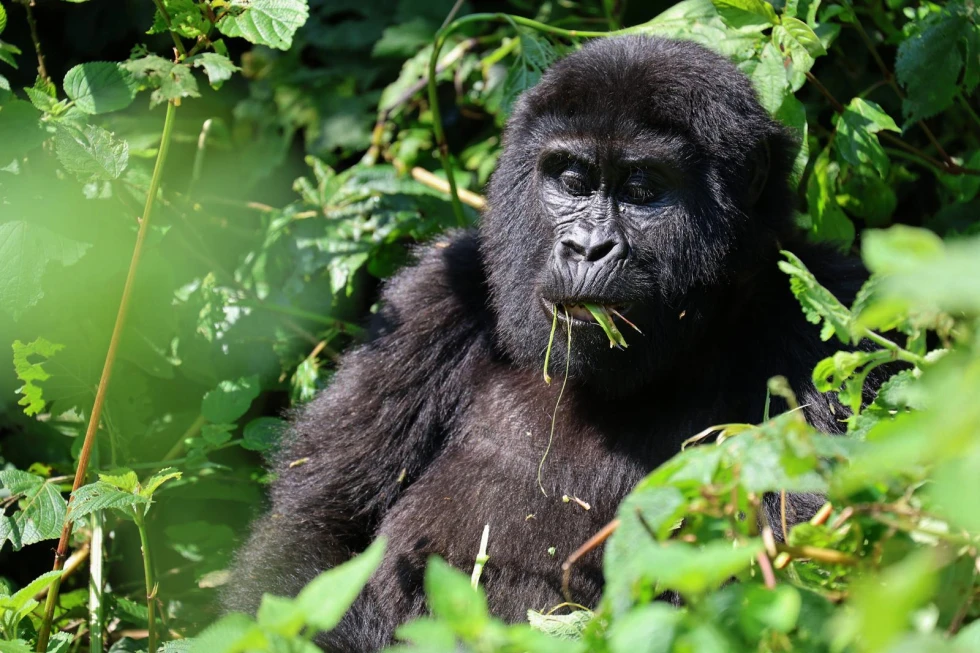
BWINDI, Uganda (AP) — Every year on September 24, conservationists mark World Gorilla Day, an occasion launched in 2017 to honor the 50th anniversary of the Karisoke Research Center in Rwanda. The center was founded by renowned American primatologist Dian Fossey, whose groundbreaking work brought global attention to gorilla conservation.
Fossey studied mountain gorillas, a subspecies of the eastern gorilla that lives in the Virunga Massif, spanning Congo, Rwanda, and Uganda. The other gorilla species, the western gorilla, is found in forests across west and central Africa.
Both species face serious threats from poaching and deforestation, and the International Union for Conservation of Nature lists them as endangered, with three of the four recognized subspecies critically endangered.
A close connection to humans
Gorillas share around 98% of their DNA with humans, making them our closest relatives after chimpanzees. This kinship provides important insights into human origins and evolution but also makes gorillas vulnerable to many of the same diseases. Respiratory illnesses, particularly influenza, are among the leading causes of death for adult gorillas in the wild.
Because of this, tourists tracking gorillas are required to keep at least seven meters away and avoid physical contact, even if the primates approach on their own. Fossey herself worried that gorilla tourism might negatively affect their behavior, yet in countries like Uganda, regulated tourism has become a powerful tool for conservation, funding both habitat protection and community development.
Family bonds in the forest
In the wild, gorillas live in tightly knit families led by a dominant male, or silverback—named for the distinctive patch of silvery fur on his back. Silverbacks protect and guide their groups, which can include multiple females, juveniles, and infants.
Uganda’s Bwindi Impenetrable National Park is home to 27 habituated families, accustomed to the presence of people. Rangers describe one silverback, Murinzi—whose name means “protector”—as especially attentive to his family.
Silverbacks assert dominance through chest-beating, vocalizations, and displays of strength, while gorilla mothers are deeply nurturing toward their young. According to the Dian Fossey Gorilla Fund, the affection between mother and infant is strikingly visible to anyone lucky enough to watch. In the wild, gorillas can live over 40 years.
Under pressure
Despite their size—an adult silverback can weigh nearly 400 pounds—gorillas are mostly gentle herbivores, eating leaves, shoots, and stems, with occasional ants or snails. Their power and presence make them a draw for eco-tourism, but shrinking habitats pose a grave threat.
The International Gorilla Conservation Program warns that clearing forests for farmland, firewood, and other resources continues to erode gorilla habitats. Conservationists stress that protecting these forests is key to ensuring gorillas survive for generations to come.