
He was stuck 😰
When animal rescuer Nancy Prior received a call about a bird trapped near a floating dock, she knew it could be a difficult rescue.
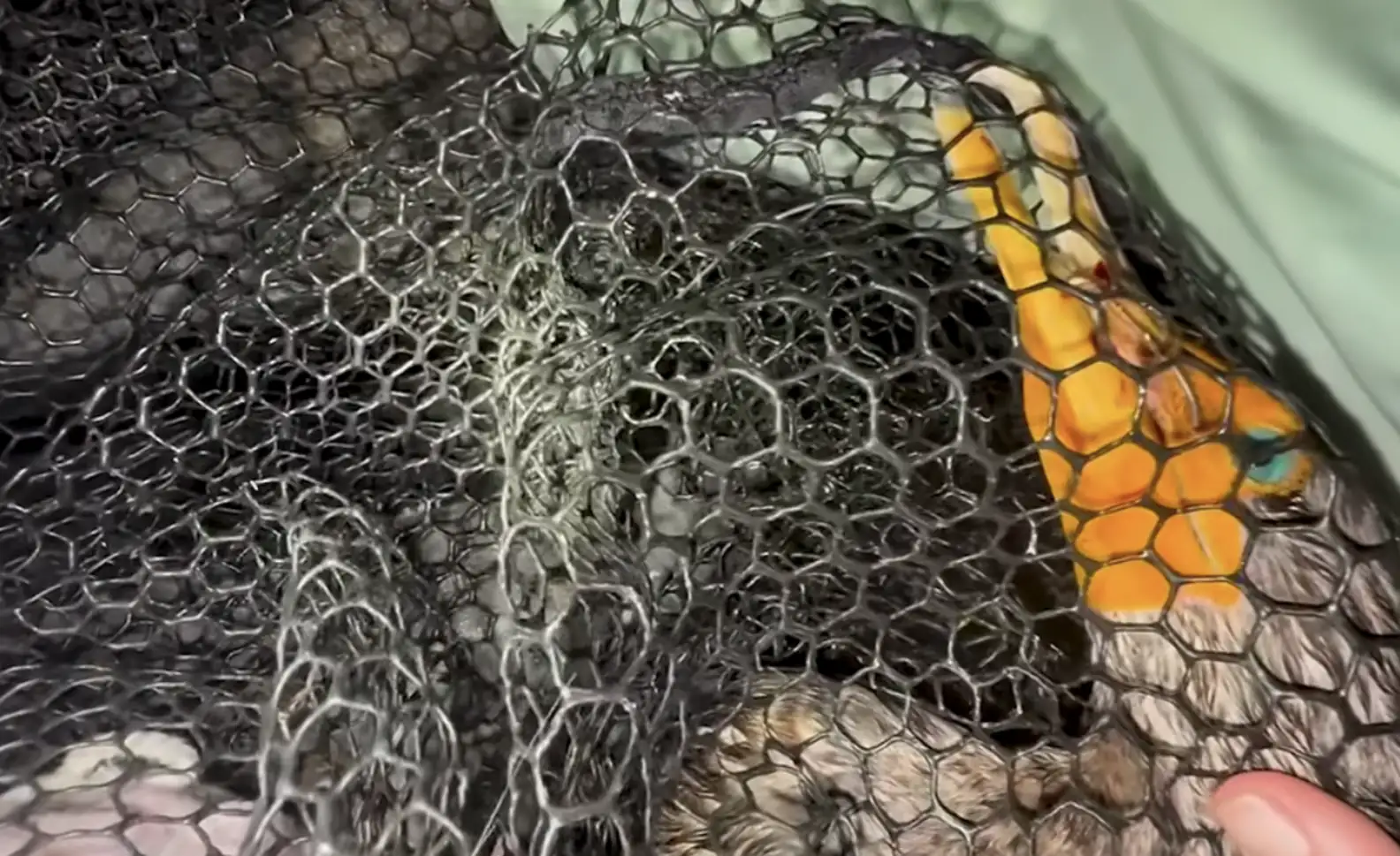
The bird, a cormorant, had reportedly become entangled in fishing line somewhere out on the water. Its exact location was unclear, and the floating structure wasn’t even visible from shore.
But Prior wasn’t willing to leave the struggling animal behind.
After setting out by boat and searching the surrounding water, she finally located the frightened cormorant. As she approached, she discovered that the situation was even more serious than she had imagined.
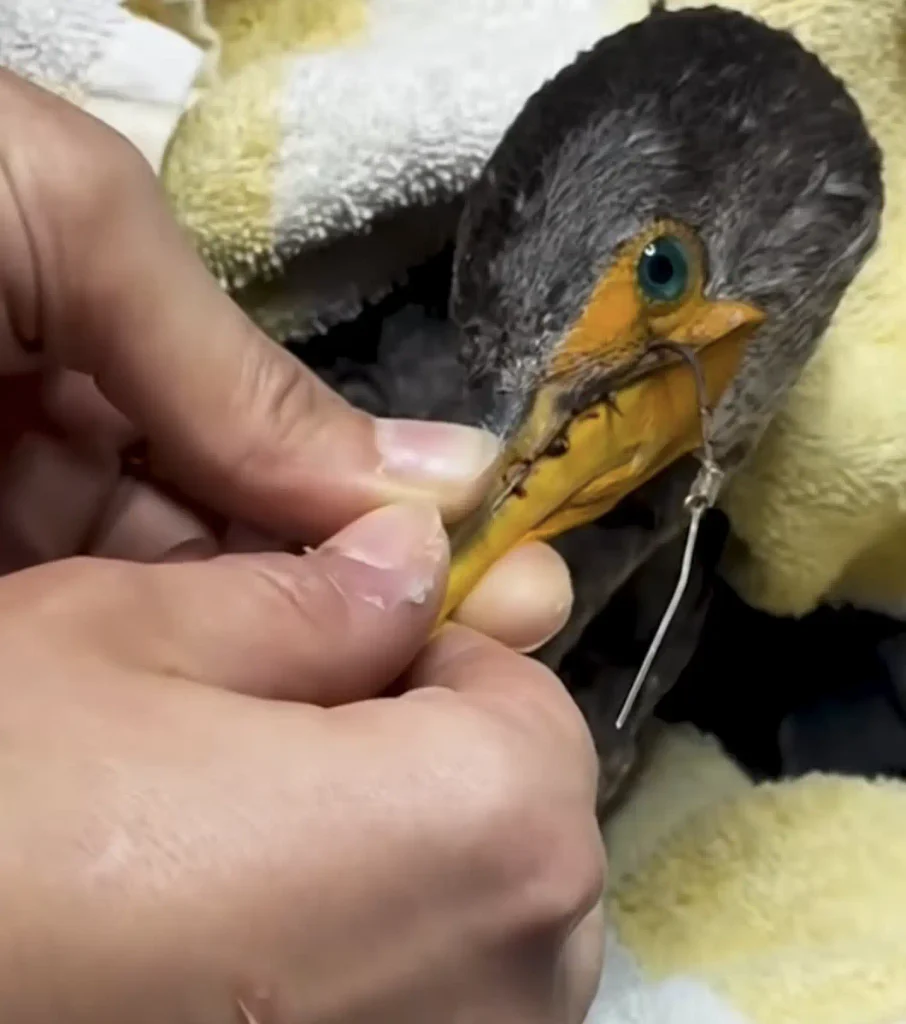
A fishing hook was lodged so deeply inside the bird’s mouth that it could no longer open its beak.
What followed was a delicate rescue that would give the injured bird another chance at life.
A Desperate Call Sends a Wildlife Rescuer Onto the Water
During the summer, Prior received a report about a cormorant struggling near a floating barge.
The caller explained that the bird appeared to be tangled in fishing line, but there were few additional details about its condition or exact location.
For Prior, the limited information created an immediate challenge.
The barge couldn’t be seen from land, making it impossible to assess the bird’s situation from shore.
To reach the animal, she would have to search for it by boat.
Determined to help, Prior headed out onto the water and began scanning the surrounding area.
After searching for some time, she finally spotted movement near the floating structure.
There was the cormorant.
The bird was still alive and moving in the water, but something was clearly wrong.
As Prior approached, she began to understand just how dangerous its predicament had become.
The Bird Was Trapped by More Than Fishing Line
At first, the rescue appeared to involve a relatively straightforward fishing-line entanglement.
But when Prior got closer, she noticed something far more alarming.
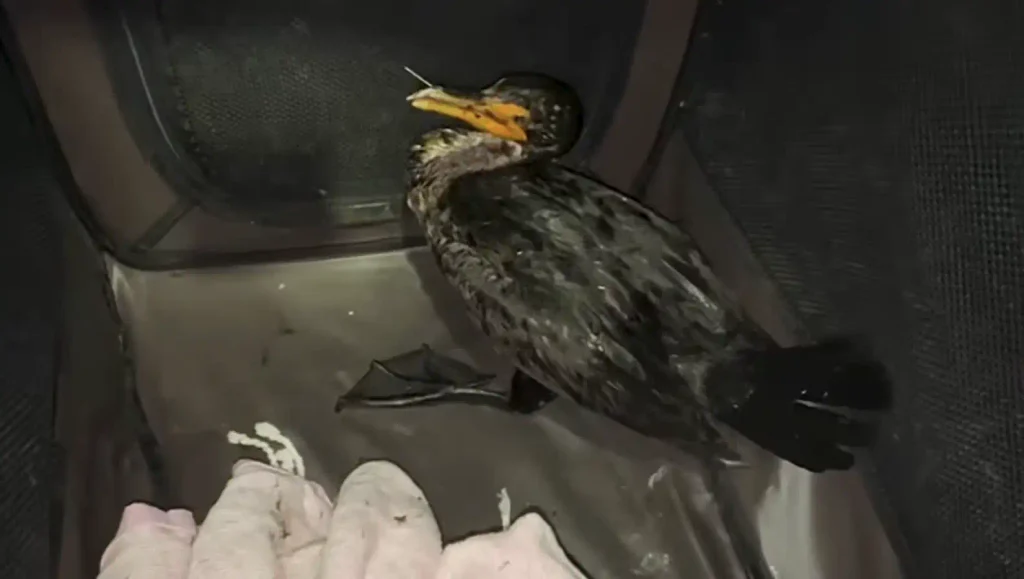
The cormorant had a fishing hook embedded inside its mouth.
Even worse, the hook was positioned in a way that prevented the bird from opening its beak.
For a fish-eating waterbird, such an injury can quickly become life-threatening.
Cormorants rely on their beaks to capture and handle prey. If a bird cannot open its mouth normally, feeding becomes extremely difficult or impossible.
Prior believed the cormorant had likely become hooked before moving toward the floating dock to rest.
The fishing line attached to the hook then became tangled around the structure, leaving the bird effectively tethered in place.
It was a frightening situation.
The animal was unable to move freely, and the hook in its mouth created an additional threat to its survival.
Prior knew the bird needed professional treatment as quickly as possible.
But getting it out of the water wasn’t going to be easy.
The Frightened Cormorant Refuses to Cooperate
Although the injured bird needed help, it didn’t understand that Prior was trying to save it.
As she approached with a rescue net, the cormorant repeatedly attempted to escape.
Its movements made the situation more complicated, particularly because the fishing line was still attached.
Prior had to be careful not to worsen the injury or create additional tension on the hook.
Rather than attempting a complicated hook removal on the water, she focused on securing the bird and freeing it from the line holding it near the dock.
She carefully cut away the excess fishing line and prepared to transport the cormorant somewhere safer.
The bird’s feisty behavior was encouraging because it showed that it was still alert and responsive.
However, its condition remained serious.
The embedded hook needed to be removed by experienced wildlife professionals, where the injury could be assessed and treated properly.
With the bird secured, Prior headed toward Sweetbriar Nature Center.
Wildlife Specialists Carefully Remove the Embedded Hook
At Sweetbriar Nature Center, the injured cormorant finally received the medical attention it needed.
The center provides wildlife rehabilitation services, helping injured and vulnerable animals recover with the goal of returning suitable patients to their natural habitats.
For this particular bird, the immediate priority was removing the hook that had been preventing it from opening its beak.
The rehabilitation team carefully extracted the fishing hook and assessed the cormorant’s condition.
They also administered fluids to help support its recovery.
Once the hook was gone, the bird could begin recovering from an ordeal that might otherwise have had a tragic outcome.
Fortunately, its response to treatment was encouraging.
The cormorant improved quickly under the team’s care, and before long, its rescuers were preparing for the moment they had all hoped to see.
It was finally going home.
An Unexpected Twist in the Rescue
Looking back, Prior recognized something unusual about the circumstances.
The fishing line had placed the bird in a potentially deadly situation.
But the same entanglement had also kept the cormorant in one location long enough for rescuers to find it.
Had the bird continued moving through open water with the hook embedded in its mouth, locating it might have been much more difficult.
Instead, the line tethered it near the floating structure, allowing someone to notice the struggling animal and call for help.
It was a troubling irony.
The fishing gear had created the emergency, yet the bird’s inability to move away ultimately made its rescue possible.
That didn’t make the situation any less dangerous.
Without intervention, the cormorant could have remained trapped, unable to feed normally and increasingly vulnerable to exhaustion or further injury.
Thankfully, Prior’s determination and the rehabilitation team’s care changed the outcome.
The Moment the Cormorant Finally Returns to the Wild
After the bird recovered sufficiently for release, Prior transported it back to the water where it had originally been rescued.
For wildlife rehabilitators, returning an animal to a suitable natural habitat is often the most rewarding part of the process.
The cormorant had arrived in care unable to open its beak, trapped by fishing line and struggling to escape.
Now it was ready to return to the life it knew.
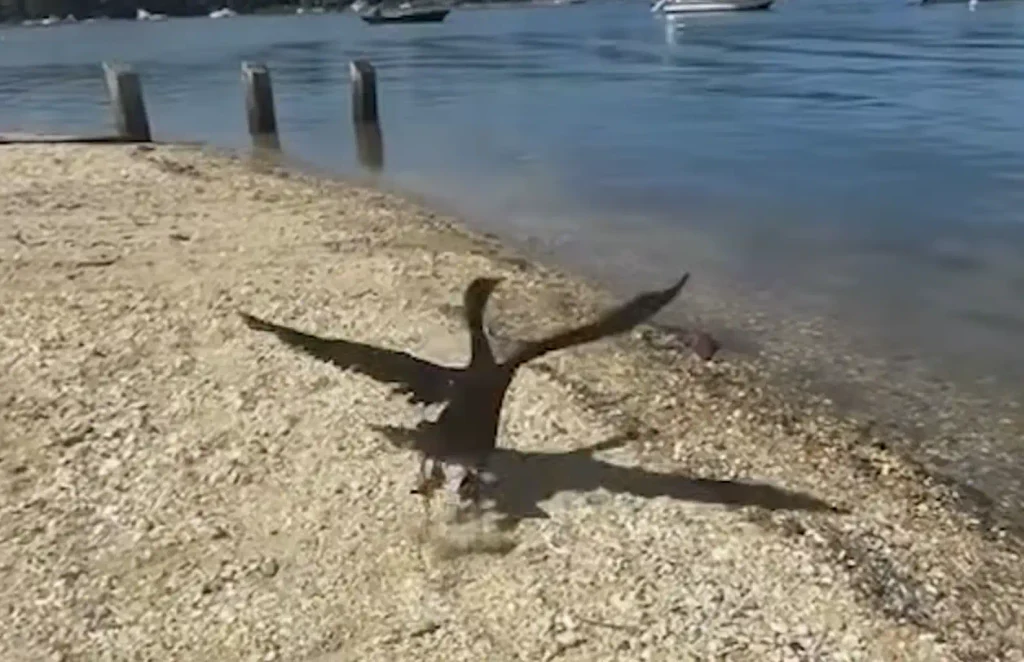
Prior opened the transport enclosure.
The bird didn’t hesitate.
It immediately took off, spreading its wings and flying away across the water.
Within moments, the once-trapped cormorant was disappearing into the distance.
The release was the successful ending everyone had been working toward.
There was no more fishing line holding it in place.
No hook preventing it from opening its beak.
Just a wild bird flying freely again.
For Prior, the moment was an unforgettable reward for the time and effort spent reaching the animal, securing it, and getting it the treatment it needed.
The Hidden Danger of Discarded Fishing Gear
Although the rescue ended happily, the cormorant’s experience highlights a serious problem affecting wildlife around the world.
Discarded or lost fishing line can remain in the environment long after anglers have left.
Because many fishing lines are thin, strong, and difficult to see, birds and other animals may become entangled without immediately being able to escape.
Fishing hooks can create additional injuries when swallowed or embedded in an animal’s mouth, throat, or body.
Waterbirds are particularly vulnerable because they regularly dive, swim, and hunt in areas where recreational fishing occurs.
A bird that becomes tangled may struggle to move, fly, or feed.
In severe cases, entanglement can result in serious injury, starvation, or death.
The risk isn’t limited to cormorants.
Ducks, geese, swans, pelicans, and other aquatic birds can also be affected by fishing-related debris.
That is why responsible fishing practices and proper equipment disposal are so important.
How People Can Help Protect Birds From Fishing-Line Injuries
Preventing fishing-line entanglement is one of the simplest ways people can help reduce avoidable harm to wildlife.
Anglers should collect used fishing line, hooks, and other equipment rather than leaving them on shorelines, docks, or in the water.
Where specialized fishing-line recycling stations are available, they provide a convenient way to dispose of monofilament line responsibly.
Anyone who notices abandoned fishing equipment in a public area can also help by reporting it or removing it when safe to do so.
If an animal is already tangled, however, the situation requires particular care.
Wild birds can injure themselves further when frightened or improperly restrained.
Fishing hooks embedded inside the mouth should not be pulled out by untrained members of the public.
Instead, contacting a qualified wildlife rehabilitator or appropriate animal rescue organization is usually the safest course of action.
Prior’s rescue demonstrates why experienced intervention matters.
By recognizing the difficulty of the bird’s condition and transporting it for professional treatment, she helped prevent an already dangerous injury from becoming worse.
A Second Chance for One Remarkable Bird
The cormorant’s rescue began with very little information.
A concerned person had spotted a bird in trouble near a floating structure and reached out for help.
Prior responded by taking a boat onto the water, searching for the animal, and carefully working through a complicated rescue.
The team at Sweetbriar Nature Center then removed the embedded hook and provided the care the bird needed to recover.
Each part of that effort contributed to its successful release.
For the cormorant, the outcome meant returning to the water, spreading its wings, and continuing its life in the wild.
For the people who helped it, the experience was another reminder that even a single piece of fishing gear can create a life-threatening situation for an unsuspecting animal.
And for everyone who hears its story, the message is worth remembering.
A little care when fishing, properly disposing of equipment, and taking action when wildlife is in trouble can make an enormous difference.
One discarded fishing line nearly cost this cormorant its freedom. But thanks to a determined rescuer and a dedicated rehabilitation team, the bird was finally able to open its beak, spread its wings, and fly home again.