

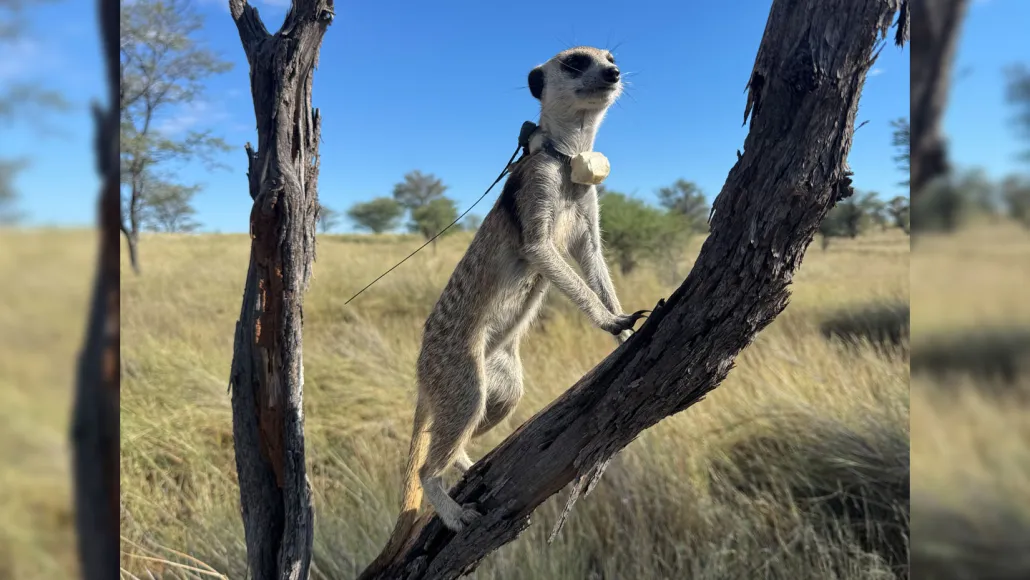
Meerkats live, forage and raise their young in large groups. But they’ve still got solo skills
At first glance, Australia’s legless geckos could easily be mistaken for snakes. Their elongated bodies, unusual movements, and complete absence of functional legs make them look remarkably similar to their slithering relatives.
But beneath that snake-like appearance lies an extraordinary evolutionary story.
New research suggests that these unusual reptiles, known as pygopod geckos, have developed far more similarities to snakes than scientists previously understood. Their body proportions, feeding habits, and remarkable dietary specialization appear to follow evolutionary patterns more commonly associated with snakes than with other legless lizards.
The findings offer an intriguing glimpse into how different groups of animals can independently develop similar solutions to the challenges of survival.
Meet the Strange Legless Geckos of Australia
Australia is home to some of the world’s most unusual reptiles, but few are as fascinating as pygopod geckos.
These remarkable animals belong to a family of legless lizards found throughout Australia and New Guinea.
Unlike the familiar geckos that climb walls, trees, and even glass, pygopods have evolved elongated bodies that allow them to move across the ground without functional limbs.
Their appearance can be so convincing that someone encountering one in the wild might easily mistake it for a small snake.
However, despite their resemblance, pygopods are not snakes.
They belong to a separate evolutionary branch of lizards closely related to other geckos.
Scientists currently recognize approximately 50 pygopod species, and their physical diversity is extraordinary.
Some individuals grow to nearly a meter in length, while others are extremely small and delicate.
Their tails are particularly remarkable.
In certain species, the tail can be more than four times the length of the animal’s body, creating proportions rarely seen among other lizards.
Some pygopods can even use their elongated tails to propel themselves into the air.
By generating wave-like movements with their bodies, these unusual reptiles can perform small jumps, sometimes repeating the motion several times.
For animals that appear to be built entirely for slithering, this unexpected ability is just one example of their extraordinary adaptations.
Scientists Discover an Unexpected Evolutionary Connection
To better understand these mysterious reptiles, an international research team led by evolutionary biologist Ian Brennan of the Queensland Museum Kurilpa examined their genetic relationships, body structures, and feeding habits.
The study formed part of a broader effort to investigate the evolutionary history of Australian lizards and snakes.
Researchers analyzed DNA from all 50 recognized pygopod species, using the genetic information to reconstruct their evolutionary relationships.
They also examined measurements of body length and tail length, comparing pygopods with more than 3,100 species of lizards and snakes.
The results revealed something unexpected.
Although pygopods are geckos, their evolutionary patterns showed striking similarities to those found among snakes.
And those similarities extended beyond their appearance.
The researchers discovered that pygopods had developed an unusual combination of body proportions and highly specialized diets, allowing them to occupy a remarkable variety of ecological roles.
The findings suggest that becoming legless may have opened new evolutionary possibilities rather than simply limiting how these animals could move.
Their Bodies Follow an Unusual Evolutionary Pattern
One of the most interesting discoveries involved the different ways reptiles become longer during evolution.
In many lizards with functional legs, changes in overall length are often associated with longer tails.
Snakes, on the other hand, have primarily evolved greater length through the elongation of their bodies.
But pygopod geckos appear to have taken both approaches.
Some lineages have evolved longer bodies, while others have developed dramatically extended tails.
This combination has produced an extraordinary range of body shapes among animals belonging to the same family.
For scientists, the findings challenge the assumption that losing limbs necessarily restricts the physical forms a reptile can develop.
Pygopods demonstrate that legless animals can still evolve widely different body proportions.
Their remarkable diversity also suggests that similar outward appearances can conceal very different evolutionary pathways.
Two reptiles may look almost identical at first glance, yet achieve their elongated shapes through different anatomical changes over millions of years.
These Snake-Like Geckos Have Surprisingly Specialized Diets
The research team also investigated what pygopod geckos eat.
This revealed another remarkable similarity to snakes.
Most familiar gecko species primarily consume insects and other small invertebrates.
Many legless lizards also have relatively generalized diets, feeding on a variety of small prey they encounter while moving through their habitats.
But pygopods are different.
Researchers compared dietary information across 1,738 species of lizards and snakes and discovered that pygopods collectively display an exceptionally broad range of feeding habits.
Among the reptile groups examined, only monitor lizards and colubrid snakes exceeded their dietary diversity.
That finding is especially notable because pygopods represent a relatively small family of reptiles.
Rather than relying on a narrow range of common food sources, different pygopod lineages have evolved specialized hunting strategies.
Some focus on spiders and scorpions.
Others feed predominantly on ants and termites.
And one particularly unusual group has developed a hunting strategy that looks remarkably similar to the way certain snakes capture prey.
One Legless Gecko Can Swallow Other Lizards Whole
Among the most extraordinary pygopods are members of the genus Lialis.
Unlike many geckos that primarily hunt insects, these predatory reptiles feed on other lizards.
Their feeding behavior resembles that of snakes, allowing them to capture and swallow relatively large prey.
Scientists have identified several anatomical features that support this specialized hunting strategy.
Their jaws are highly flexible, helping them accommodate prey that would be difficult for many other lizards to swallow.
They also possess teeth that can move backward, assisting in securing struggling prey.
These adaptations allow Lialis to take advantage of a very different food source from that consumed by most geckos.
The discovery is important because it illustrates how much ecological diversity can exist within a group of animals that share a similar legless body plan.
While one pygopod specializes in tiny insects, another can function as a predator of other reptiles.
That variety is one of the strongest reasons researchers believe pygopods deserve greater attention in studies of reptile evolution.
Could These Geckos Have Once Filled the Role of Snakes?
The genetic analysis also provided clues about when pygopods began their unusual evolutionary journey.
According to the researchers’ estimates, pygopods separated from other gecko lineages in Australia approximately 50 million years ago.
Snakes originated much earlier, with estimates placing their evolutionary beginnings around 160 million years ago.
However, modern snake groups did not necessarily occupy Australia’s ecosystems throughout that entire period.
Brennan suggests that pygopods may have spent millions of years filling ecological roles similar to those occupied by small snakes.
During that time, they could have diversified into different habitats and developed specialized feeding strategies with relatively limited competition from snakes.
As additional snake lineages eventually reached Australia, the available ecological opportunities may have changed.
Those newcomers could have competed for some of the same food resources and habitats.
This possibility offers an intriguing explanation for why pygopods developed remarkable adaptations without reaching the enormous diversity seen among snakes worldwide.
However, the idea remains an evolutionary hypothesis rather than a confirmed historical sequence.
More research will be needed to determine precisely how competition, environmental changes, and habitat availability shaped their development.
What Makes This Discovery Important for Evolutionary Science?
The findings highlight a biological process known as convergent evolution.
This occurs when different groups of organisms independently develop similar characteristics because they face comparable environmental challenges or opportunities.
For example, animals that move through similar habitats or hunt similar prey may evolve structures that perform comparable functions, even when they are not closely related.
Pygopods and snakes provide a particularly fascinating example.
Both groups possess elongated, legless bodies.
Both display remarkable variation in physical form.
And both have evolved lineages with highly specialized diets.
Yet these characteristics developed along separate evolutionary histories.
The similarities suggest that certain ecological opportunities may repeatedly favor comparable adaptations, even in animals separated by millions of years of evolution.
The research also challenges the idea that losing limbs represents an evolutionary disadvantage.
For pygopods, the absence of functional legs has not prevented the development of varied body shapes, unusual movement strategies, and specialized feeding behaviors.
Instead, these adaptations appear to have helped them exploit a remarkable range of ecological opportunities.
Scientists Say More Research Is Still Needed
Although the findings offer valuable insights, researchers acknowledge that important questions remain unanswered.
Sonal Singhal, an evolutionary biologist at California State University, Dominguez Hills, has suggested that future investigations could combine the new findings with additional information about skull structure, movement, and habitat use.
Studying these characteristics together could help explain how physical adaptations influence the environments pygopods occupy and the prey they are capable of capturing.
For example, examining the flexible jaws of Lialis in greater detail could reveal how specialized anatomy contributed to the evolution of its unusual diet.
Researchers could also investigate whether particular body proportions are associated with certain habitats or movement patterns.
Such work may reveal additional evolutionary connections between pygopods and other reptile groups.
The new study was released on bioRxiv in October 2026 as a preprint, meaning its findings have not yet completed the formal peer-review process.
While the results are promising, independent scientific evaluation and further research will help establish how strongly the proposed evolutionary patterns are supported.
Australia’s Legless Geckos Reveal Nature’s Extraordinary Creativity
For decades, pygopod geckos have remained relatively unfamiliar compared with Australia’s more famous reptiles.
They lack the imposing size of crocodiles, the recognizable appearance of many snakes, and the climbing abilities commonly associated with geckos.
But their unusual evolutionary history may make them some of the country’s most fascinating animals.
The latest research suggests that these remarkable reptiles have independently developed physical and ecological characteristics that closely resemble those found among snakes.
From extremely long tails and unexpected jumping abilities to specialized diets and flexible jaws, pygopods demonstrate how diverse life can become even within a seemingly restrictive body plan.
Their story also reinforces one of evolution’s most fascinating lessons: there is rarely only one way for an organism to succeed.
Animals facing similar challenges can arrive at comparable solutions through entirely separate evolutionary journeys.
For Brennan and his colleagues, studying these little-known reptiles may offer new opportunities to understand how body shape, ecology, and competition influence the diversity of life.
Australia’s legless geckos may look like snakes, but their greatest evolutionary achievement is not simply resembling them. It’s demonstrating that nature can follow different paths and still arrive at remarkably similar results.