

Here’s how …
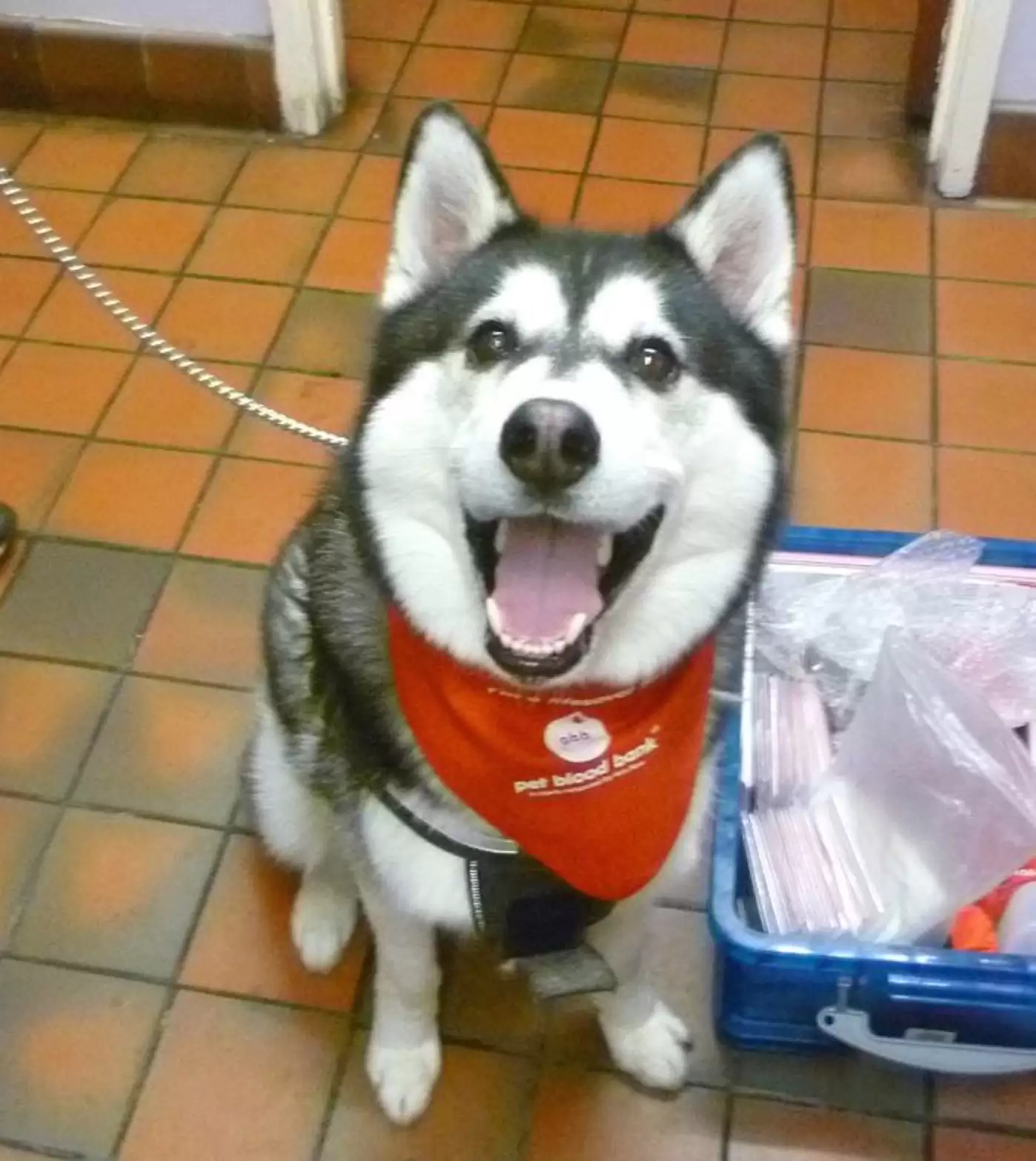
Most dogs would rather be anywhere than at the veterinarian’s office. But for a rescued husky mix named Glitch, visiting the vet is an experience he actually enjoys.
As a puppy, Glitch struggled with frequent health problems and spent much of his early life surrounded by veterinary professionals. Those visits helped him recover, but they also gave him something unexpected: a sense of comfort and trust around the very people many dogs find intimidating.
Now healthy and stronger, Glitch has found a remarkable way to give back. By becoming a canine blood donor through the UK charity Pet Blood Bank, he is helping provide lifesaving treatment for other dogs facing medical emergencies.
And his story reveals something many pet owners don’t realize — their own dogs might have the opportunity to become lifesavers, too.
From a Sick Puppy to an Unlikely Hero
Glitch’s journey hasn’t always been easy.
During his early months, the rescued husky mix required frequent veterinary attention because of recurring health problems.
While other puppies were busy exploring the world, Glitch became familiar with examination rooms, medical equipment, and the professionals responsible for his care.
Fortunately, his health eventually improved.
As he grew older, he developed into a strong, affectionate dog with an unusually relaxed attitude toward veterinary appointments.
For his owner, Karl Sparham, this easygoing personality became especially meaningful after he discovered that dogs could donate blood.
The idea came to him while reading an online discussion about a pet that had needed an emergency transfusion after an accident.
The conversation highlighted the importance of having compatible canine blood available when an animal’s life is in danger.
Sparham began researching blood donation programs and eventually learned about Pet Blood Bank UK, an organization that collects blood from healthy donor dogs for use in veterinary treatment.
With Glitch’s friendly temperament and comfort around medical professionals, Sparham realized his dog could be an excellent candidate.
A puppy who had once needed so much veterinary care was about to help other animals receive it.
Why Do Dogs Need Blood Donations?
Blood transfusions aren’t just for humans.
Dogs can experience serious medical emergencies that require donated blood to stabilize their condition or support recovery.
Severe injuries, major blood loss, complicated surgical procedures, and certain illnesses can all create situations in which a transfusion becomes necessary.
For example, a dog involved in a traumatic accident may lose a dangerous amount of blood. Another pet may develop severe anemia that prevents its body from carrying enough oxygen.
In such cases, access to suitable blood products can make a critical difference.
Veterinary blood banks help provide that supply.
Pet Blood Bank UK collects donations from healthy dogs, processes the blood into components, and distributes those products to veterinary practices when needed.
Remarkably, one donation can potentially help save the lives of up to four dogs.
That means an ordinary family pet can make an extraordinary contribution simply by being healthy, comfortable, and suitable for the donation process.
Do Dogs Have Blood Types Like Humans?
One of the most important parts of canine blood donation is understanding blood compatibility.
Just as humans have different blood groups, dogs have several blood group systems.
Veterinarians commonly focus on an antigen known as DEA 1, which stands for Dog Erythrocyte Antigen 1.
Dogs are categorized as either DEA 1 positive or DEA 1 negative.
These classifications help veterinary professionals determine which donated blood products are appropriate for a patient.
DEA 1 negative blood is especially valuable because it can be used more broadly in emergencies when a recipient’s blood type is not immediately known.
However, dogs have additional blood antigens, meaning no single blood type guarantees perfect compatibility in every situation.
Veterinarians use blood typing and, when appropriate, crossmatching to reduce the risk of transfusion reactions.
Certain breeds, including greyhounds, Dobermanns, boxers, and German shepherds, are more likely to have DEA 1 negative blood.
But any breed may have a valuable blood type, and testing is the only reliable way to determine an individual dog’s status.
For Glitch and other volunteer donors, proper screening helps ensure their contributions can be used safely.
Can Your Dog Become a Blood Donor?
If your dog is healthy and enjoys meeting new people, blood donation may be an opportunity worth exploring.
However, not every pet is suitable.
Responsible blood banks follow strict eligibility requirements designed to protect both the donor and the recipient.
Under Pet Blood Bank UK’s current donor program, dogs generally need to meet the following criteria:
- Be between 1 and 8 years old.
- Weigh more than 25 kilograms (approximately 55 pounds).
- Be fit and healthy.
- Have a friendly, confident temperament.
- Be comfortable with veterinary handling and lying on their side.
- Have never traveled outside the United Kingdom or Ireland.
- Meet the organization’s medical history and medication requirements.
Additional checks are carried out before donation.
A dog’s behavior is particularly important. If an animal becomes extremely frightened or distressed during veterinary visits, donating blood may not be appropriate.
For Glitch, his positive experiences with veterinary professionals made him especially well suited to the program.
His confidence allowed the veterinary team to carry out the procedure while keeping him comfortable.
What Happens During a Dog Blood Donation?

The thought of a pet donating blood might sound intimidating, but established veterinary blood donation programs follow a carefully managed process.
At Pet Blood Bank UK, each appointment begins with a veterinary assessment to confirm that the dog is healthy enough to donate.
Staff review the animal’s medical history, perform an examination, and collect a small blood sample for testing.
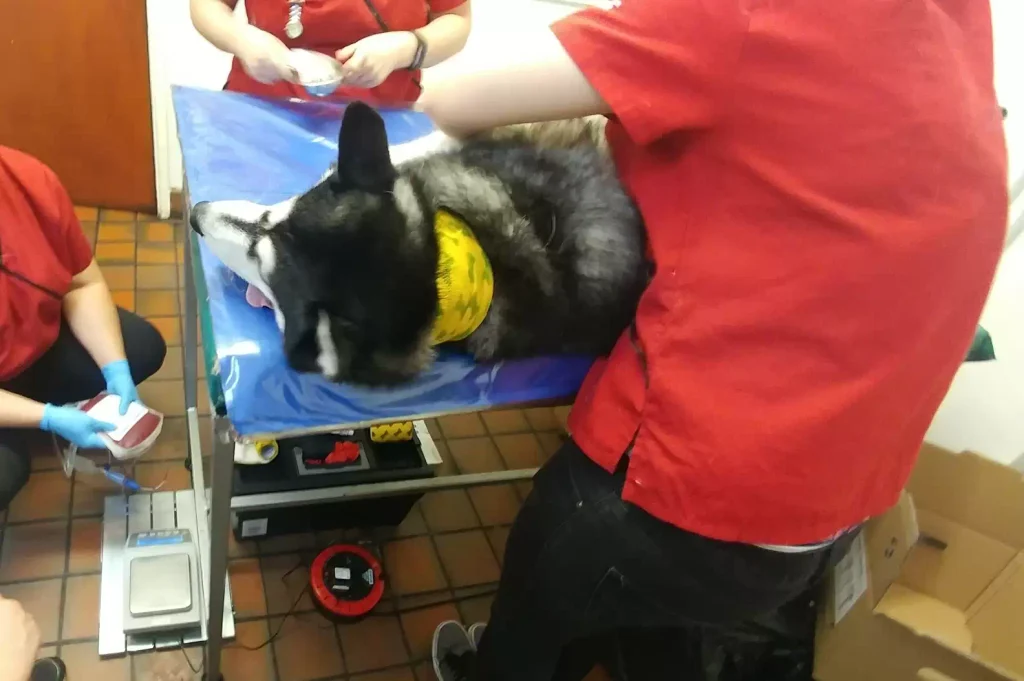
Once the dog is approved, the veterinary team gently positions the animal on its side.
Blood is then collected through a needle placed in the jugular vein in the neck.
During the procedure, trained staff members closely monitor the donor and provide reassurance.
The blood collection itself generally takes between five and ten minutes.
For eligible dogs, Pet Blood Bank UK collects approximately 450 milliliters of blood during a standard donation.
Including the health examination, preparation, collection, and aftercare, owners should allow around 45 minutes for the complete appointment.
For many calm, sociable dogs, the experience includes plenty of attention, gentle handling, and treats.
And for Glitch, that was certainly part of the appeal.
Glitch’s Donation Becomes a Surprisingly Happy Experience
When Glitch attended his donation appointment, he appeared completely comfortable in the familiar veterinary environment.
The husky mix was guided into the donation room and helped into position on his side.
One veterinary professional monitored his condition, while other team members prepared the equipment, collected his blood, and kept him comfortable.
Throughout the process, Glitch remained relaxed.
Rather than becoming frightened, he seemed to enjoy the affection and attention from the people around him.
Once the procedure was complete, he received a collection of well-earned rewards.
His caregivers provided food, dog treats, and a toy to celebrate his contribution.
For Sparham, the experience was rewarding in more ways than one.
Not only had Glitch handled the appointment beautifully, but his donation could now help other animals facing serious medical difficulties.
The dog who had once needed frequent medical assistance had become part of a system helping save other dogs’ lives.
Does Donating Blood Hurt a Dog?
One of the most common concerns pet owners have about canine blood donation is whether the procedure causes pain.
While the needle insertion can produce brief discomfort, blood collection is generally well tolerated by suitable, healthy dogs.
Routine donation appointments usually do not require anesthesia.
Veterinary staff monitor each animal carefully, watching for signs of distress and ensuring the dog remains comfortable throughout the procedure.
Some donors may experience minor bruising, tenderness, or swelling around the collection site afterward.
Although significant complications are uncommon in appropriately screened donors, no medical procedure is completely risk-free.
After donating, dogs are typically offered water, snacks, and time to rest.
Pet Blood Bank UK recommends a quiet remainder of the day, with a return to normal activities the following day if the dog is feeling well.
For Glitch, the experience appeared positive from beginning to end.
His familiarity with the veterinary team and the environment helped make the appointment feel like another friendly visit.
How Often Can Dogs Donate Blood?
The frequency of canine blood donation depends on the requirements of the blood bank, the dog’s health, and the demand for specific blood types.
At Pet Blood Bank UK, dogs with DEA 1 negative blood may be invited to donate approximately every eight weeks.
Dogs with DEA 1 positive blood are generally invited less frequently, often once or twice a year.
These intervals help maintain blood supplies while protecting donor welfare.
Other organizations may follow different schedules, and every donation should be approved by veterinary professionals.
Dogs should never be enrolled in repeated blood collection without appropriate medical screening and oversight.
The priority must always be ensuring that donation remains safe and comfortable for the animal involved.
How to Register Your Dog as a Blood Donor
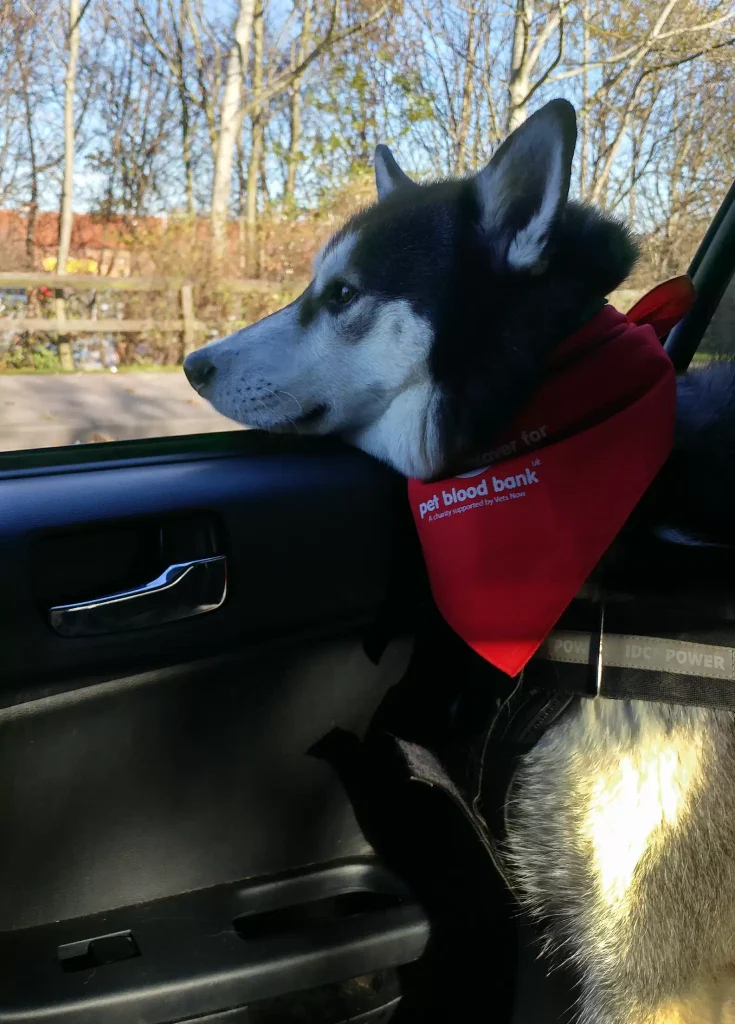
For owners inspired by Glitch’s story, becoming involved may be easier than expected.
In the United Kingdom, Pet Blood Bank offers donation sessions at participating veterinary practices across the country.
Owners can review the eligibility requirements, locate nearby sessions, and register their dogs through the organization’s official website.
Those living in other countries can ask local veterinary hospitals, emergency clinics, or veterinary teaching institutions whether they operate or work with canine blood donation programs.
If your dog does not meet the donor requirements, there may still be opportunities to support these programs through volunteering, fundraising, or spreading awareness.
Every contribution can help make veterinary blood supplies more accessible to animals that need them.
A Rescue Dog Gives Other Animals the Same Second Chance He Received
Glitch’s story is a wonderful example of how an animal’s difficult beginning can eventually become a source of hope for others.
As a vulnerable puppy, he relied on veterinary professionals to help him through repeated illnesses.
Those early experiences gave him an unusual comfort around medical settings, something that would later make him a suitable blood donor.
Now, his willingness to participate in the donation program can help provide essential treatment for dogs facing life-threatening emergencies.
For Sparham, seeing his companion contribute to the well-being of other animals has been an incredibly rewarding experience.
And for the families whose pets need emergency transfusions, the generosity of blood donors can make an enormous difference.
Glitch may not understand the medical importance of the blood he gives.
To him, a donation appointment might simply mean friendly people, plenty of attention, and a few well-deserved treats.
But to another dog fighting for survival, that contribution could mean everything.
Sometimes, a hero doesn’t need extraordinary training or a dramatic rescue mission. Sometimes, all it takes is a healthy dog, a caring owner, and the willingness to give another animal a second chance.