

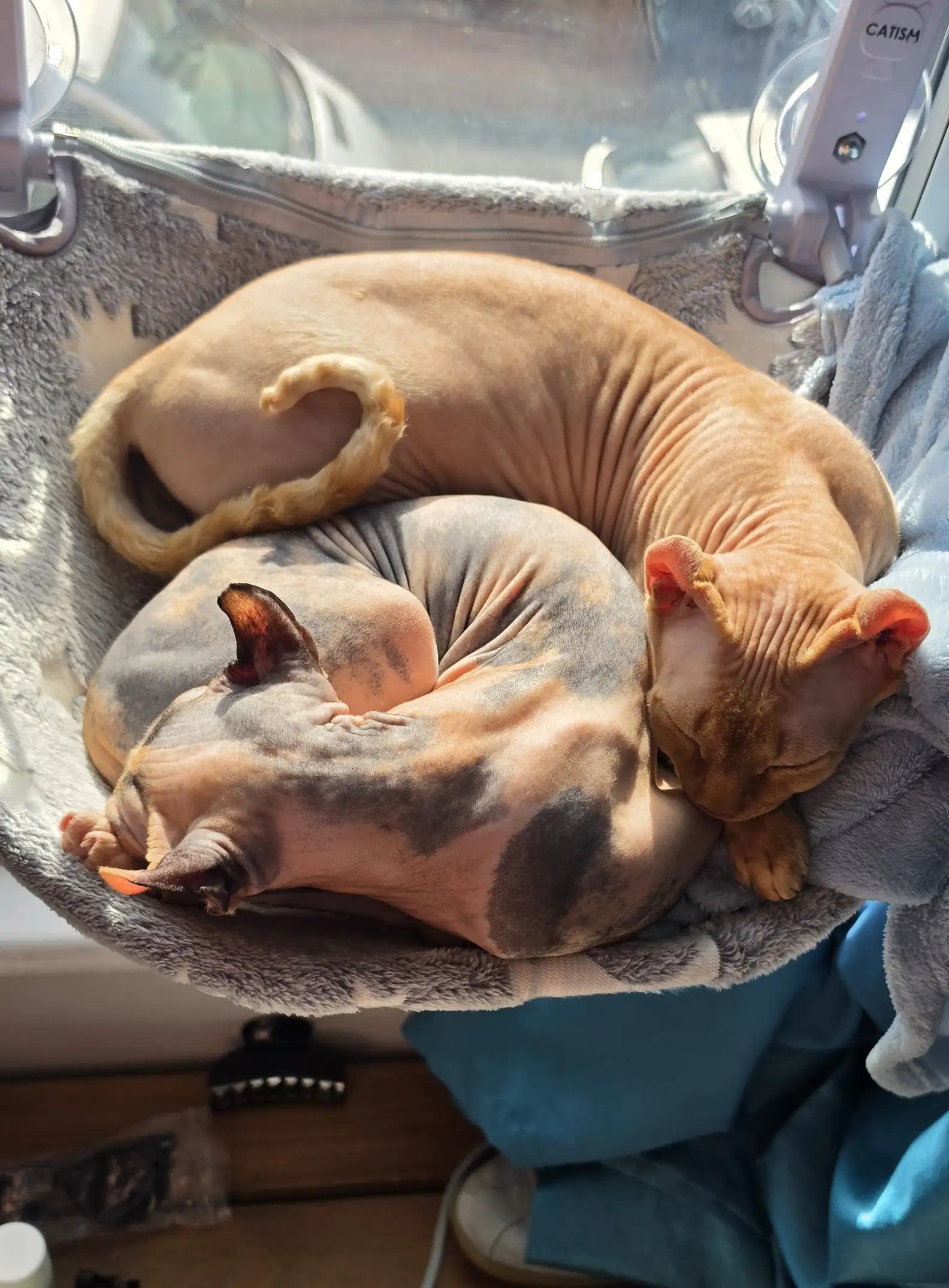
“They aren’t fashion accessories.”
Jelly and Custard were supposed to be cherished family pets. Instead, the two unusual-looking cats spent their earliest years moving from one home to another, never knowing how long they would be allowed to stay.
The siblings, a cross between sphynx and American curl cats, had originally been sold for a considerable amount of money because of their distinctive appearance.
But the people who purchased them soon discovered that caring for hairless cats required more time and attention than they had expected.
The cats were given up, beginning a heartbreaking cycle of repeated rehoming.
By the time they were just two years old, Jelly and Custard had already lived in seven different homes.
One family kept them for only 24 hours.
But when the siblings eventually arrived at an animal rescue center in England, their story finally began to change.
Two Designer Cats Are Passed Between Seven Different Homes
Jelly and Custard were bred during the growing demand for unusual-looking designer cats.
Their appearance combines characteristics associated with sphynx and American curl breeds, making them especially distinctive.
With their nearly hairless bodies and unusual features, the siblings attracted attention from people interested in owning rare or fashionable pets.
However, their first family was unprepared for the responsibilities involved in caring for them.
The cats were soon surrendered.
Unfortunately, their next homes weren’t permanent either.
Over the first two years of their lives, Jelly and Custard were passed between seven households.
Some arrangements lasted longer than others, but one ended after just a single day.
For the young cats, each move meant adjusting to another unfamiliar environment.
They repeatedly lost the stability that companion animals need to feel secure.
Eventually, their journey brought them to the RSPCA Canterbury and District Branch.
The rescue team was determined to make sure their next home would be their last.
RSPCA Staff Are Heartbroken by the Cats’ Difficult Past
When Jelly and Custard arrived at the rescue center, staff members learned about the repeated rehoming they had endured.
Natalie Archer, manager of RSPCA Canterbury Branch, was deeply concerned by how the siblings had been treated.
She compared their experience to unwanted fashion accessories being passed from person to person.
But Jelly and Custard weren’t accessories.
They were living animals with individual personalities and needs.
Archer emphasized that cats experience fear, discomfort, happiness, and affection, regardless of how unusual or fashionable they may look.
The rescue also highlighted a wider concern about breeding animals for unusual physical characteristics without ensuring prospective owners understand their needs.
When people choose a pet primarily because of its appearance, they may underestimate the long-term responsibility involved.
For Jelly and Custard, that lack of preparation had resulted in repeated upheaval.
Now, the RSPCA wanted to find them a family who could offer stability, patience, and proper care.
Why Hairless Cats Need More Specialized Care
One of the biggest challenges facing Jelly and Custard was that their appearance came with additional care requirements.
Unlike most cats, hairless breeds have little or no protective fur.
That means their owners must pay particular attention to grooming, temperature, and skin health.
Their care may include regular bathing or gentle skin cleaning to remove accumulated oils.
Their ears and eyes may also require additional attention.
Because they lack a normal coat, they can be more sensitive to cold temperatures and may need warm places to rest.
Exposure to strong sunlight can also create problems for their skin.
Some sphynx cats are also at increased risk of health conditions such as hypertrophic cardiomyopathy, a form of heart disease.
Regular veterinary care is therefore especially important.
Not every hairless cat will experience the same medical problems, but prospective owners should understand the breed-related risks before adopting.
For Jelly and Custard, finding someone familiar with these requirements was essential.
The rescue wanted more than a family attracted by their unusual appearance.
It wanted people prepared to meet their needs for the rest of their lives.
Cats Become So Popular That Shelter Website Crashes
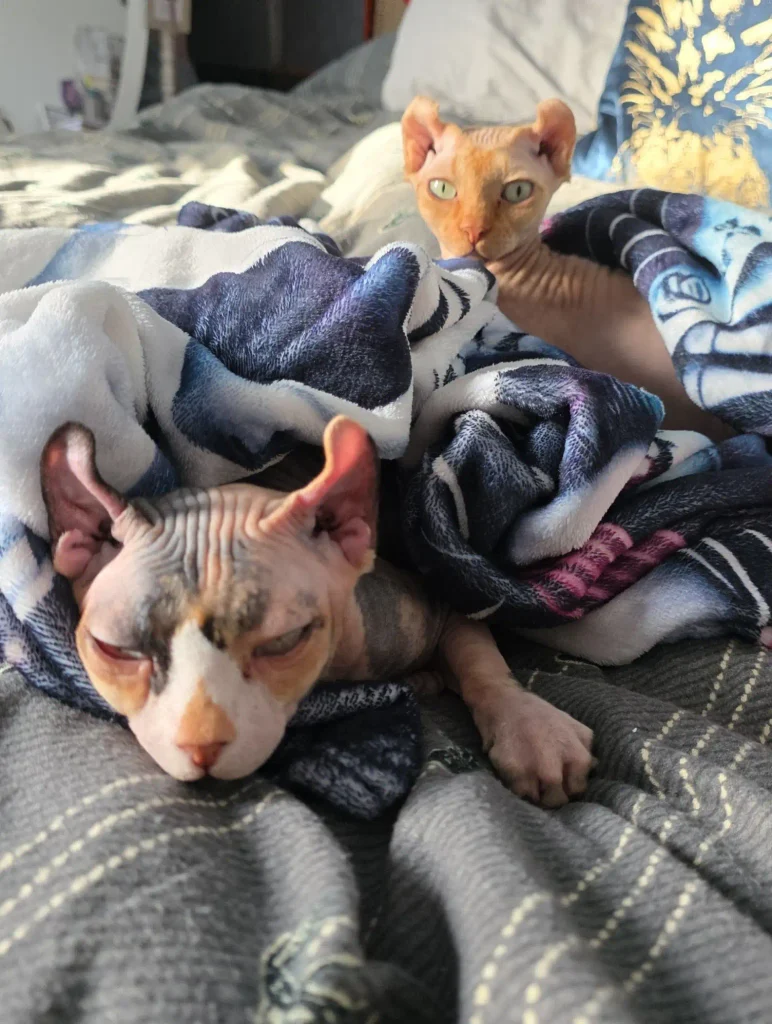
When the RSPCA shared Jelly and Custard’s story, the response was extraordinary.
The siblings’ unusual appearance immediately attracted widespread attention.
People were fascinated by the cats and eager to learn more about adopting them.
So many visitors reportedly tried to access the rescue’s website that it crashed under the increased traffic.
For staff members, the overwhelming interest was encouraging.
But it also created a challenge.
They knew Jelly and Custard needed a particularly suitable home.
The cats had already been rehomed seven times, and the rescue team didn’t want to risk another unsuccessful adoption.
That meant looking beyond initial enthusiasm.
The ideal family would need to understand the additional responsibilities of caring for hairless cats.
Fortunately, one application stood out.
Experienced Cat Lover Offers Jelly and Custard a Forever Home
Heather Morris and her family were among the people who applied to adopt Jelly and Custard.
Unlike some of the cats’ previous owners, Morris already had experience with the breeds involved.
She understood that their needs extended well beyond their unusual appearance.
She was prepared to provide the specialized care, attention, and stability they required.
Morris, her husband, and their children quickly fell in love with the two cats.
After everything Jelly and Custard had experienced, the family offered exactly what the rescue had hoped to find.
A permanent home with people who knew what they were taking on.
The adoption marked a turning point for the siblings.
Instead of moving between temporary households, they finally had a family committed to keeping them.
And once they settled into their new surroundings, their personalities began to shine.
Jelly and Custard Show Their Playful Personalities
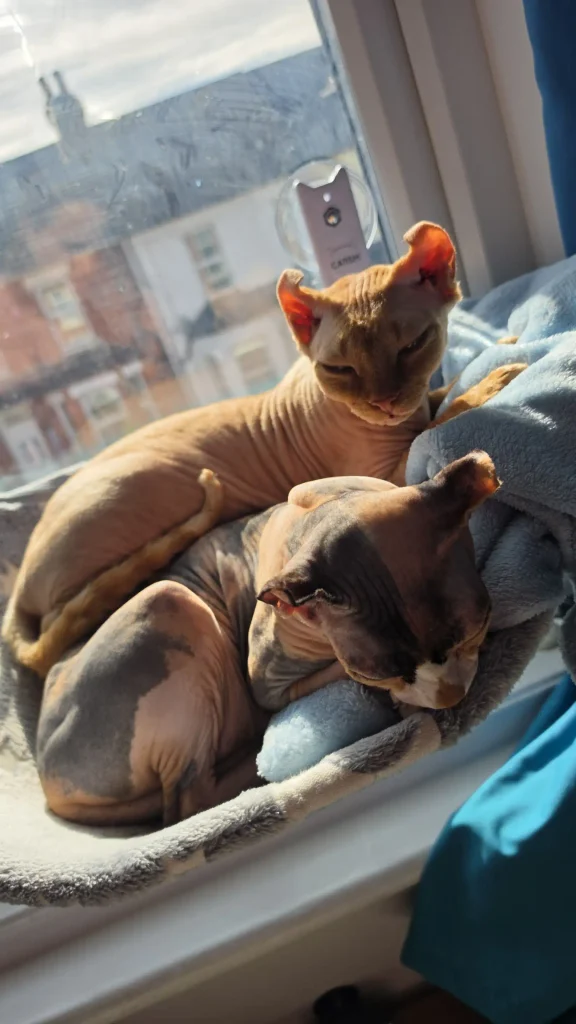
In their new home, Jelly and Custard quickly became central members of the family.
Their personalities were lively, affectionate, and full of energy.
According to Morris, the siblings sometimes behave more like dogs than cats.
They enjoy being involved in family life and have a talent for turning an ordinary day into a chaotic adventure.
Their playful antics have made them impossible to ignore.
But Morris and her family wouldn’t have it any other way.
After years of uncertainty, the cats are now thriving in a home where their behavior is embraced rather than treated as a problem.
For their new owners, caring for Jelly and Custard is a commitment they willingly accepted.
And the cats are finally receiving the stability they deserve.
New Owner Wants People to Understand the Responsibility of Hairless Cats
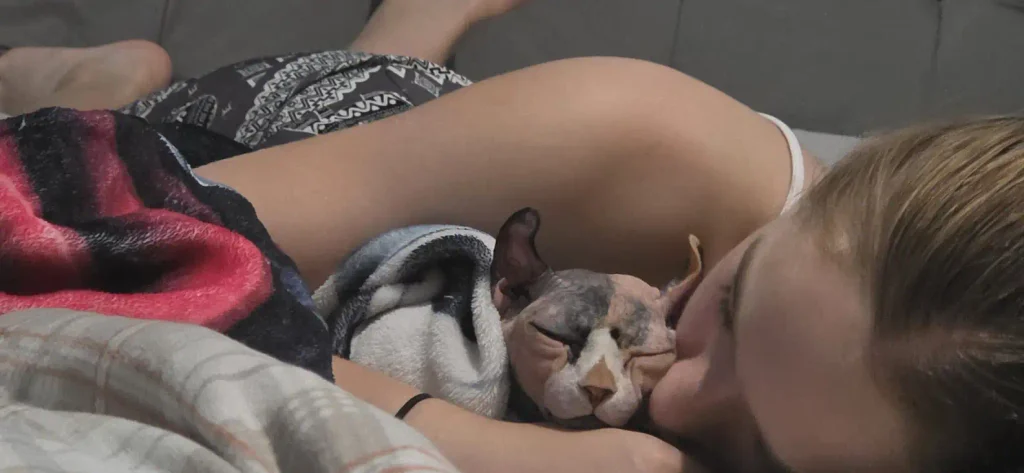
Although Morris is delighted to have Jelly and Custard in her family, she remains saddened by their difficult beginnings.
She believes their story illustrates the risks of choosing a pet based primarily on appearance.
Hairless cats are often admired for their unusual looks, but not everyone realizes how much care they may require.
Morris wants potential owners to understand that these cats are a significant responsibility.
Their grooming needs, sensitivity to temperature, and possible health problems must all be considered.
She hopes that sharing Jelly and Custard’s experience will encourage people to research breeds carefully before bringing an animal home.
That preparation can help prevent situations where pets are surrendered because their needs prove more demanding than expected.
For Morris, the siblings are not unusual possessions to be admired.
They are beloved family members.
Designer Cat Trend Raises Concerns About Animal Welfare
The experiences of Jelly and Custard have also highlighted concerns about the popularity of designer pets.
Animals with unusual physical characteristics can attract significant attention and high prices.
However, popularity does not always translate into suitable homes.
When breeding decisions prioritize appearance over health and welfare, animals may face additional challenges.
Prospective owners may also be unaware of the care requirements associated with particular breeds.
The RSPCA has expressed concern about these trends, especially when animals are purchased impulsively and later surrendered.
Jelly and Custard’s repeated rehoming demonstrates the consequences that can follow when expectations and responsibilities do not match.
Their story also shows why shelters carefully assess potential adopters.
A successful adoption depends on finding a home that can meet an animal’s individual needs, not simply one that admires its appearance.
After Seven Homes, Jelly and Custard Finally Find Happiness
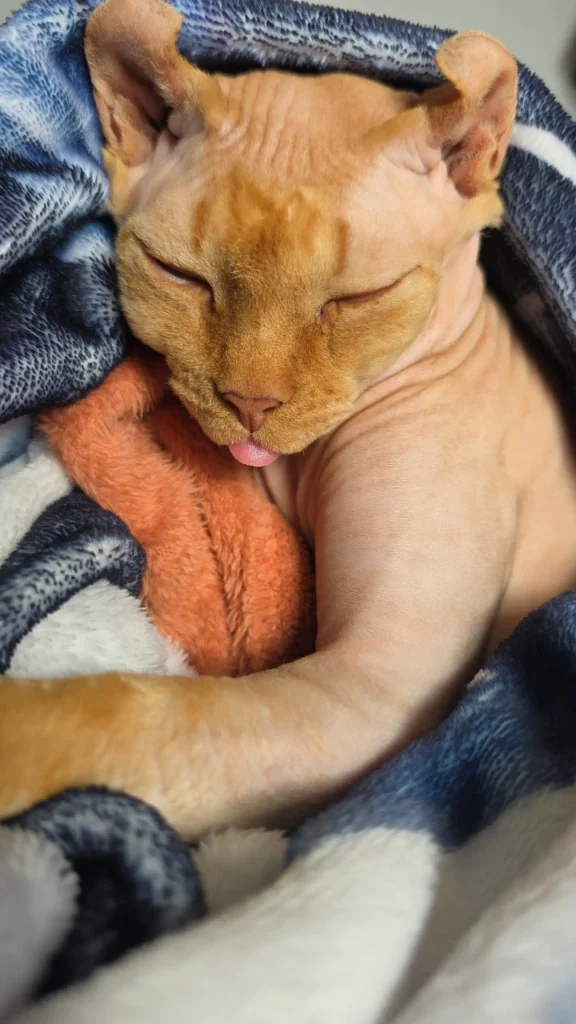
Jelly and Custard’s first two years were filled with uncertainty.
They were bred because of their fashionable appearance, sold for a high price, and repeatedly rehomed when their care needs proved too demanding.
By the time they arrived at the RSPCA Canterbury Branch, they had experienced seven different homes.
One had lasted just 24 hours.
But their rescue gave them another opportunity.
With the help of dedicated shelter staff, the siblings found Heather Morris and her family.
Today, Jelly and Custard are thriving in a home where their personalities are celebrated and their specialized needs are understood.
They no longer have to wonder when they will be moved somewhere new.
After seven homes and countless changes, Jelly and Custard have finally found the one thing they needed most: a family ready to love them for life.