

The mantis was carrying a secret.
Ariel Matthews was three miles into a walk around her neighborhood when something unusual on the sidewalk caught her attention.
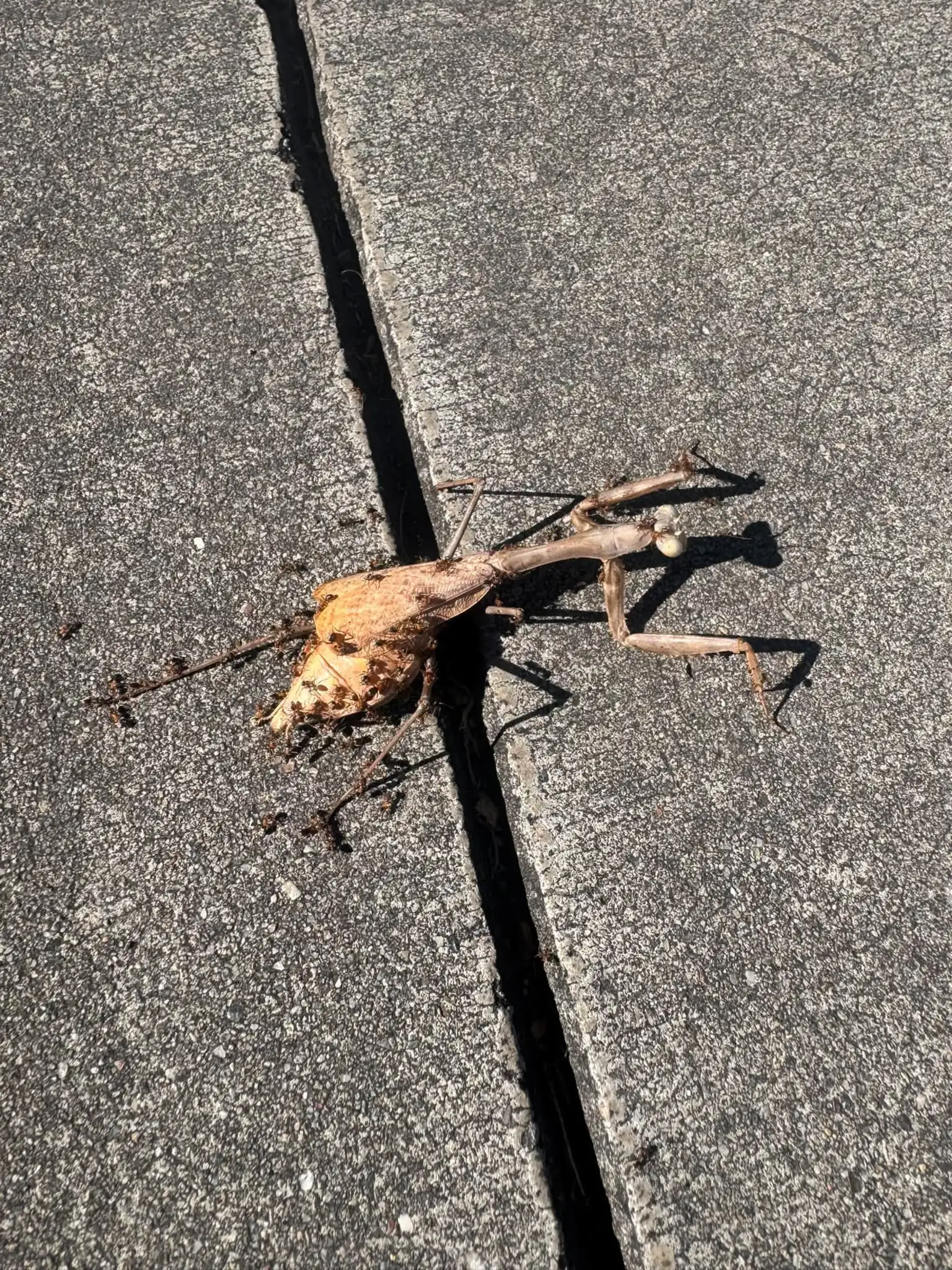
A large praying mantis was lying on the ground, covered in ants.
The insect appeared unable to escape as the tiny creatures swarmed across her body.
Matthews hadn’t left home expecting to rescue an animal, especially one so small. But the sight of the struggling mantis made her stop immediately.
Instead of continuing her walk, she decided to help.
What began as a delicate, ten-minute rescue would eventually lead to another surprise.
Just days after Matthews brought the praying mantis to safety, she discovered that the insect had been carrying something precious.
Woman Spots Praying Mantis Surrounded by Ants
Matthews was enjoying a long neighborhood walk when she noticed movement near the sidewalk.
Looking closer, she discovered a large praying mantis lying on the ground.
Ants were crawling all over the insect, and the situation appeared serious.
Matthews was shocked by what she saw.
Her immediate concern was finding a way to help without accidentally injuring the mantis.
Although praying mantises are predators that feed on other insects, they can still become vulnerable when injured, weakened, or unable to move away from danger.
Matthews wasn’t sure why this particular mantis had ended up on the sidewalk.
But she knew she didn’t want to leave her there.
So she began looking for something she could use to lift the insect safely.
Ariel Matthews Uses Tree Bark to Rescue the Insect
With no special equipment available, Matthews improvised.
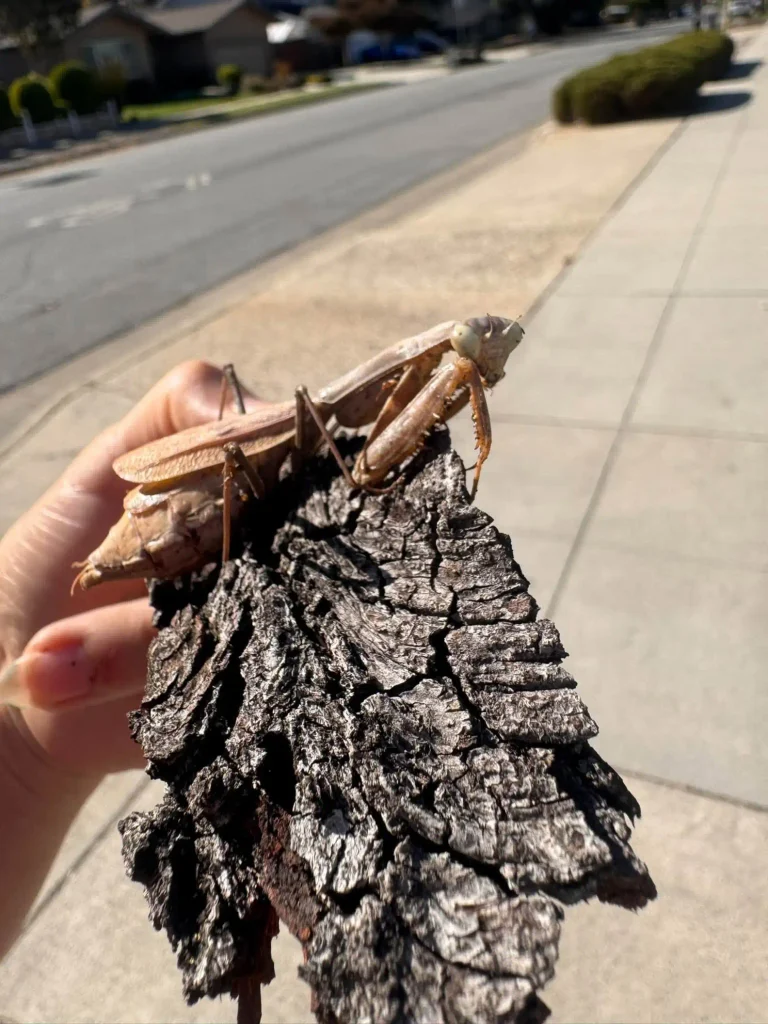
She found several pieces of bark nearby and carefully used them to scoop the mantis off the pavement.
The challenge was removing the ants without hurting the insect.
Matthews noticed that whenever she transferred the mantis onto a fresh piece of bark, some of the ants scattered.
She repeated the process, moving the insect carefully from one piece of bark to another.
Most of the ants eventually moved away on their own.
A few remained attached, so Matthews gently removed them individually.
She continued working patiently until she could no longer see ants on the mantis.
The entire process took approximately ten minutes.
By the end, the insect was free from the swarm.
But Matthews was still worried.
Rescuer Decides Not to Leave the Weak Praying Mantis Behind
After removing the ants, Matthews considered what to do next.
The mantis had already been through a stressful experience, and she feared the weakened insect might be attacked again if left on the sidewalk.
Rather than immediately releasing her, Matthews decided to take her home temporarily.
She wanted to provide a protected environment where the insect could rest without being exposed to another swarm of ants.
Once home, Matthews asked her son to help prepare a small enclosure.
They placed the praying mantis inside a tank and began monitoring her condition.
The insect appeared to be doing well in her new surroundings.
For Matthews, seeing her survive the ordeal was already rewarding.
Then, several days later, something unexpected appeared inside the enclosure.
Rescued Praying Mantis Lays an Egg Case
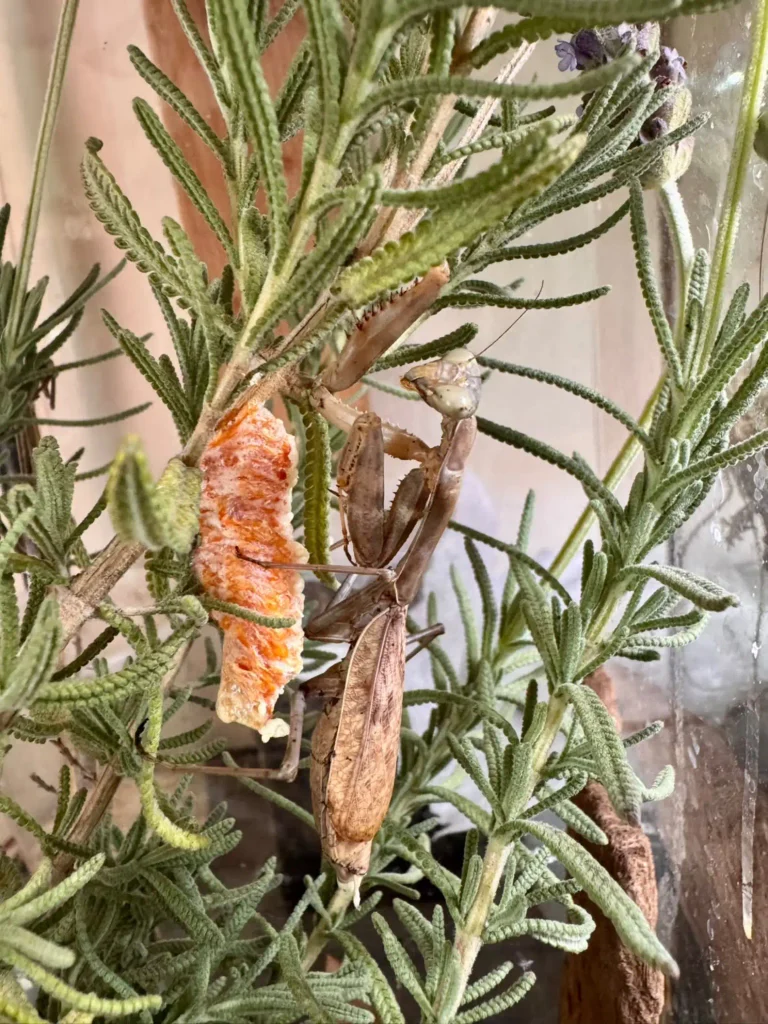
Matthews discovered that the mantis had produced an ootheca.
An ootheca is a protective egg case created by certain insects, including praying mantises.
The structure has a foamy appearance when first produced and later hardens, helping protect the eggs inside.
The discovery meant that the rescued mantis was a potential mother.
What Matthews initially thought was a rescue involving just one insect had taken on a new meaning.
The mantis had survived long enough to lay her egg case.
If the eggs are fertile and develop successfully, young mantises could eventually emerge.
However, laying an ootheca does not automatically mean that the eggs are fertilized or that they will hatch.
Matthews was nevertheless delighted by the unexpected development.
What Happens When a Praying Mantis Lays an Ootheca?
Praying mantises reproduce by laying eggs inside a protective structure called an ootheca.
Depending on the species, an egg case may contain dozens or even hundreds of eggs.
The female produces a foam-like material around the eggs, which hardens to form a protective covering.
This structure helps shield the developing embryos from environmental conditions.
After a period of development, young mantises may hatch from the case.
The timing depends on the species, temperature, and seasonal conditions.
Some mantis species produce egg cases that remain dormant through colder months before hatching when conditions become suitable.
The exact species of the mantis Matthews rescued was not identified in