

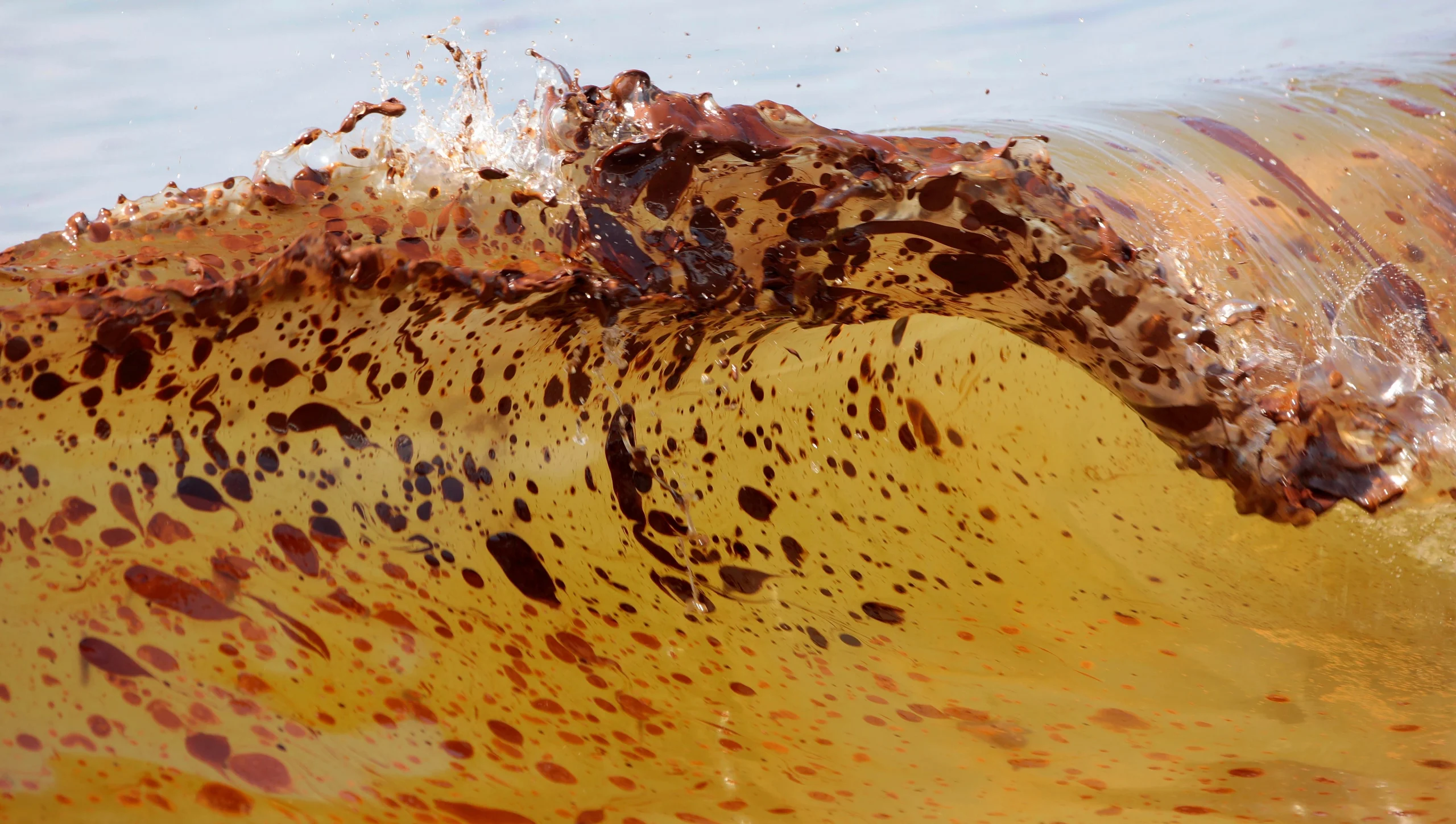
More than a decade after the Deepwater Horizon disaster, life in a little-known region of the Gulf of Mexico remains dramatically diminished. A new study has found that populations of marine animals in the ocean’s twilight zone fell by around 60% following the 2010 oil spill, with little evidence of a meaningful recovery.
Researchers found that fish populations dropped by 63.5% between 2011 and 2015. Crustaceans, including shrimp and krill, declined by 62%, while squid and octopuses fell by nearly 60%. The findings, published in the journal PNAS, point to long-lasting damage in an ecosystem that supports marine life throughout the Gulf.
The affected region, known as the ocean’s twilight zone, lies between sunlit surface waters and the deep seafloor. Extending to depths of roughly 5,000 feet, it is home to countless creatures that serve as food for larger predators, including whales and dolphins. Despite its importance, this vast underwater environment remains poorly understood.
According to lead researcher Tracey Sutton, a biological oceanographer at Nova Southeastern University, scientists had not collected comparable data from this particular part of the Gulf before the disaster.
A dramatic decline beneath the surface
The Deepwater Horizon drilling rig exploded in April 2010, killing 11 workers and triggering one of the worst environmental disasters in modern history. Oil and gas continued pouring into the Gulf for nearly five months, releasing approximately 134 million gallons of oil.
To understand the spill’s effects, researchers compared surveys conducted in 2011 with another expedition to the same location about three and a half years later. Using nets placed at different depths and acoustic sonar, they measured the abundance of marine animals throughout the water column.
The results were striking. By 2015, the amount of marine life detected had fallen to between one-quarter and one-third of the levels recorded in 2011.
Scientists investigated whether natural factors, such as changes in temperature, oxygen availability or food supplies, could explain the decline. None showed a pattern that matched the dramatic losses, leading the researchers to identify the oil spill as the most likely cause.
Continued monitoring has revealed little improvement. Although surveys in 2022 and 2023 suggested a slight increase in some populations, the change was neither statistically significant nor sustained.
The team supported its findings with several independent forms of evidence: animals collected in nets, sonar measurements and genetic analyses indicating declining diversity associated with inbreeding.
Damage that reached across generations
The spill’s effects may have extended well beyond the animals killed immediately after the explosion. According to Sutton, pollutants accumulated in the eggs of surviving creatures, potentially affecting subsequent generations and leaving them weaker.
Some of the most significant losses occurred among species that form the foundation of the marine food web. Krill populations declined by 72%, while lanternfish—small fish with light-producing organs along their bodies—fell to roughly one-third of their former abundance.
Dragonfish, deep-water predators known for their sharp teeth and glowing lures, also suffered substantial declines.
“These are foundational species,” Sutton explained, emphasizing that countless other animals depend on them for food.
When such species disappear or become less abundant, the consequences can spread throughout an entire ecosystem. Predators may lose essential food sources, while changes in prey populations can disrupt the delicate relationships that sustain marine communities.
Study co-author Isabel Romero, a chemical oceanographer at the University of South Carolina, said both the oil and the chemical dispersants used during the cleanup harmed marine life, although they affected animals in different ways.
Oil is highly toxic, while dispersants break it into smaller droplets. That process can increase the exposure of organisms living deeper in the water column, potentially spreading contamination through parts of the ocean that are difficult to observe.
Rita Colwell, a marine microbiologist at the University of Maryland and former director of the National Science Foundation, said research into alternative cleanup methods suggests future responses could place greater emphasis on supporting oil-degrading microbes rather than relying on chemical dispersants.
BP spokesperson Paul Takahashi said the disaster permanently changed the company and that it had introduced changes intended to help prevent another incident.
Although the researchers acknowledged that they could not conclusively prove the spill was responsible for every observed decline, Sutton said the timing of the losses and the lack of a convincing alternative explanation strongly support that conclusion.
An interconnected world hidden beneath the waves
The research also revealed how closely connected different depths of the Gulf really are.
Many marine animals move vertically through the water every day. Some deep-water creatures rise toward the surface at night, while dolphins, whales and other predators dive down to hunt. These movements link habitats that might otherwise appear separate.
Rather than functioning as a series of isolated layers, Sutton said, the Gulf operates as one interconnected system, with energy and nutrients moving between its surface and deeper waters.
That connectivity also helps explain why damage in one part of the ocean can have consequences across a much larger area.
Scientists who were not involved in the study said the scale and persistence of the decline were deeply concerning. Kaitlin Frasier of the Scripps Institution of Oceanography, who previously studied Gulf of Mexico whales and dolphins, noted that research published in 2024 had also identified population declines among some marine mammals following the spill, reaching as high as 83%.
Marine scientist Boris Worm of Dalhousie University said the findings demonstrated how a single industrial accident could affect marine ecosystems across thousands of square kilometers, with little visible recovery even after more than a decade.
The difficulty is that much of this damage takes place far below the surface, beyond the reach of ordinary observation. While an oil slick can be seen from above, changes in deep-water populations may remain hidden for years.
As scientists learn more about these environments, the findings carry implications beyond the Deepwater Horizon disaster. Researchers say the damage should be considered in discussions about expanding deep-water oil drilling and developing deep-sea mining, both of which could place additional pressure on ecosystems that remain only partly understood.
The Gulf’s twilight zone may be largely invisible to people on land, but its animals play an essential role in ocean life. The continued decline offers a sobering reminder that the consequences of an environmental disaster can persist long after the oil disappears from the surface.