
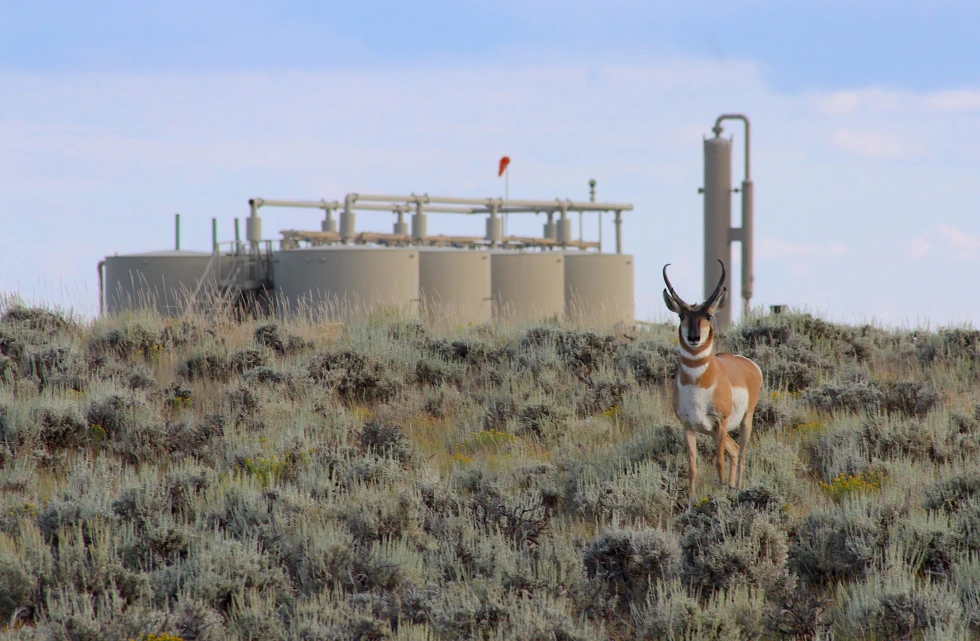
Just a few years ago, one of Wyoming’s most important pronghorn crossings appeared dangerously close to becoming an oil and gas development site.
In 2023, an energy company offered $19 an acre for the right to drill at a narrow section of land where the Sublette pronghorn herd crosses the New Fork River during its seasonal migration. The proposed lease quickly became the center of a heated battle among wildlife advocates, energy interests and state officials.
The timing made the situation even more concerning.
The pronghorn herd was still recovering from an exceptionally harsh winter, while Wyoming had yet to formally designate the famous migration route that the animals had used for generations. Without that designation, the river crossing remained vulnerable to industrial activity and other disruptions.
Private property surrounding the crossing presented another challenge. Although the state had been working toward protecting the migration corridor, those protections offered little authority over privately owned land.
Conservation groups tried nearly every avenue available to them.
At one point, wildlife advocates even attempted to compete directly for an oil and gas lease covering part of the sensitive area. Their bid was unsuccessful, and the controversy eventually contributed to a change in state law that prohibited conservation organizations from participating in future state oil and gas lease auctions in the same way.
What seemed like a major setback, however, looks very different three years later.
Today, nearly all of the land used by pronghorn moving through the New Fork River bottleneck has some form of long-term protection.
The transformation came through a combination of public policy and private conservation. Wyoming ultimately designated the migration corridor, while a conservation easement helped protect an important privately owned section of the crossing. An oil and gas company also played a role in making that protection possible.
For people who had watched the area become increasingly vulnerable, the change has been remarkable.
Kerry Schultz, director of the Jackson Hole Land Trust’s Green River Valley Program, described the transformation of both the private and state-owned parcels as a major conservation victory.
The story is particularly notable because the private landowner voluntarily chose to protect his property rather than pursue development.
Protecting the private ranch
One of the key pieces of the puzzle is Wild Horse Ranch, a 233-acre stretch of pasture along the river.
The property has been in the Looney family for decades. Mike Looney’s father purchased the land during the 1970s with the intention of dividing it into smaller parcels and selling them.
Some subdivision did take place.
But after inheriting the property following his father’s death in the 1980s, Looney decided he wanted something different for the remaining land.
Rather than turning the riverside property into additional development, the Sublette County construction worker wanted to preserve its open character and its value to wildlife.
For Looney, the landscape was more than a potential real-estate investment. He wanted the “beautiful little place down on the river” to remain much as it had been.
A conservation easement eventually offered him a way to accomplish that while also making financial sense.
The agreement places lasting restrictions on future development while allowing the property to remain privately owned.
For conservationists, that distinction is important. Protecting the land doesn’t necessarily require the government to purchase it outright. A willing landowner can retain ownership while ensuring that the habitat and migration route remain intact for future generations.
In the case of Wild Horse Ranch, that choice helped close one of the biggest gaps in protection along the New Fork River crossing.
The result is a striking reversal.
A place that only a few years ago was being targeted for oil and gas development is now substantially more secure — giving migrating pronghorn a better chance of continuing to use the same ancient route their herds have followed for generations.
And for conservationists, the outcome demonstrates how quickly a vulnerable landscape can change when private landowners, conservation groups and government agencies work toward the same goal.