

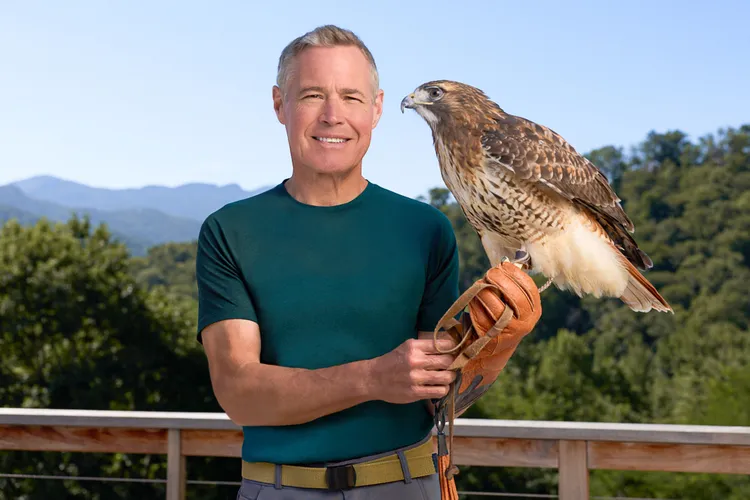
Jeff Corwin is back on national television with a new wildlife series that brings the adventure much closer to home.
In Jeff Corwin’s Southern Wild, the award-winning conservationist travels across North Carolina to explore the state’s remarkable wildlife, from bats and salamanders to alligators, sea turtles and black bears.
The series, created in partnership with Lees-McRae College in Banner Elk, also focuses on the people working to protect those animals and the habitats they depend on.
For Corwin, the goal is to remind viewers that extraordinary wildlife is not limited to distant jungles or remote islands.
After years of filming around the world, he has increasingly turned his attention to North America and the natural wonders found closer to home.
“North Carolina is this incredible wild place where you get this amalgamation of the steamy southern part with sea turtles, armadillos, and alligators, but then you get into the Blue Ridge Mountains of Appalachia where you have Arboreal forests, rainforests, frogs, and Hellbenders,” Corwin said.
The state’s variety of ecosystems gives the series a wide range of stories to tell.
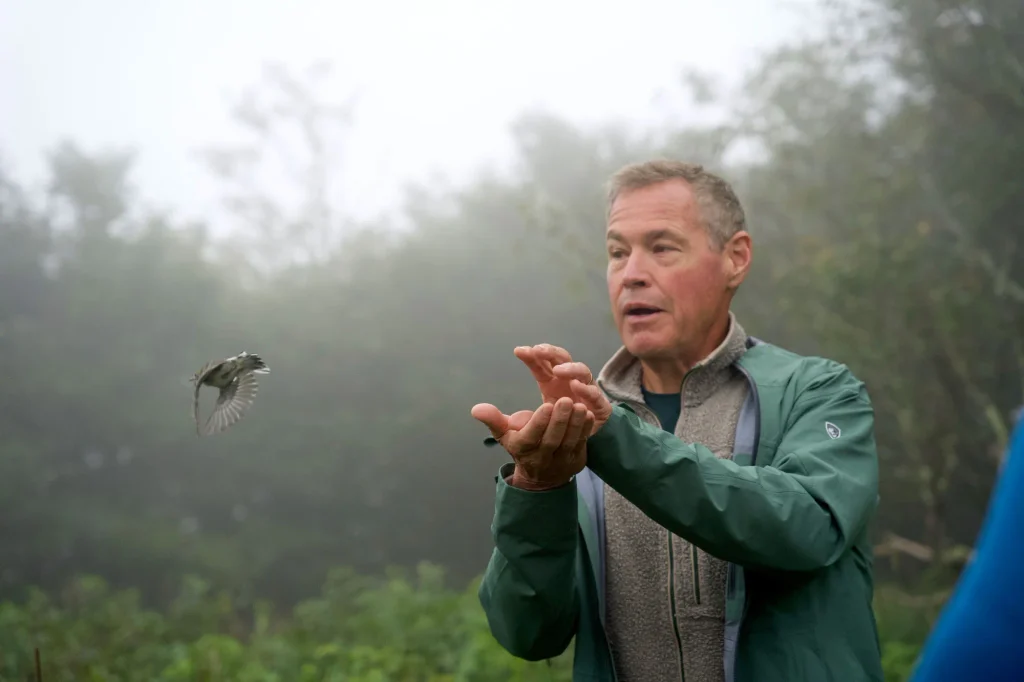
Jeff Corwin releasing a banded bird.
Beyond introducing viewers to wildlife, Southern Wild highlights conservation projects taking place across North Carolina.
One of the most urgent involves the red wolf, a critically endangered species whose future is closely tied to recovery efforts in the state.
Corwin described North Carolina as a crucial place for the species’ survival.
“This state will be the linchpin of whether they make it,” he said.
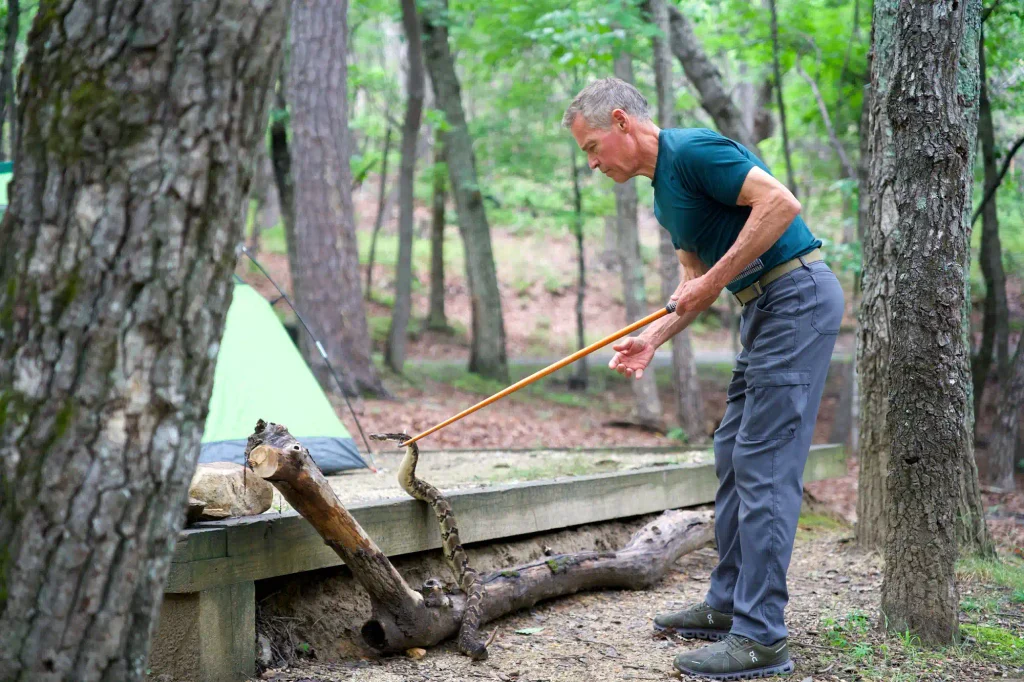
Jeff Corwin with a rattlesnake.
The show also takes a closer look at bats, including the little brown bat.
Once considered one of the most abundant mammals in North America, the species has suffered major declines because of white-nose syndrome, a fungal disease that disrupts hibernation and can cause bats to burn through the energy reserves they need to survive winter.
Corwin hopes the series will help viewers see why even animals that are often misunderstood deserve protection.
He noted that a single little brown bat can consume enormous numbers of insects, making the species an important part of healthy ecosystems.
A North Carolina population has attracted particular attention because some of the bats appear unusually resistant to the disease, potentially giving researchers valuable clues about how the species could recover.
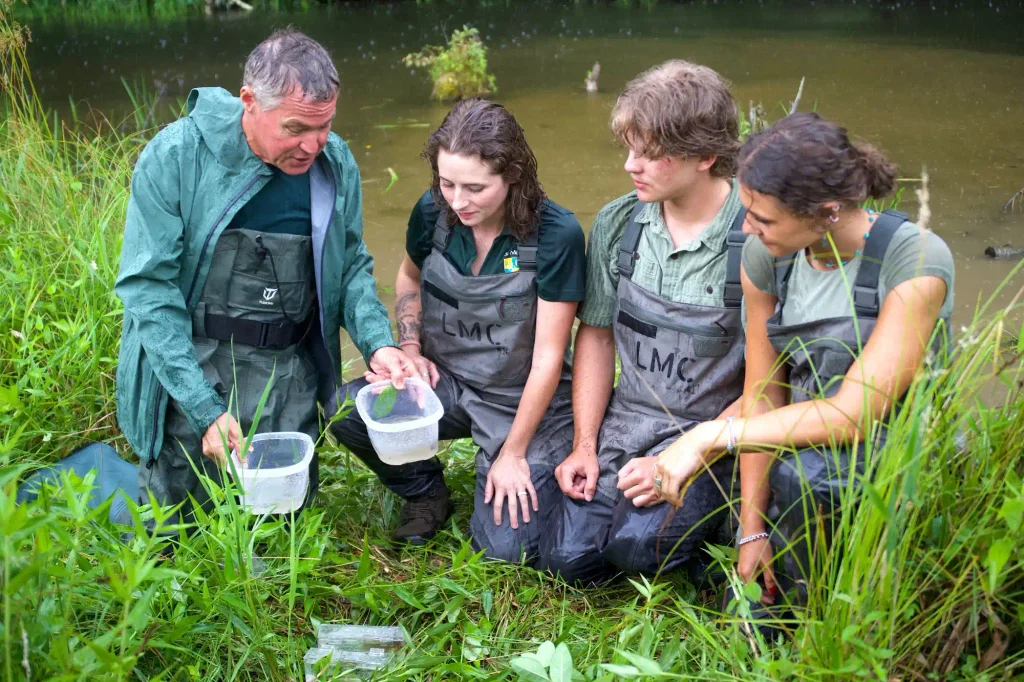
*Jeff Corwin conducting a herpetology survey with Lees-McRae professor Anna Bigler and students Macen