

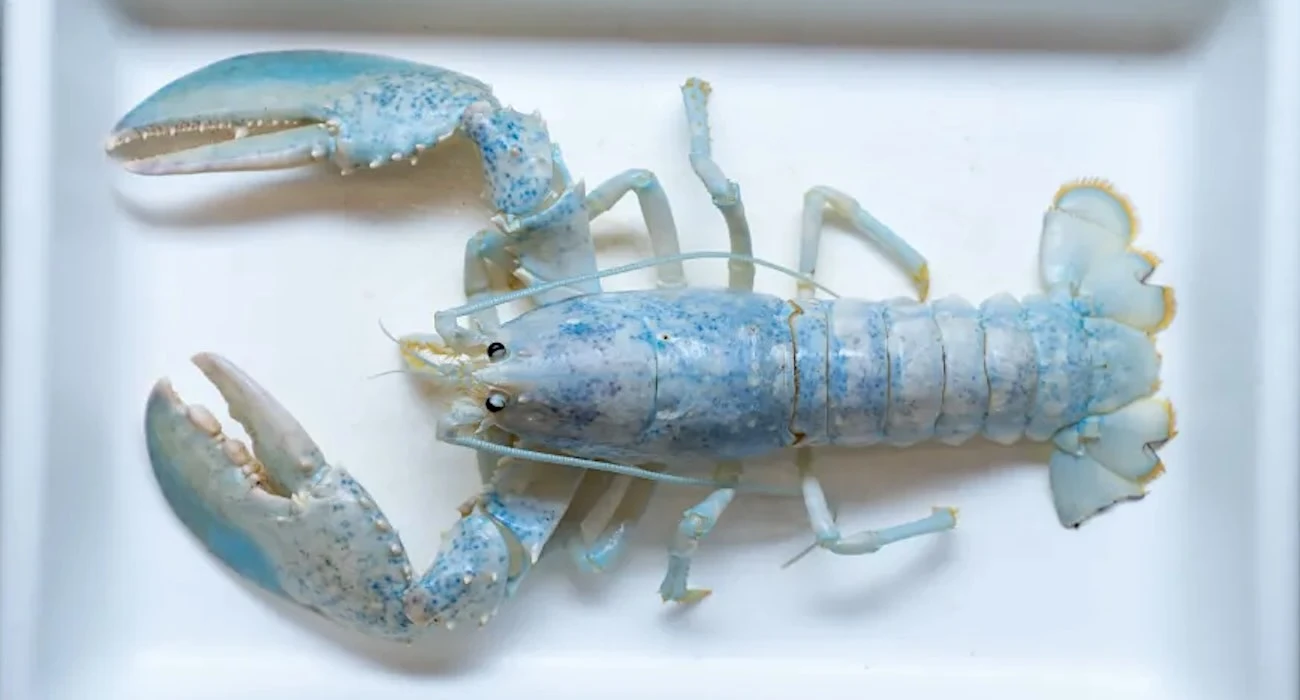
An exceptionally rare white lobster nicknamed “Casper” has found a new home at the University of New England, where researchers hope it will help unlock the mystery behind unusual lobster colors.
The pale crustacean, sometimes called a “ghost” lobster, is believed to occur in roughly 1 out of every 100 million lobsters.
Casper arrived at the university’s Arthur P. Girard Marine Science Center after being donated by the Maine State Aquarium in Boothbay.
Its arrival comes just before Halloween, making the ghostly-looking lobster especially fitting for the season.
But Casper will be doing more than attracting attention.
Researchers plan to collect a small DNA sample as part of a study investigating the genetic causes of rare shell coloration in American lobsters.
The research program has already examined lobsters with striking colors including orange, blue, yellow, purple, calico and split-color patterns.
According to the university, the sampling process is noninvasive and will not harm Casper.
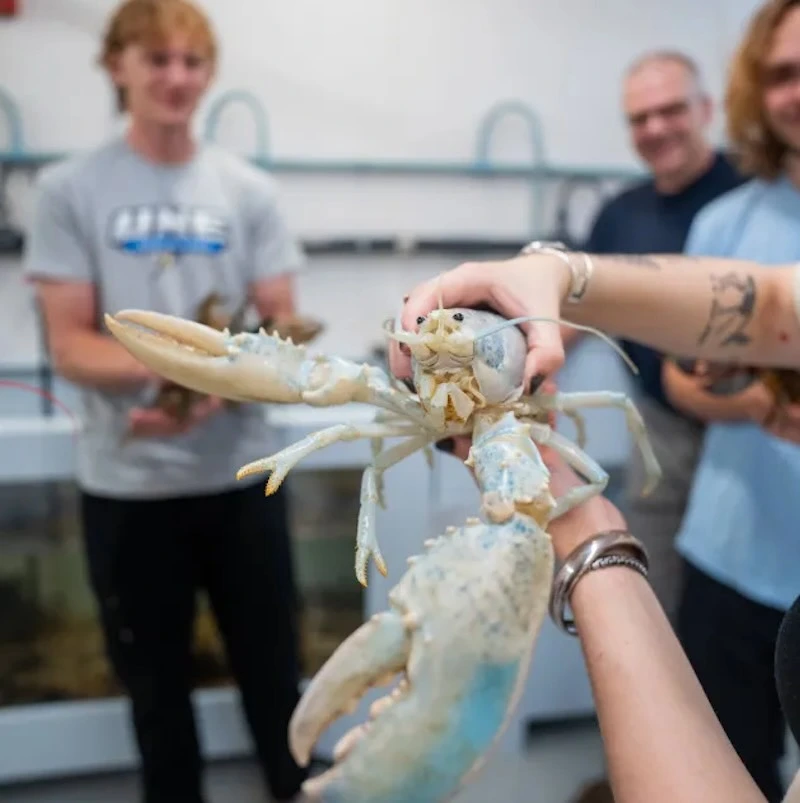
Casper at the University of New England’s Arthur P. Girard Marine Science Center.
The project is led by Markus Frederich, Ph.D., professor of marine sciences at the University of New England.
Frederich and his team are studying the molecular mechanisms that cause some American lobsters to develop dramatically different colors from the species’ usual mottled brown shell.
The university launched the research effort in 2024 after several unusually colored lobsters arrived at the marine science center.
One of them, an orange lobster named Peaches, was estimated to be a 1-in-30-million find.
Peaches later produced offspring with a surprising range of colors, including typical brown, orange and blue. That gave researchers a rare chance to investigate how unusual shell coloration may be passed from one generation to the next.
Scientists collected genetic material from the young lobsters and are now studying more than 15,000 genes in search of differences linked to shell color.
Casper’s arrival adds another valuable piece to that research.
The lobster’s transfer from