

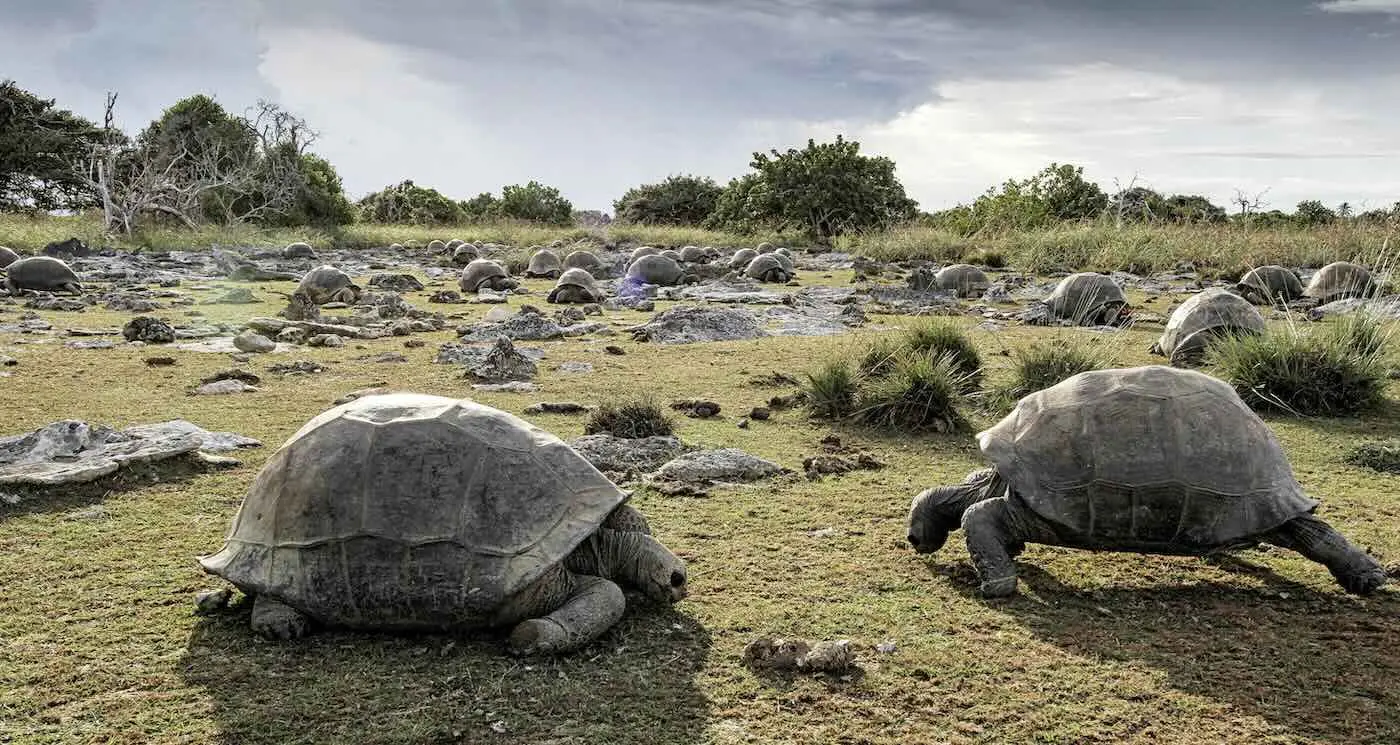
A major new survey has revealed a remarkable conservation success story on Aldabra Atoll in the Seychelles, where the world’s largest free-roaming population of giant tortoises is now estimated at nearly 183,000.
The new figure is the highest ever recorded for the species and is far above the human population of the Seychelles.
Researchers from the Seychelles Islands Foundation and the University of Exeter analyzed five years of tortoise counts collected between 2018 and 2022. The findings provide the first major population update since the late 1990s, when estimates placed the number of Aldabra giant tortoises at around 100,000.
Aldabra Atoll, a remote ring of coral islands in the Indian Ocean, is one of only two places in the world where giant tortoises still live in the wild. The other is the Galápagos Islands, which supports a much smaller population.
“More than 180,000 giant tortoises roaming freely on our atoll is proof of what long-term commitment to conservation can achieve,” said Dr. Frauke Fleischer-Dogley, CEO of the Seychelles Islands Foundation.
“This is wonderful news for Seychelles, for the world, and for everyone who has worked to protect Aldabra.”
The study, published in the journal Ecology and Evolution, found that the tortoise population remained relatively stable during the survey period, with researchers estimating nearly 183,000 adult and sub-adult animals.
Aldabra Atoll giant tortoises – Credit: Dennis Hansen / SWNS
The scale of the recovery is especially striking considering the species’ history.
During the 19th century, heavy exploitation pushed the Aldabra giant tortoise population to fewer than 1,000 animals. Decades of protection and conservation work gradually reversed that decline.
Aldabra was designated a strict nature reserve in 1981 and became a UNESCO World Heritage Site the following year. Since then, conservationists have worked to protect the atoll’s ecosystem and monitor its tortoise population.
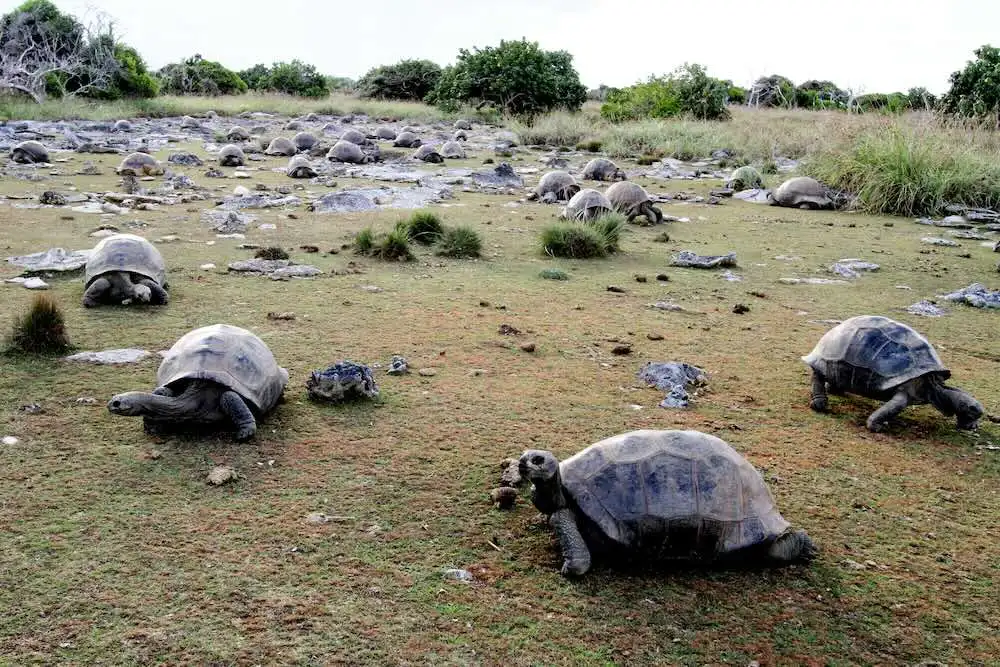
Researchers now describe the comeback as one of the most significant conservation successes in the Indian Ocean.
“Aldabra’s giant tortoise monitoring program is one of the longest running in the region, but the atoll’s dense vegetation makes counting tortoises genuinely difficult in places,” said study co-author Dr. Nancy Bunbury.
To produce a more accurate estimate, researchers used statistical models that accounted not only for the tortoises they observed, but also for animals that may have gone undetected.
“By modeling what we didn’t see, as well as what we did, we’ve produced the most reliable baseline yet for this iconic Seychelles species, establishing a benchmark we can use to track the population for decades to come,” Bunbury said.
Despite the encouraging results, conservationists say the tortoises still face significant challenges.
Climate change is expected to bring longer and more frequent droughts to Aldabra, potentially reducing the amount of food and shade available to the animals.
Invasive species also remain a serious concern. Feral cats and black rats can prey on tortoise eggs and hatchlings, limiting the population’s ability to grow.
Conservationists hope that removing the remaining invasive mammals from the atoll could give young tortoises a better chance of survival while helping the population cope with future environmental pressures.
“These results are great news for the tortoises and testament to the fantastic work done in the field,” said Dr. Dave Hudson, a postdoctoral research associate at the University of Exeter.
“Hopefully we have provided the conservation managers the evidence they need to track future change and act early as the tortoises face increasing pressures from climate change, drought, and invasive species.”
From fewer than 1,000 animals in the 19th century to nearly 183,000 today, Aldabra’s giant tortoises have made an extraordinary recovery — offering a powerful example of what decades of sustained conservation can achieve.