

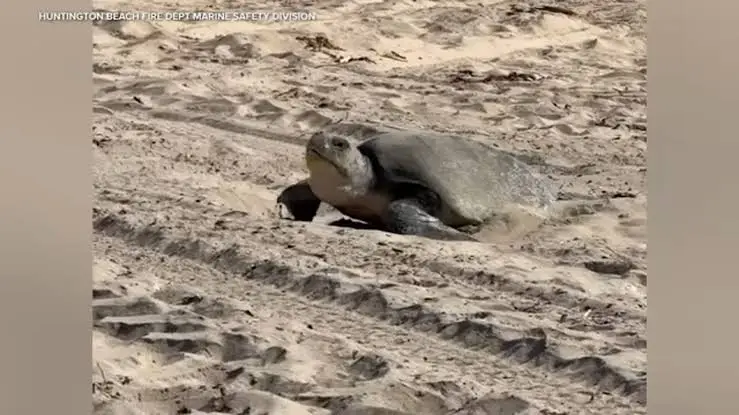
For the first time in recorded history, sea turtles have been observed laying eggs on the U.S. West Coast. Two unexpected nesting events in Southern California have surprised scientists and sparked new interest in marine conservation.
1. A Historic Discovery
An extraordinary discovery took place in Huntington Beach, California, when a local resident spotted a sea turtle laying eggs on a sandy beach near the Seal Beach National Wildlife Refuge.
This was an unusual sight. Sea turtles typically nest on warmer beaches in tropical and subtropical regions, not along the California coastline.
Scientists identified the animal as an olive ridley sea turtle. The discovery marked the first documented natural sea turtle nesting event on the U.S. West Coast.
Even more surprisingly, it was only the beginning.
2. A Second Turtle Appears
Just three days after the first discovery, another olive ridley sea turtle was spotted laying eggs near Huntington Beach Pier.
Wildlife experts confirmed that the two nests belonged to different turtles, making these discoveries particularly significant.
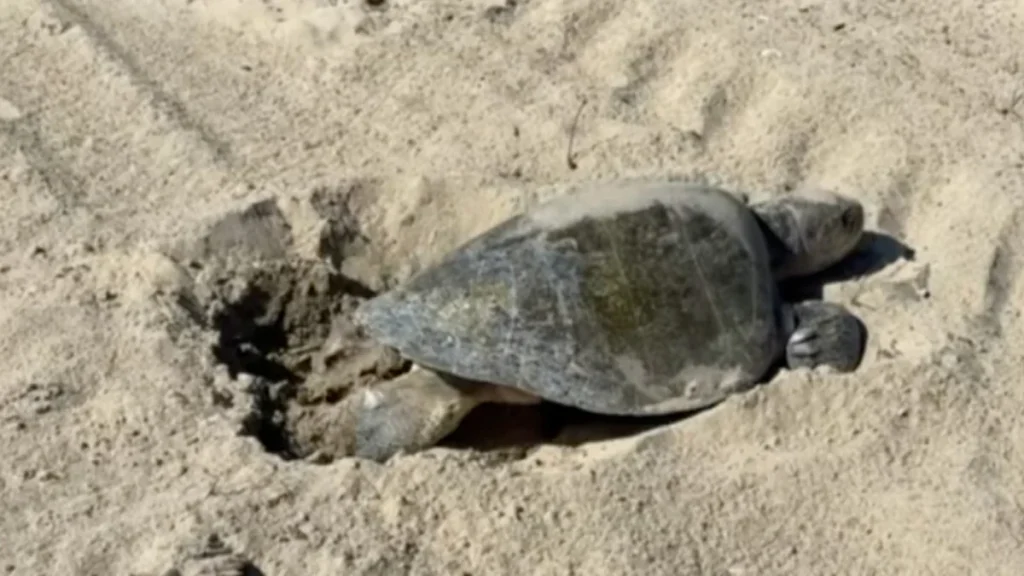
Local conservation teams responded immediately. They installed protective fences around the nests and placed warning signs to prevent people from disturbing the eggs.
The unexpected appearance of two nesting turtles within such a short period raised an important question: Why were these animals nesting so far from their usual breeding grounds?
3. Meet the Olive Ridley Sea Turtle
The olive ridley is one of the smallest sea turtle species in the world. It gets its name from the olive-green color of its shell.
These turtles usually inhabit warm tropical and subtropical waters in the Pacific, Atlantic and Indian oceans. They are capable of traveling long distances between feeding areas and nesting beaches.
Key Facts About Olive Ridley Sea Turtles
| Feature | Description |
|---|---|
| Scientific name | Lepidochelys olivacea |
| Average adult length | 75–90 cm |
| Adult weight | Up to approximately 45 kg |
| Natural habitat | Tropical and subtropical oceans |
| Conservation status | Vulnerable |
| Incubation period | 45–60 days |
| Eggs per nest | Approximately 50–100 |
Although olive ridley turtles are widespread, their populations face threats from plastic pollution, fishing activities, coastal development and the destruction of nesting habitats.
Protecting their breeding areas is essential for their long-term survival.
4. Why Did the Turtles Choose California?
Scientists are investigating several possible explanations for the turtles’ unusual behavior.
One possibility involves warmer ocean temperatures associated with El Niño. Changes in water temperature and ocean currents may influence turtle migration, potentially allowing them to travel farther north than usual.
Another possibility is extreme weather. Powerful storms or hurricanes might have disrupted the turtles’ normal migration routes.
Possible Reasons for the Unusual Nesting Events
| Possible cause | How it may affect turtles |
|---|---|
| Warmer ocean temperatures | May allow turtles to travel farther north |
| El Niño | Can change ocean currents and water temperatures |
| Hurricanes and storms | May disrupt normal migration routes |
| Environmental changes | May influence marine animal movements |
Scientists have not yet confirmed the exact reason for these unusual nesting events.
There was another surprising detail: both turtles nested during daylight hours.
Sea turtles generally prefer nesting at night, when beaches are cooler and there is less human activity. Their unexpected daytime nesting behavior has given researchers another interesting question to investigate.
5. Protecting the Nests
Once the turtles were discovered, local wildlife conservation organizations quickly began protecting their nesting sites.
Sea turtle eggs are vulnerable to predators, changing weather conditions and human disturbances.
To reduce these risks, conservation teams installed protective fencing and warning signs around both nests.
Visitors were also encouraged to follow several important safety guidelines.
How People Can Help Protect Sea Turtle Nests
- Keep your distance: Avoid approaching nesting turtles or their eggs.
- Keep pets away: Dogs and other animals can accidentally damage nests.
- Avoid bright lights: Artificial lighting may disturb turtles and confuse newly hatched babies.
- Do not touch the eggs: Moving or disturbing eggs can damage developing embryos.
- Respect protected areas: Follow warning signs and instructions from wildlife authorities.
These simple precautions can make a significant difference in protecting the developing turtles.
6. What Happens Next?
Olive ridley sea turtle eggs normally take approximately 45–60 days to hatch.
The exact incubation period depends on environmental conditions, including sand temperature, moisture and weather.
Each nest may contain between 50 and 100 eggs. If conditions remain favorable, numerous baby turtles could emerge from the two California nests.
However, hatching is only the beginning of their journey.
Once the young turtles emerge from the sand, they must find their way to the ocean. During this journey, they face numerous dangers, including predators, artificial lighting and human activity.
The Sea Turtle Hatching Process
- Nesting: A female turtle digs a hole in the sand and lays her eggs.↓
- Incubation: The eggs remain buried for approximately 45–60 days while the embryos develop.↓
- Hatching: The baby turtles break through their shells and emerge from the sand.↓
- Journey to the ocean: The hatchlings move across the beach toward the water.↓
- Beginning marine life: The young turtles enter the ocean and begin their lives at sea.
Protecting nesting beaches throughout this process significantly improves the turtles’ chances of survival.
7. Why This Discovery Matters
The discovery of two olive ridley sea turtle nests in Southern California is significant for both wildlife conservation and scientific research.
It provides researchers with an opportunity to study unusual turtle movements and investigate how environmental conditions might influence nesting behavior.
Although these discoveries are remarkable, they do not necessarily mean that sea turtles are permanently expanding their nesting range into California.
Scientists will need more observations and long-term research to determine whether these events are isolated incidents or part of a broader environmental pattern.
For conservationists, the immediate priority is protecting both nests and giving the developing turtles the best possible chance of survival.
Conclusion
The unexpected arrival of two nesting olive ridley sea turtles on California’s coast marks a historic moment for marine wildlife.
Their unusual migration and daytime nesting behavior have raised important scientific questions, while their vulnerable eggs have brought local conservation organizations and communities together.
As the eggs develop, researchers and wildlife experts hope that the nests will produce healthy hatchlings capable of reaching the Pacific Ocean.
Beyond its historical significance, this event reminds us of the importance of protecting marine habitats and understanding how environmental changes affect wildlife.