
“The two became inseparable” ❤️
A young bat named Nibbles has an extraordinary story of survival after being discovered severely injured following a powerful thunderstorm in southern Pennsylvania.
When a concerned resident first spotted him struggling on the ground, the tiny animal’s unusual behavior led some people to suggest that he should be euthanized. Fortunately, the person who found him refused to give up and contacted wildlife rehabilitation specialists instead.
What followed was a challenging recovery involving months of dedicated care, unexpected setbacks and a heartwarming friendship with another rescued bat.
A Frightened Baby Bat Is Discovered After a Severe Storm
The remarkable rescue began on the morning following a powerful thunderstorm in southern Pennsylvania.
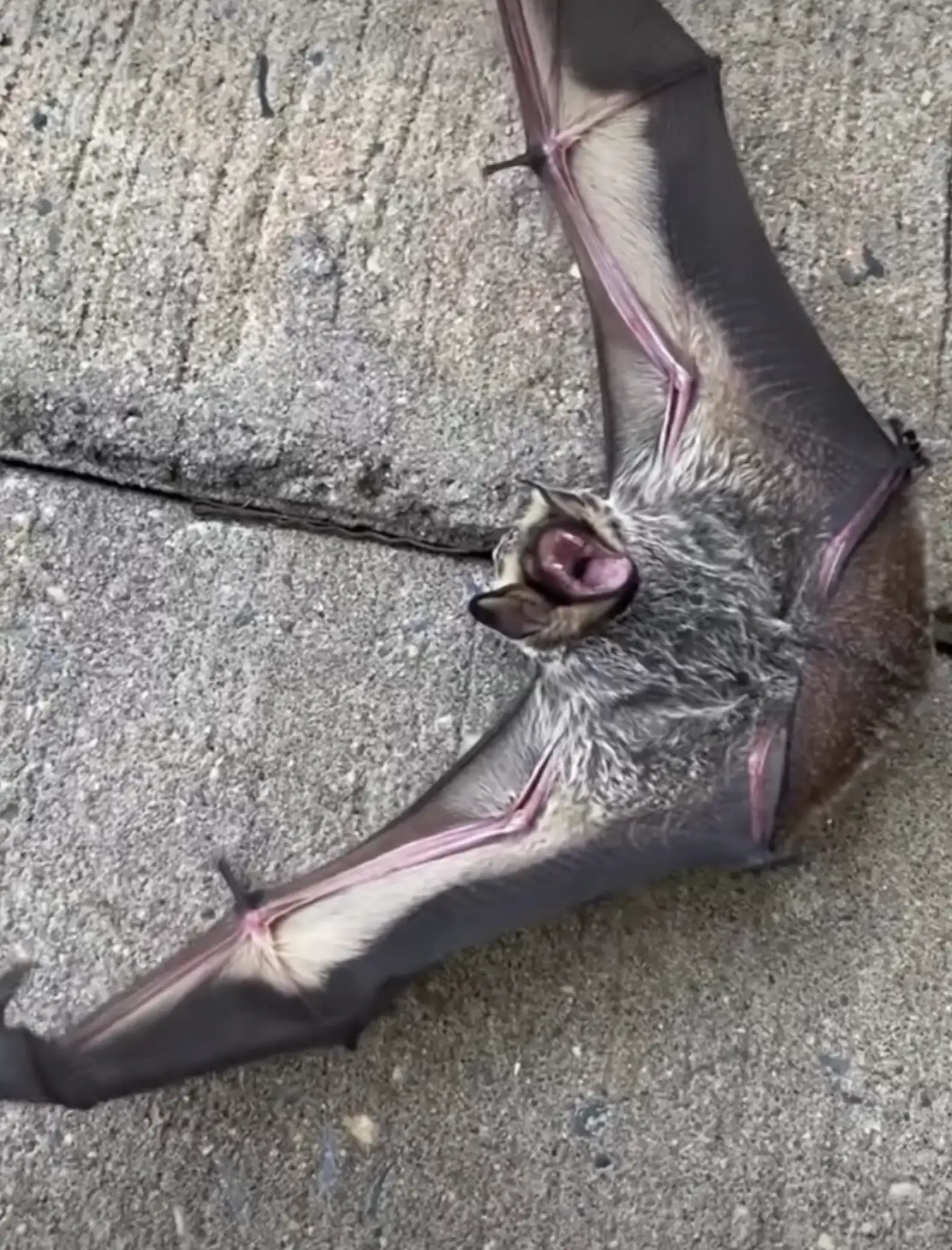
A concerned resident discovered a small bat lying on his back on the ground. His wings were stretched outward, his tiny fangs were exposed, and he was moving frantically.
When the person approached to record the unusual scene, the bat’s movements became even more dramatic.
It was clear that something was wrong, but the concerned resident wasn’t sure what had happened or how to help.
Hoping to find someone with experience handling injured wildlife, they shared footage of the animal online.
Unfortunately, many of the initial responses were far from encouraging.
Several commenters suggested contacting authorities to have the bat euthanized and tested for rabies, despite there being no reported physical contact between the animal and the person who discovered him.
Thankfully, the resident also reached out to Pennsylvania Bat Conservation and Rehabilitation (PBCR), an organization specializing in rescuing and rehabilitating bats.
The team’s interpretation of the situation was considerably different.
Wildlife Experts Recognize the Bat’s Defensive Behavior
After reviewing the situation, the experienced rescuers at PBCR recognized that the bat’s unusual movements could be a natural defensive response.
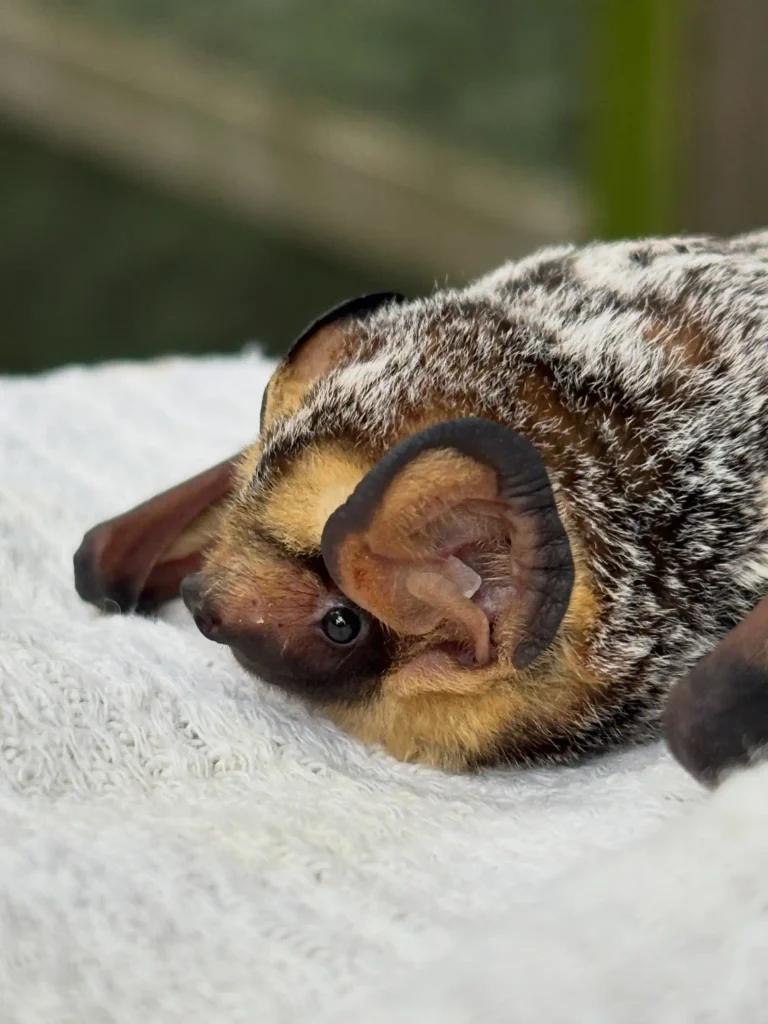
The little animal was a juvenile hoary bat, and the organization had encountered similar behavior while caring for other young bats.
When frightened or threatened, hoary bats may spread their wings, expose their teeth and move dramatically in an attempt to discourage potential predators.
For such a small and vulnerable animal, displaying intimidating behavior can be an important survival mechanism.
Although abnormal behavior alone cannot establish whether a bat has rabies, the rescuers understood that the youngster’s defensive display was not necessarily evidence of the disease.
They wanted to give him an opportunity to receive proper veterinary assessment rather than immediately assuming the worst.
The team quickly arranged to retrieve the frightened bat and bring him into their specialized rehabilitation program.
They gave their newest patient an adorable name: Nibbles.
However, once the rescuers examined him more closely, they discovered that his problems were much more serious than they had initially hoped.
Veterinarians Discover Nibbles Has Severe Head Trauma
After safely collecting Nibbles, the rehabilitation team conducted a thorough examination to determine why he had been found struggling on the ground.
The results were concerning.
Nibbles had suffered significant head trauma, and his injuries were severe enough to make his recovery uncertain.
The team couldn’t immediately determine how long it would take for him to improve or whether he would eventually regain the abilities necessary to survive independently.
Despite the seriousness of his condition, his caregivers were determined to give him every possible chance.
The young bat required extensive attention, careful monitoring and a rehabilitation plan tailored to his injuries.
His rescuers knew they were facing a lengthy recovery process, but they remained committed to helping him.
Over the following months, Nibbles received dedicated care from the PBCR team.
Gradually, their efforts began producing encouraging results.
Months of Rehabilitation Bring Hope and New Challenges
Recovering from severe head trauma was an enormous challenge for such a small animal.
Nibbles needed time to regain his strength and recover from the pain associated with his injuries.
Fortunately, he gradually began showing signs of improvement.
After months of rehabilitation, his caregivers reported that he was no longer experiencing the pain that had affected him when he first arrived.
It was a significant milestone, but his recovery was far from complete.
Although Nibbles had regained some of his ability to fly, he continued experiencing difficulties with controlled flight and landing.
He could take off and move through the air, but he wasn’t consistently able to land safely. Instead, he sometimes crashed when attempting to return to a resting place.
These difficulties raised concerns about his ability to survive if he were released.
For a wild bat, successful flight is essential for finding food, avoiding predators and navigating its environment.
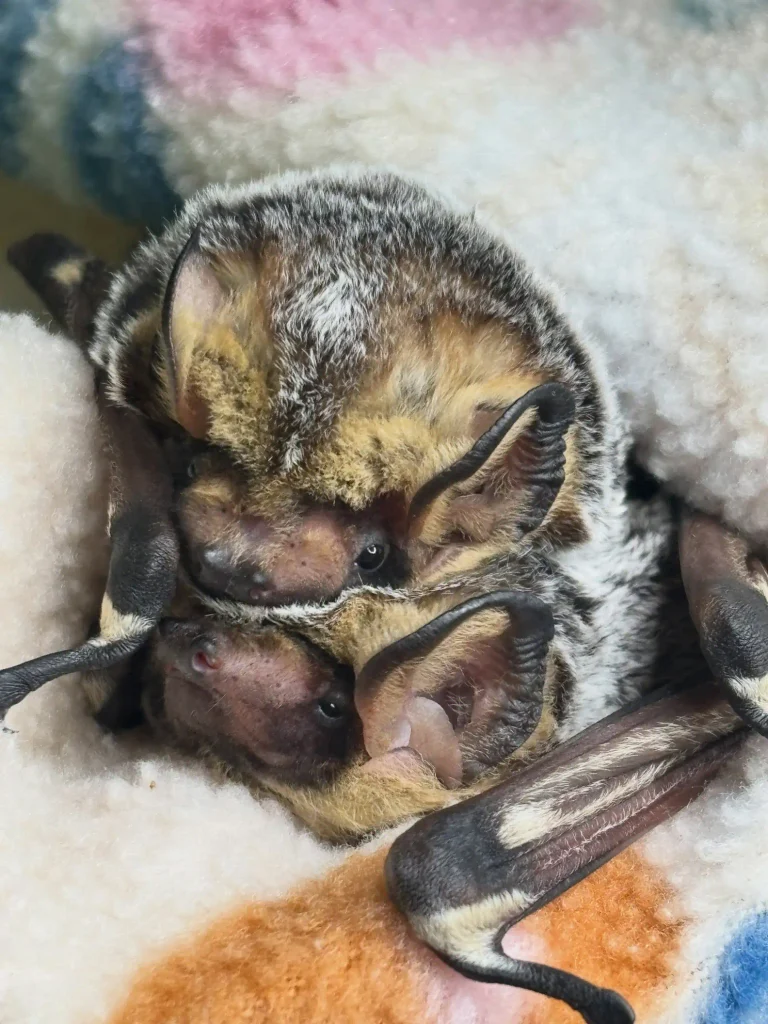
Recognizing that Nibbles still needed assistance, his caregivers continued working to improve his coordination and cognitive function.
They remained hopeful that further rehabilitation might eventually allow him to return to his natural habitat.
However, while Nibbles was working toward that goal, something wonderful happened.
An Unexpected Friendship Changes Everything
During his rehabilitation, Nibbles met another rescued bat living at the facility.
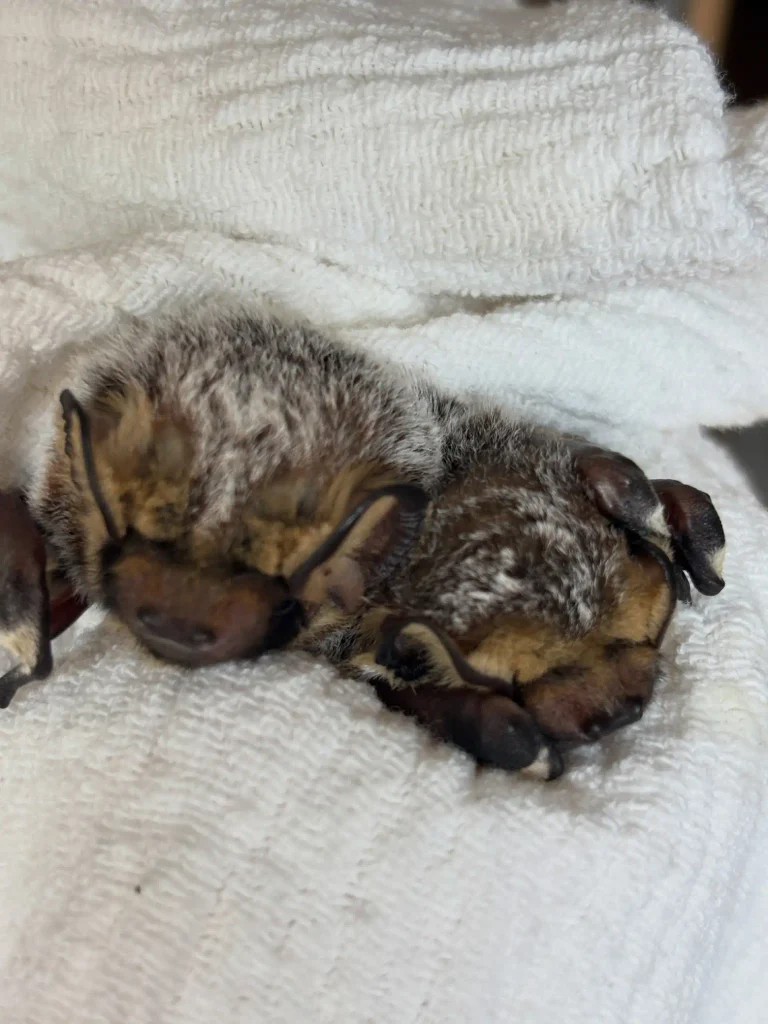
Her name was Clover.
Although the two animals had arrived under different circumstances, they quickly formed a remarkable connection.
Before long, Nibbles and Clover were spending their time together, developing a close bond that delighted their caregivers.
The rehabilitation team described the two bats as inseparable.
For Nibbles, who had already endured so much, finding companionship became another positive development in his recovery.
Instead of facing his rehabilitation journey alone, he now had another bat beside him.
Their friendship also provided an encouraging experience for the PBCR staff, who had spent months helping Nibbles overcome his injuries.
Watching the two rescued animals develop such a close relationship was especially rewarding after the uncertainty surrounding his initial condition.
The little bat who had once been found helpless on the ground was now recovering in a safe environment with a companion of his own.
Rescuers Continue Working Toward a Possible Return to the Wild
Although Nibbles has made meaningful progress, his journey isn’t over.
His caregivers continue monitoring his condition and working to improve his flying abilities, hoping that he might eventually become strong and coordinated enough to survive independently.
However, a return to the wild will depend on whether he can demonstrate the physical abilities and behaviors necessary for safe release.
For now, Nibbles remains under the supervision of experienced wildlife rehabilitators, with Clover providing companionship along the way.
His story has become an encouraging example of what dedicated wildlife rehabilitation can accomplish.
When he was first discovered, some people believed the frightened youngster should be euthanized because of his alarming behavior.
Instead, he received professional care, began recovering from his serious injuries and developed an unexpected friendship.
Nibbles’ Story Carries an Important Message About Bat Conservation
For the team at PBCR, Nibbles represents more than an individual rescue success.
His experience highlights how easily frightened or injured wildlife can be misunderstood, particularly when the animal belongs to a species that people commonly fear.
Bats often receive negative attention because of concerns about rabies, even though they play essential roles in ecosystems around the world.
Many species help control insect populations, while others contribute to pollination and seed dispersal.
Understanding these animals and their natural behaviors can help people make better decisions when encountering them.
However, anyone who discovers a grounded bat should avoid touching or handling it. Bats can carry rabies, and unusual behavior cannot reliably confirm or rule out infection. If physical contact may have occurred, medical or public health advice should be sought promptly.
For an injured bat that can be safely left undisturbed, contacting a licensed wildlife rehabilitator is the appropriate next step.
That’s the message Nibbles’ rescuers hope people will remember.
A frightened animal displaying defensive behavior isn’t necessarily beyond help. With professional assessment and appropriate care, some injured bats can make remarkable recoveries.
And for Nibbles, that second chance has already brought something special: relief from his initial suffering, a devoted team of caregivers and an unexpected best friend named Clover.
Do you like this personality?