

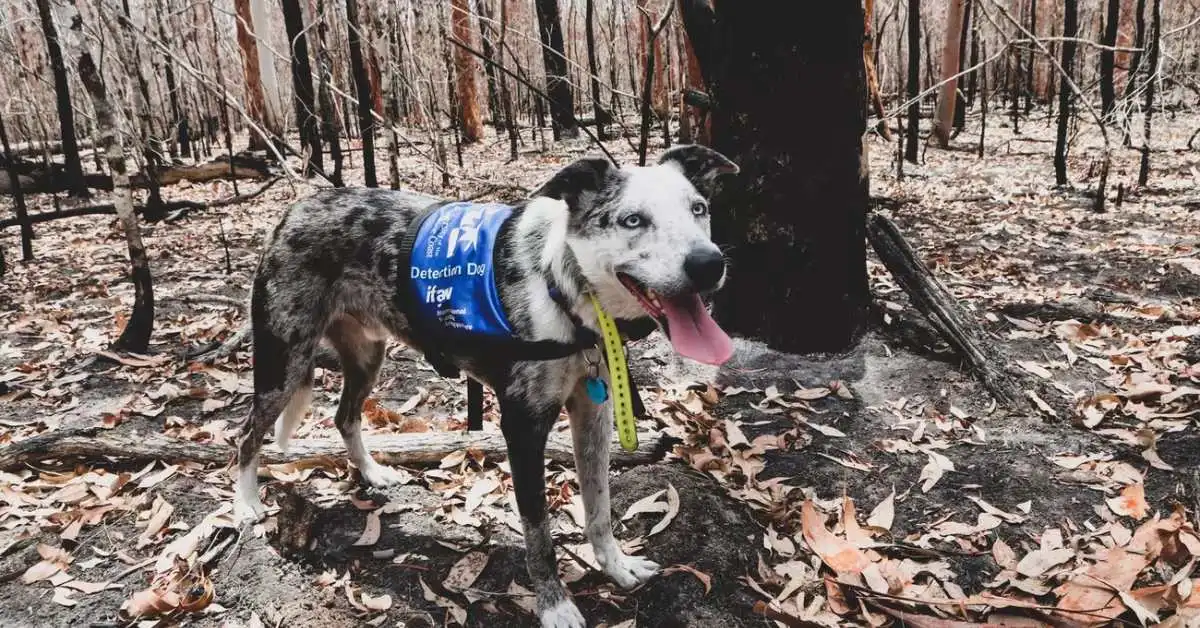
When devastating bushfires swept across Australia in 2019 and 2020, countless animals were caught in the destruction. Among the rescuers working through the burned landscape, one unlikely hero became known around the world for helping save koalas.
His name is Bear, and he is a dog.
After 10 years of service, the 11-year-old detection dog has officially retired. But his work has been so important to koala conservation that teams are already searching for the next dog who can follow in his pawprints.
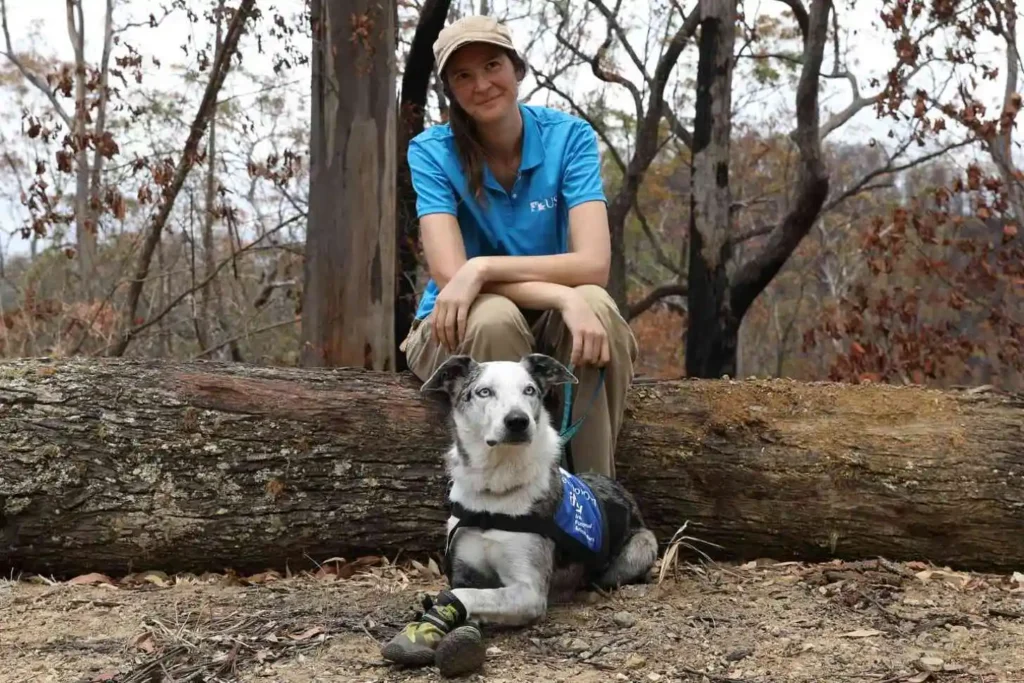
Bear began his conservation career about a decade ago, working with IFAW and the University of the Sunshine Coast’s Detection Dogs for Conservation program. He was trained to find koalas and other wildlife in need of help, especially in difficult environments where humans might struggle to spot them.
Unlike many detection dogs who search for droppings, Bear was trained to detect the scent of live koalas. He learned to look and smell upward into the trees, then drop to the ground at the base of a tree when he found a koala above.
His reward for a job well done was simple: playtime with his favorite ball.
Bear became especially important during Australia’s Black Summer fires. Thousands of koalas were affected by the disaster, and many were left injured, dehydrated or trapped in burned areas. Bear helped locate more than 100 koalas across the scorched bush so they could receive veterinary care.
For the people working with him, Bear quickly proved he was more than just a trained dog. He was a true conservation partner and a symbol of hope during an incredibly difficult time.
Before becoming a detection dog, Bear was not exactly an easy pet. He had endless energy and a strong obsession with balls, traits that made him difficult in a normal home but perfect for search work. His drive and focus turned him into an ideal wildlife detection dog.
Over the years, Bear also became an ambassador for koalas and the threats they face. His work helped bring attention to climate change, habitat loss and the growing dangers affecting Australia’s wildlife.
Now that Bear is retired, conservation groups are working to find his successor. Other dogs on the Detection Dogs for Conservation team, including Maya, Baxter and Billie-Jean, continue helping with wildlife and habitat research, but Bear’s replacement will need very specific skills.
The next koala detection dog will likely be young, medium-sized and confident enough to move through dense bushland. Like Bear, the new recruit may work alongside drones and human search teams after disasters such as bushfires, floods and cyclones.
Bear’s legacy will continue through the next generation of detection dogs. But for now, after a decade of hard work, he gets to enjoy a well-earned retirement at home with one of his former handlers.
Instead of searching burned forests, Bear can spend his days doing what he loves most — playing fetch, relaxing and being celebrated as the hero he is.