

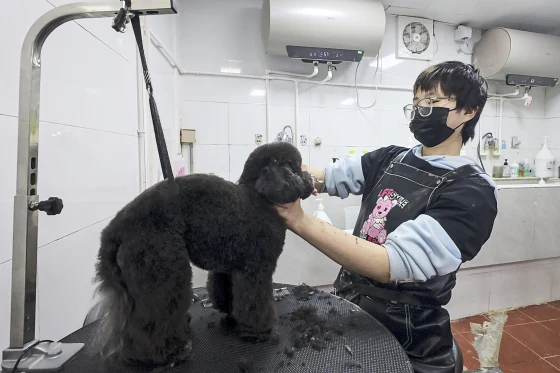
BEIJING — China is shrinking, and not just in numbers. Across the country, more young couples are making a conscious decision not to have children — at least not human ones.
Instead, many are choosing a different kind of family: dogs, cats, and other beloved pets.
Like their counterparts in the United States and around the world, young people in China are increasingly embracing “pet parenting”, finding emotional fulfillment in animals rather than raising children.
Why More Chinese Couples Are Choosing Pets
The shift is being driven by a combination of economic pressure and changing social values.
With slowing economic growth, a highly competitive job market, and the rising cost of living, many young adults feel that having children is simply too expensive and stressful.
But it’s not just about money.
It also reflects changing attitudes toward marriage and family as Chinese society continues to modernize.
“Many people don’t want to get married now,” said Guo Xinyi, 28, who owns a poodle and two cats.
“They feel pets bring happiness, while raising a child is exhausting.”
A Growing Concern for Chinese Authorities
This trend is deeply concerning for Chinese officials, who are struggling to reverse the country’s demographic decline.
Government data released last week showed that China’s population has fallen for the fourth year in a row.
- China’s population dropped by 3.39 million last year
- Total population now stands at 1.405 billion
- Births fell 17% to a record low of 7.92 million
- In 2015, there were 16.55 million births
China is now the world’s second most populous country, after being overtaken by India in 2023.
The One-Child Policy Legacy
This year marks the 10th anniversary of the end of China’s one-child policy, which was introduced in 1979 to control population growth.
The policy was relaxed in 2021, allowing couples to have up to three children, in an effort to combat the rapidly aging population.
But the results have been disappointing.
Rather than a baby boom, China is seeing half as many births as a decade ago.
Marriage Rates Are Also Collapsing
Marriage — traditionally seen as a prerequisite for having children in China — is also declining sharply.
In 2024:
- The number of marriages fell by 20%
- From 7.68 million to 6.1 million
- The biggest drop on record
Without marriage, fewer couples are even considering parenthood.
Government Incentives Aren’t Working
Authorities have introduced several pronatalist policies, including:
- Annual childcare subsidies of 3,600 yuan ($500) per child under age 3
- Expanded tax breaks for families
- Longer maternity leave in some regions
- A new 13% tax on contraceptives, seen as largely symbolic
Yet young people remain unconvinced.
Career Pressure and the “Curse of 35”
According to sociologist Yuying Tong from the Chinese University of Hong Kong, career anxiety is a major factor.
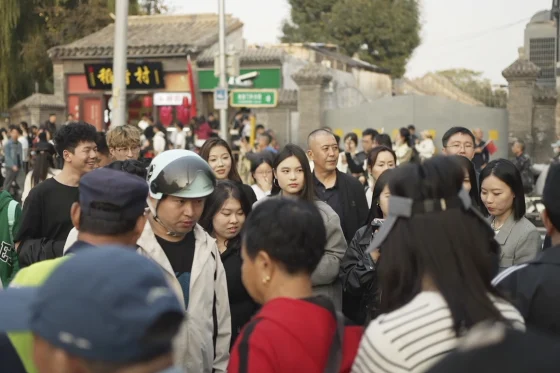
Young adults face:
- High unemployment
- Intense competition
- Age discrimination in hiring — known as the “curse of 35”
Many worry that having children would damage their careers, especially women.
They also fear what kind of future their children would face.
“Parents worry about competition at school and in the job market,” Tong said.
“With pets, there is no competition.”
Pets Are Now More Common Than Toddlers
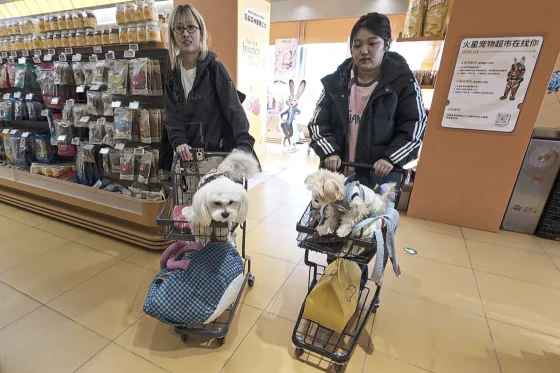
The pet population in China has exploded.
According to Goldman Sachs:
- China now has more pets than children aged 4 and under
- By 2030, China will have:
- Over 70 million pets
- Only 40 million toddlers
In 2017, the situation was reversed:
- 90 million young children
- Only 40 million pets
Pets as Family Members
Pets in China are no longer just animals — they’re treated as full family members.
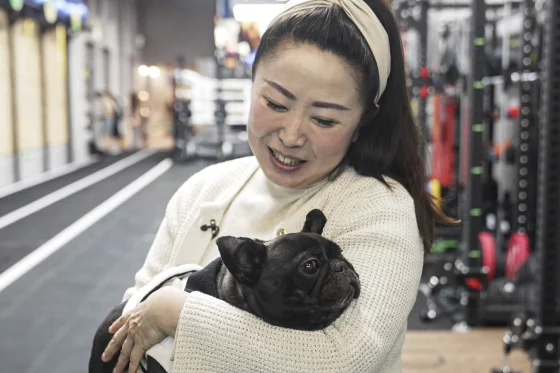
Angela He, a gym owner in Beijing, cooks homemade meals for her bulldog Meiqiu and even buys matching outfits.
“It’s like real parents and kids,” she said. “One family.”
“Second Pets” Are the New “Second Babies”
Pet grooming shop owner Gan Yixuan says many of her customers are child-free couples.
“They raise a dog instead and treat it exactly like their child,” she said.
In the industry, this trend is called “second pets” — just like second children.
“First one pet, then two, sometimes three,” Gan explained.
Less Stress, More Love
For Guo, raising three pets feels like “being a mom without the pain.”
“It’s still responsibility,” she said.
“But it’s much less financially stressful.”
She hasn’t ruled out marriage or children one day — but for now, pets offer something modern young adults increasingly value:
Companionship without pressure.
A New Definition of Family in China
China’s shift toward pet parenting reflects something deeper than demographics.
It shows a society where people now prioritize:
- Emotional wellbeing
- Personal freedom
- Mental health
- Work-life balance
As Angela He put it:
“It’s not like traditional China anymore.
Now people decide their own life.”
And for millions of young Chinese, that life includes fur, paws, and unconditional love — instead of diapers and school fees.